
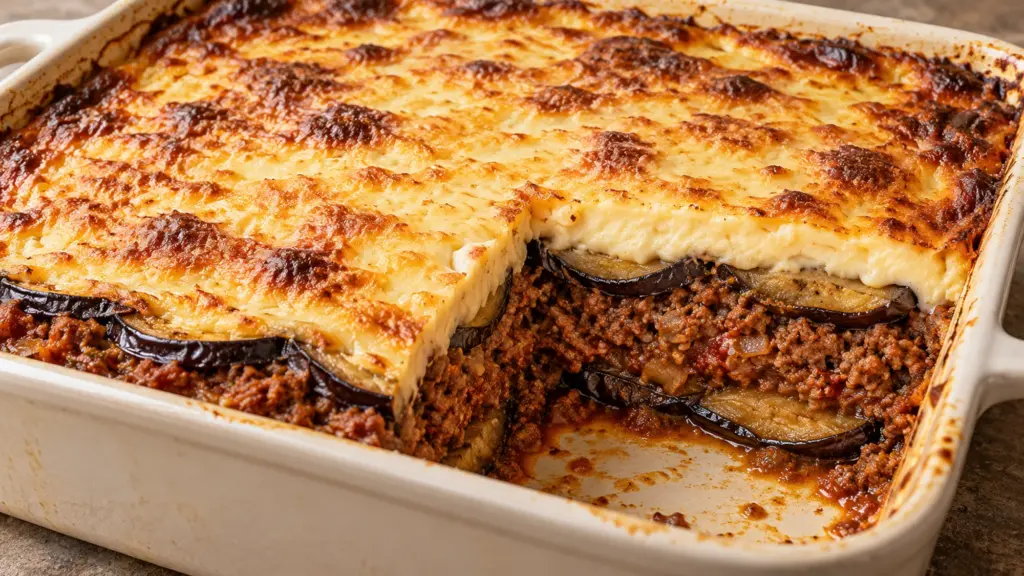
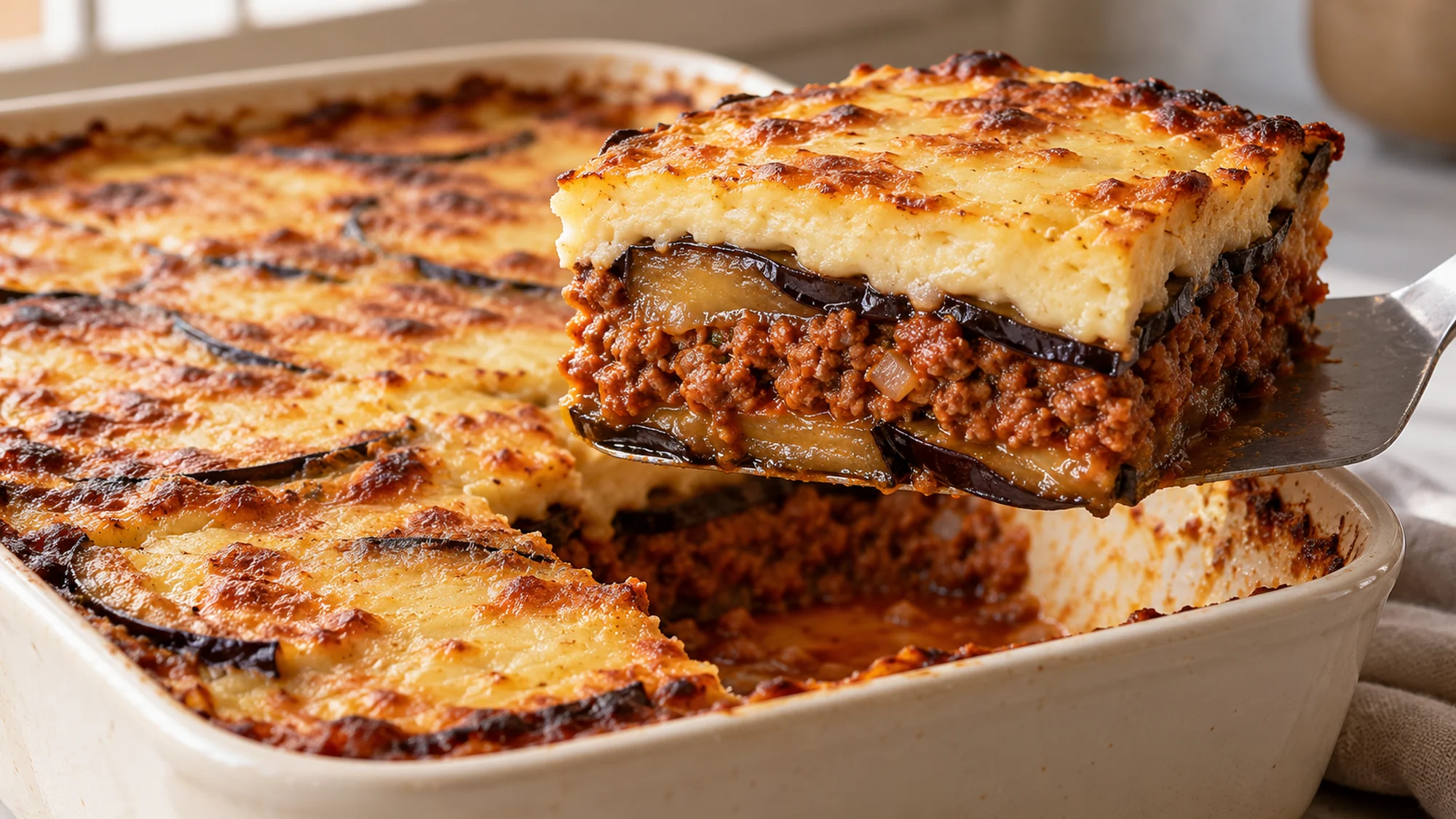
A spoon reaches through a browned white top, a savory tomato layer and tender slices of eggplant. Moussaka earns its place at a shared table through that contrast. The layers need a little organization, but each part has a clear job and can be prepared in sequence.
This moussaka uses roasted eggplant instead of frying it, a thick lamb-and-tomato filling, and a béchamel finished with egg yolk and Parmesan. It fills a deep 8-inch square baking dish and serves six. Let the pan rest after baking so the layers settle before cutting.
I prefer roasting the eggplant while the filling simmers. It avoids a crowded skillet and gives the slices a chance to lose moisture. Keep the tomato mixture thick, too; a runny filling is harder to layer neatly.
Serving Suggestions for Moussaka
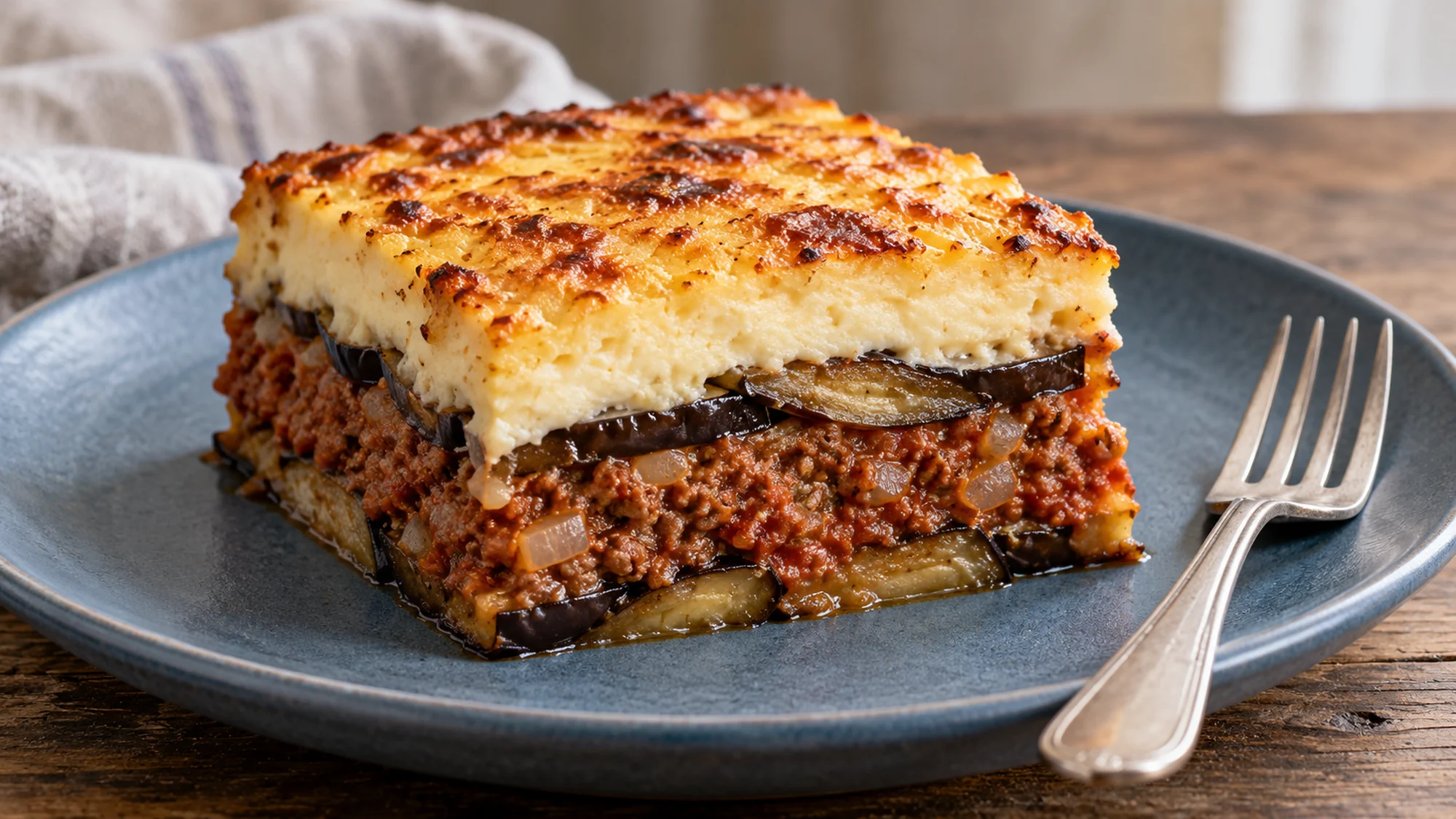
Cut the rested casserole into six portions and lift each piece with a broad spatula. A perfect square is pleasant, but a little sauce at the edges is normal. Serve warm rather than straight from the oven; the short rest makes the layers easier to handle and the top less likely to slide.
The casserole is substantial on its own. I’d put something crisp and simply dressed beside it, perhaps cucumber and tomato or plain greens with lemon. That keeps the plate lively without competing with the cinnamon and tomato in the filling.
- Serve with a cucumber salad or a small plate of fresh greens.
- Offer lemon wedges at the table for diners who like a sharper finish.
- Pair with plain bread to catch any sauce left on the plate.
- For a cool dessert after this savory main, try Spoonvale’s chocolate strawberry yogurt clusters.
Rest the pan, cut six generous portions and choose a fresh side that balances the rich layers.
Moussaka Variations and Layering Choices
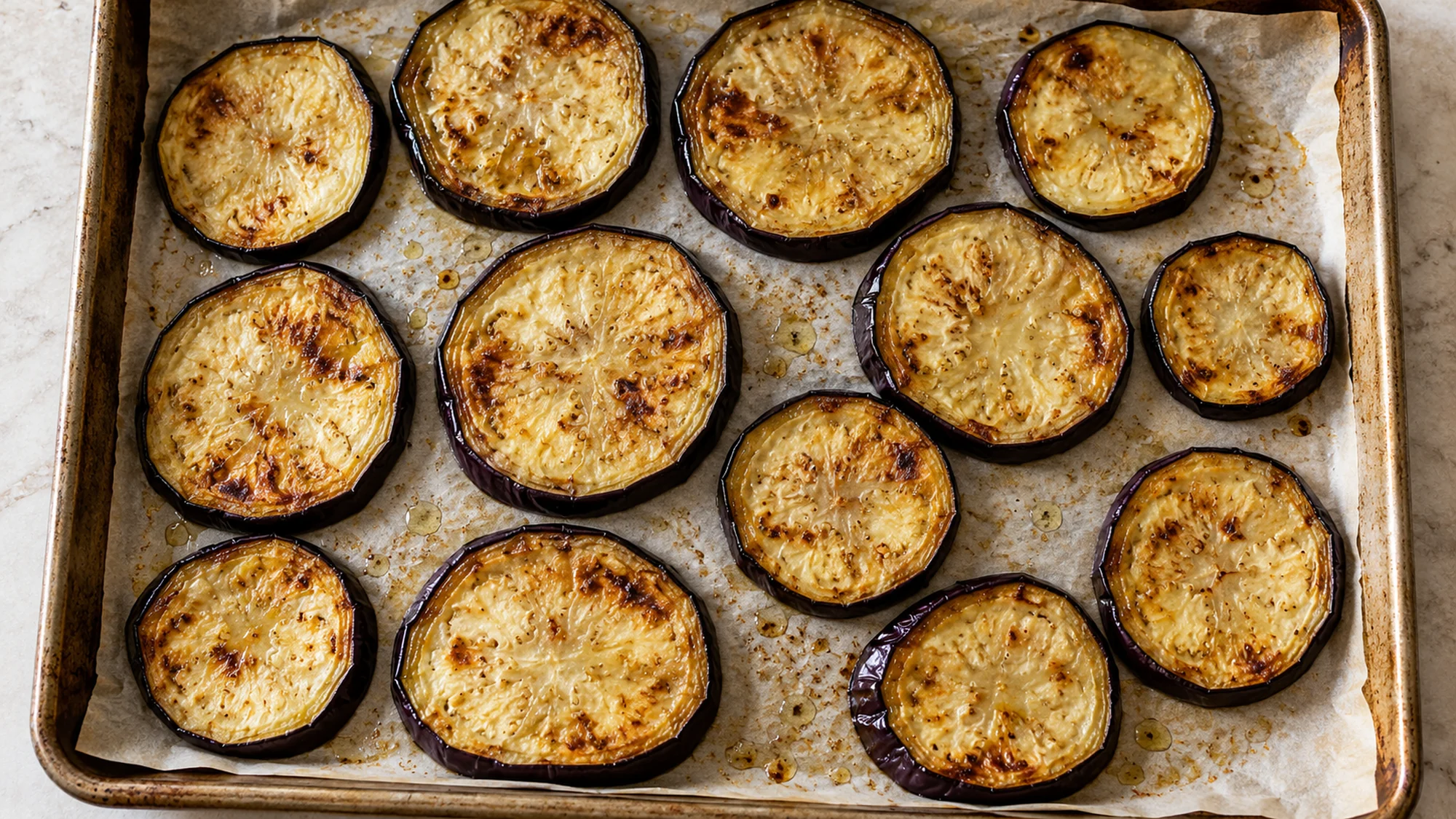
Eggplant slices need to be tender before assembly. Spread them across two trays so they roast rather than steam. Brush with the measured oil, turn halfway through and look for softened centers and browned edges. This approach uses the same basic eggplant-and-sauce structure found in Diane Kochilas’s moussaka overview, while the quantities and method here are written for this pan.
Reduce the lamb and tomato mixture until a spoon leaves a brief trail in the pan. The béchamel should be thick enough to spread without running into the meat layer. Cool it briefly before whisking in the yolk, and do not boil it afterward. Those little pauses make assembly calmer.
| Layer | Ready when | Why it matters |
|---|---|---|
| Roasted eggplant | Tender in the center; edges lightly browned | Slices layer without releasing excess moisture |
| Lamb and tomato | Thick enough for a spoon to leave a trail | Filling stays in the middle of the pan |
| Béchamel | Smooth and spreadable, with no lumps | Top covers the casserole evenly |
| Baked casserole | Golden on top; center reaches 165°F (74°C) | Ready for the required rest |
- Use a deep 8-inch square dish so the layers and sauce fit without reaching the rim.
- Divide the eggplant into two layers rather than stacking it all beneath the meat.
- Do not skip the 20-minute rest. It helps the top firm enough for a cleaner cut.
- If Parmesan is unsuitable, choose a hard cheese you enjoy that melts into a smooth sauce, and check its salt before adding more.
Keep each layer thick enough to hold its place, then allow the finished casserole to settle.
Health Benefits, Portions and Safe Cooking
Eggplant adds a vegetable layer, and lamb brings a hearty center to this dish. Béchamel, cheese and oil also contribute to its richness. Serve a portion that suits the rest of your meal, and add a crisp vegetable side if you want contrast. Ingredient lists alone do not justify a precise nutrition figure for a slice.
Cook the ground lamb through as it browns and check it reaches 160°F (71°C). After baking, check the assembled casserole at its center for 165°F (74°C). The FoodSafety.gov temperature chart gives the ground-meat and casserole targets. Use a food thermometer rather than judging safety from the browned top.
- Refrigerate leftovers promptly in shallow covered containers once they have cooled enough to handle.
- Reheat a portion until hot throughout and check the center with a thermometer.
- Keep raw lamb tools and surfaces separate from ready-to-eat salad ingredients.
Use the measured temperatures for safety, then serve moussaka as part of a balanced plate.
Bottom Line
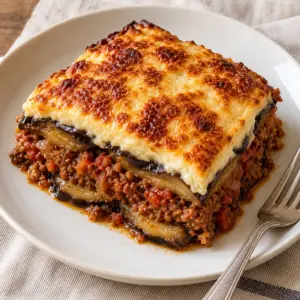
Moussaka asks for a little time, but the method is straightforward when each layer reaches the right texture before assembly. Roast the eggplant until tender, simmer the lamb filling until thick and spread a smooth béchamel on top. After baking, let the pan rest for 20 minutes and bring the golden, savory slices to the table.
Moussaka Recipe

Ingredients
- 2 medium eggplants about 900 g total, sliced into 8 mm rounds
- 3 tbsp olive oil 45 ml, divided: 2 tbsp for eggplant, 1 tbsp for filling
- 1 medium onion about 150 g, finely chopped
- 2 cloves garlic about 6 g, minced
- 14 oz ground lamb 400 g
- 1 tbsp tomato paste 15 g
- 14 oz crushed tomatoes 400 g
- 1 tsp dried oregano
- 0.25 tsp ground cinnamon
- 1.25 tsp fine salt about 7.5 g total, divided among eggplant, filling and sauce
- 0.25 tsp freshly ground black pepper divided between filling and sauce
- 3 tbsp unsalted butter 40 g
- 0.33 cup all-purpose flour 40 g
- 500 ml whole milk about 2 cups plus 2 tablespoons
- 1 large egg yolk
- 0.33 cup finely grated Parmesan 40 g
- 0.125 tsp ground nutmeg
Equipment
- 2 rimmed baking trays
- Parchment paper
- Large skillet
- Medium saucepan
- Whisk
- knife and cutting board
- Measuring spoons and kitchen scale
- Deep 8-inch square baking dish at least 2½ inches deep, about 2½ quarts
- Food thermometer
- Wide serving spatula
Instructions
- Heat the oven to 425°F (220°C) and line 2 rimmed baking trays with parchment. Wash and dry the eggplants, then cut into 8 mm rounds. Arrange in single layers, brush with 2 tablespoons of the olive oil and sprinkle with ¼ teaspoon of the salt. Roast for 25–30 minutes, turning halfway, until tender and browned at the edges. Reduce the oven to 375°F (190°C).
- While the eggplant roasts, heat the remaining 1 tablespoon oil in a large skillet. Cook the onion for about 5 minutes until softened, then add the garlic for 30 seconds. Add the lamb and cook, breaking it up, for 6–8 minutes until browned; drain excess fat if needed. Check that the ground lamb reaches 160°F (71°C).
- Stir the tomato paste into the lamb for 1 minute. Add the crushed tomatoes, oregano, cinnamon, ¾ teaspoon salt and half the pepper. Simmer uncovered for about 20 minutes, stirring occasionally, until thick enough for a spoon to leave a brief trail.
- In a saucepan, melt the butter over medium heat. Whisk in the flour and cook for 2 minutes without browning. Add the milk gradually while whisking, then simmer for 4–6 minutes until smooth and thick. Remove from the heat. Stir in Parmesan, nutmeg, remaining ¼ teaspoon salt and pepper. Cool for 5 minutes. Whisk about 2 tablespoons of the warm sauce into the yolk, then whisk the yolk mixture back into the pan. Do not boil after adding the yolk.
- In a deep 8-inch square baking dish, layer half the eggplant, then all the thick lamb filling, then the remaining eggplant. Spread the béchamel evenly over the top.
- Bake at 375°F (190°C) for 35–40 minutes, until the top is golden and the center reaches 165°F (74°C). Rest for 20 minutes before cutting into 6 portions.
Notes
Tried this recipe?
Let us know how it turned out!Emily is Spoonvale’s recipe-writing persona, bringing a warm, practical voice to everyday cooking. Her focus is simple: approachable meals, comforting flavors, and clear instructions that help make time in the kitchen more enjoyable.