
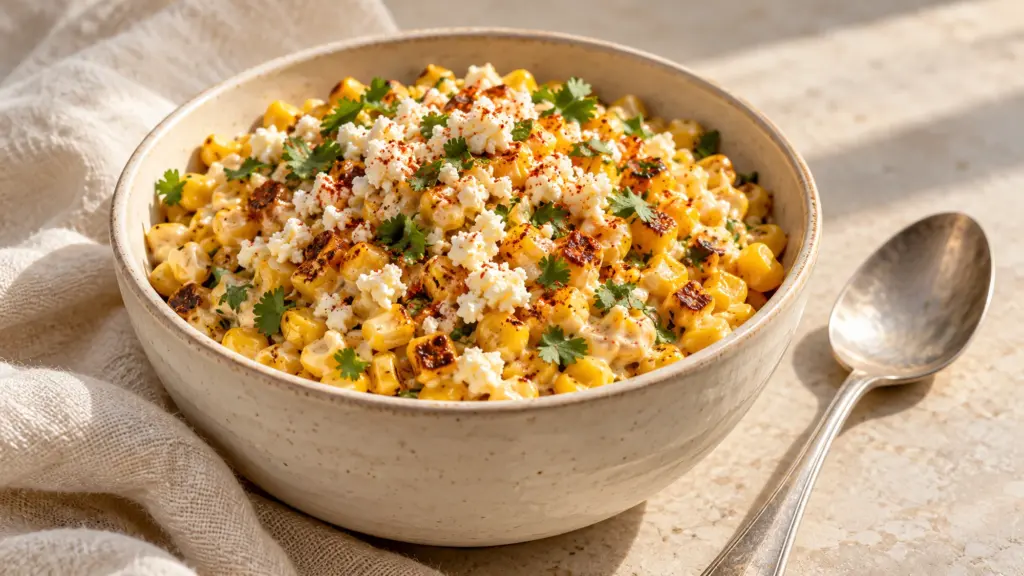
A spoonful of warm corn, a bright squeeze of lime and a crumble of salty cheese make a small cup feel like a complete snack. This esquite uses sweet corn browned in a skillet, with just enough mayonnaise to catch the seasoning. The kernels stay tender, with little golden patches that bring a deeper flavor.

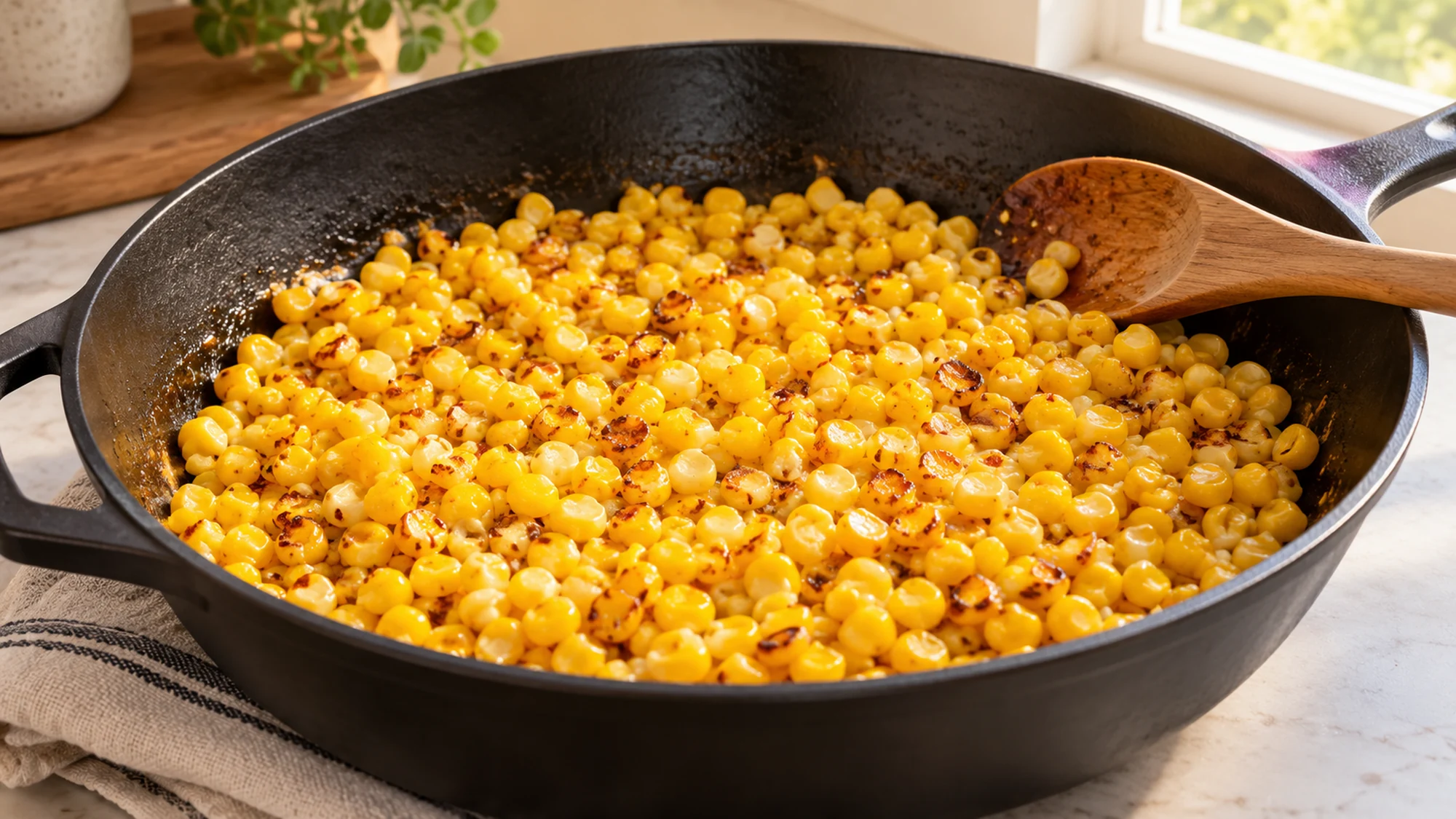
Dry the corn thoroughly and brown it in two batches before adding the creamy ingredients. A crowded, wet pan steams the kernels; a roomy skillet gives them a chance to develop golden edges.
Esquites are also made as a brothy corn snack, so this drier version is one particular approach. Small cups with spoons let the lime and cheese reach every bite. Keep the toppings ready before the corn leaves the pan; the final mixing takes only a moment. The pan does the flavor work before the dairy and lime arrive, so there is no need to chase a dark crust on every kernel. Light golden patches are enough.
Serving Esquite in Small Cups
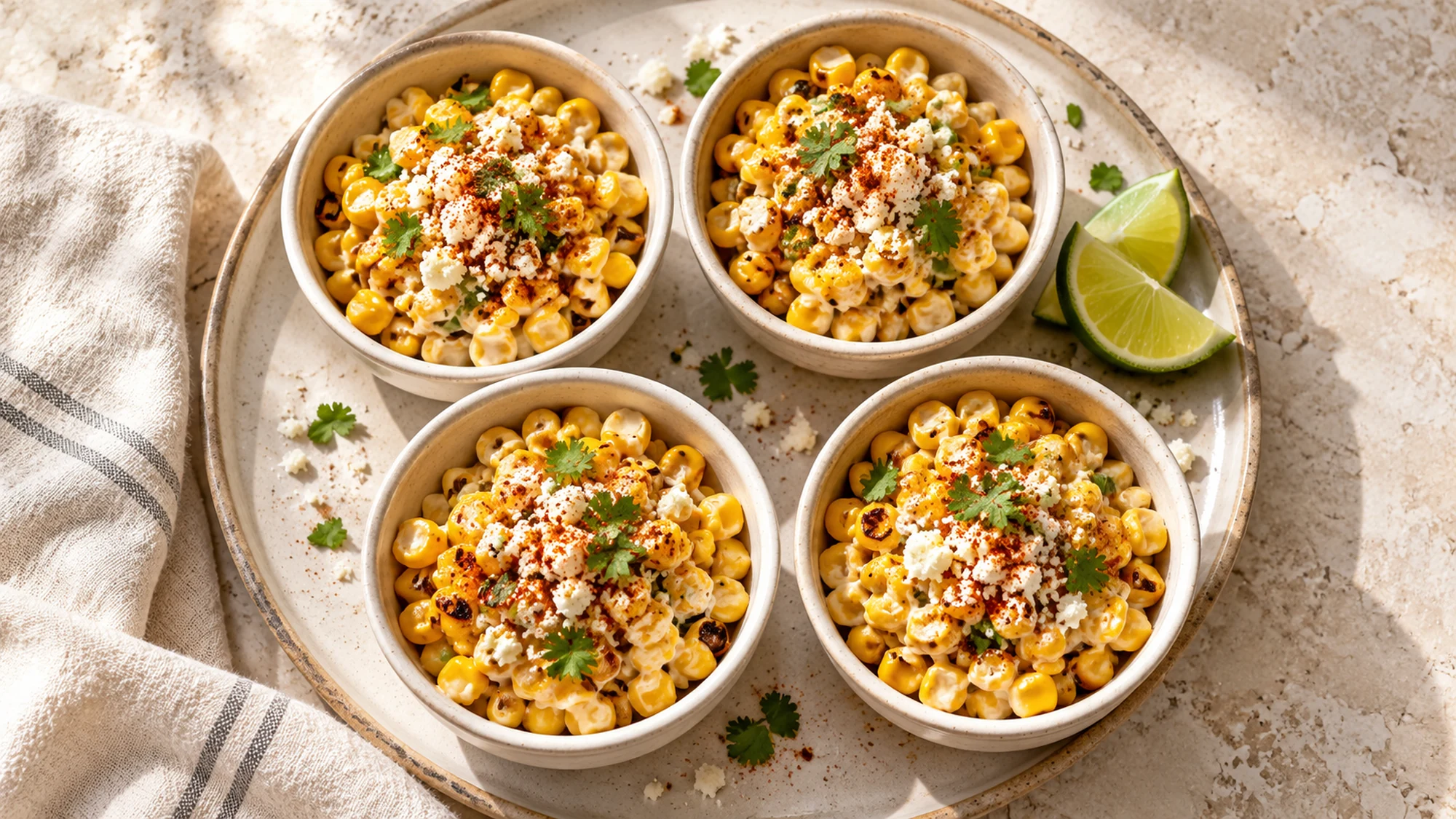
Serve the corn warm as four small snacks or as a side with a main dish. Its richness pairs comfortably with plain grilled vegetables or a cooked protein that has a little acidity of its own. A small portion is plenty beside tacos, especially when the meal already includes tortillas, rice or beans. A cup also works alongside Spoonvale’s baked cod tacos with lime slaw, whose cooked fish and fresh cabbage make a contrasting main dish.
Divide the dressed corn among cups before adding the final cheese and cilantro. That gives each portion a similar balance instead of leaving all the salty crumbles on top of one serving bowl. I would put extra chili on the table rather than start with a very hot batch; people can choose their own level.
A spoon is the useful utensil here, and a small cup makes the serving manageable. Keep the corn warm and the toppings fresh, then bring the cups to the table soon after finishing.
Esquite Variations for the Corn You Have
Fresh and frozen sweet corn can both work, provided you deal with their moisture. Frozen kernels should thaw in the refrigerator, drain and dry well before they reach the skillet. Fresh kernels also benefit from blotting after cutting. If the pan collects liquid, give that moisture time to evaporate before expecting any browning. Listen for a steady sizzle and let the kernels sit briefly between stirs. Constant stirring makes browning slower, while leaving the pan unattended risks scorched butter and bitter spots.
The cheese has a strong influence on the result. Cotija is a salty finishing cheese, so crumble it finely and taste it with the corn before adding more salt. The comparison below offers practical alternatives, while keeping the skillet method and measured portions clear.
| What you have | How to use it | Expected difference |
|---|---|---|
| Frozen sweet corn | Thaw, drain and pat dry | Similar sweetness; moisture needs attention |
| Fresh sweet corn | Cut kernels from the cob and dry | Flavor varies with the corn |
| Crumbled feta | Replace Cotija by weight | Softer texture and a tangier finish |
| Less chili powder | Reduce the measured amount | Milder heat; corn stays prominent |
Change the seasoning gradually and keep the corn in the foreground. A good variation still has tender kernels, a little richness, something sharp and a finishing touch that you can notice in each spoonful.
Health Benefits and Practical Food Safety
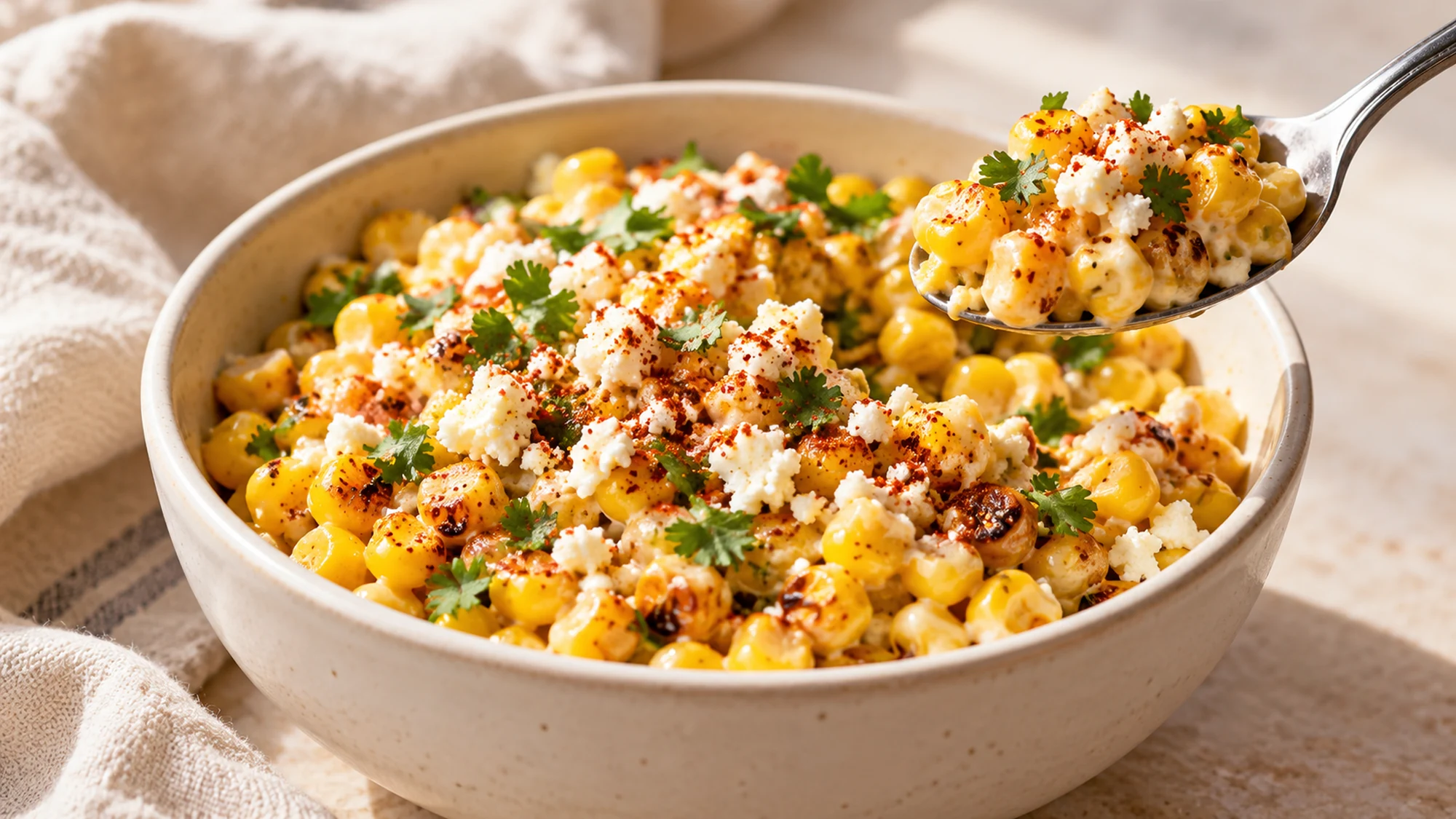
Corn contributes carbohydrate and some fiber, while the butter, mayonnaise and cheese add richness. This is a modest side or snack rather than a complete meal on its own. An assortment of foods across the day matters more than assigning a health label to one creamy cup.
Food handling is straightforward but still worth planning. Use clean tools for the ready-to-eat toppings and keep cheese and mayonnaise chilled until needed. The FDA’s safe-handling guidance recommends prompt refrigeration of perishable food, particularly when meals linger outdoors. Refrigerate leftovers in a shallow container instead of leaving a large warm bowl on the counter.
Keep the portion comfortable, taste before adding salt and enjoy the corn’s own sweetness. Those choices make the dish useful alongside a varied meal without promising benefits that a recipe cannot guarantee.
Bottom Line
Esquite is especially inviting when the corn keeps its texture beneath a light, creamy coating. Dry the kernels, use a roomy pan and give each batch a little undisturbed time to brown. Fold in the lime and mayonnaise off the heat, then finish the four cups with Cotija, cilantro and a measured sprinkle of chili.
Esquite Recipe


Ingredients
- 600 g sweet corn kernels fresh, or frozen and thawed in the refrigerator
- 15 g unsalted butter divided
- 40 g mayonnaise
- 40 g Cotija cheese finely crumbled
- 20 ml fresh lime juice
- 5 g cilantro leaves chopped
- 1.5 g mild chili powder divided; check the label for heat and salt
- 1 g fine salt
Equipment
- 1 12 inch heavy skillet
- 1 Large mixing bowl
- 1 wooden spoon or spatula
- kitchen scale, measuring spoons and citrus juicer
- clean tray and paper towels for drying corn
- 4 small serving cups and spoons
Instructions
- If using frozen corn, thaw it in the refrigerator first. Drain the kernels and spread them on a clean towel-lined tray. Pat thoroughly dry. Set a 12 inch heavy skillet over medium-high heat.
- Melt half the butter in the skillet. Add half the corn in an even layer and cook for 6–8 minutes, stirring occasionally and allowing it to sit between stirs, until heated through with golden-brown patches. Transfer to a large bowl. Repeat with the remaining butter and corn. Adjust the heat if the butter starts to scorch; avoid blackening the kernels.
- Let the corn stop steaming heavily for about 2 minutes. Fold in the mayonnaise, lime juice, salt and half the chili powder until lightly coated. Taste a kernel with a little cheese before adding any extra salt.
- Divide among four small cups. Add the Cotija, cilantro and remaining chili powder. Serve warm with spoons.
Nutrition
Video
Notes
Tried this recipe?
Let us know how it turned out!Emily is Spoonvale’s recipe-writing persona, bringing a warm, practical voice to everyday cooking. Her focus is simple: approachable meals, comforting flavors, and clear instructions that help make time in the kitchen more enjoyable.