
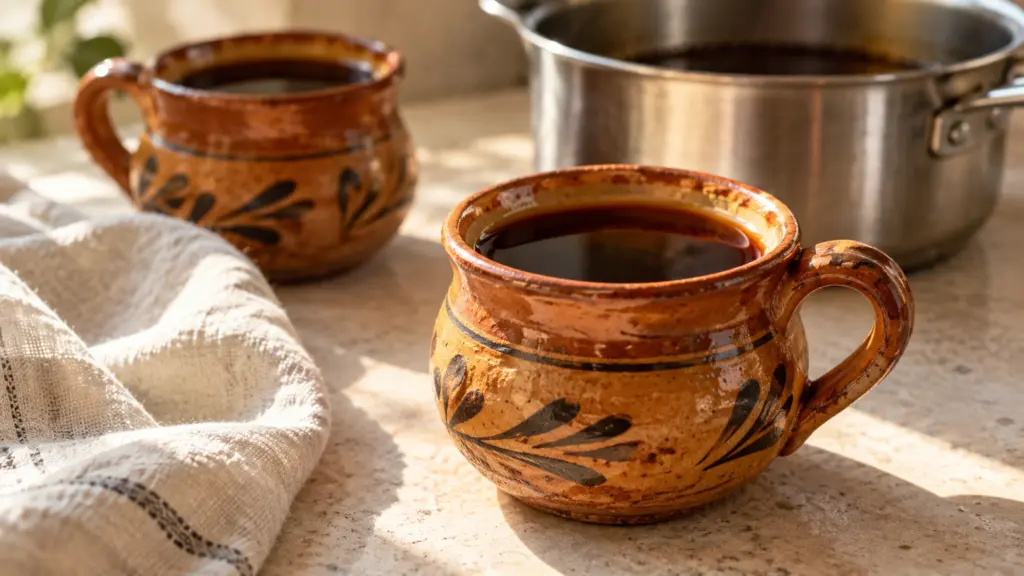
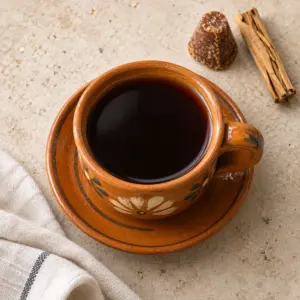
The first thing to notice about café de olla is the cinnamon aroma. Underneath it sits dark coffee and the rounded, toffee-like sweetness of piloncillo. This four-ingredient version brings those flavors together in an ordinary saucepan, then filters the drink into a jug for easy pouring.
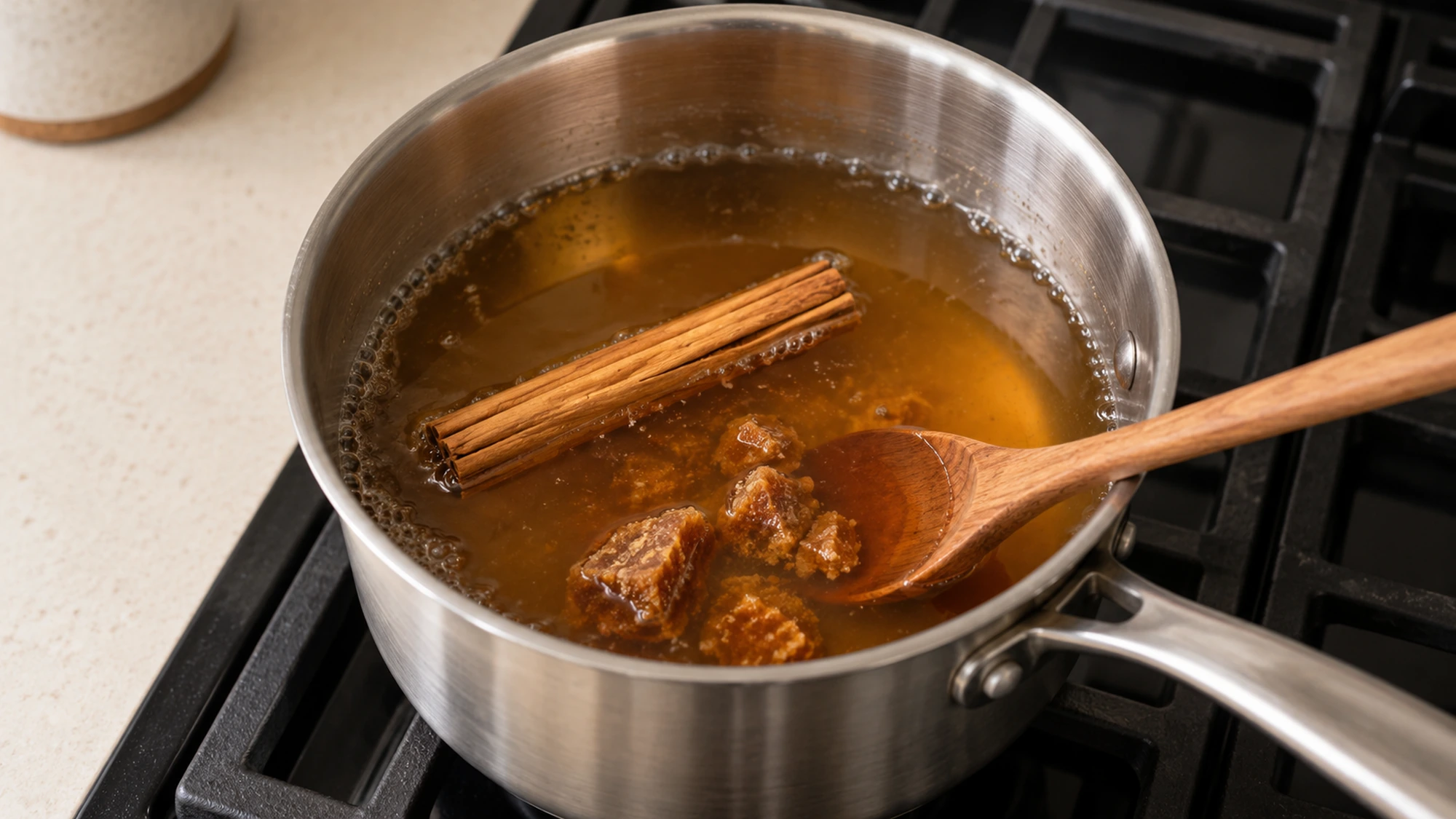
A small pot gives you room to control the sweetness, coffee strength, and serving size. Dissolve the sugar before the grounds go in, give the coffee a short covered steep off the heat, and strain it completely before anyone reaches for a second cup.
- Piloncillo is sold in firm brown cones or blocks. Chop off small pieces with a sturdy knife on a stable board, or grate it, rather than dropping a large cone into the water and waiting.
- The spice here is a whole canela stick; ground cinnamon leaves particles that the filter must catch.
There is no need to buy a clay pot for this version. Pati Jinich’s explanation of café de olla also makes room for everyday cookware; a saucepan, supported filter, and heatproof jug handle the job. Use ground coffee meant for brewing, not instant granules, because the final straining step removes the spent grounds.
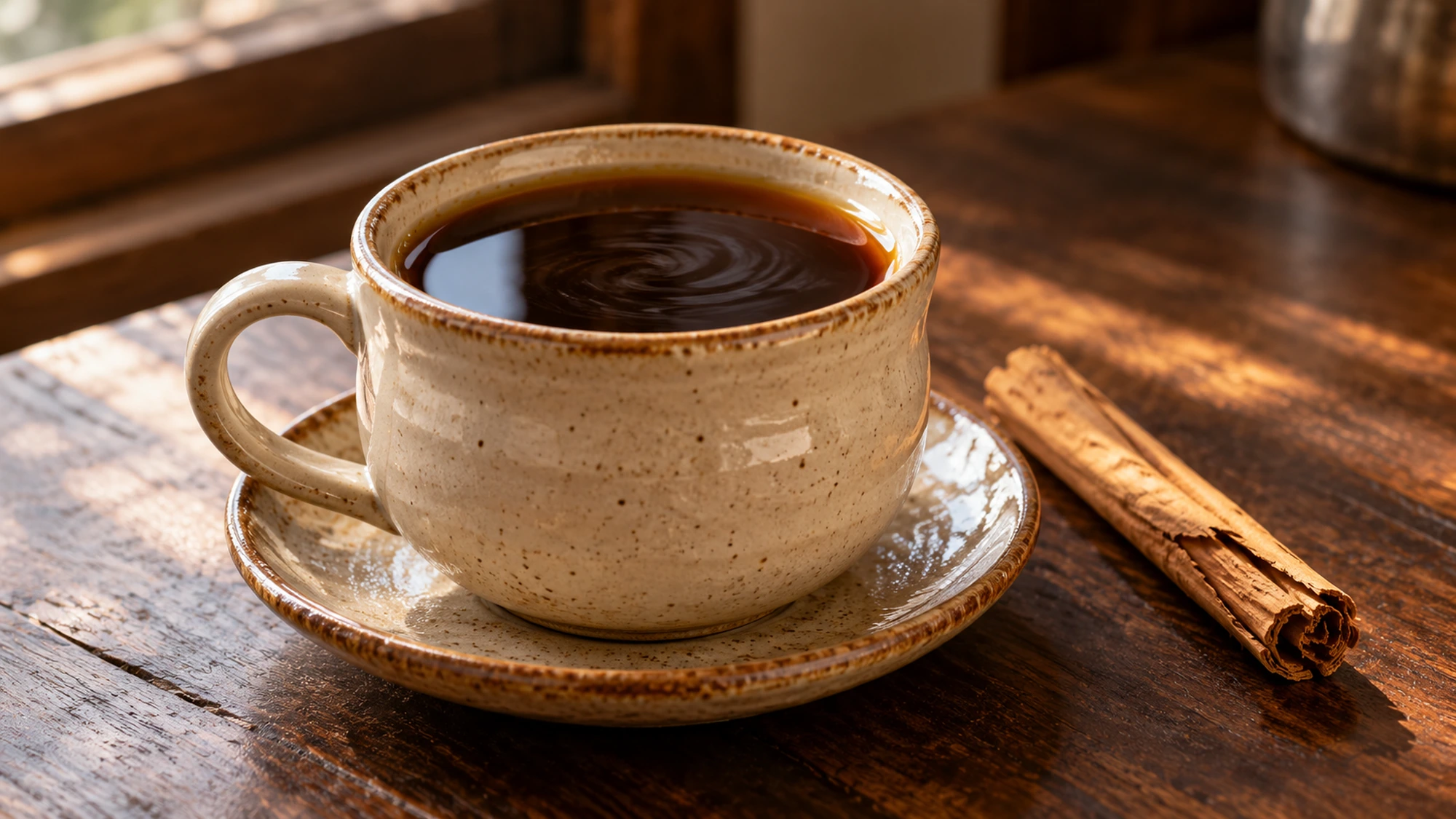
Serving Suggestions for café de olla
Pour into small cups while the coffee is fresh and aromatic. The batch makes four modest servings rather than four oversized mugs. Offer it with scrambled eggs and warm tortillas for breakfast, or set out a small piece of pan dulce alongside an afternoon cup.
If I’m arranging a sweet breakfast, I’d keep the food portions modest and let the coffee supply some of the sweetness. A savory plate gives the piloncillo more contrast without needing an elaborate spread. Put extra hot water in a separate heatproof jug for anyone who wants a gentler cup.
- Warm the serving cups with hot water and empty them before pouring.
- Strain the whole batch first; leaving the remaining coffee sitting on its grounds changes the balance as the meal goes on.
- For another warm drink option, offer Spoonvale’s atole de pinole alongside a separate pot of coffee.
Serve small cups promptly, with the grounds already removed from the whole batch.
Variations for café de olla
Start with the straightforward cinnamon version before layering in other spices. The table keeps the main brewing method intact while showing where a substitution changes the result.
| What you want | Practical change | What to expect |
|---|---|---|
| No piloncillo available | Replace it with the same weight of dark brown sugar | Molasses flavor, with a slightly different sweetness |
| A less sweet cup | Begin with half the piloncillo | More of the coffee’s roast comes through |
| Less caffeine | Use the same weight of decaffeinated ground coffee | Similar preparation; some caffeine can remain |
| A citrus note | Add one thin strip of orange peel with the canela | A brighter aroma; avoid bitter white pith |
If I wanted to compare roasts, I’d keep the sugar and cinnamon unchanged between batches. A medium roast offers a different balance from a very dark one, and changing every ingredient together makes the source of the difference harder to identify.
- One clove can join the cinnamon if you enjoy a stronger spice note. Keep it restrained, and remove it during straining.
- Milk is another optional addition at the table; the base recipe contains none.
- Adjust one thing at a time so the coffee still has a clear place in the cup.
Keep the same brewing method and change a single flavor or sweetness choice first.
Health Benefits
This is a sweetened coffee drink, so its place at the table depends on portion size, caffeine tolerance, and the rest of your meal. The recipe uses no cream, and you can decide how much sugar goes into the pot.
Piloncillo contributes flavor, but being less refined does not remove its role as added sugar. The FDA’s guide to added sugars explains why sweeteners still count when considering your overall intake.
- Caffeine also varies with the coffee and brewing conditions. The FDA explains individual caffeine sensitivity, including why decaffeinated coffee is not completely caffeine-free.
- Choose decaf when appropriate for your preferences, without treating it as a guarantee of zero caffeine.
Enjoy the cinnamon and coffee for their flavor, with sweetness and caffeine suited to you.
Bottom Line
A useful café de olla recipe should make the brewing decisions clear. Chopped piloncillo dissolves into the cinnamon water, the grounds steep off the heat, and careful filtering keeps the finished cup smooth. The recipe card below gives the measured ingredients and timing, including the final straining time.
Use the four-ingredient version as your starting point, then adjust sweetness or roast on the next pot. Serve it while the aroma is still inviting and the cups are warm.
café de olla Recipe

Ingredients
- 1 liter water approximately 4¼ US cups
- 60 g piloncillo chopped or grated; 2.1 oz
- 2 g whole canela about one 3-inch (7.5 cm) cinnamon stick
- 60 g medium-coarse ground coffee 2.1 oz; medium or dark roast, not instant
Equipment
- 2-liter (about 2-quart) saucepan with lid
- Wooden spoon
- Kitchen scale and measuring jug
- Fine-mesh strainer and large paper coffee filter
- 1-liter heatproof jug
- 4 small heatproof cups
Instructions
- Place the water, chopped piloncillo, and canela in a 2-liter (about 2-quart) saucepan.
- Bring to a gentle simmer over medium-high heat, allowing about 5 minutes. Reduce the heat and simmer gently for 5 minutes, stirring until the piloncillo dissolves completely. If pieces remain, continue just until dissolved.
- Remove the saucepan from the heat. Stir in the ground coffee to wet all the grounds, cover, and steep for 5 minutes. Do not return the coffee to a boil.
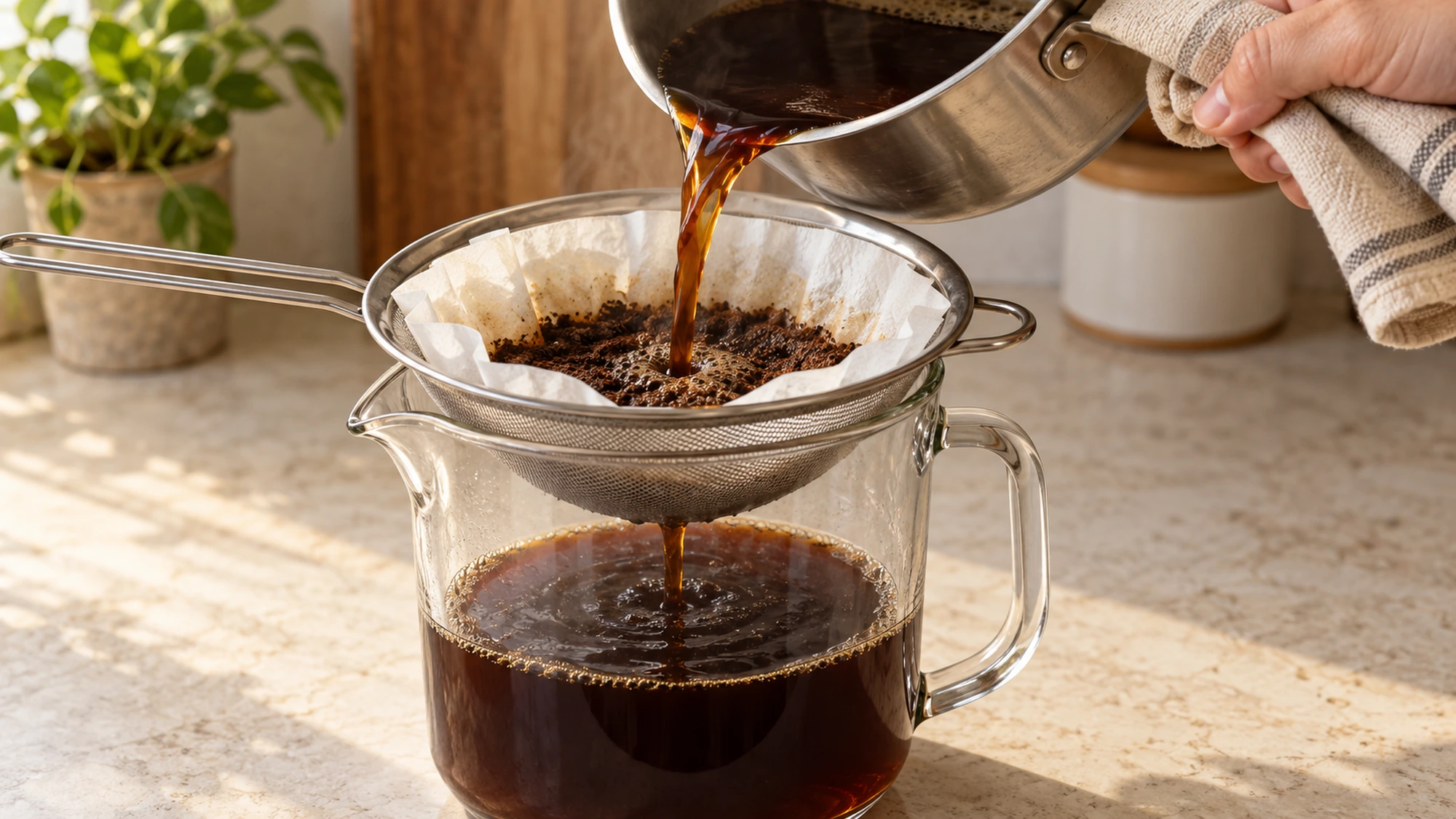
- While the coffee steeps, support the paper filter inside the fine-mesh strainer and set the strainer securely over the heatproof jug. At the end of the steep, remove the canela with the spoon.
- Pour slowly through the filter in stages, keeping the liquid below the paper’s rim. Allow about 5 minutes for it to drain by gravity; do not squeeze the grounds. Discard the spent grounds and canela.
- Divide the filtered coffee among four small cups and serve promptly. For a lighter cup, add a little hot water at the table.
Video
Notes
Tried this recipe?
Let us know how it turned out!Emily is Spoonvale’s recipe-writing persona, bringing a warm, practical voice to everyday cooking. Her focus is simple: approachable meals, comforting flavors, and clear instructions that help make time in the kitchen more enjoyable.