
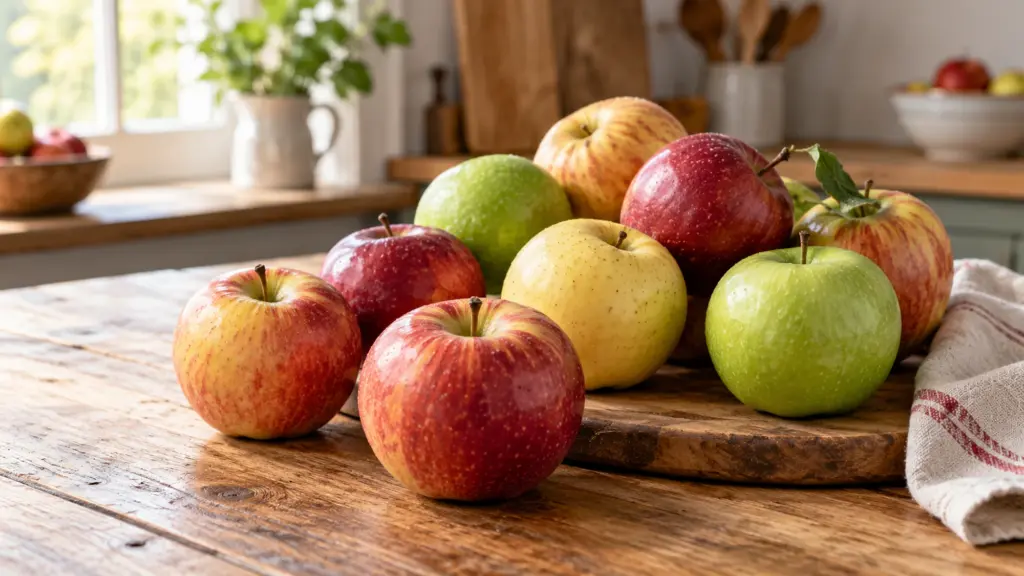
A crisp apple is one of those foods that can make a snack feel complete without much preparation. Still, the familiar saying about an apple a day leaves a few useful questions unanswered: does the peel matter, is juice the same, and what do the health claims actually mean?
Yes, apples can be a nutritious part of a varied diet. Whole apples provide fiber, but eating them is not a guarantee against illness, and apple juice does not offer the same eating experience or fiber as whole fruit.
I’d start with the apple you enjoy eating, rather than searching for a supposedly perfect variety. A sweet slice beside lunch or a tart wedge with yogurt can be a practical choice without turning a snack into a daily health assignment.
Are Apples Good for You in a Balanced Diet?
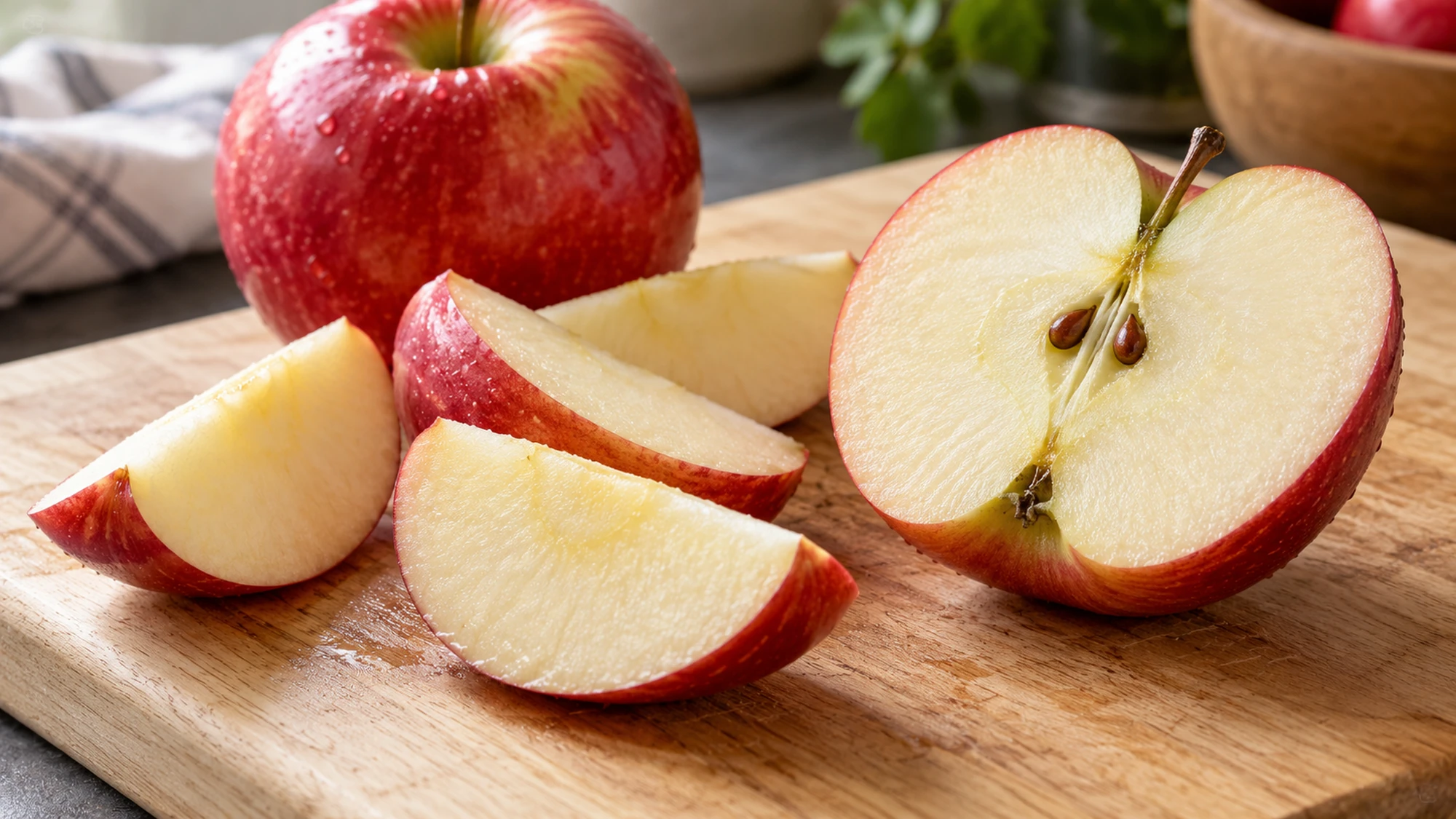
Apples contribute fiber, and the peel is worth keeping when you like its texture. Mayo Clinic explains that apple skin contains insoluble fiber, while the flesh contains soluble fiber. Those are useful nutritional qualities, not a promise that one fruit can prevent disease.
- Keep the peel on for a convenient whole-fruit option.
- Choose a variety you enjoy, whether tart, sweet, firm, or softer.
- Include apples among other fruits rather than treating them as the only worthwhile choice.
- Match the form and portion to your appetite, meal, and any personal dietary advice.
If peel makes an apple difficult or unpleasant to eat, peeling it is not a reason to dismiss the rest of the fruit. The practical question is what helps you eat comfortably and enjoy a varied diet.
There is no need to earn a perfect score with every apple; useful everyday choices leave room for preference.
What the Research Says About Apples
In a randomized crossover trial involving 40 adults with mildly elevated cholesterol, participants ate two Renetta Canada apples daily for eight weeks or consumed a sugar- and energy-matched beverage. The apple period produced improvements in some cholesterol measures compared with the beverage period.
That is an interesting result, but it is not proof that everyone should eat two apples a day. The trial was small, used a specific variety and comparison, and measured risk markers rather than whether people avoided heart attacks or lived longer.
- A measured change in cholesterol is not the same as a demonstrated reduction in heart attacks.
- A result in a selected group does not automatically apply to every age or health condition.
- A food study does not replace prescribed treatment or individualized advice.
Enjoy apples as food, and keep the certainty of any health claim in proportion to the evidence.
Whole Apples, Applesauce, and Juice
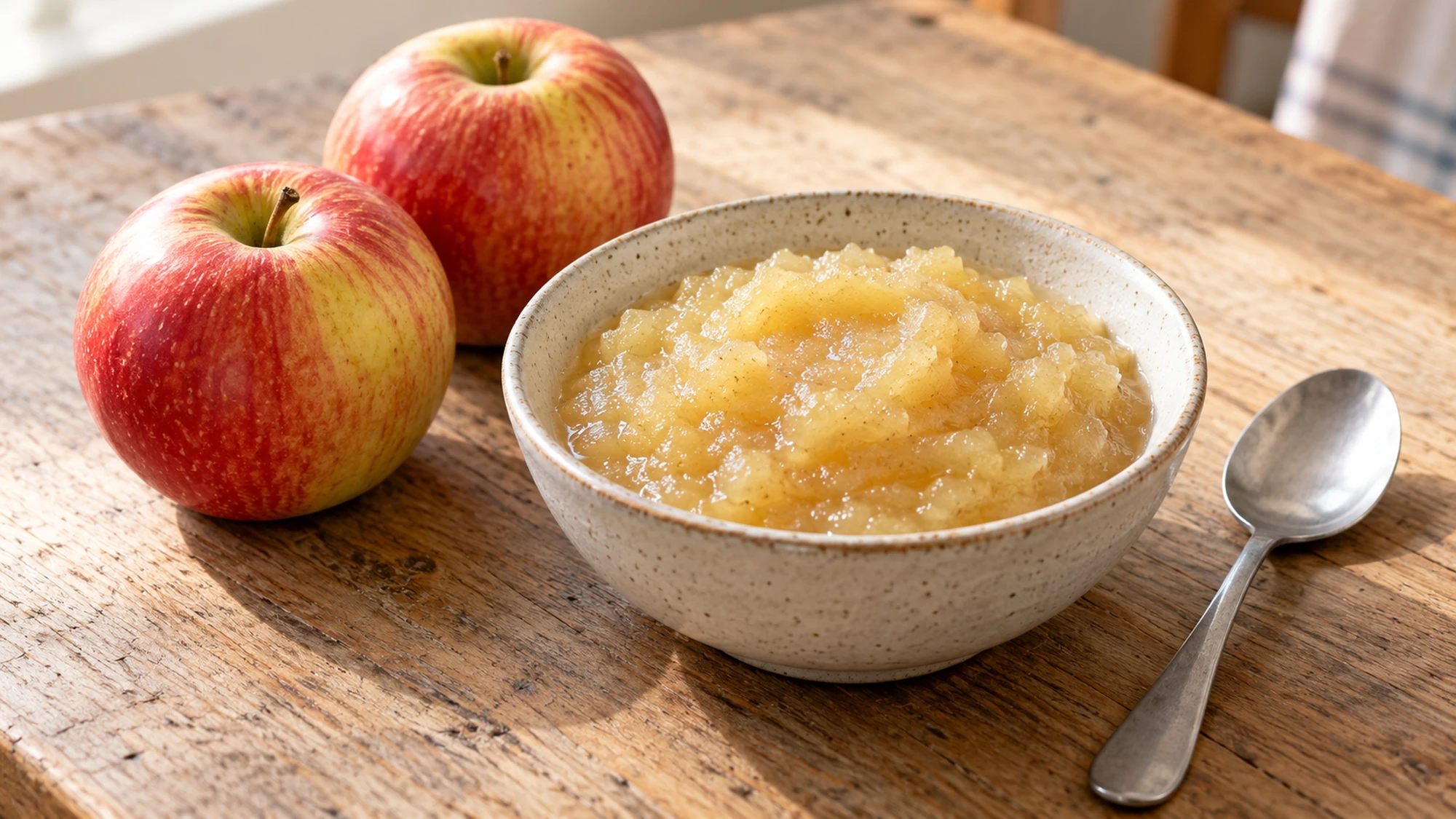
These options have different strengths in the kitchen. Whole apples offer crunch and portability, applesauce offers a softer texture, and juice is a drink rather than an equivalent replacement for the whole fruit. Read prepared-product labels instead of judging everything by the word “apple.”
| Apple option | Practical use | What to consider |
|---|---|---|
| Whole apple | Portable snack | Wash before eating |
| Apple wedges | Lunch or snack plate | Keep or remove peel to suit your needs |
| Plain applesauce | Softer side or topping | Check ingredients and added sugar |
| Apple juice | A beverage | Do not assume whole-fruit fiber |
| Sweetened apple products | A particular snack or dessert | Compare ingredients and serving information |
Mayo Clinic’s whole-fruit explanation emphasizes the fiber difference between fruit and juice. I’d choose based on what I want to eat: a drink cannot provide the same crunch and chewing as a plate of wedges.
Choose the form for its actual role, rather than assuming every apple product has the same benefits.
Choosing and Enjoying Apples Without Overthinking It
A few uncomplicated pairings can make apples easier to use throughout the week. There is no need to turn every serving into a recipe or cover the fruit with several sweet toppings.
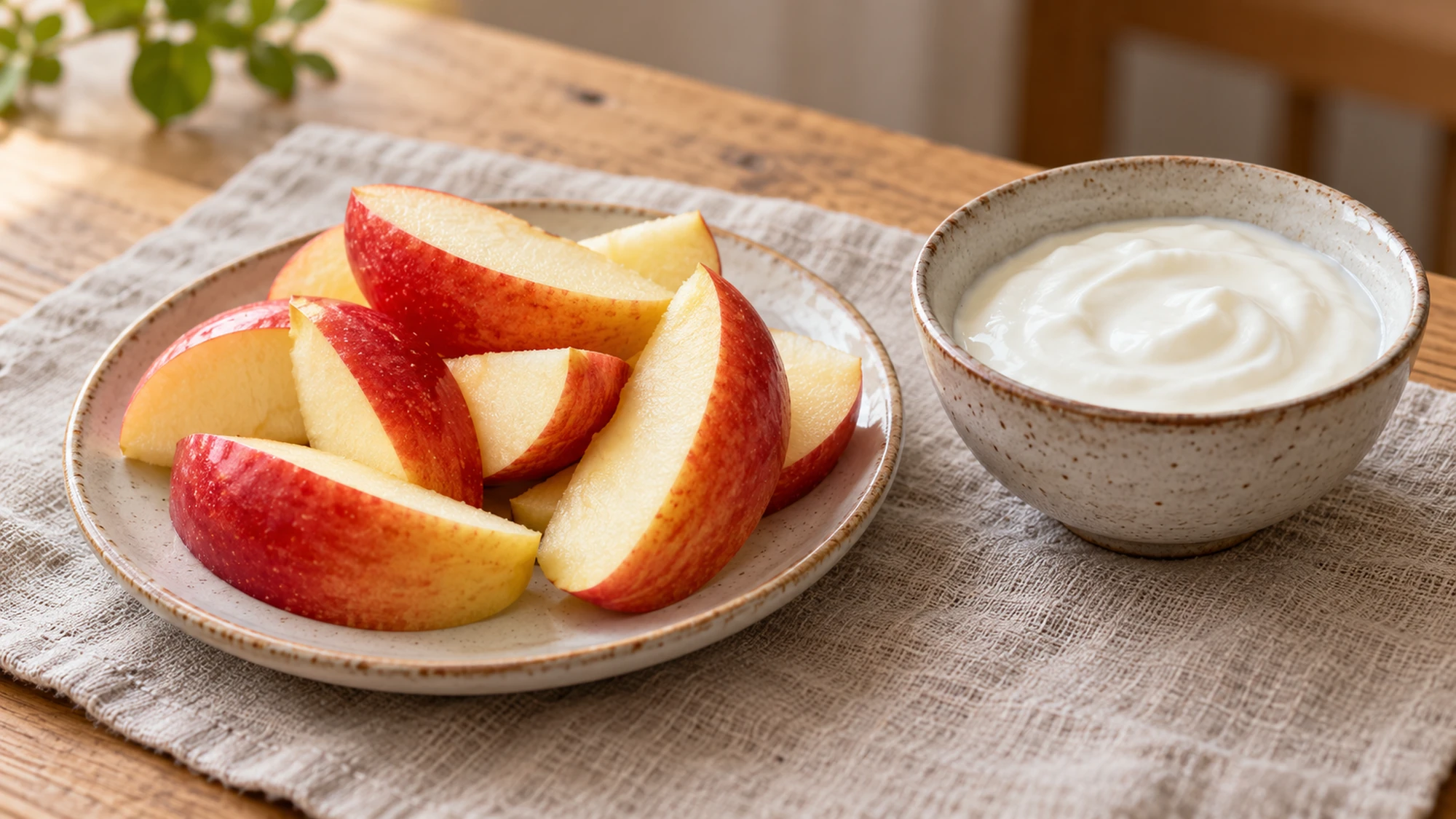
- Serve wedges with plain yogurt for contrasting textures.
- For an oven-baked breakfast, try Spoonvale’s apple cinnamon baked oatmeal.
- Add thin slices to a sandwich or salad when a crisp note sounds good.
- Use applesauce when a softer fruit option suits the meal better.
Follow FDA produce-handling advice: wash apples under running water, including before peeling, and do not use soap. Cut away damaged or bruised areas and discard rotten produce. Keep your hands, knife, and preparation surface clean; convenience should not mean skipping basic handling.
Bottom Line
Apples can be a useful, enjoyable fruit choice, especially when eaten whole. Keep the peel when it suits you, distinguish juice from whole fruit, and choose prepared products by their labels. The strongest everyday reason to eat an apple may simply be that it is a convenient fruit you genuinely like.
Sources
- Mayo Clinic: apples and dietary fiber
- Randomized apple trial: abstract
- Mayo Clinic: whole fruit and juice
- FDA: selecting and serving produce safely

Emily is Spoonvale’s recipe-writing persona, bringing a warm, practical voice to everyday cooking. Her focus is simple: approachable meals, comforting flavors, and clear instructions that help make time in the kitchen more enjoyable.