
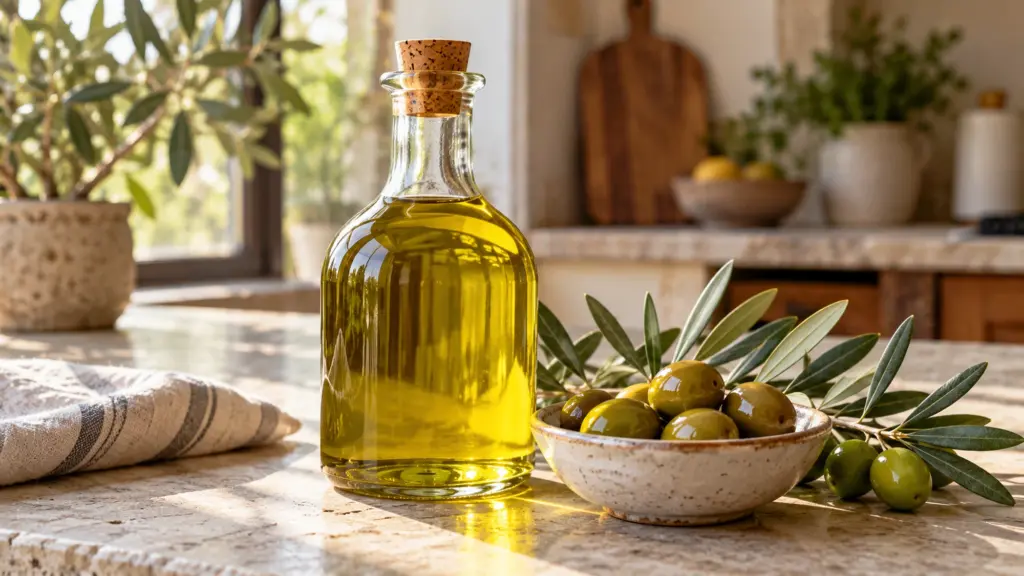
A bottle of olive oil can sit beside sunflower or sesame oil for years before anyone asks whether they belong in the same category. Then a shopping label or an online argument turns a simple pantry choice into a surprisingly tangled question.
No, olive oil is not a seed oil. It comes from the olive fruit. That answers the ingredient question, but it does not make every olive oil identical or tell you which bottle best suits dinner.
I’d separate the botanical question from the cooking decision. First identify what is in the bottle; then think about flavor, the dish you are making, and how much oil you will realistically use.
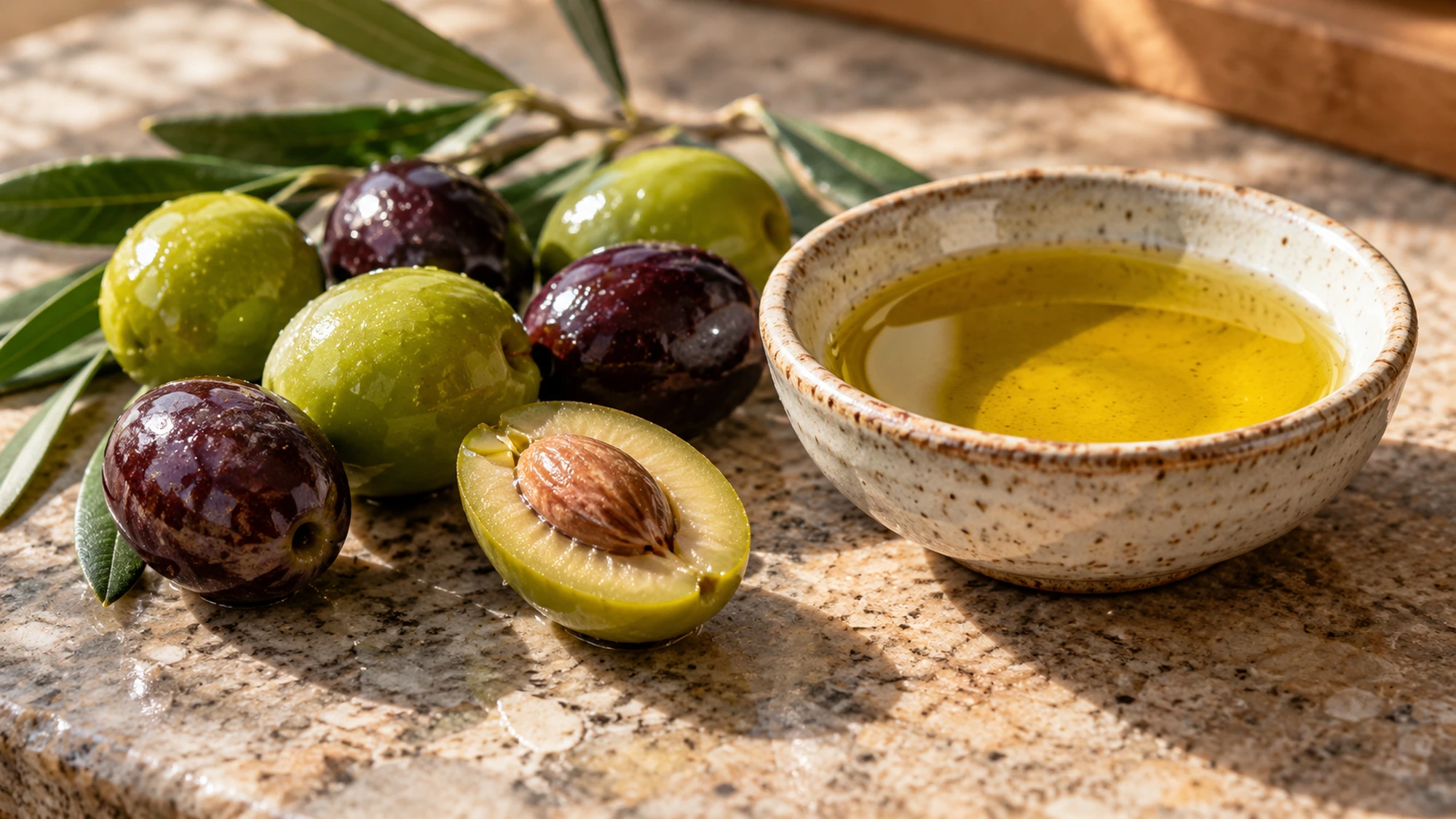
Is Olive Oil a Seed Oil? Start With the Fruit
The International Olive Council describes olives as drupes, the botanical group that also includes cherries and plums. The fruit contains a stone, but the presence of that stone does not turn the oil into a seed oil.
The useful distinction is the source of the oil, not whether the plant happens to produce seeds. “Plant oil” is a broad description; “seed oil” is a narrower one. Olive oil belongs in your plant-derived pantry without belonging to that narrower category.
- Read the ingredient list if a bottle is described as a blend.
- Do not assume a photograph of olives means olive oil is the only oil inside.
- Keep origin, processing, and flavor as separate questions.
The olive’s fruit is the starting point. The rest of the label explains which olive-oil product you are buying.
Extra Virgin, Virgin and Refined: Read the Product Name
Under the IOC’s olive-oil definitions, virgin oils are obtained through mechanical or other physical processes. Extra virgin and virgin have different quality criteria. Refined olive oil has undergone refining; a product simply designated olive oil can combine refined and virgin oils.
Use the full name rather than treating a large “olive” on the front as the entire description. This compact comparison helps distinguish the categories without turning the bottle into a chemistry assignment.
| Product term | What it tells you | Do not assume |
|---|---|---|
| Extra virgin olive oil | A virgin oil meeting extra-virgin criteria | Every bottle has the same flavor |
| Virgin olive oil | A distinct virgin-oil category | It is another spelling of extra virgin |
| Olive oil | Can blend refined and virgin olive oils | It is necessarily all extra virgin |
| Olive-pomace oil | A separate category from extraction residue | It is the same as virgin olive oil |
A clear category name is more useful than a vague promise on the front of a bottle.
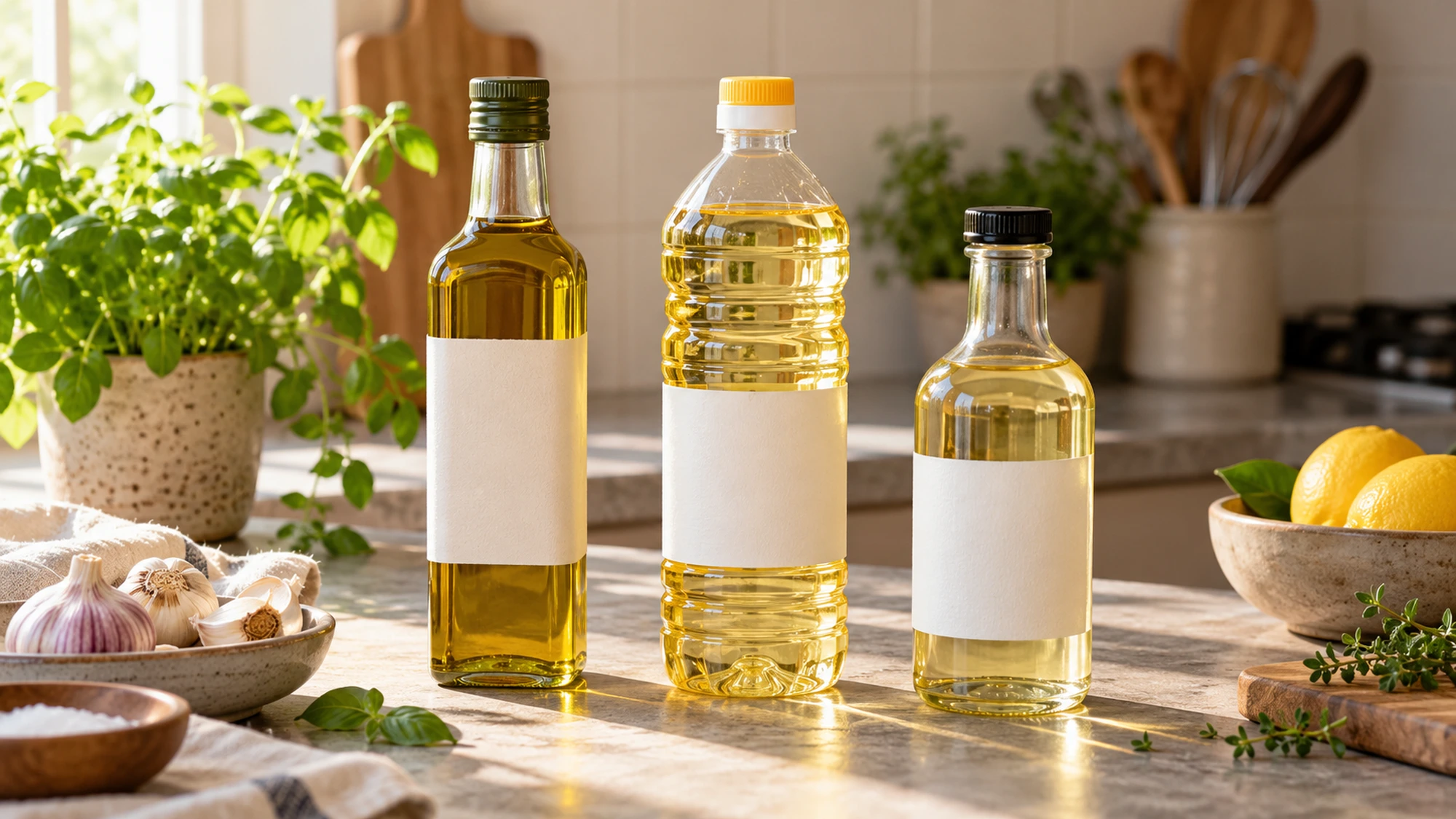
Compare Oils by Flavor and Purpose, Not Fear
The IOC’s flavor guide describes profiles ranging from green fruitiness to ripe fruitiness. Olive varieties and harvest timing help explain why two bottles can taste quite different. “Olive oil” is not a single flavor setting.
For a dressing or finishing drizzle, consider whether you want the oil to be noticeable. For a dish with delicate ingredients, you might prefer a quieter flavor. Neither choice requires declaring every other cooking oil good or bad.
- Ask whether you want a noticeable olive flavor or a more neutral background.
- Choose a product appropriate to the cooking method and follow the recipe’s guidance.
- Compare the actual oils, not a sweeping claim about all seeds or all fruits.
Being fruit-derived answers where olive oil comes from. It is not, by itself, a complete nutrition argument.
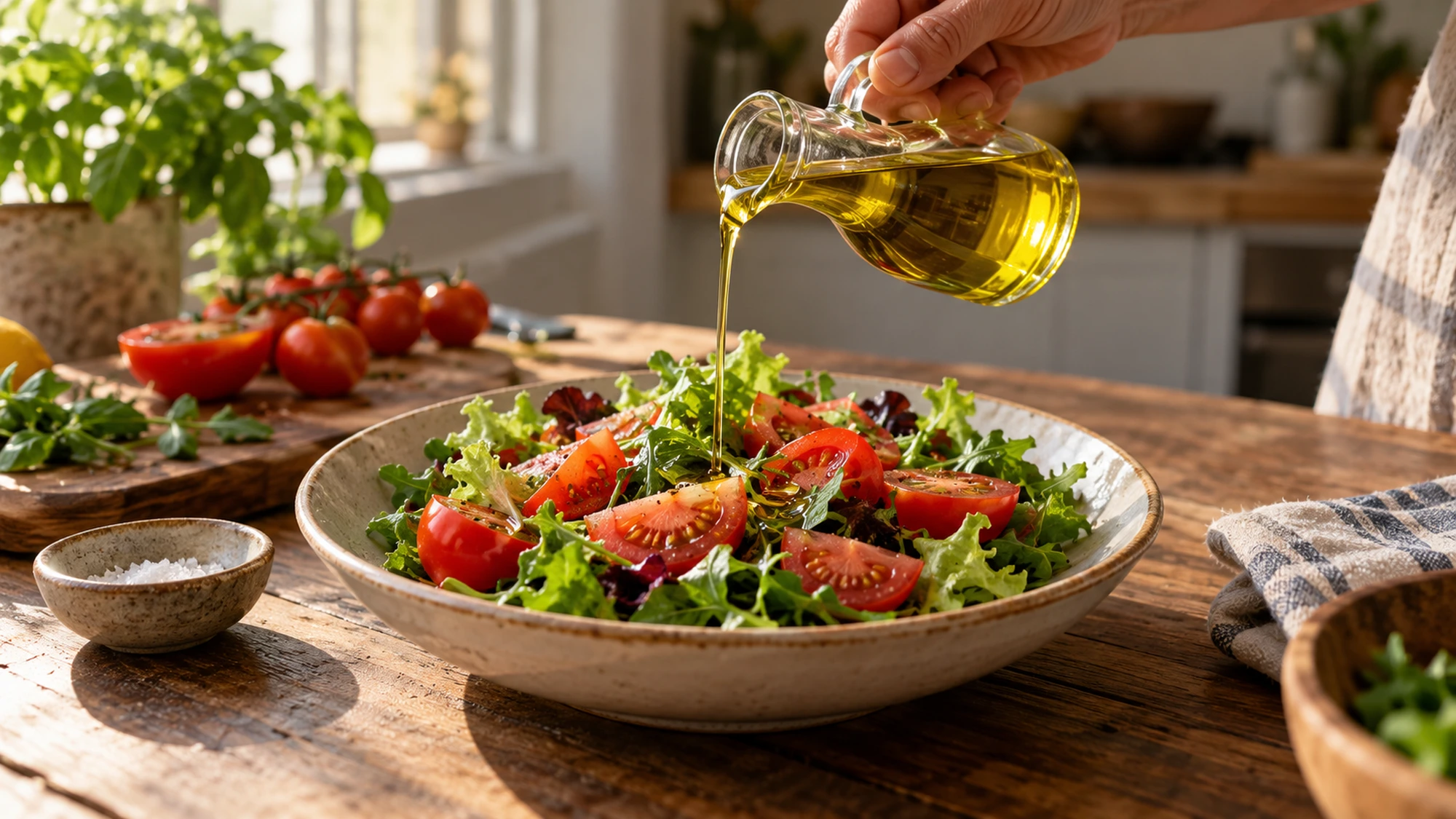
Choose a Bottle You Will Actually Use
I’d begin with the next few meals rather than the biggest bottle on the shelf. If you mainly want a drizzle for beans or a simple dressing, a smaller bottle lets you learn whether you enjoy its flavor before committing to more.
Think about the whole purchase: the product name, quantity, price, and how easily you can pour and close the container. A bottle that suits your cooking routine is more useful than one bought because its label sounds impressive.
- Read the full product description and ingredient information before comparing prices.
- Choose a quantity that fits your household’s use rather than buying on bottle size alone.
- Follow the storage directions and keep the container closed between uses.
- Keep the bottle away from the stove’s immediate heat and strong light.
- If trying a new oil, use it first in a simple dish where its flavor will not be hidden.
For a practical first use, I’d choose vegetables, beans, or bread rather than a heavily seasoned sauce. That is a preference, not a quality test: it simply makes it easier to decide whether the flavor earns a place in your kitchen.
Bottom Line
Olive oil comes from olive fruit, not the seed-oil category. The useful next step is to read the complete bottle label, distinguish virgin and refined products, and choose a flavor and quantity that fit your meals. You do not need a pantry argument to make a sensible choice.
The Culinary Institute of America’s olive-oil overview explores varieties and flavors.
Sources
- International Olive Council: olive fruit
- International Olive Council: oil categories
- International Olive Council: varietals and flavors

Emily is Spoonvale’s recipe-writing persona, bringing a warm, practical voice to everyday cooking. Her focus is simple: approachable meals, comforting flavors, and clear instructions that help make time in the kitchen more enjoyable.