

The carton has been in the refrigerator for a while, and breakfast is halfway planned. Before reaching for a bowl of water, pause: the familiar float test cannot answer the most important question about an egg.
You cannot prove an egg is safe by looking at it, smelling it or seeing whether it sinks. Obvious spoilage is a reason to discard it, but normal-looking eggs can still carry harmful bacteria. Storage and handling history matter.
I’d check the carton and refrigerator history before cracking an egg into anything else. A simple kitchen check should reduce guesswork, not turn one reassuring sign into permission to ignore the rest.

How to Tell if Eggs Are Bad: Check the Carton First
For store-bought shell eggs in the United States, begin with how they were handled. The FDA advises buying refrigerated eggs with clean, uncracked shells. Take the carton’s instructions seriously rather than treating the shell as protective packaging that solves everything.
Ask what you actually know: were the eggs kept cold, is the carton intact, and are they covered by a recall? If you cannot establish their handling history, a kitchen experiment cannot fill in that missing information. Follow any applicable recall instructions instead of testing the eggs yourself.
- Keep the original carton so product information remains available.
- Do not buy cracked eggs.
- Separate a question about freshness from a question about safe handling.
- Do not taste a questionable raw egg to decide whether it belongs in dinner.
A normal shell is useful to inspect, but it is not a certificate of safety.
What Appearance and Smell Can Tell You
The USDA explains that some color differences are ordinary. A cloudy white can indicate freshness; yolk color varies with the hen’s diet. Pink or iridescent egg white, however, can indicate spoilage. These are different observations, not one universal color rule.
I’d crack an egg into a separate small bowl before adding it to batter, especially when inspecting an unfamiliar carton. This keeps a clearly spoiled egg out of the larger mixture. It does not test for Salmonella, and the absence of a bad smell is not proof that the egg is safe.
| Observation | What it can mean | What it cannot prove |
|---|---|---|
| Cloudy egg white | An ordinary freshness characteristic | That bacteria are absent |
| Pink or iridescent white | A spoilage warning | That cooking will rescue it |
| A different yolk shade | Diet-related variation | A reliable safety ranking |
| Normal appearance and smell | No obvious sensory warning | That handling was safe |
| Objectionable odor or mold | A reason to discard the egg | That only the visible part is affected |
Use spoilage signs to reject an egg, not normal appearance to guarantee one.
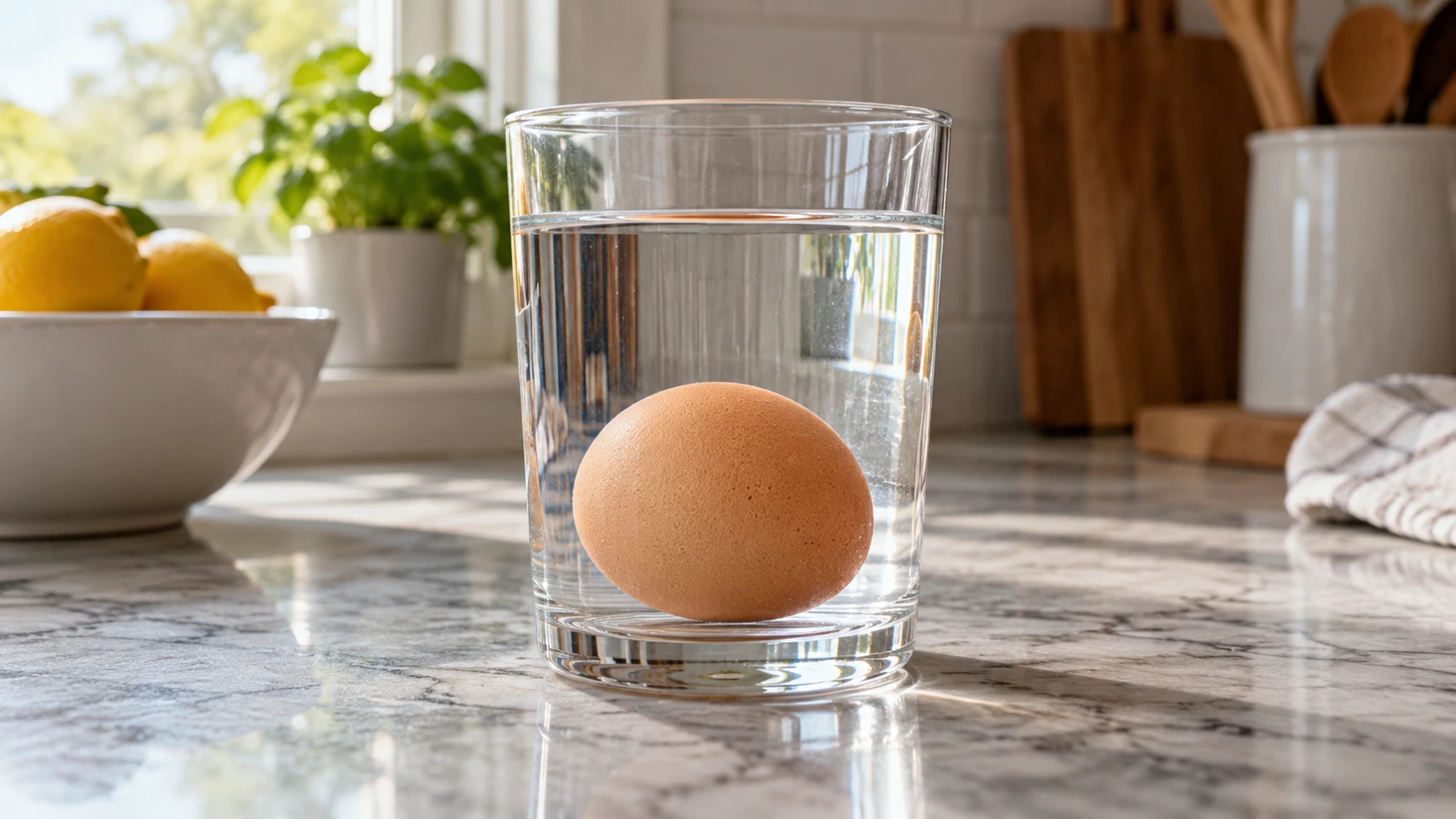
Why Floating Does Not Settle the Question
An egg can float as its internal air cell enlarges. The USDA’s float-test explanation treats buoyancy as a quality clue, not a simple unsafe-or-safe verdict. An older floating egg is not automatically spoiled, and a sinking egg has not passed a bacterial test.
That distinction is easy to lose in a quick kitchen tip. The water shows how the egg behaves physically; it cannot reconstruct temperatures during storage or reveal every pathogen. If the original concern was mishandling, watching the egg sink does not resolve it.
- Do not label every floating egg dangerous solely because it floats.
- Do not label a sinking egg safe solely because it sinks.
- Do not use the test to override a recall, damaged shell or known mishandling.
- When uncertainty remains, choose another ingredient rather than escalating to more unreliable tests.
The float test is not the food-safety shortcut it is often made out to be.
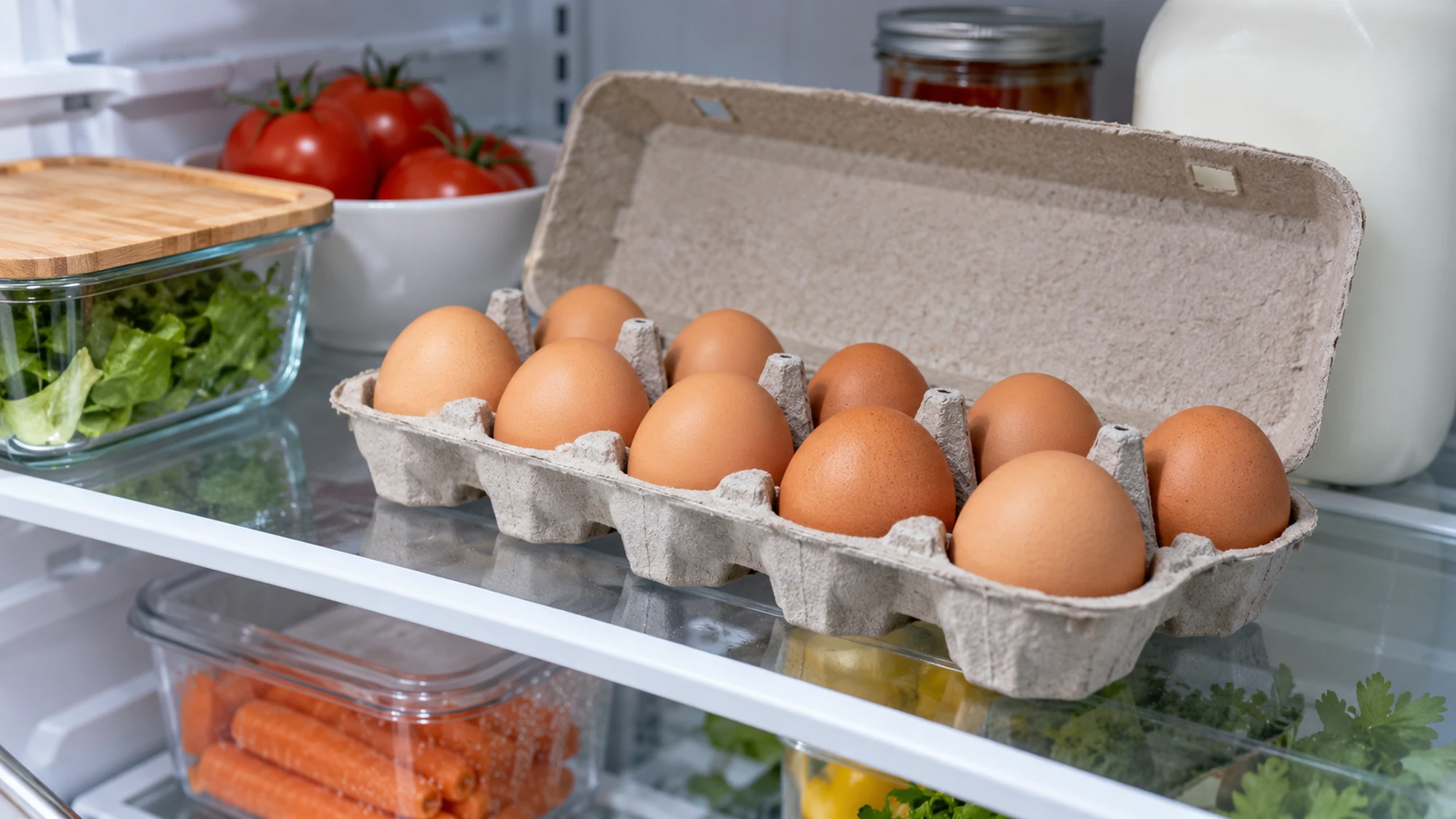
Storage and Cooking Are the More Useful Habits
FDA recommends keeping eggs in their original carton at 40°F or below and using them within three weeks for best quality. Hard-cooked eggs should be used within one week. These recommendations assume proper handling; a calendar alone cannot undo time spent warm.
Cook shell eggs until whites and yolks are firm; egg dishes should reach 160°F, measured with a thermometer. For dishes served raw or undercooked, FDA recommends appropriately pasteurized eggs or egg products. Clean hands, utensils and surfaces after contact with raw eggs.
- Keep preparation organized so raw egg does not spread onto ready-to-eat food.
- Check the refrigerator temperature with a thermometer rather than judging by touch.
- Plan only what you can handle and store properly.
- If a specific carton or product gives additional instructions, follow them.
Reliable handling habits are more valuable than a dramatic countertop test.
Bottom Line
Knowing how to tell if eggs are bad means recognizing the limits of home checks. Discard obvious spoilage, respect recalls and handling history, and do not mistake a sinking or normal-looking egg for a safety guarantee. Refrigeration, careful preparation and appropriate cooking remain the useful safeguards.
The FDA’s Playing It Safe With Eggs video covers practical egg-handling guidance.
Sources

Emily is Spoonvale’s recipe-writing persona, bringing a warm, practical voice to everyday cooking. Her focus is simple: approachable meals, comforting flavors, and clear instructions that help make time in the kitchen more enjoyable.