
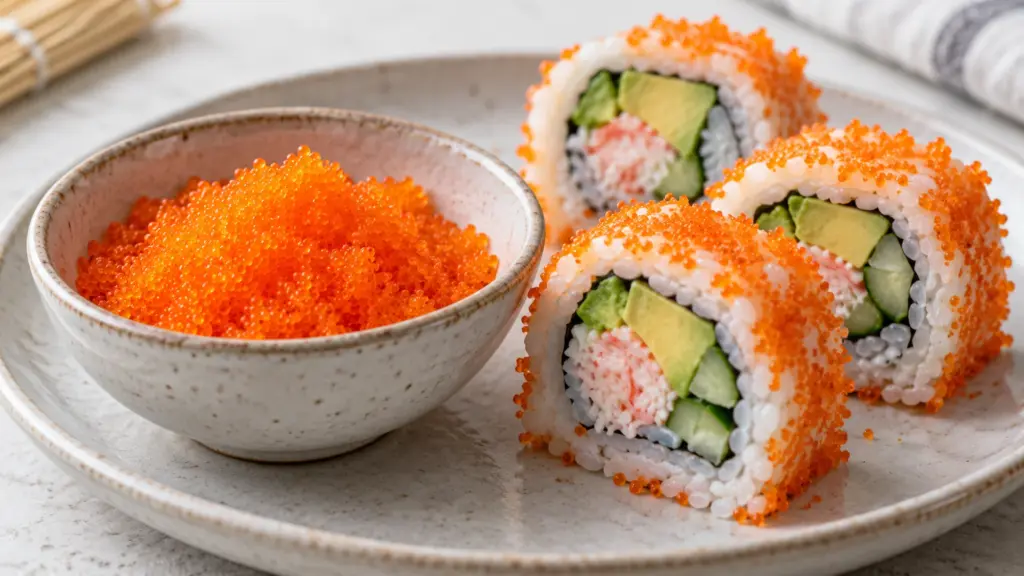
Those tiny orange beads around a sushi roll can look like a finishing detail rather than an ingredient worth investigating. Yet a spoonful of masago brings its own seasoning, texture and label questions to the meal.
Masago usually refers to prepared capelin roe, or fish eggs, used as a sushi garnish and ingredient. Commercial products can include other roe, seasonings and colorings, so the exact package matters more than the orange appearance.
I’d treat it as a small but deliberate addition, not something to scatter on a dish without checking. You can appreciate the texture while still asking what is in the container and how it should be handled.
What Is Masago?
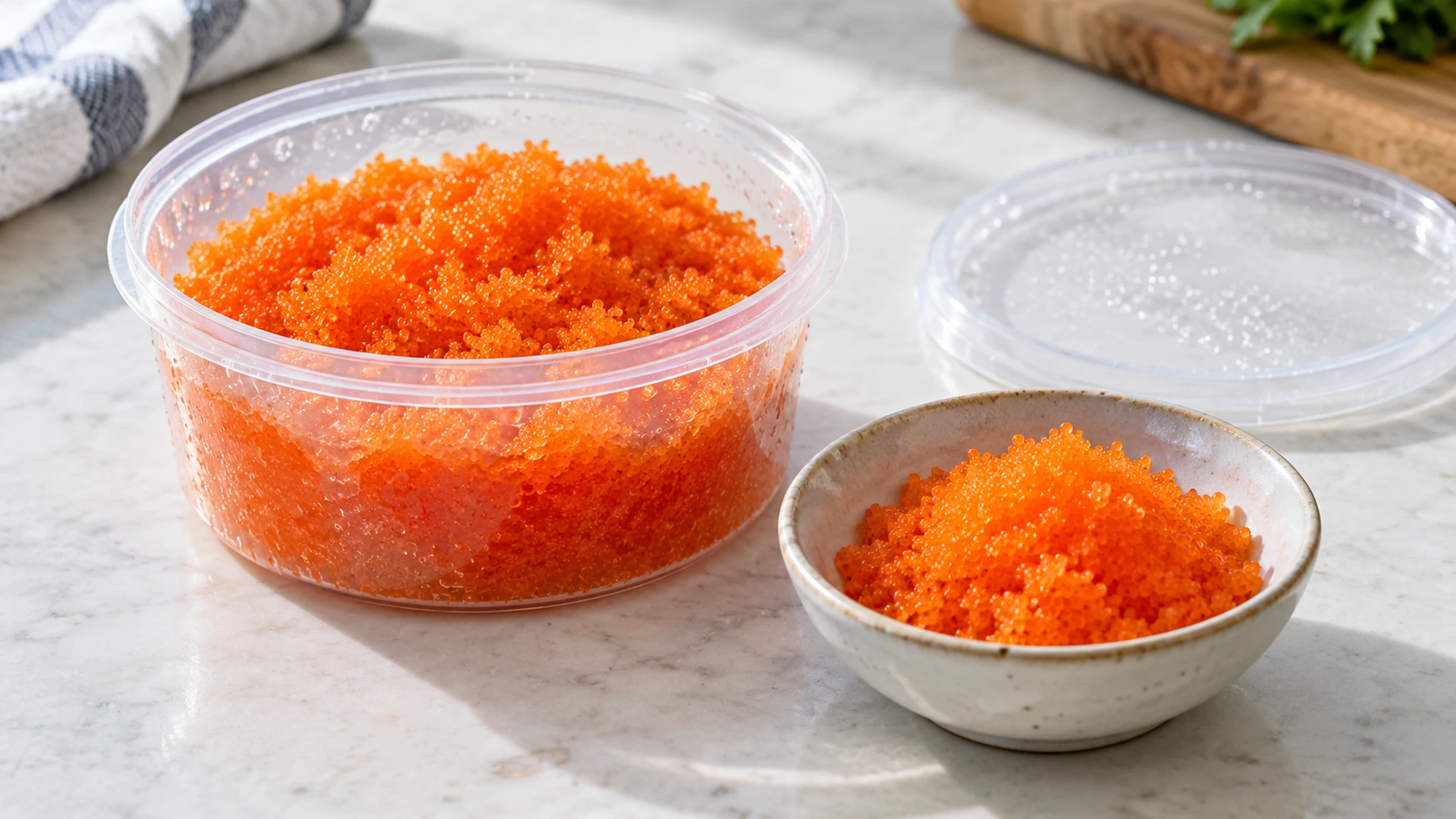
Masago is fish roe, not a grain, seed or vegetarian garnish. The Yutaka orange masago ingredient list identifies capelin roe alongside ingredients such as sugar, salt and soy sauce. That is a useful example of a prepared product, not a universal formula for every masago sold.
The individual eggs are small, which makes the garnish look like a fine coating on a roll rather than the large separate beads associated with salmon roe. Still, size and color are not a dependable way to establish the exact species or full ingredient list.
- Read the product’s fish identity and ingredient information.
- Do not assume a tiny garnish is irrelevant to someone’s fish allergy.
- Treat flavored and colored versions as separate products with their own labels.
- Ask the restaurant which product it uses when the details matter.
Masago is an ingredient with its own label, even when it appears only as a garnish.
Prepared Roe Products Can Differ
The Azuma Foods product catalog lists seasoned capelin roe as well as products combining capelin and herring roe; some versions also include soy protein. Its tobiko offerings identify flying-fish roe, with blends in some products. Those distinctions show why familiar menu names do not replace ingredient information.
Color is particularly easy to overread. A bright orange, red or dark roe product may include added coloring or flavoring. Rather than deciding what it contains from a photograph, compare the actual product descriptions.
| Label detail | Why it matters | Practical question |
|---|---|---|
| Fish species or blend | Products need not contain identical roe | Which fish are listed? |
| Seasoning | Changes flavor and ingredients | Is it plain or flavored? |
| Soy sauce or soy protein | Can add allergens | Are soy or wheat declared? |
| Nutrition panel | Reflects the actual formula | What is the listed serving size? |
| Storage directions | Apply to that product | What changes after thawing or opening? |
A familiar name is a starting point. The package supplies the details.
Use Masago as a Finishing Ingredient
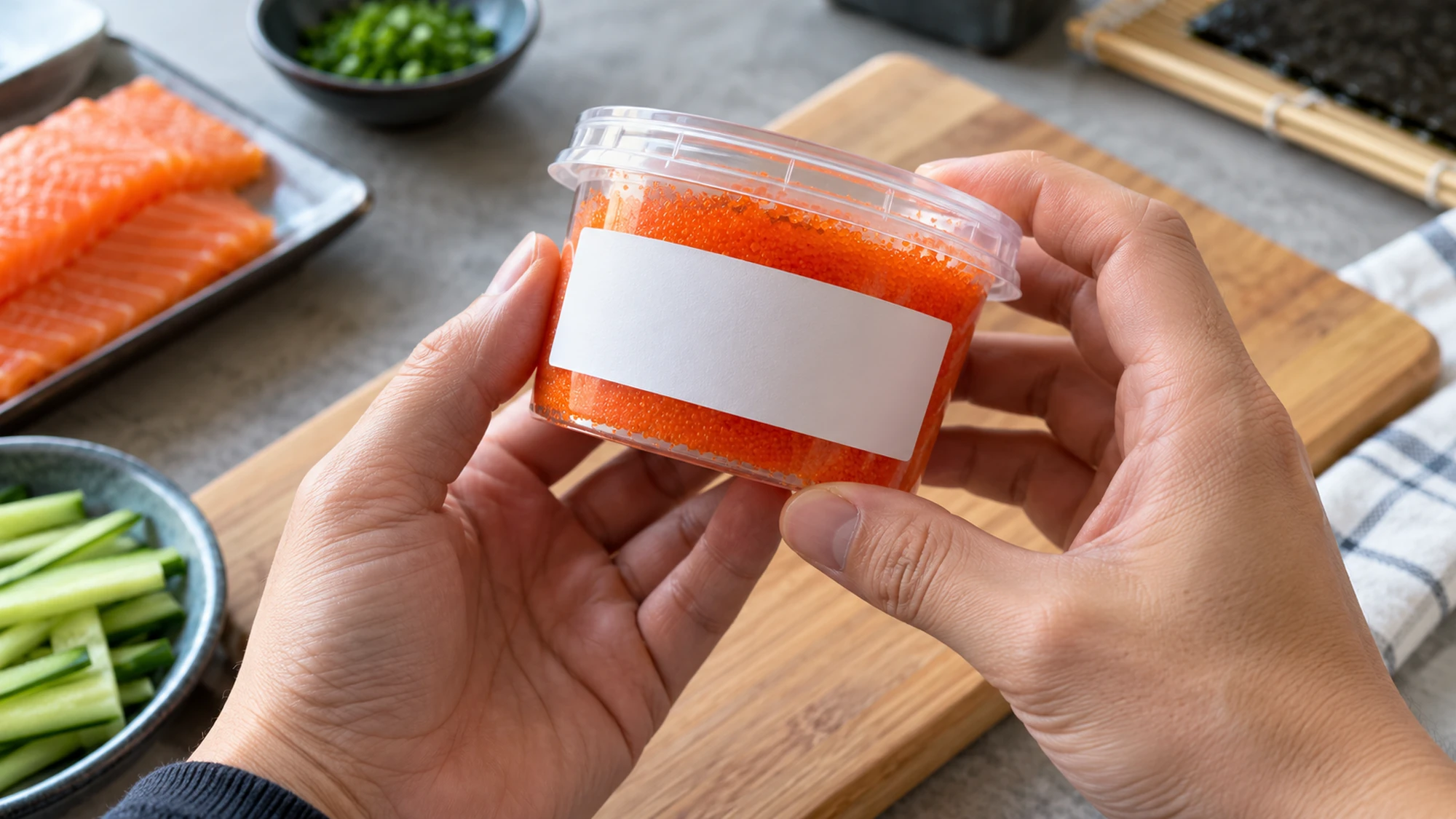
Its small-grained texture makes masago useful where you want a little contrast across a bite. A light coating on a sushi roll, a modest topping on a prepared dish, or a small amount in a sauce can play different roles. The rest of the meal still deserves room to taste like itself.
My preference would be to add a little first and assess the seasoning before adding more. A seasoned roe product can already bring saltiness and sweetness, so automatically adding extra salty sauce at the same time makes it harder to judge the balance.
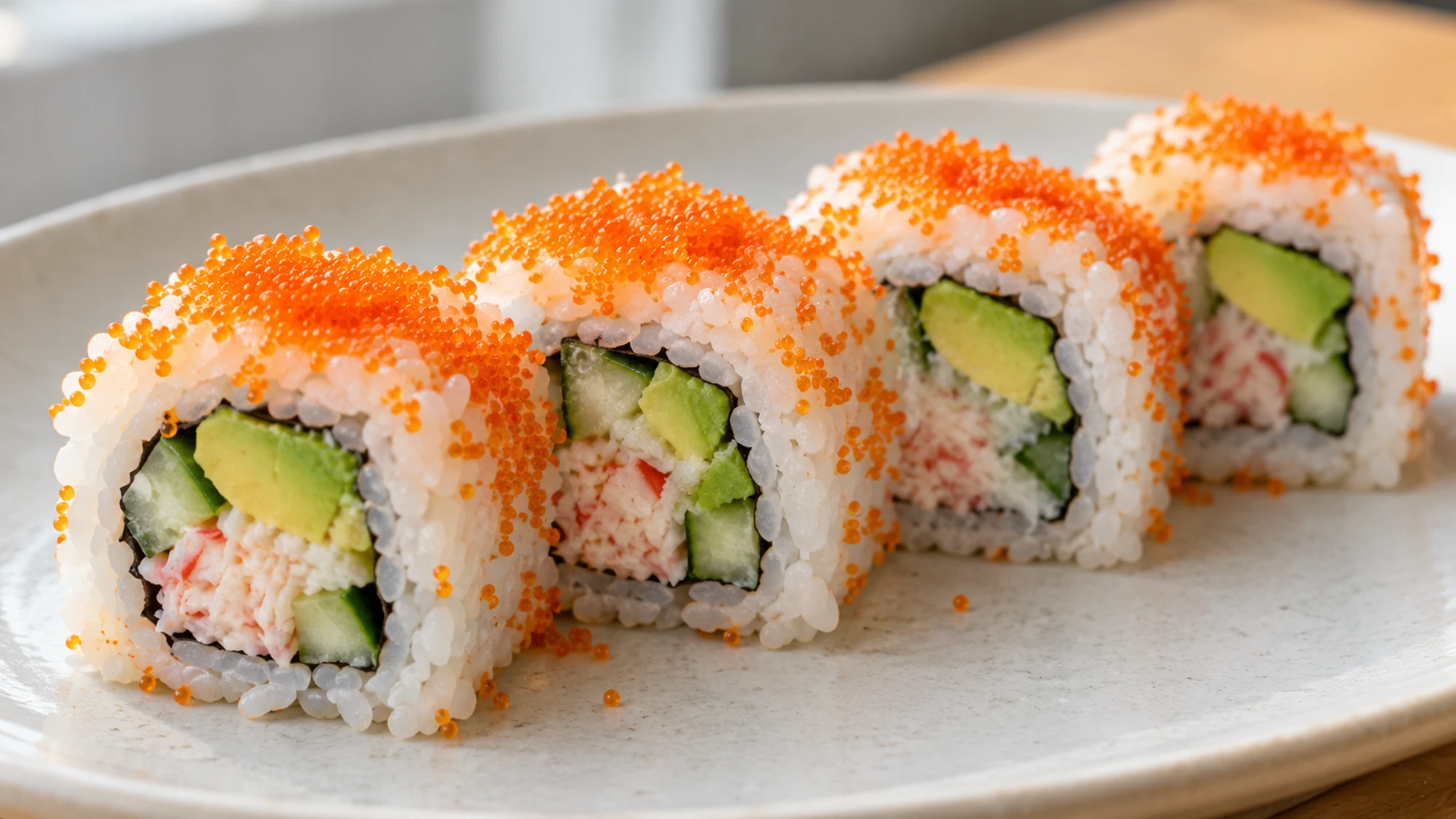
- For rolls, think about an even, modest coating rather than a heavy layer.
- For a sauce, account for the roe product’s existing seasoning.
- For a mixed plate, keep dietary needs in mind before adding a garnish to every portion.
- Use a clean utensil and return the remaining product to its required storage promptly.
A small amount can be intentional; more garnish is not automatically a better dish.
Check Allergens and Cold-Storage Directions
Yutaka’s listed formula includes fish, soy and wheat-containing soy sauce. Other products can differ, so neither gluten-free nor allergen-free status should be inferred from the fact that the main ingredient is roe. Read the current package, especially when buying a different flavor or brand.
Follow the product’s instructions for frozen storage, thawing and use after opening. Do not borrow a different brand’s refrigerator window. The FDA’s seafood guidance reinforces the importance of cold handling and advises higher-risk people to avoid raw or undercooked seafood. A sushi-related name does not establish that a roe product is pasteurized or ready for every person to eat.
- Check whether the package gives specific thawing instructions.
- Use the actual product’s storage temperature and time limits.
- Do not rely on color or smell alone to establish safety.
- If processing or suitability is unclear, ask the manufacturer or seller before serving it.
The right handling instructions come from the product in your kitchen, not a generic sushi photo.
Bottom Line
Masago is a prepared fish-roe ingredient that can add fine texture and seasoning to a dish. Check the fish identity, other ingredients and storage directions before using it. A careful label read makes more sense than assuming every bright orange sushi topping contains the same thing.
Howcast’s California-roll demonstration shows masago as a coating. It is a serving illustration, not a substitute for product-specific handling advice.
Sources

Emily is Spoonvale’s recipe-writing persona, bringing a warm, practical voice to everyday cooking. Her focus is simple: approachable meals, comforting flavors, and clear instructions that help make time in the kitchen more enjoyable.