
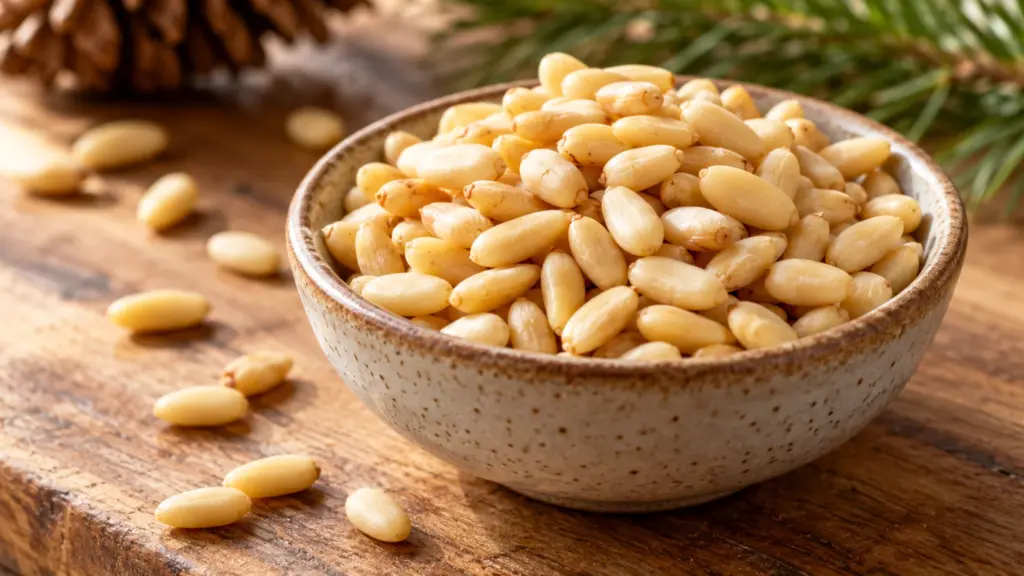
A recipe asks for pine kernels, but the grocery shelf says pine nuts. You do not need a second shopping trip or a special substitute: the difference is usually the wording, not a different ingredient.
Pine kernels and pine nuts normally refer to the same edible pine seeds. “Kernel” emphasizes the part removed from the shell, while “pine nut” is the familiar culinary name. They can add a mild, rich bite to pesto, salads and baking.
I’d choose the packet by freshness, quantity and the recipe, not by which of those two names sounds more impressive. A small amount can make a noticeable difference without taking over the dish.
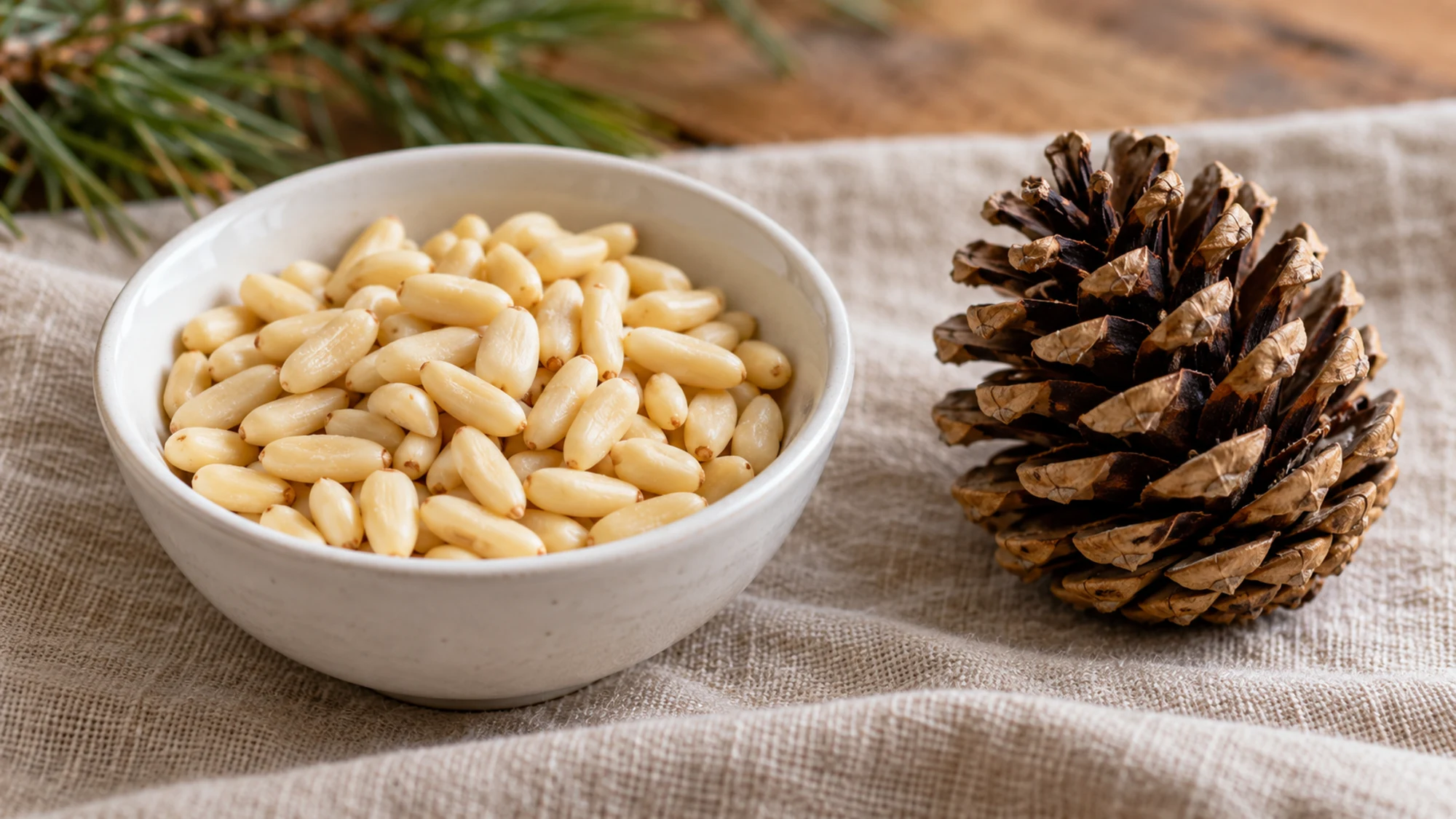
Pine kernels and pine nuts come from cones
The USDA Forest Service uses both names for these seeds. The Royal Botanic Gardens, Kew describes the edible seeds of stone pine as pine nuts and notes uses including pesto, cakes, cookies and fatayer. Stone pine is one source, not the only pine species used for food.
Botanical terminology is interesting, but it is not an allergy test. A pine seed can still cause an allergic reaction. Buy a food-grade product intended for eating rather than assuming seeds from an unidentified cone belong in the kitchen.
- Shelled kernels are the ready-to-use ingredient most recipes mean.
- Different edible species can produce differences in shape and flavor.
- A name on its own does not tell you the product’s freshness or suitability for an allergy.
- Use the actual package instructions for the product you bought.
Choose a role before choosing a substitute
Pine nuts are often used in small amounts for richness, texture and a gentle nutty flavor. Their role matters when considering a replacement: a crunchy salad topping is more forgiving than a sauce where the nuts shape the texture. A small sprinkle over a bean salad is one practical way to use them as a finishing texture rather than the main ingredient.
I prefer to keep a first batch simple when trying an unfamiliar ingredient. Taste a little before adding it, then decide whether you want its softer raw character or a toasted note. A substitution is a change in flavor and texture, not a promise that everything will taste identical.
| Use | What pine nuts contribute | What to consider |
|---|---|---|
| Pesto or another blended sauce | Richness and body | A different nut or seed changes flavor and may change thickness |
| Salad or vegetable topping | Small, tender crunch | Add near serving to preserve contrast |
| Baking | Nutty flavor and texture | Follow the recipe’s stated raw or toasted form |
| Finishing grains or beans | A concentrated savory accent | Start modestly, taste, then add more |
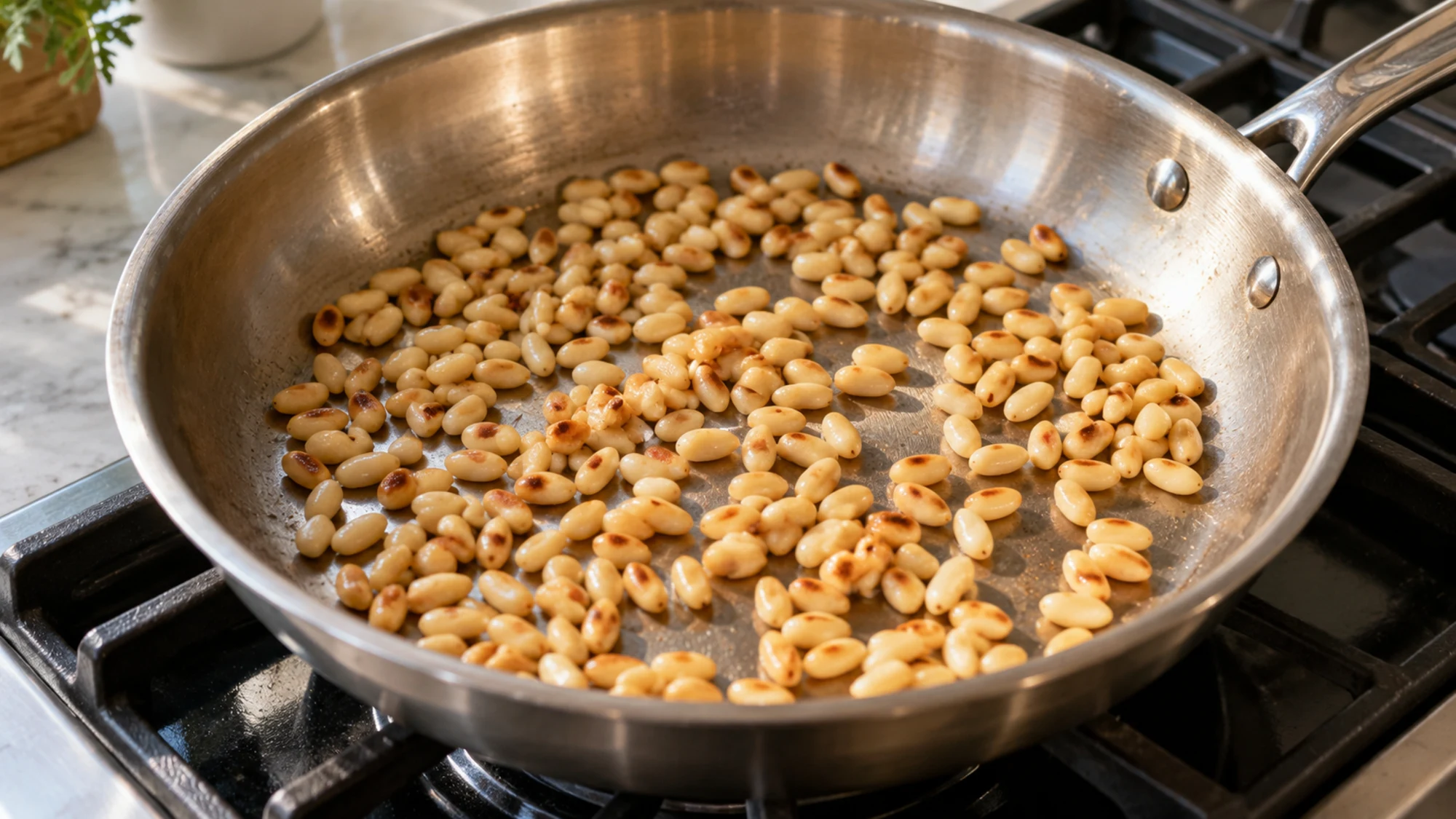
Toast gently and pay attention to the pan
Toasting can deepen the flavor, but the small kernels can move from pale to overdone quickly. Use a modest amount in a dry pan, keep them moving and watch their color and aroma instead of treating a timer as a guarantee. Transfer them out of the hot pan when they are lightly golden.
That last step is easy to overlook: a pan continues to give off heat after the burner is off. I’d rather stop a little early than try to hide a scorched flavor in a whole bowl of sauce. Let the kernels cool before deciding how much to add.
- Keep the layer shallow enough to see the kernels clearly.
- Use gentle heat and stir or shake the pan frequently.
- Look for a light golden color and pleasant toasted aroma.
- Move to a cool plate promptly instead of leaving them in the pan.
- Do not assume toasting makes an allergen safe or prevents pine mouth.
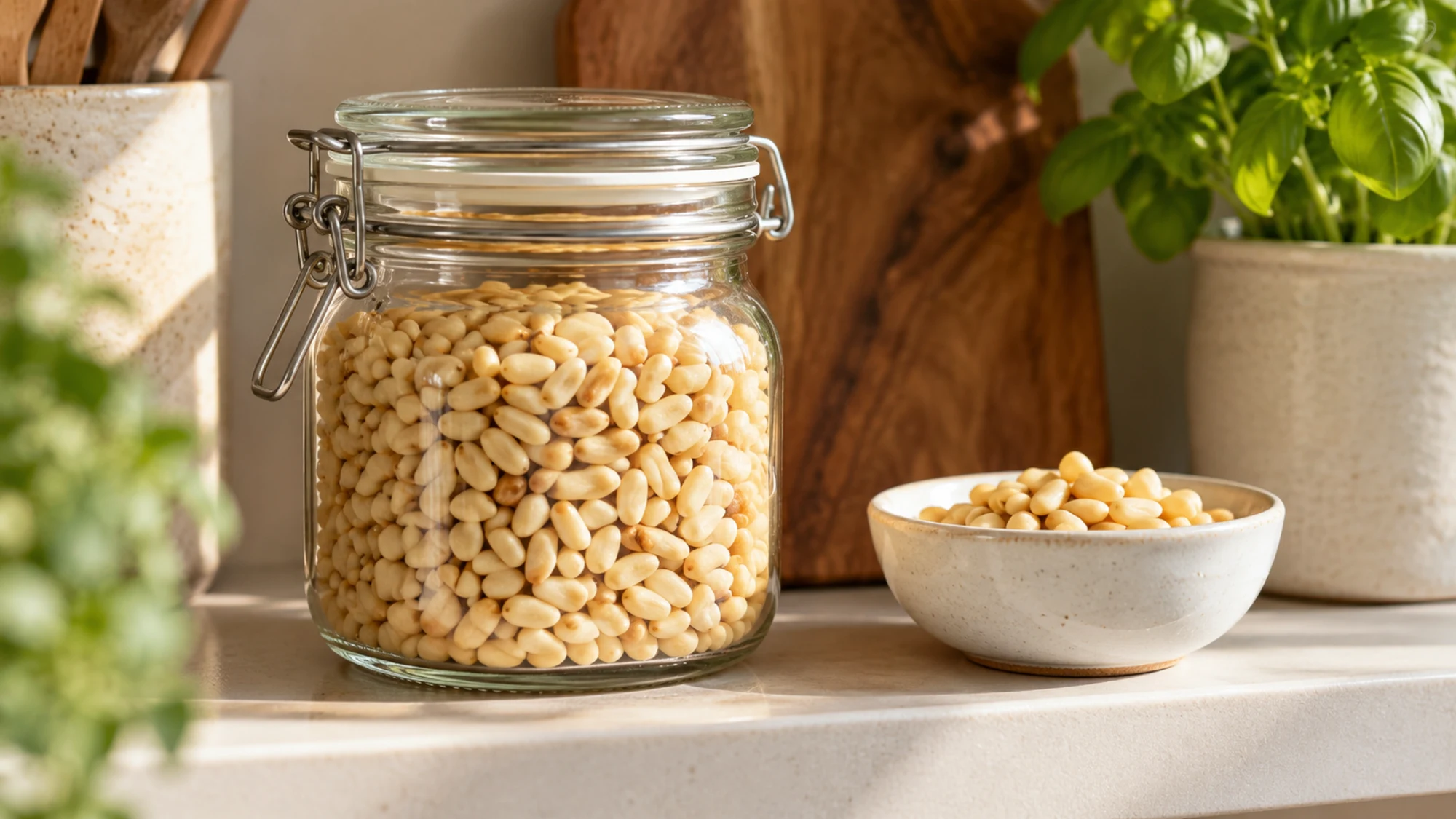
Store carefully and know the two different cautions
Buy an amount you can use and close the container tightly. Diamond’s storage guidance recommends refrigerating opened nut products to help prevent off-flavors and rancidity. Follow the product’s date and storage directions rather than assuming every bag has the same shelf life.
Allergy is one concern; delayed taste disturbance is another. The FDA’s allergen-labeling guidance includes pine nuts among tree nuts considered major food allergens. If you have a diagnosed nut or seed allergy, follow your allergist’s advice instead of deciding from the word “seed.”
Separately, Canadian food-safety guidance describes pine mouth: a bitter or metallic taste that may begin one to three days after eating pine nuts and last days to two weeks. The nuts can taste normal when eaten. This is not the same as rancidity or an allergic reaction, and not every unusual taste has this cause.
- Keep opened kernels sealed and refrigerated according to the package.
- Discard an obviously rancid product rather than trying to cover its flavor.
- Do not assume toasting or a particular country of origin rules out pine mouth.
- Seek medical advice for persistent unexplained symptoms; breathing difficulty or other serious allergic symptoms need urgent care.
Bottom Line
Pine kernels and pine nuts are usually two names for the same culinary ingredient. Buy food-grade kernels, use their richness deliberately and toast with a watchful eye. Tight storage and sensible quantities help protect flavor, while allergy guidance and delayed pine mouth deserve separate consideration.
Canal Andalucía Cocina demonstrates toasting pine nuts with chef Enrique Sánchez. The demonstration is in Spanish; use the visible color and pan movement as technique context, not allergy or food-safety advice.
Sources
- USDA Forest Service: piñon terminology
- Kew: stone pine and edible seeds
- Diamond: nut storage
- FDA: food allergen labeling guidance
- Canadian Food Inspection Agency: bitter or metallic taste after pine nuts

Emily is Spoonvale’s recipe-writing persona, bringing a warm, practical voice to everyday cooking. Her focus is simple: approachable meals, comforting flavors, and clear instructions that help make time in the kitchen more enjoyable.