

Two small cans can look almost interchangeable in the pantry and behave very differently in a saucepan. Before pouring one into dinner or dessert, the most useful check is the full product name on the label.
Evaporated milk is concentrated milk with some water removed. Plain evaporated milk is not the same as sweetened condensed milk, and swapping them without adjusting a recipe can change both sweetness and texture.
I’d keep the label facing forward on the shelf. It is a small habit that makes the difference between choosing a creamy cooking ingredient and accidentally adding a very sweet one.
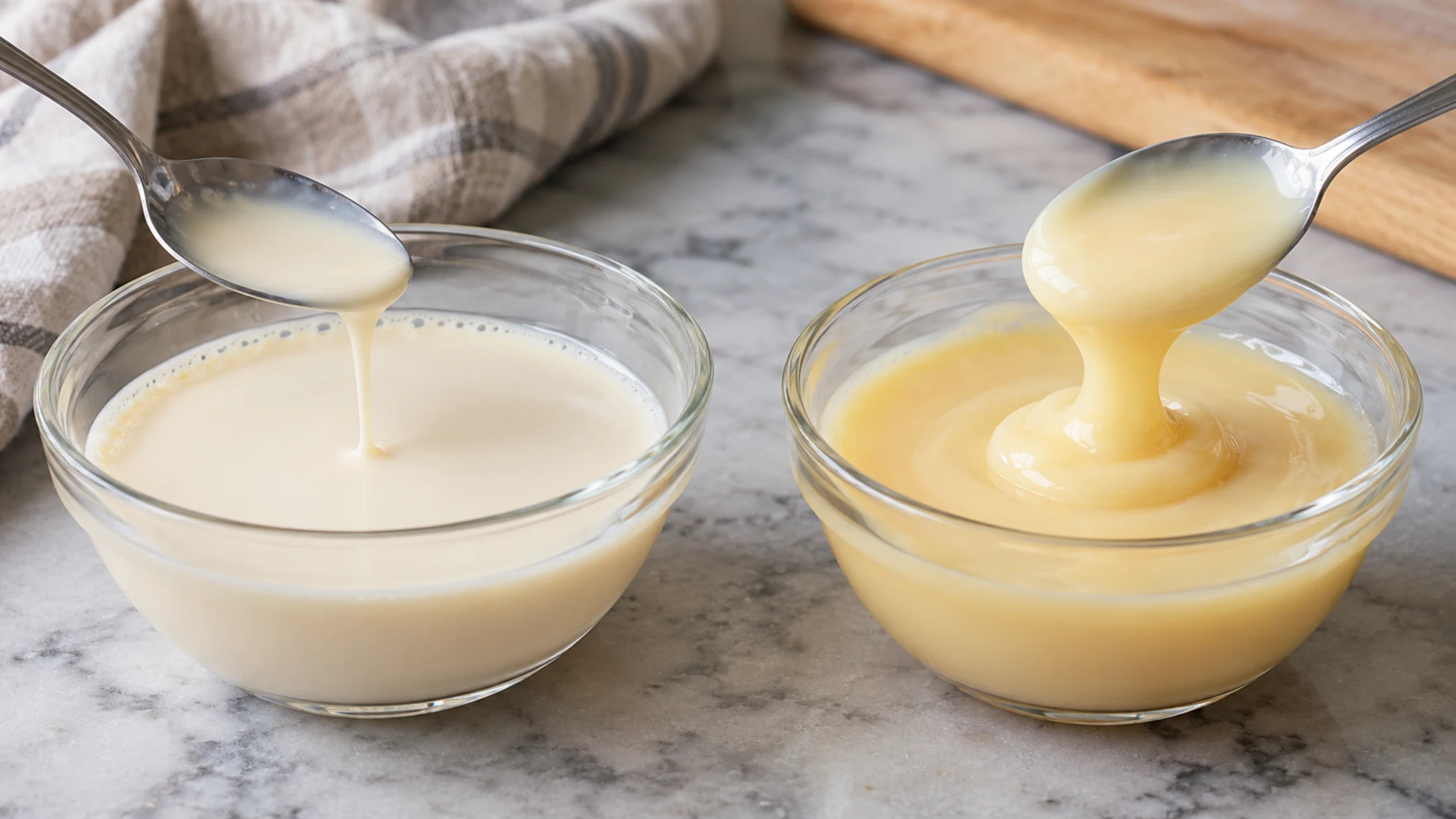
What evaporated milk brings to a recipe
Carnation describes its evaporated milk as milk with about half its water removed. The result is more concentrated than ordinary drinking milk. Exact processing descriptions vary, so it is better to use the manufacturer’s wording for a particular product than promise one universal percentage for every can.
That concentration can add body to sauces, soups, mashed potatoes and desserts without using the same volume of ordinary milk. It does not make evaporated milk identical to cream: their fat levels and behavior can differ. A slightly golden color and fuller cooked-milk flavor can be normal for the product.
Read the ingredient list and directions, and shake the can if its label tells you to. Plain, reduced-fat, fat-free and lactose-free versions are not automatically interchangeable in every recipe, especially where richness or setting behavior matters.
Evaporated milk versus sweetened condensed milk
Sweetened condensed milk contains substantial added sugar and is much thicker and sweeter. It is designed for different uses. A recipe that calls for one is not quietly asking for the other, even when both are sold in similar-looking cans.
For a concrete label comparison, these figures come from the current US Carnation products linked below, using the same two-tablespoon serving. They describe those products, not all brands. Plain evaporated milk still has total sugars, so unsweetened is not a synonym for sugar-free.
- Check for the words sweetened condensed before opening a dessert ingredient.
- Do not compare a can’s net weight with another can’s fluid volume as though they were the same unit.
- A 12-fluid-ounce can holds 1½ US cups by volume; a 14-ounce weight label describes something different.
- Use the recipe’s specified product and quantity when texture or sweetness is important.
| Per 2 tbsp (30 mL) | Carnation evaporated milk | Carnation sweetened condensed milk |
|---|---|---|
| Calories | 40 | 130 |
| Total fat | 2 g | 3.5 g |
| Total sugars | 3 g | 22 g |
| Added sugars | 0 g | 18 g |
| Protein | 2 g | 2 g |
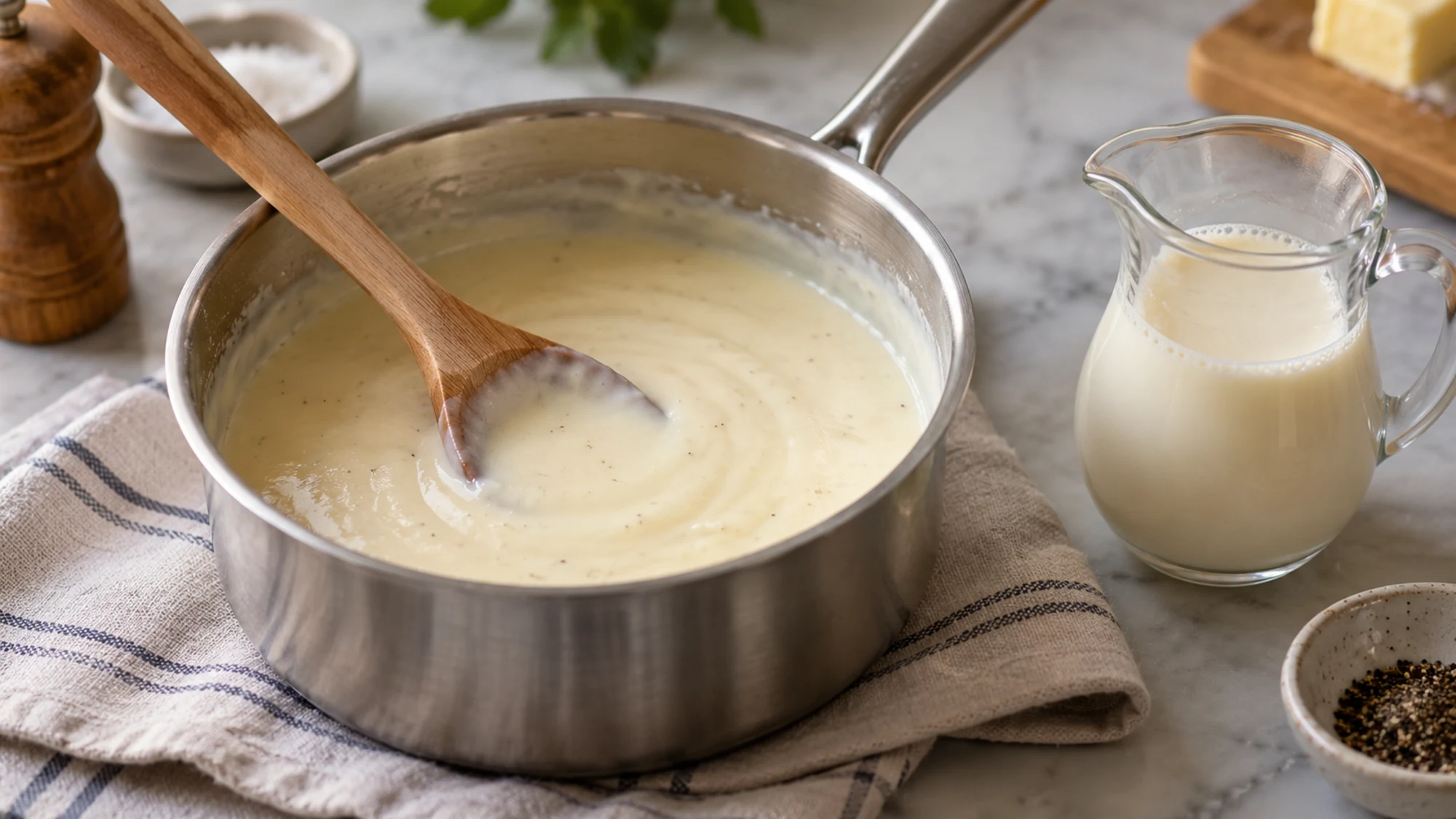
When to dilute it, and when not to
For its own product, Carnation suggests mixing half a cup of evaporated milk with half a cup of water to make one cup at a regular-milk consistency. That is a manufacturer-specific substitution guide, not proof that the mixture behaves exactly like every type of fresh milk in every recipe.
If a recipe explicitly calls for evaporated milk, do not automatically add that water. The recipe may rely on the concentrated ingredient. Dilution changes the liquid balance, and a sauce or filling that was designed for the undiluted can can become thinner.
Carnation also describes equal-volume uses in place of half-and-half or light cream. That should not be stretched into a promise that evaporated milk will whip like heavy cream or work in every delicate bake. For a first attempt, choose a recipe written for the ingredient rather than changing several variables at once.
- A useful starting point is the manufacturer’s macaroni and cheese recipe, which uses evaporated milk as part of a defined formula. The idea is to follow a recipe that accounts for the product’s concentration, not simply pour it into any sauce and expect the same result.
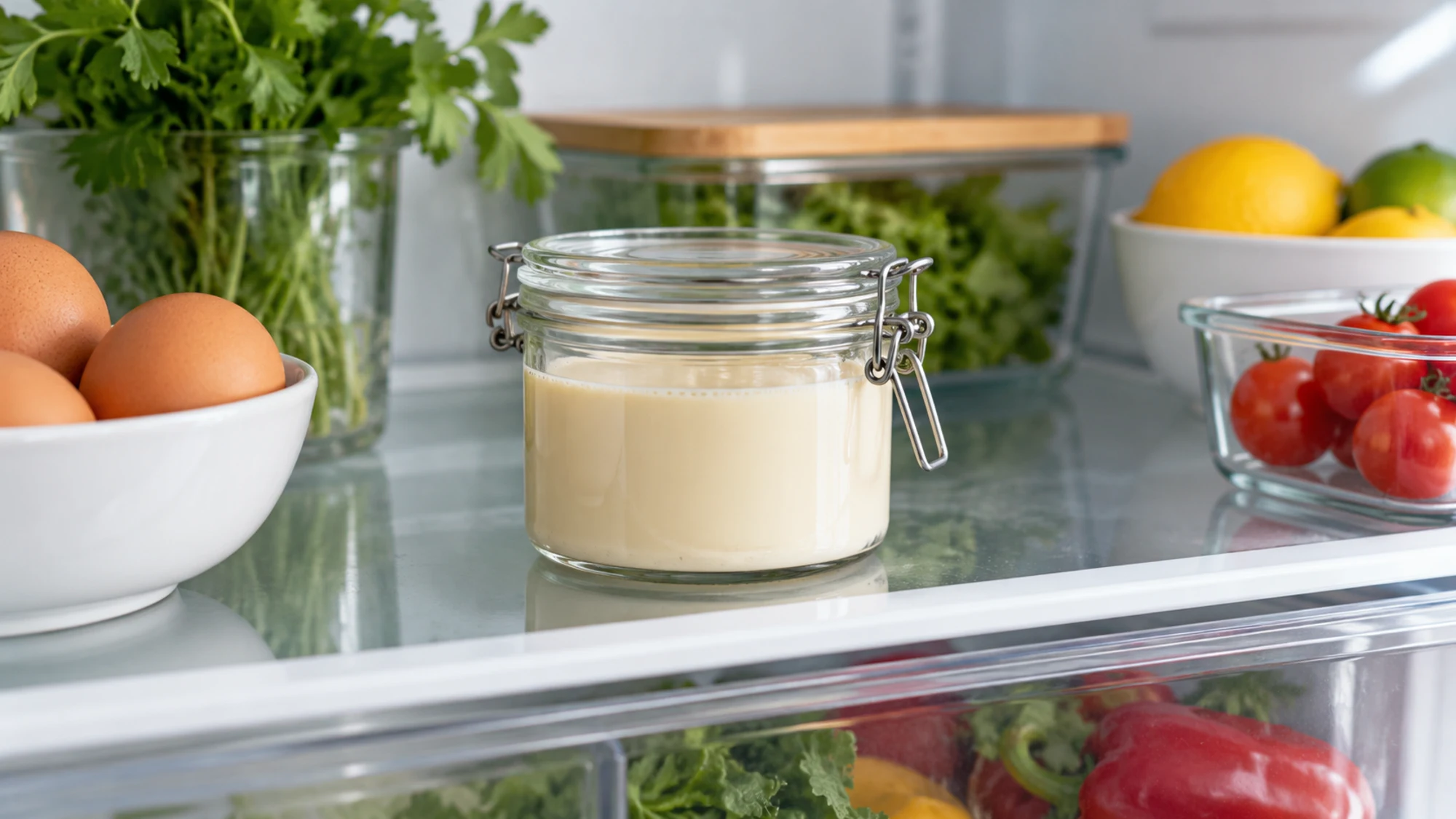
Store the opened can as a perishable food
An unopened commercially packaged can and an opened container are different storage situations. Follow the package for unopened storage and its date guidance. Once opened, Carnation advises refrigeration in a covered, airtight container and use within a few days; the exact package directions take priority.
CDC food-safety guidance calls for a refrigerator at 40°F or below and prompt refrigeration of perishable food. Do not leave opened milk or a perishable dish out for more than two hours, or one hour when the temperature is above 90°F.
Freezing can change texture. Carnation notes that its evaporated milk can become watery after freezing, so a thawed portion may not be the best choice for a dish where a smooth consistency is central. A texture warning is not the same as a claim that freezing automatically makes food unsafe.
- Lactose-free evaporated milk is still a milk product. NIDDK distinguishes lactose intolerance from milk allergy: the former involves difficulty digesting milk sugar, while the latter involves an immune response to milk proteins. Read allergen information rather than treating lactose-free as dairy-free.
Bottom Line
Use evaporated milk as the concentrated ingredient the recipe calls for, and keep it separate from sweetened condensed milk in both your shopping and your substitutions. Dilute only when the intended use calls for it, follow the product label, and refrigerate an opened container promptly. The right can and the right liquid balance matter more than a blanket substitution rule.
Gemma Stafford’s Bigger Bolder Baking demonstration shows the idea of concentrating milk by removing water. Homemade concentrated milk is not shelf-stable like an unopened commercially processed can; use the manufacturer and food-safety guidance above for storage decisions.
Sources
- Carnation: evaporated milk uses, substitutions and storage FAQs
- Carnation: evaporated milk product label
- Carnation: sweetened condensed milk product label
- CDC: preventing food poisoning
- NIDDK: lactose intolerance and milk allergy distinction

Emily is Spoonvale’s recipe-writing persona, bringing a warm, practical voice to everyday cooking. Her focus is simple: approachable meals, comforting flavors, and clear instructions that help make time in the kitchen more enjoyable.