
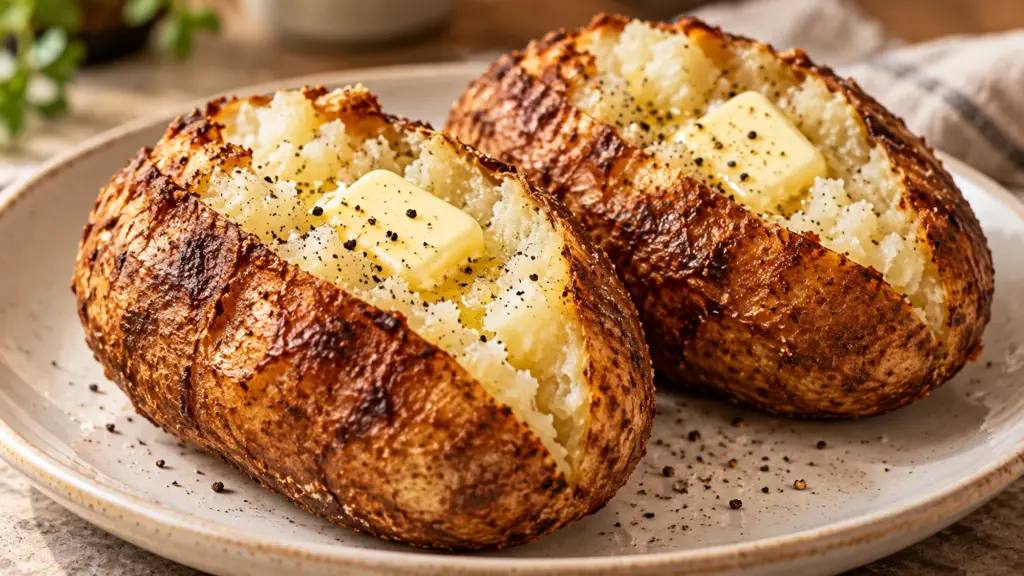
A baked potato can look ready long before its middle catches up. The skin darkens, dinner is waiting, and the center still resists the fork. A jacket potato in air fryer works best when you choose similarly sized russets, leave space around them, and check the flesh instead of trusting the clock alone.
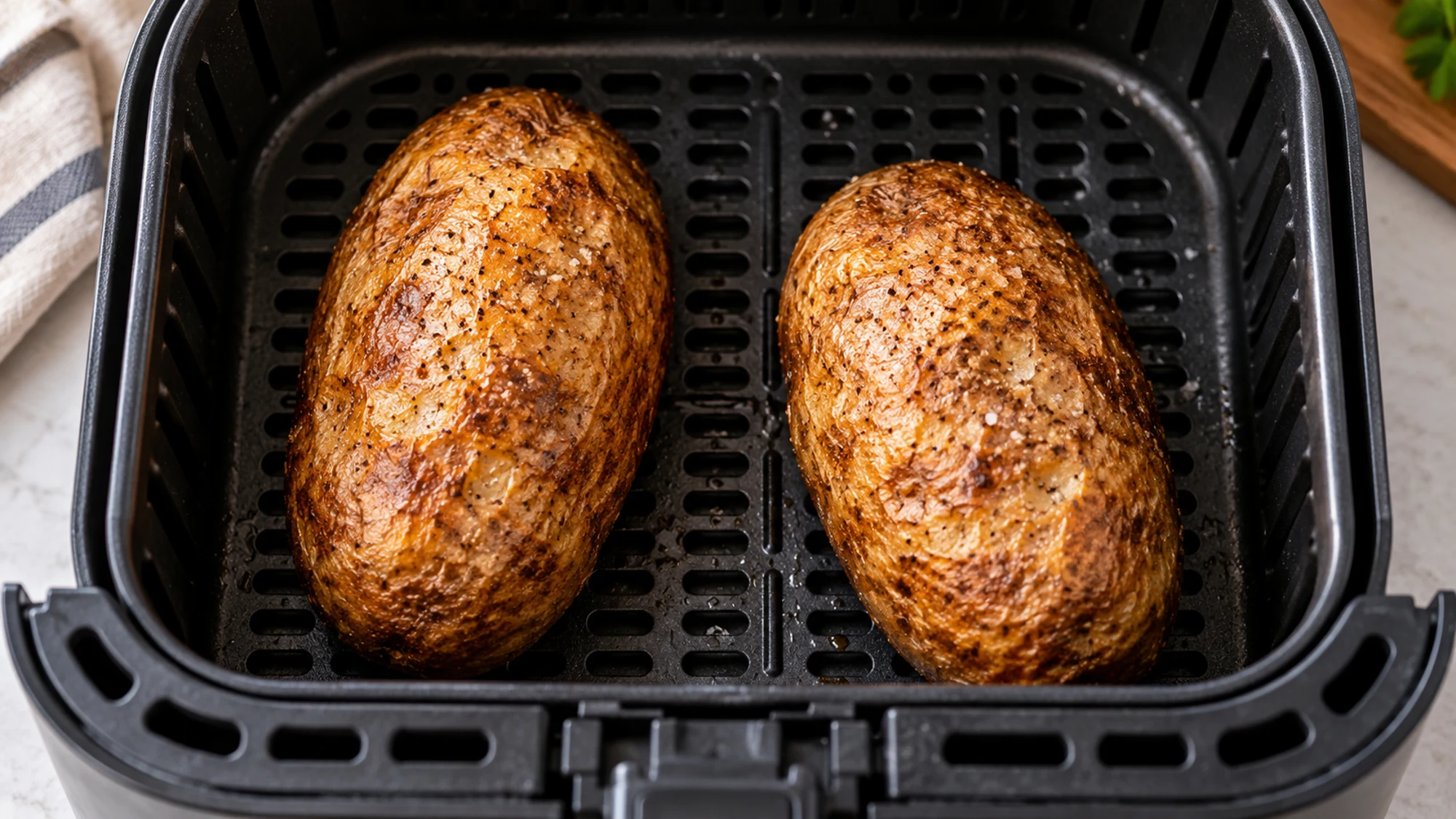
For crisp skin and a fluffy center, cook unwrapped russet potatoes at 400°F, turning halfway, until a thin knife slides easily through the middle. Two medium potatoes usually need about 40–55 minutes; larger ones can take longer. Dry the skins thoroughly and use only a light coating of oil.
I’d choose a potato around 9 ounces for this two-serving recipe: substantial enough to split and fill, without asking the outside to wait forever for the center. The recipe card keeps the ingredient quantities and full method together.
Serving Suggestions for Jacket Potato in Air Fryer
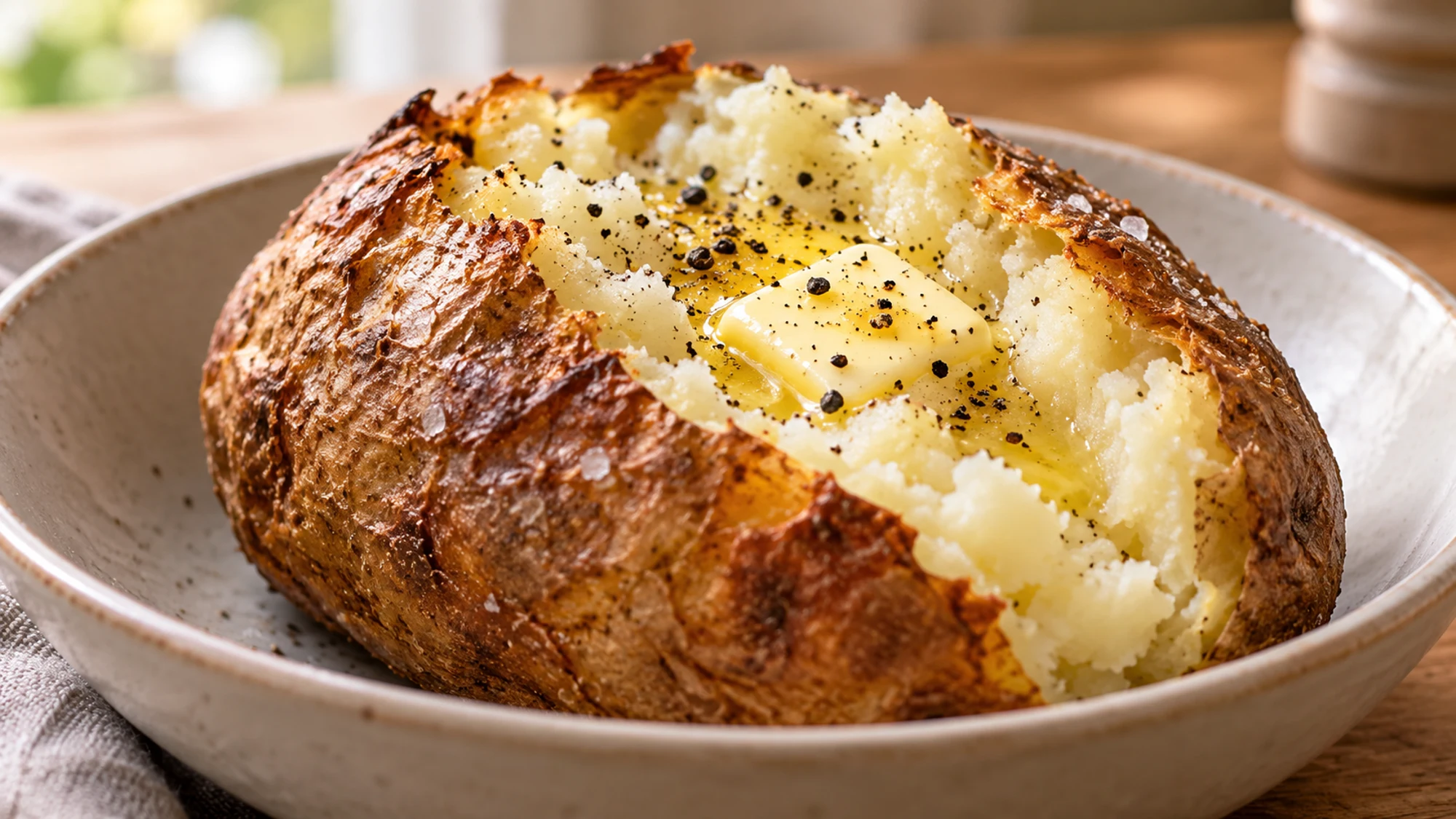
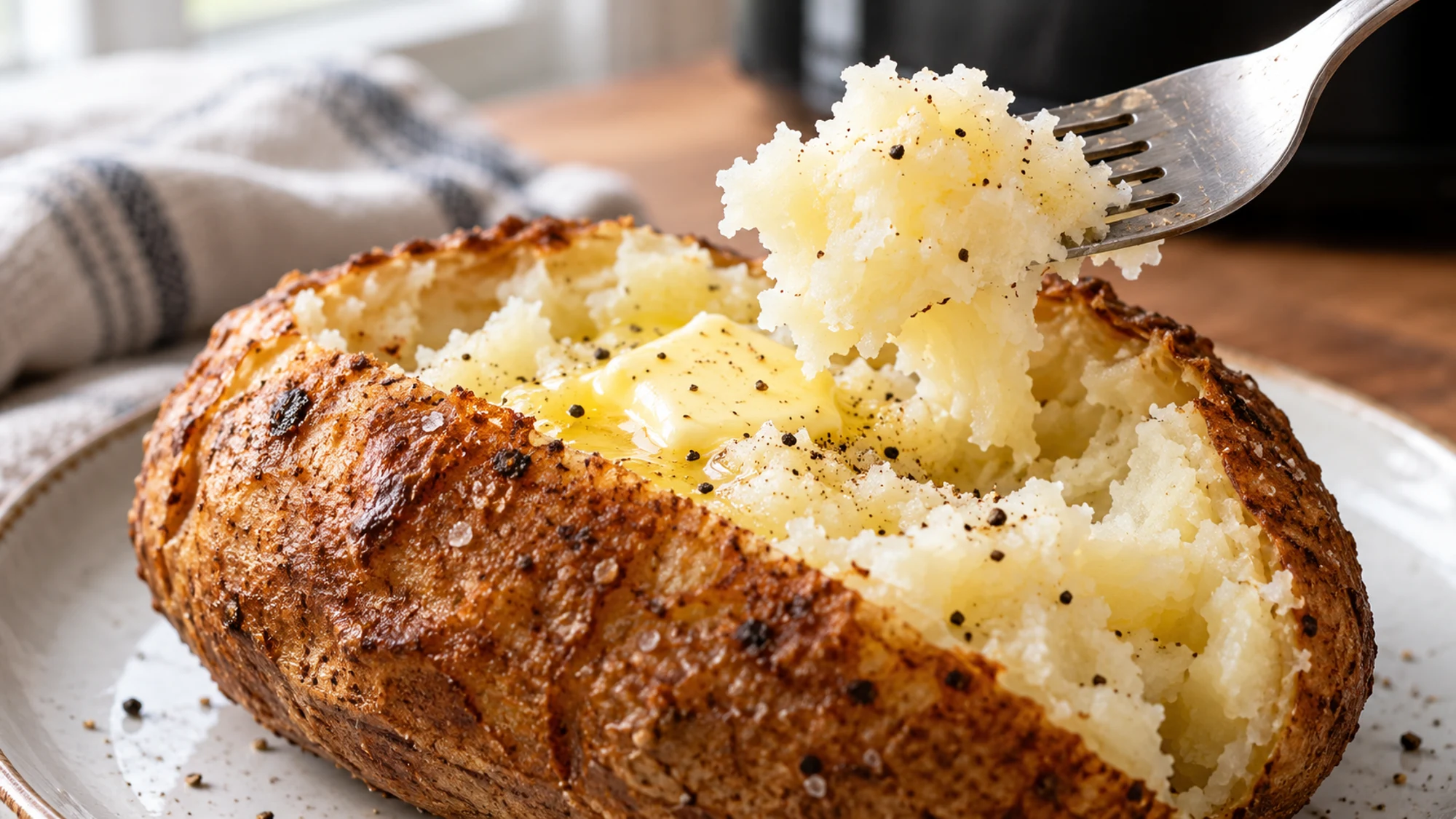
Bring the potatoes to the table as soon as they are ready. Cut a cross through each top, then gently press the ends inward using a clean towel to protect your hands. Fluff the exposed flesh with a fork so the butter has somewhere to go. The contrast between that soft interior and the salted skin is the whole attraction.
Choose toppings to suit the meal rather than piling everything on at once. A cool, tangy topping provides contrast, while something saucy turns the potato into a fuller dinner. Keep wet toppings separate until serving so the skin stays crisp.
- Simple side: finish with the measured butter and pepper, alongside roast vegetables or this apricot chicken with a tangy glaze.
- More substantial meal: add cooked beans or leftover cooked chicken and a crunchy salad; these additions are separate from the card’s nutrition estimate.
- Cool contrast: spoon on plain yogurt and chopped chives just before eating, especially with strongly flavored toppings.
- For a group: set out toppings in small bowls and let everyone finish their own potato. Check basket capacity before doubling the recipe.
Keep toppings ready and add them at the table to preserve the crisp skin.
Variations and Texture Choices
The small decisions matter more than an elaborate seasoning mix. Russets have a floury interior that suits this preparation; waxier potatoes tend to stay denser. I prefer keeping the first batch simply seasoned so the skin’s texture remains the point.
Use the comparison below to choose an adjustment. These are serving and texture options, not promises of identical cooking times. A different potato size, a crowded basket or a different machine can change the result.
| Choice | What changes | Best use |
|---|---|---|
| Russet potatoes | Fluffy, floury center | Classic split jacket potato |
| Yukon Gold potatoes | Creamier, denser flesh | Smaller portions with soft interiors |
| Skip the butter | Less richness; skin still uses oil | Serve with a separate topping |
| Add garlic powder | More savory surface flavor | Use lightly to avoid a dusty coating |
- Keep the basket uncrowded: touching potatoes block circulating air and make turning awkward.
- Skip foil: wrapping holds moisture against the skin. An uncovered surface is better for the crisp finish promised here.
- Judge the center: a knife should meet very little resistance. A dark skin by itself does not prove that the flesh is tender.
- Save leftovers promptly: refrigerate within two hours, or one hour above 90°F, and use within three to four days. Reheat leftovers to 165°F.
Change the topping freely, but preserve space in the basket and check that the center is tender.
Health Benefits and Meal Balance
Potatoes contribute carbohydrate, potassium and some fiber; the skin is worth eating if you enjoy it. The useful question is how the potato fits into the meal. Butter adds richness, while beans, vegetables or a protein topping change the overall balance. No single topping makes the meal automatically right for everyone.
The vegetable-group guide explains how potatoes fit among vegetables, and the leftover-handling guide gives practical storage and reheating advice. I’d treat those details as more useful than calling an air-fried potato a health shortcut.
- Keep portions in view: the card serves two, with one potato per person.
- Read topping labels when cooking for allergies; butter contains milk.
- Treat nutrition as an estimate: potato weights, oil retained and extra toppings all affect the final serving.
Think about the whole plate: a potato supplies a useful base, and the topping choices complete the meal.
Bottom Line
A good jacket potato is a texture recipe: dry skin, a little oil, circulating heat and a genuinely tender center. Start with matching russets, leave them unwrapped and use the knife test before serving. Keep toppings ready so the crisp exterior reaches the table promptly. The method below makes two potatoes and leaves the finishing choices to you.
Jacket Potato in Air Fryer Recipe

Ingredients
- 2 russet potatoes about 9 oz / 250 g each, scrubbed
- 1 tsp olive oil
- 0.25 tsp fine salt
- 0.125 tsp black pepper
- 1 tbsp unsalted butter 14 g, for serving
Equipment
- Basket air fryer large enough to leave space between 2 potatoes
- Fork
- Tongs
- Thin knife
- Clean kitchen towel
Instructions
- Scrub the potatoes under cool running water and dry them thoroughly with a clean towel. Preheat the air fryer to 400°F (200°C) according to its instructions.
- Prick each potato several times with a fork. Rub with the oil, then season with the salt. Place apart in the basket without foil.
- Air fry for 40–55 minutes, turning carefully halfway through with tongs. Start checking at 40 minutes. A thin knife should slide easily into the center; larger potatoes may need additional time.
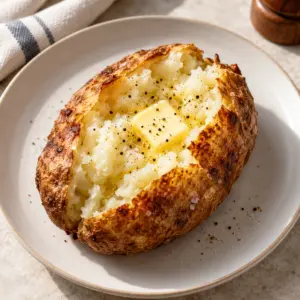
- Split the tops carefully, protecting your hands from heat. Fluff the flesh with a fork and divide the butter and pepper between the two potatoes. Serve immediately.
Nutrition
Video
Notes
Tried this recipe?
Let us know how it turned out!Emily is Spoonvale’s recipe-writing persona, bringing a warm, practical voice to everyday cooking. Her focus is simple: approachable meals, comforting flavors, and clear instructions that help make time in the kitchen more enjoyable.