
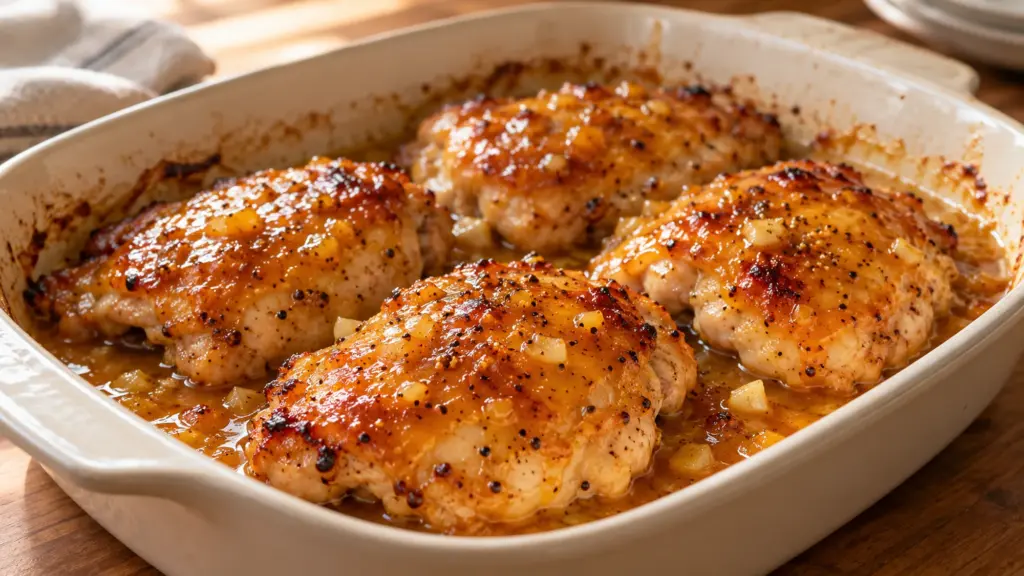
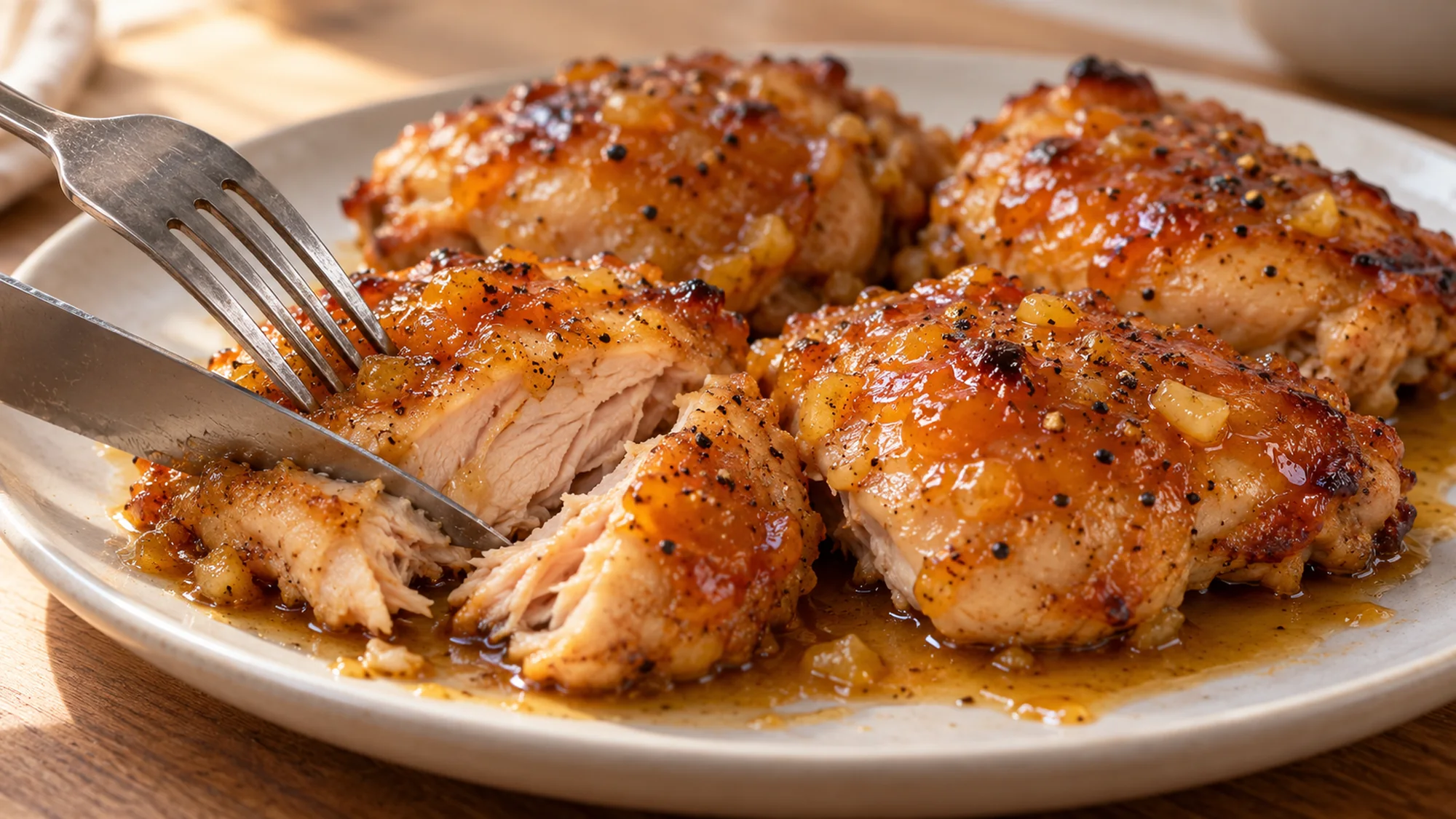
A jar of apricot preserves can do more than wait for toast. In this apricot chicken recipe, it becomes a glossy oven glaze with Dijon, garlic, and cider vinegar. The fruit flavor stays recognizable, while mustard and vinegar pull it toward dinner rather than dessert.
This apricot chicken recipe serves four and uses a simple stirred glaze, without a marinade. Check the thickest pieces with a thermometer: they must reach 165°F. The glaze should bubble around the edges and coat the chicken, but its color cannot tell you whether the meat is safely cooked.
I prefer a little tang against the preserves instead of adding more sugar. A small amount of soy sauce brings a savory note, and smoked paprika adds gentle depth without turning this into a hot sauce. The complete amounts and method are together in the recipe card.
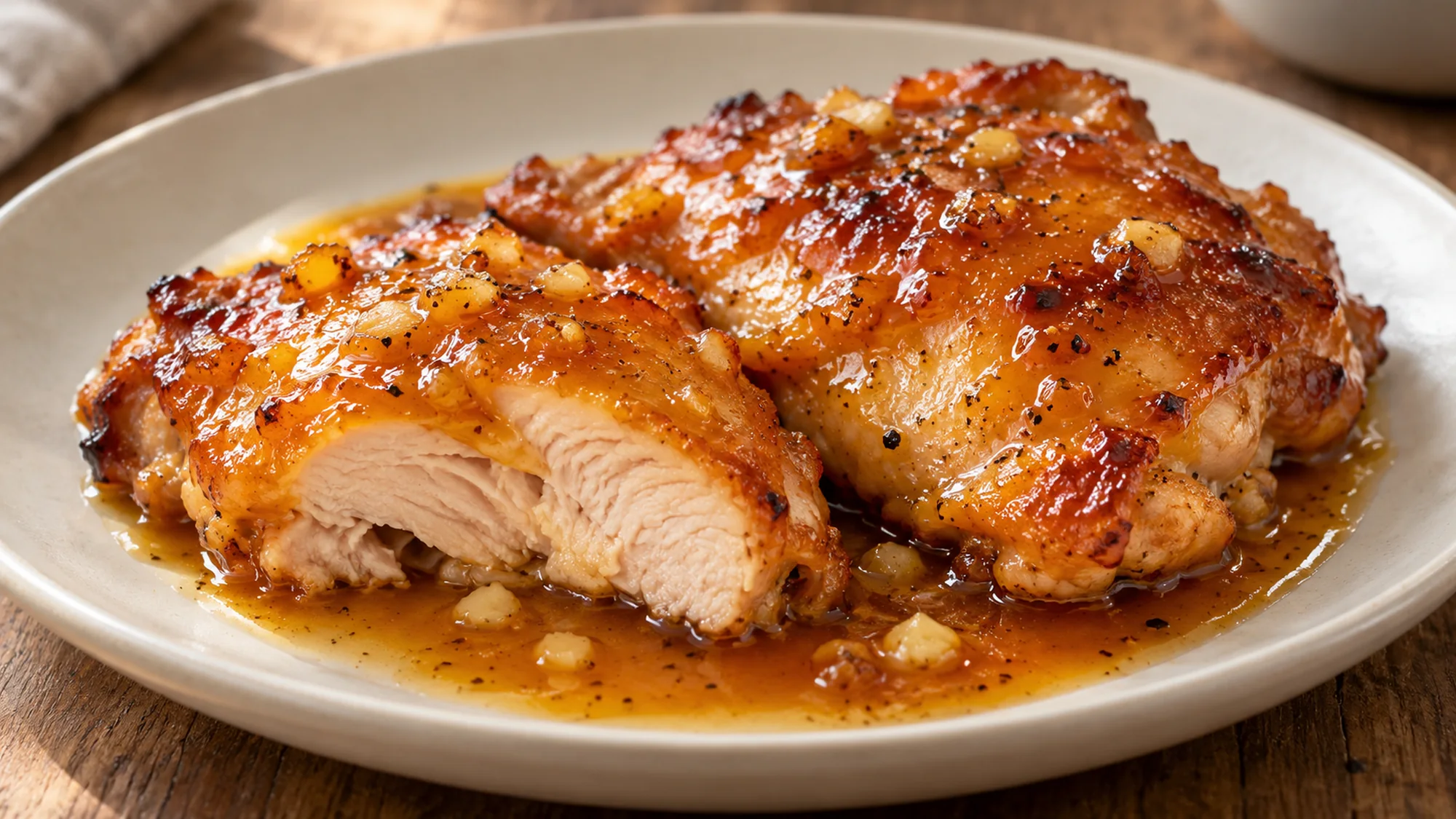
Serving Suggestions for This Apricot Chicken Recipe
Choose a side that gives the sauce somewhere to go. Rice is a natural fit, and plain couscous or a fluffy potato works too. Spoon some of the fully cooked pan sauce over the chicken, then keep a little alongside the starch. I would leave a leafy salad lightly dressed so it brings freshness without competing with the glaze.
| Side | What it adds | Serving idea |
|---|---|---|
| Plain rice | A mild base for the glaze | Spoon cooked sauce over the rice |
| Split baked potato | A fluffy, substantial side | Serve chicken alongside or sliced on top |
| Steamed green beans | Fresh contrast and texture | Keep lightly seasoned |
| Leafy salad | Cool, crisp contrast | Add dressing just before serving |
For the potato option, Spoonvale’s jacket potato in air fryer gives you a crisp skin and a soft center. Start the side early enough to meet the chicken at the table. Refrigerate leftovers promptly in shallow containers rather than leaving the baking dish on the counter through the evening.
Pair the glazed chicken with a plain starch and a crisp or green vegetable. Those simple sides let the apricot and Dijon stay distinct.
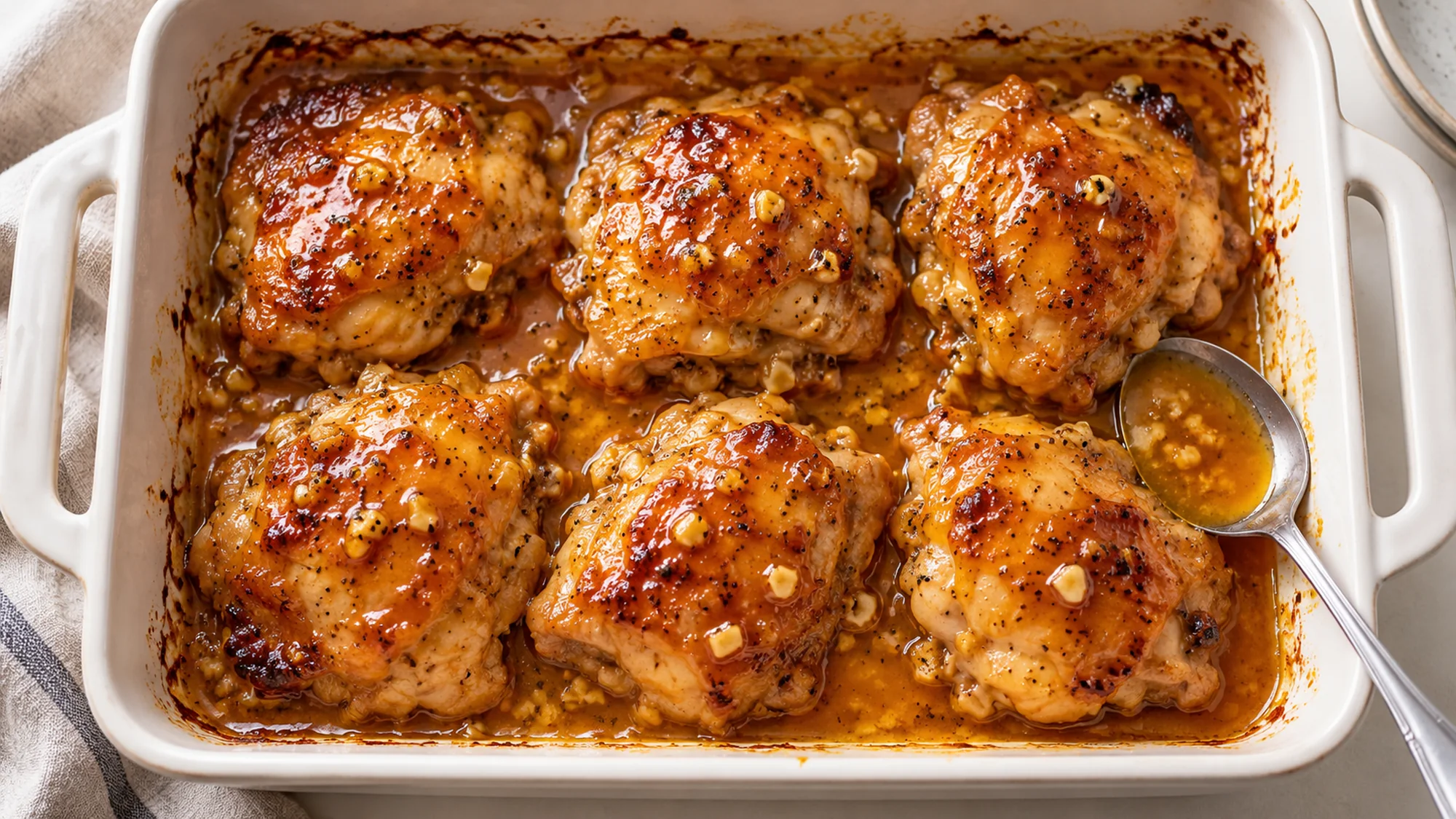
Variations and Glaze Choices
Preserves vary in sweetness and consistency, so the jar affects the finished sauce. Choose apricot preserves you enjoy, then keep the measured vinegar and mustard in the mixture for balance. Very thick preserves may remain slightly textured; that is fine. Soft fruit pieces are different from scorched glaze.
- Smoother glaze: stir the preserves thoroughly before measuring. Small fruit pieces can stay in the sauce.
- Different mustard: whole-grain Dijon gives visible mustard seeds and a different texture. It does not make the sauce automatically milder.
- Less smoky flavor: replace smoked paprika with the same amount of sweet paprika. The color stays warm, while the smoke recedes.
- Lower-sodium option: use a lower-sodium soy sauce if preferred, checking its label. Sodium levels still vary by brand.
- Different cut: boneless breasts need their own timing and temperature checks. Bone-in thighs require a different cooking time, so avoid using the card’s timer unchanged.
If the sauce darkens before the meat is ready, loosely cover the dish with foil and continue until the chicken reaches the safe temperature. Keep the dish on the center rack; sugary edges can catch when they sit too close to strong top heat.
Change the flavor gently and keep the doneness check constant. The glaze can look ready before a thick piece of chicken is cooked through.
Health Benefits and Practical Balance
Chicken contributes protein, and using skinless thighs gives the dish a rich texture without relying on a cream sauce. Apricot preserves contribute flavor and added sugar; a spoonful of preserves is not a substitute for a serving of whole fruit. The card’s estimated nutrition includes the measured glaze, with side dishes excluded.
The useful safety details are simple. Follow the CDC’s chicken-handling guidance: keep raw juices away from ready-to-eat food, skip rinsing the chicken, and wash your hands after handling it. The USDA thermometer guide explains checking poultry in the thickest area.
- Check every larger piece rather than relying on the smallest thigh.
- Follow USDA leftover guidance: refrigerate within two hours, or one hour above 90°F; use within three to four days.
- Reheat leftovers to 165°F and keep their sauce with them to help preserve moisture.
Think about the whole plate and the handling steps. A balanced side dish and an accurate thermometer are more useful than giving a sweet glaze a health halo.
Bottom Line
Apricot preserves, Dijon, and a little vinegar make a lively glaze for everyday chicken thighs. Keep the pieces in one layer, protect the sweet sauce from scorching, and let the thermometer decide when dinner is ready. I would serve it with a simple side that catches the sauce, then save any extra portions promptly for another meal.
Apricot Chicken Recipe

Ingredients
- 1.5 lb boneless skinless chicken thighs 680 g, fully thawed
- 0.333333333 cup apricot preserves about 105 g
- 1 tbsp Dijon mustard
- 1 tbsp apple cider vinegar
- 1 tbsp soy sauce
- 2 tsp olive oil
- 2 garlic cloves finely minced
- 0.5 tsp smoked paprika
- 0.25 cup water 60 ml
- 0.25 tsp black pepper
Equipment
- 9-by-13-inch baking dish
- Small mixing bowl
- Whisk
- Measuring cups and spoons
- Tongs
- knife and cutting board
- Instant-read food thermometer
- Paper towels
Instructions
- Pat the chicken dry with paper towels; do not rinse it. Preheat the oven to 400°F (200°C). Wash your hands with soap and water after handling raw chicken.
- In a small bowl, whisk together the apricot preserves, Dijon mustard, apple cider vinegar, soy sauce, olive oil, minced garlic, smoked paprika, water and black pepper.
- Using tongs, arrange the chicken in a 9-by-13-inch baking dish in a single layer, unfolding the thighs so they cook evenly. Pour the glaze over the chicken and spoon it over the tops.
- Bake uncovered for 25–35 minutes, checking at 25 minutes. Insert an instant-read thermometer into the thickest part of the larger pieces; all must reach at least 165°F (74°C). If the glaze darkens too quickly, loosely cover with foil and continue baking until the chicken reaches that temperature. Timing varies with piece size and dish.
- Rest for 5 minutes. Use clean serving utensils to divide the chicken into 4 portions and spoon the fully cooked pan sauce over the top. Serve with side dishes of your choice.
Nutrition
Video
Notes
Tried this recipe?
Let us know how it turned out!Emily is Spoonvale’s recipe-writing persona, bringing a warm, practical voice to everyday cooking. Her focus is simple: approachable meals, comforting flavors, and clear instructions that help make time in the kitchen more enjoyable.