
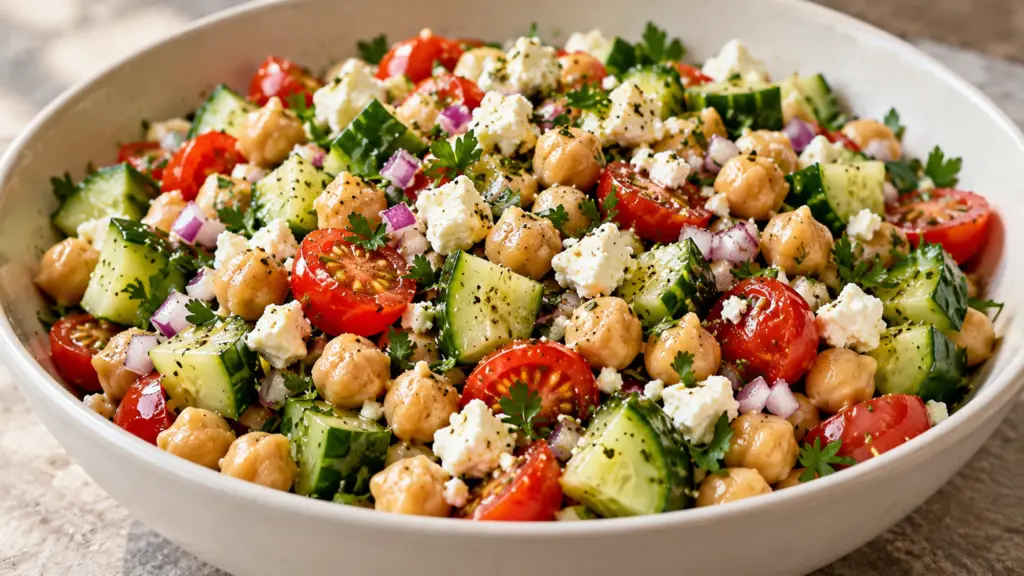
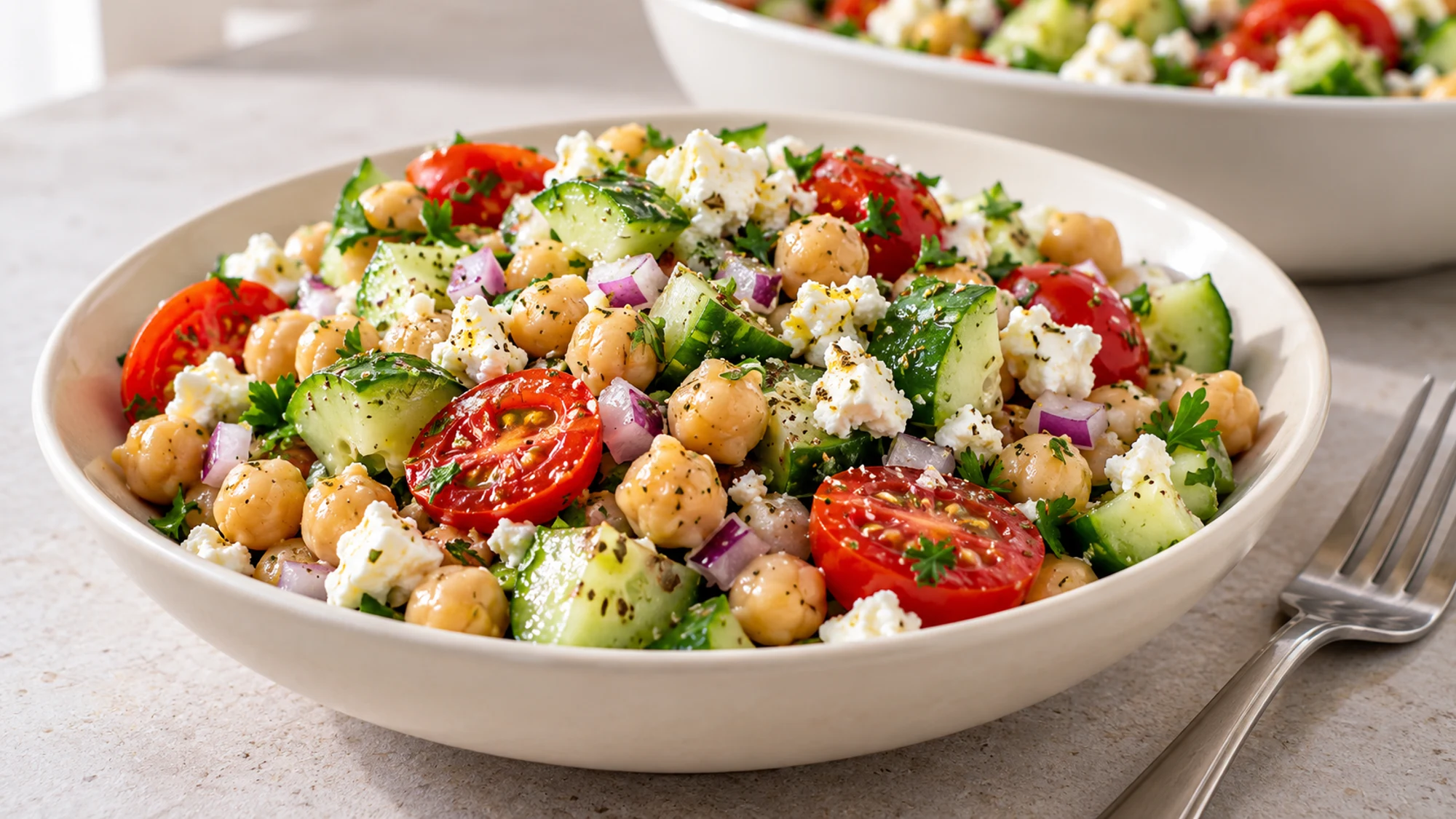
A can of chickpeas is useful, but on its own it can make lunch feel a little unfinished. Crisp cucumber, juicy tomatoes and a lemon dressing give it a fresher direction. This chickpea cucumber salad adds crumbled feta, parsley and a small amount of red onion for a bowl with plenty of contrast.
This no-cook chickpea cucumber salad makes four generous servings. Canned chickpeas keep preparation simple, while cucumber, tomatoes and a lemon-oregano dressing bring freshness. Allow 20 minutes to prepare it and a brief 10-minute chill before serving.
I prefer cucumber pieces big enough to keep a proper crunch beside the tender chickpeas. Tiny dice can disappear into the dressing, while very large chunks are awkward on a fork. A little care with the knife does more for this salad than an extra handful of toppings.
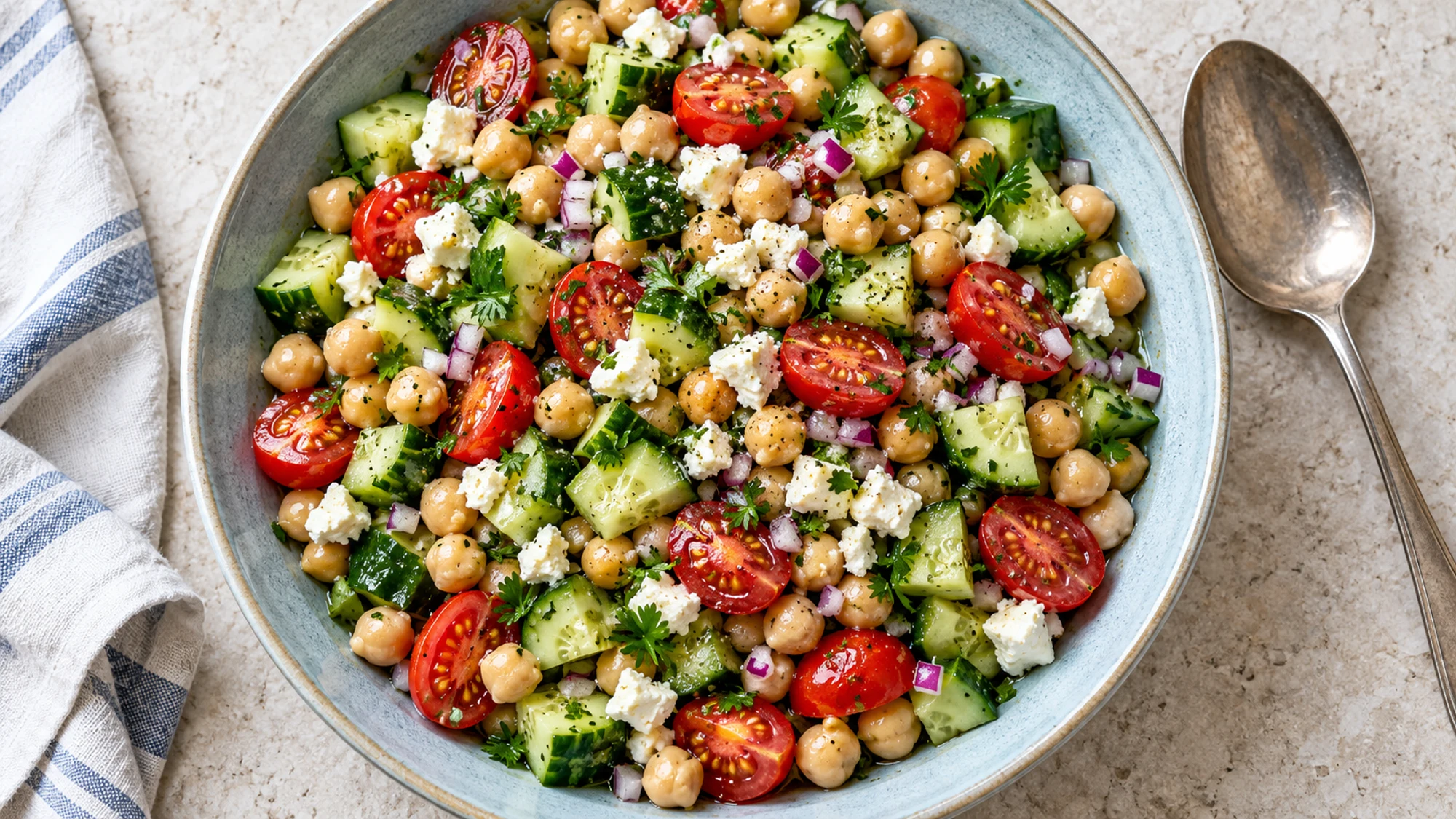
How to Serve Chickpea Cucumber Salad
Serve a generous bowl for a light lunch, with bread or a cooked grain if that makes the meal more satisfying for you. The chickpeas give it substance, but you can also offer smaller portions beside roasted chicken, fish or another warm main dish.
For a warm-and-cool plate, spoon a modest portion beside Spoonvale’s cheese stuffed sweet potato. The cucumber and lemon give a fresh contrast to that soft cheddar filling. I would keep the salad as it is rather than adding another creamy dressing to the plate.
- Bring a serving spoon so each scoop catches chickpeas and vegetables together.
- Fold in the feta gently; a few distinct crumbles are more appealing than a coating over everything.
- Keep the bowl refrigerated until needed, and toss it again just before serving.
Think about contrast rather than a long list of sides. A crisp, lemony scoop can refresh a richer meal, while a larger bowl needs only the additions that suit your appetite.
Chickpea Cucumber Salad Variations
The base salad is deliberately straightforward: mild chickpeas, cool cucumber, tomatoes, salty feta and a bright dressing. Before changing it, consider which flavor or texture you want to adjust. Swapping several ingredients at once can leave you wondering why the balance has changed.
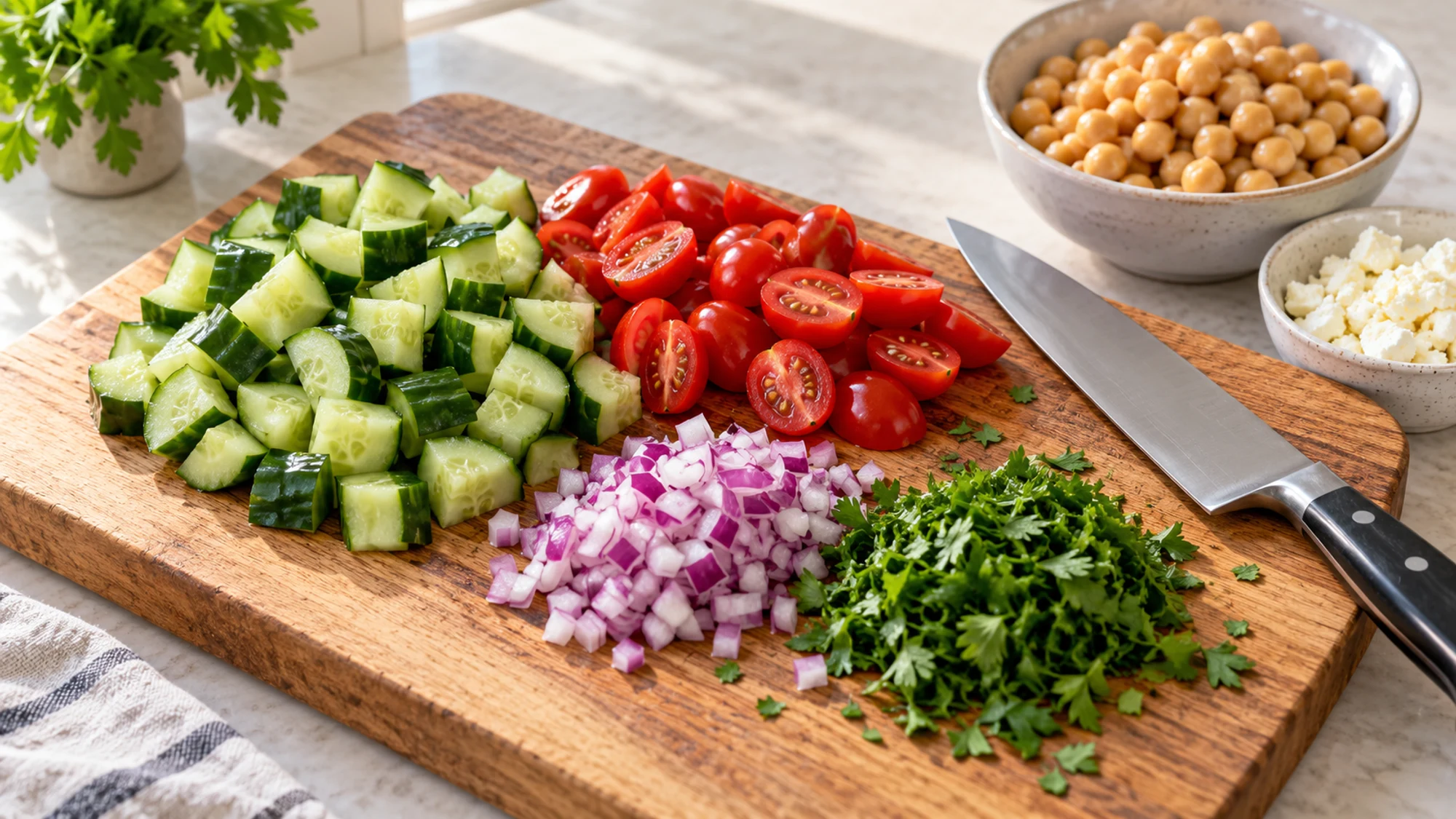
Flat-leaf parsley brings a fresh herbal note without making the salad taste strongly of one herb. Basil or dill will take it in another direction, so start with a modest amount. If raw onion feels too sharp for your taste, simply use a little less.
| Your preference | Useful change | What changes |
|---|---|---|
| No dairy | Omit the feta | Less saltiness and no creamy cheese crumbles; check all labels for dietary needs. |
| A different herb | Try basil or dill instead of parsley | A more distinctive herbal flavor. |
| Less onion bite | Reduce the red onion | A milder bowl without changing the main textures. |
| A different bean | Use drained white beans | A softer bite that needs gentler tossing. |
Keep the cucumber crisp and the chickpeas well drained, whatever variation you choose. Extra water can dilute the dressing; adding more oil immediately is less useful than tasting the salad after a gentle toss.
Health Benefits and Everyday Balance
Chickpeas belong to the legume family and provide plant protein and dietary fiber. They can bring useful variety to meals without needing a complicated preparation. The vegetables add different colors and textures, while feta and olive oil contribute flavor and richness.
Feta contains milk, a major food allergen. Omit it for a dairy-free variation and check the remaining ingredient labels. Canned chickpeas and cheese can also contribute sodium, so consider their labels and the salt in the dressing together.
- Use clean tools and follow sensible produce handling, including rinsing vegetables before cutting.
- Choose the serving size and accompaniments around the whole meal, rather than a single “healthy” ingredient.
A useful salad brings both enjoyment and variety to the plate. Keep dietary needs specific, let the vegetables stay recognizable, and treat the feta as a flavorful finishing ingredient.
Bottom Line
This chickpea cucumber salad works through simple contrasts: tender beans, crisp cucumber, juicy tomatoes and a tangy lemon dressing. Parsley keeps the flavor fresh, while feta adds small creamy, salty bites without needing a heavy sauce.
Drain well, chop the vegetables into comfortable forkfuls and add the feta gently. Give the bowl its short chill, then toss once more and serve. The recipe below has the full quantities and method for four generous portions.
Chickpea Cucumber Salad Recipe

Ingredients
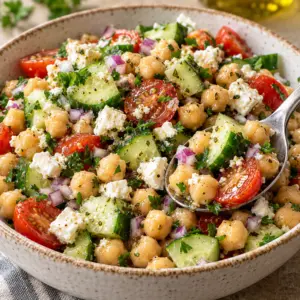
- 2 cans (15.5 oz each) chickpeas drained and rinsed; about 480 g drained total
- 1 medium English cucumber about 300 g
- 1 cup grape tomatoes 150 g, halved
- 1/2 cup crumbled feta 75 g
- 1/4 cup finely diced red onion 40 g
- 1/4 cup chopped flat-leaf parsley 15 g
- 3 tbsp fresh lemon juice 45 ml
- 2 tbsp extra-virgin olive oil 30 ml
- 1/2 tsp dried oregano
- 1/4 tsp kosher salt
- 1/4 tsp ground black pepper
Equipment
- Colander
- Cutting board
- Chef’s knife
- 4-quart mixing bowl
- Small bowl
- Fork
- Serving spoon
- Measuring cup and spoons
Instructions
- Rinse the cucumber, tomatoes, parsley and lemon under running water; dry well.
- Drain and rinse the chickpeas in a colander, then shake well to remove excess water.
- Trim and dice the cucumber into roughly ½-inch (1 cm) pieces. Halve the grape tomatoes, finely dice and measure the red onion, and chop and measure the parsley.
- Whisk the measured lemon juice, olive oil, dried oregano, salt and pepper together in a small bowl with a fork.
- Put the chickpeas, cucumber, tomatoes, red onion and parsley in a 4-quart mixing bowl. Pour over the dressing and toss until coated, then gently fold in the crumbled feta.
- Refrigerate for 10 minutes. Toss gently once more, then divide into four generous servings. Refrigerate leftovers promptly.
Video
Notes
Tried this recipe?
Let us know how it turned out!Emily is Spoonvale’s recipe-writing persona, bringing a warm, practical voice to everyday cooking. Her focus is simple: approachable meals, comforting flavors, and clear instructions that help make time in the kitchen more enjoyable.