
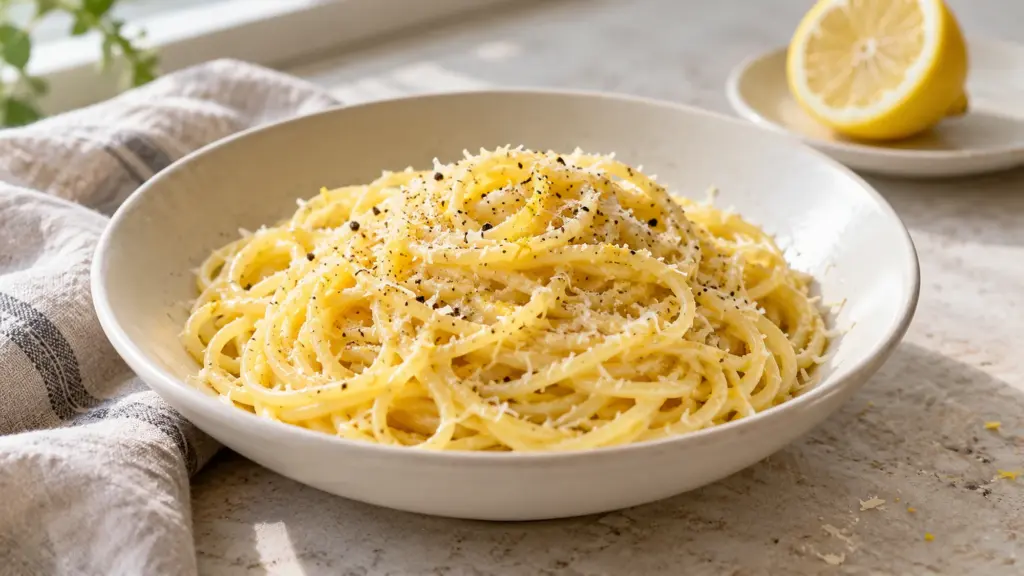
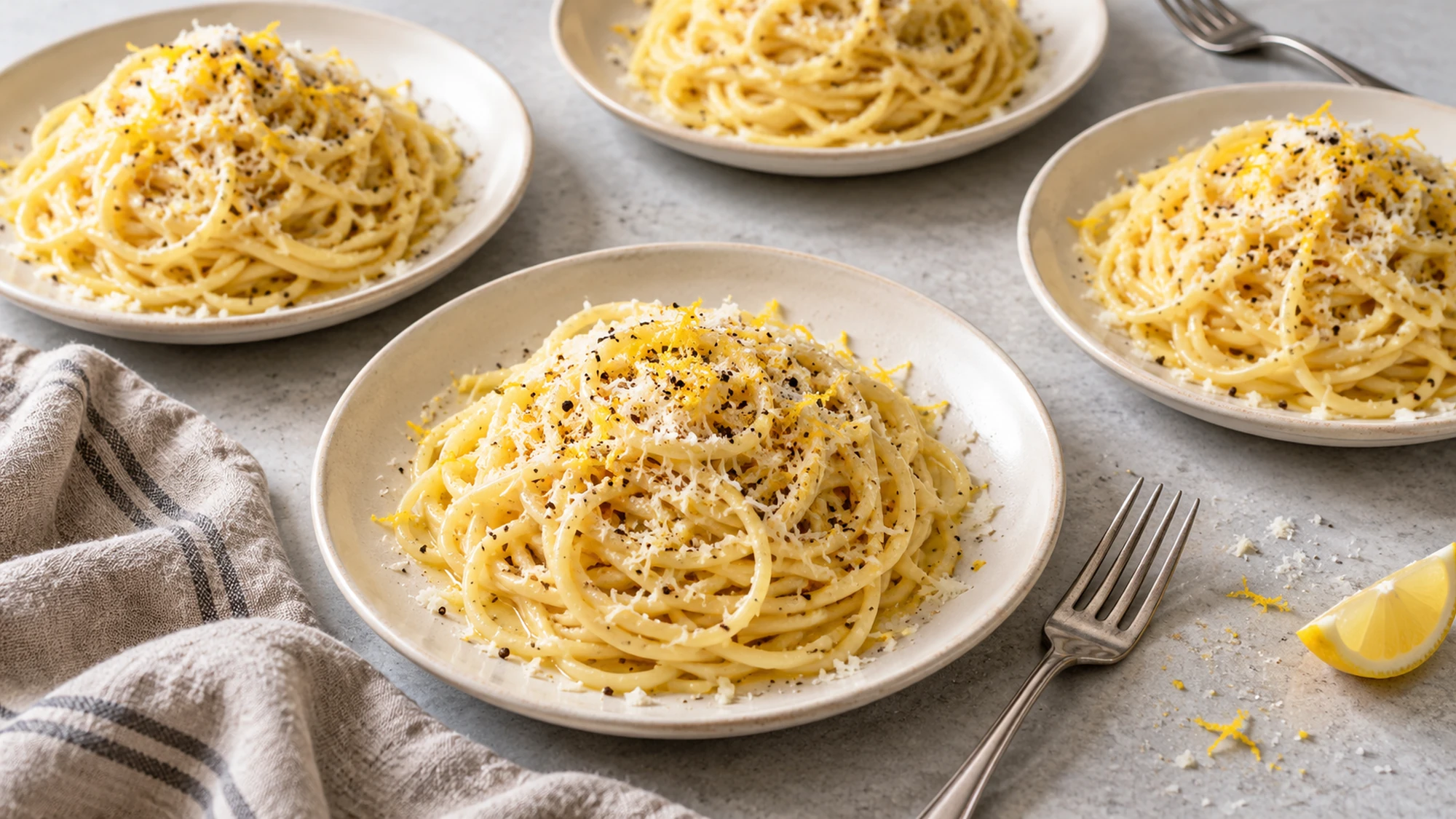
A little planning turns a lemon into an unusually handy pasta ingredient. This frozen lemon pasta starts with solid frozen fruit, grated finely enough that its zest and flesh mingle with hot spaghetti. Butter, Parmesan and a splash of the cooking water make the coating glossy, while black pepper gives each forkful a savory edge.
Freeze the prepared lemon ahead, measure a modest amount of fine gratings, and add the Parmesan off the heat. Those three choices keep the citrus distinct and the sauce soft enough to coat the strands.
This recipe uses 30 grams of grated lemon for four portions, rather than asking you to grate an entire fruit of uncertain size. I’d start there: the white pith can bring bitterness, especially on a thick-skinned lemon. There is no need to use every last piece to make dinner taste lemony.
Wash and dry the lemon before cutting or freezing; the peel becomes part of the food. The FDA recommends washing produce under running water, without soap. Halve the fruit, remove visible seeds and freeze it in a covered container until solid, allowing about 12 hours. This is the advance preparation; the pasta itself cooks the next day.
Grate over the mixing bowl with a fine grater, keeping your fingers clear of the blade. Stop while the remaining piece is still easy to hold. Reseal the unused frozen lemon for another meal, rather than trying to grate a slippery sliver.
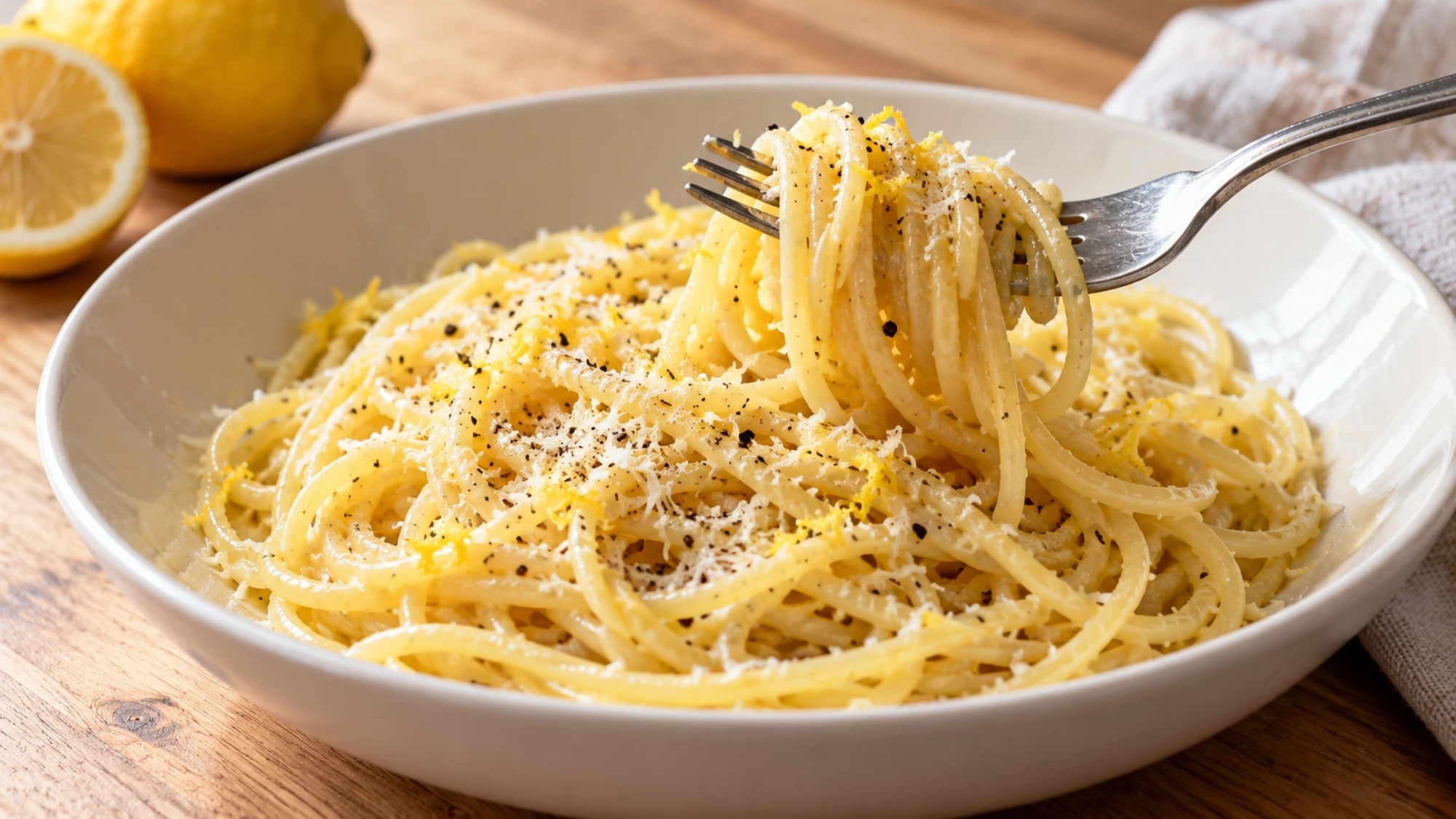
Serving Suggestions for Frozen Lemon Pasta
Bring the bowl to the table immediately after tossing. Warm plates help, but timing matters more: even a smooth sauce thickens as the pasta sits. Keep the reserved water beside you until the portions are served. A tablespoon or two can restore movement without making the dish taste heavier.
- Choose a crisp side: sliced cucumbers, a simple leafy salad or radishes make a fresh contrast to the buttery strands.
- Add substance separately: serve with cooked white beans, grilled chicken or steamed green vegetables according to your meal plans.
- Store promptly: refrigerate leftovers in shallow covered containers within two hours, or one hour above 90°F (32°C). Use within three to four days and reheat to 165°F (74°C), following USDA leftover guidance.
Serve while the strands slip easily around a fork, with a contrasting vegetable side and enough reserved water to loosen the last portion.
Variations for Frozen Lemon Pasta
A wedge of Parmesan grated very finely is my choice for this sauce. Coarse shreds take longer to disperse, and the pasta can cool while you work. Add the cheese gradually with the bowl away from direct heat, tossing between additions. If the strands look sticky, add water before reaching for more butter.
| Change | How to use it |
|---|---|
| Fresh lemon | Replace the frozen gratings with 1 teaspoon zest and 1 tablespoon juice; taste before adding more. |
| Linguine | Use the same dry weight and follow the package cooking time. |
| Herb finish | Fold in 1 tablespoon finely chopped parsley just before serving. |
If the cheese begins clumping, pause and toss with a small splash of warm cooking water before adding any more. For a more tomato-forward pasta dinner another day, Spoonvale’s baked feta pasta offers a different direction. Here, keep additions restrained so the lemon remains recognizable.
Change the pasta shape or the finishing herb if you wish, while keeping the measured citrus and gradual cheese additions as your starting point.
Health Benefits of Frozen Lemon Pasta
Pasta contributes carbohydrate, and Parmesan contributes protein and calcium. This is still a butter-and-cheese dish, so serving size and the rest of the meal matter. A generous vegetable side adds variety without requiring a larger amount of sauce. Freezing a lemon does not turn this recipe into a detox meal.
Salt and saturated fat depend on your cheese, butter and portions. The FDA’s Nutrition Facts guide can help you compare labels. Choose a vegetarian-rennet cheese if that matters to you; ordinary Parmesan is not automatically vegetarian. The standard recipe contains wheat and milk.
Treat the lemon as flavor, keep the meal varied, and use your ingredient labels when comparing salt, saturated fat or dietary needs.
Bottom Line
Frozen lemon pasta rewards one advance step and a light touch at the bowl. Prepare the fruit the night before, grate only the measured amount and save the cooking water before draining. The next day, hot spaghetti and gentle tossing do most of the work. Add Parmesan off the heat and serve as soon as the coating looks smooth.
Plan for the freeze, measure the lemon, and finish gently for a bright, glossy bowl.
Frozen Lemon Pasta Recipe

Ingredients
- 1 medium lemon wash, halve and remove visible seeds before freezing; use 30 g of fine frozen gratings and keep the rest for another meal
- 12 oz dry spaghetti 340 g
- 3 tbsp unsalted butter 42 g, cut into small pieces
- 2 oz Parmesan cheese 57 g, freshly and very finely grated from a wedge
- 1 tsp fine salt for the cooking water
- 0.25 tsp black pepper finely ground
- 3 L water for cooking the pasta; reserve 1 cup (240 ml) before draining
Equipment
- Freezer-safe covered container
- Chef’s knife and cutting board
- Fine grater for lemon and Parmesan
- kitchen scale to weigh 30 g frozen lemon gratings
- Large pasta pot and colander
- Wide heatproof mixing bowl
- Tongs
- Measuring cup and spoons
Instructions
- Wash the lemon under running water and dry it with a clean towel. Halve it, remove visible seeds and place the halves in a covered freezer-safe container. Freeze until solid, allowing about 12 hours or overnight.
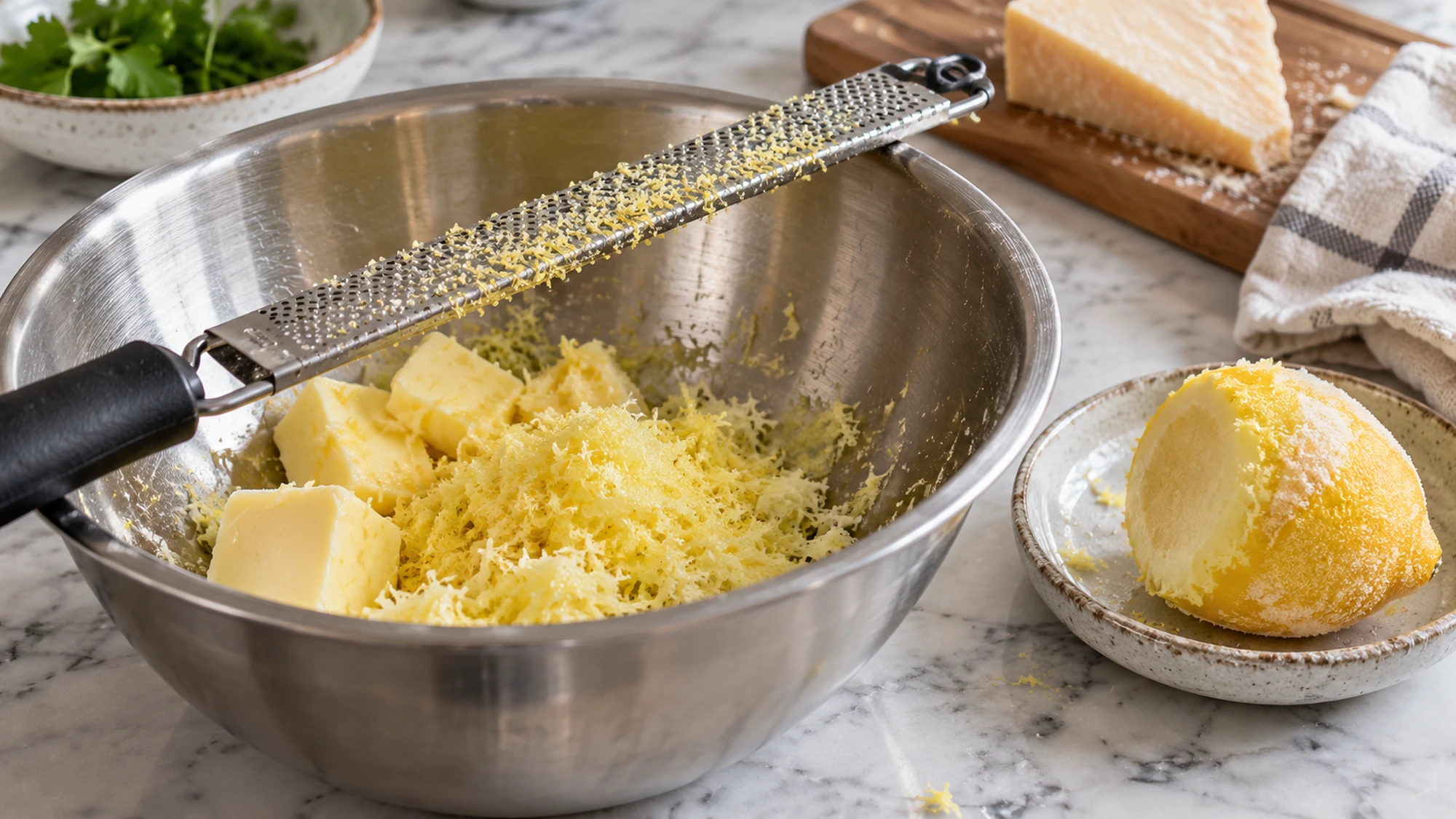
- The next day, place a wide heatproof mixing bowl on a kitchen scale and tare it. Finely grate 30 g of frozen lemon, including zest, flesh and a little pith, into the bowl. Avoid seeds and stop while the remaining lemon is still large enough to hold safely; reseal the unused fruit in the freezer. Add the butter pieces to the bowl.
- Bring 3 liters water and the fine salt to a boil in a large pot. Add the spaghetti and cook according to the package until al dente. Reserve 1 cup (240 ml) cooking water, then drain.
- Immediately add the hot spaghetti and 1/4 cup (60 ml) reserved water to the lemon and butter. Toss with tongs until the butter melts and the strands are coated.
- Keep the bowl away from direct heat. Add the Parmesan a little at a time, tossing after each addition, then add the black pepper. Loosen with more warm cooking water, 1 tablespoon at a time, until the coating is glossy and the strands move easily.
- Divide into 4 portions and serve immediately. The pasta will absorb more sauce as it stands, so keep the remaining cooking water nearby until all portions are served.
Nutrition
Notes
Tried this recipe?
Let us know how it turned out!Emily is Spoonvale’s recipe-writing persona, bringing a warm, practical voice to everyday cooking. Her focus is simple: approachable meals, comforting flavors, and clear instructions that help make time in the kitchen more enjoyable.