
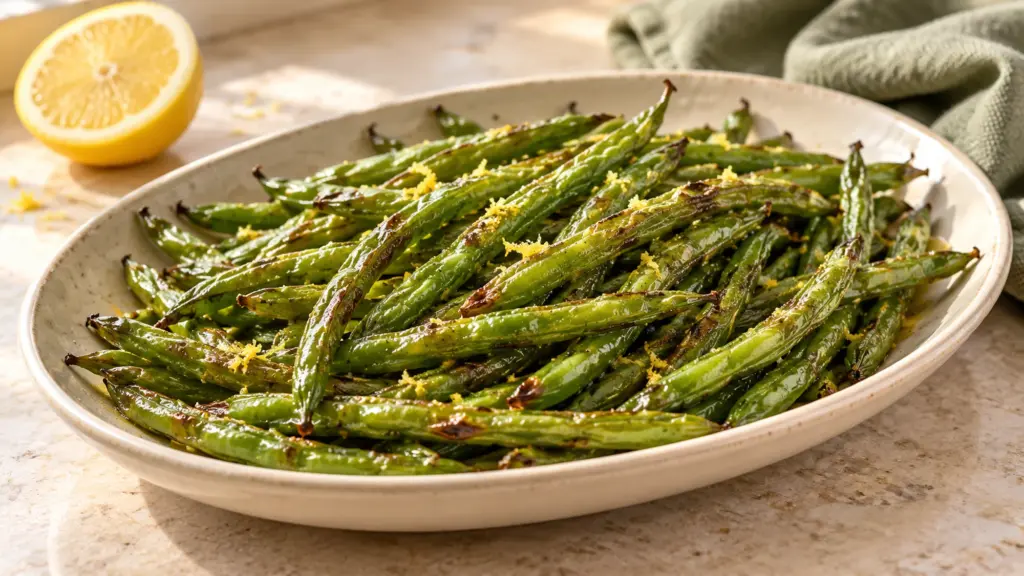
This green beans recipe uses the oven for lightly browned edges, then a small lemon-mustard dressing for a bright finish. The beans stay the main event: no creamy sauce, breading, or long ingredient list. Start with fresh beans of similar thickness so one end of the tray is not ready long before the other.

Dry the beans thoroughly, spread them in one layer on a large metal tray, and roast until tender with a few browned spots. Toss with the lemon-Dijon dressing after roasting. Expect a tender vegetable with roasted edges, rather than the brittle crunch of a snack.
I’d choose this approach when the oven is already part of dinner. The dressing can be mixed while the beans roast, and its sharpness works beside a richer main. Just leave room for the tray; squeezing it between crowded oven dishes makes the timing less predictable.
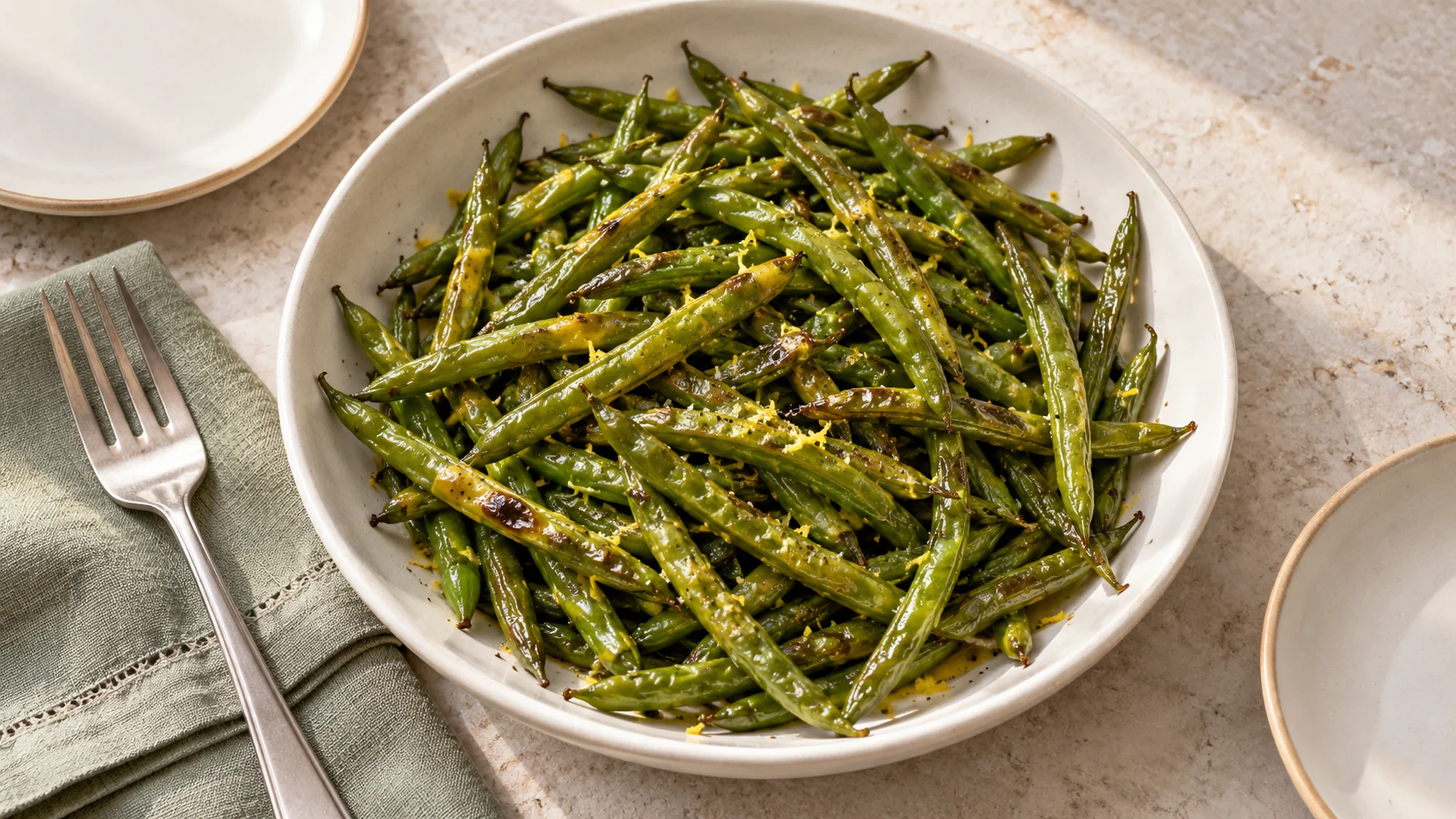
Serving this green beans recipe while warm
Bring the beans to the table soon after dressing them. Warm beans carry the lemon aroma nicely, and a wide serving dish makes them easy to share without trapping too much heat underneath a deep pile. Use tongs to lift them so extra dressing stays in the bowl.
Pair them with baked fish, roast chicken, a grain pilaf, or a simple lentil dish. My preference is to let the lemon do the talking here: if the main already has a sharp sauce, add part of the dressing first and taste before using the rest. Any dressing left behind changes the nutrition estimate slightly.
- For a gentler mustard flavor, start with half the dressing and add more at the table.
- Refrigerate leftovers in a shallow covered container within 2 hours, or 1 hour above 90°F (32°C). Use within 3–4 days at 40°F (4°C) or below.
- Reheat leftovers to 165°F (74°C); expect a softer texture than the freshly roasted beans.
Dress close to serving time and make the amount of lemon dressing suit the rest of the plate.
Adjusting the green beans recipe for thickness
Bean size deserves more attention than a rigid timer. Thin haricots verts can soften before thicker supermarket beans; begin checking them earlier. For either kind, look for a tender bite and some browning, rather than waiting for every bean to turn dark.
| Fresh bean or batch | What to change | Useful cue |
|---|---|---|
| Thin haricots verts | Check earlier | Begin checking near 12 minutes. |
| Thicker fresh beans | Allow more time | Continue until tender, checking frequently. |
| A double batch | Use two large trays | Keep a single layer and rotate as needed. |
| A milder dressing | Use less at first | Taste before adding the remainder. |
Keep frozen or canned beans for a method designed around their moisture and texture. They are useful ingredients, but this particular tray and timing start with fresh beans. Doubling the quantity also needs more surface area: use two trays and rotate their positions if your oven heats unevenly.
Adjust for thickness and tray space first. Extra seasoning cannot fix beans that have spent the roast steaming in a heap.
Health benefits and balance in a green beans recipe
Green beans add vegetables and naturally occurring fiber to the meal. That fiber contributes to everyday digestive function as part of an overall varied diet. The olive oil brings most of this side’s fat, so measuring it keeps the dressing in proportion without needing to make the beans dry.
There is no promise of a special health effect from one tray of vegetables. The card’s estimate divides all measured ingredients between four side servings and assumes the dressing is eaten. Mustard and added salt contribute sodium; check the mustard label and adjust seasoning for your own needs. Mustard is also an allergen to consider when serving guests.
- Learn how dietary fiber supports normal digestion as part of a varied diet.
- For preparation, rinse produce under plain running water and dry it with a clean towel.
A practical vegetable side earns its place through flavor and variety. Portions, dressing, and the rest of dinner all belong in the picture.
Bottom Line
The useful work happens before roasting: rinse, trim, dry, and give the beans room. Then use the oven time to mix a small dressing instead of adding another elaborate task. Taste a bean near the end, because its thickness tells you more than a promise that every tray finishes at the same minute.
Finish this green beans recipe with enough lemon-mustard dressing to lightly coat the beans, then serve while warm. Roasted spots, a tender center, and a fresh finish are all the side needs.
Green Beans Recipe


Ingredients
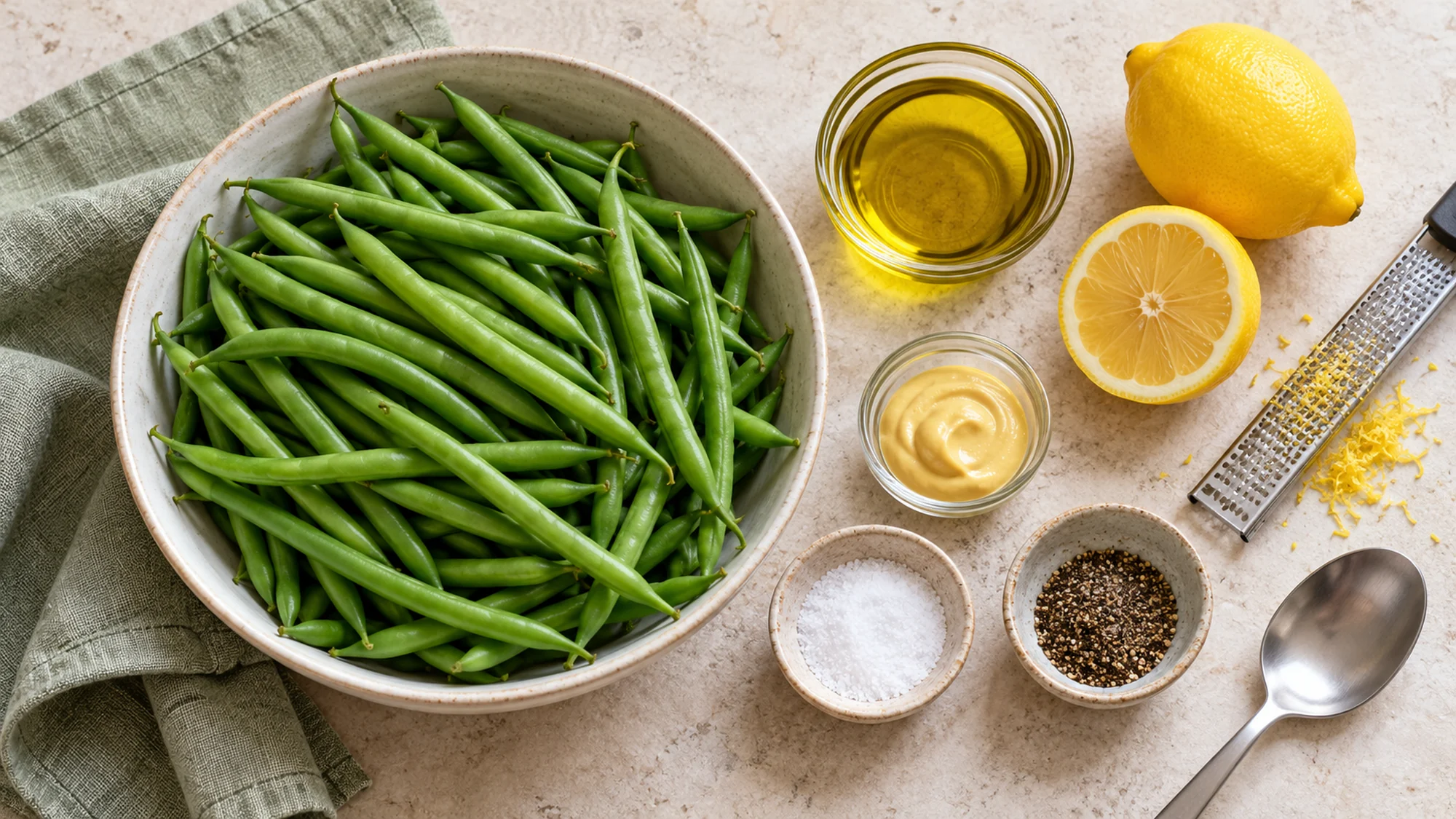
- 1 lb fresh green beans 454 g after trimming; choose similar thickness
- 1.5 tbsp olive oil 20 g, divided: 1 tbsp for the beans, 1/2 tbsp for the dressing
- 1 tbsp fresh lemon juice 15 ml
- 1 tsp finely grated lemon zest 2 g; wash and dry the lemon before zesting
- 1 tsp Dijon mustard 5 g
- 0.25 tsp fine salt 1.5 g
- 0.25 tsp ground black pepper 0.6 g
Equipment
- 1 Colander
- 1 Clean kitchen towel for drying beans
- 1 Kitchen knife and cutting board for trimming stem ends
- 1 Large rimmed metal baking sheet 18 x 13 inches; bare uncoated metal
- 1 Large mixing bowl
- 1 small bowl and whisk for dressing
- 1 Tongs
- 1 Fine zester
- Measuring spoons
- 1 Oven conventional setting
Instructions
- Rinse the green beans under plain running water, trim off the stem ends, and dry them thoroughly with a clean kitchen towel.
- Set a rack in the middle of the oven and heat to 425°F (220°C). Have an 18 x 13-inch rimmed metal baking sheet ready.
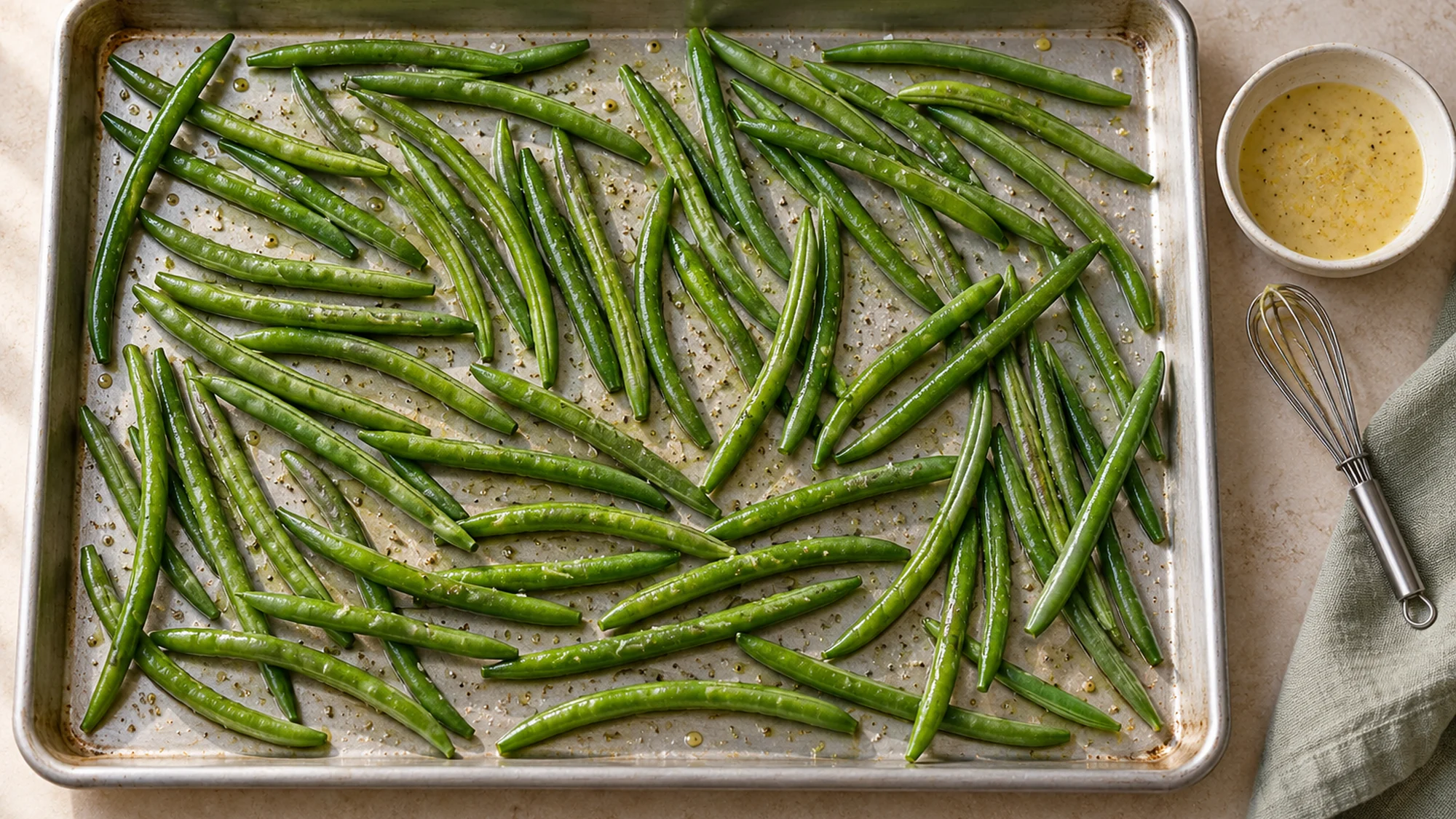
- In the large bowl, toss the dry beans with 1 tablespoon olive oil, the salt and pepper. Spread on the bare baking sheet in one layer, leaving space rather than piling the beans. Roast about 15–22 minutes, turning at 8–10 minutes, until tender with a few browned spots. Begin checking near 12 minutes for very thin beans; thicker beans may need longer.
- While the beans roast, whisk the lemon juice, lemon zest, Dijon mustard and remaining 1/2 tablespoon olive oil in the small bowl until combined.
- Transfer the hot beans to the large bowl, add the dressing, and toss gently to lightly coat. Serve warm. For a milder finish, add half the dressing first and offer the rest at the table.
Nutrition
Video
Notes
Tried this recipe?
Let us know how it turned out!Emily is Spoonvale’s recipe-writing persona, bringing a warm, practical voice to everyday cooking. Her focus is simple: approachable meals, comforting flavors, and clear instructions that help make time in the kitchen more enjoyable.