
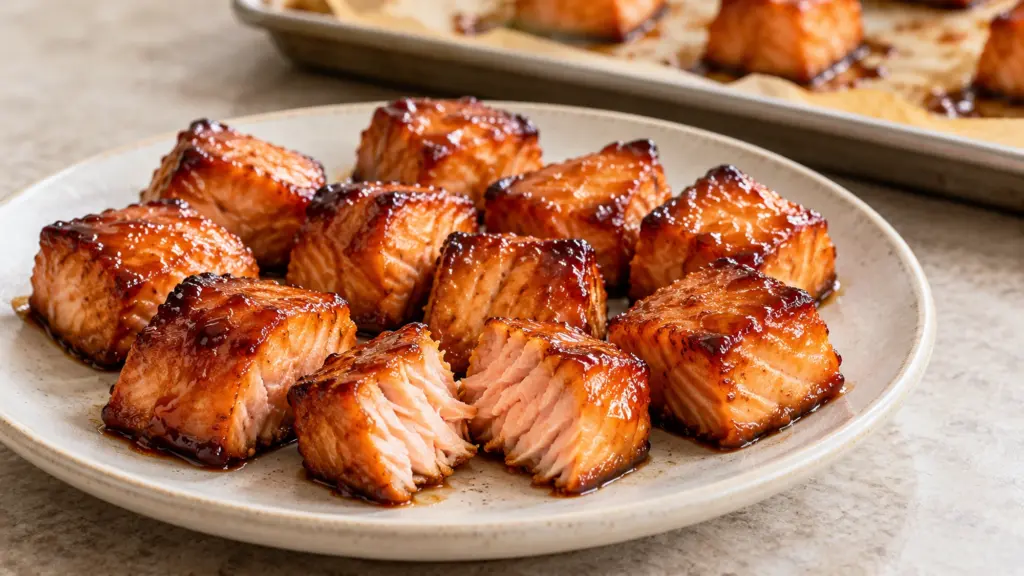
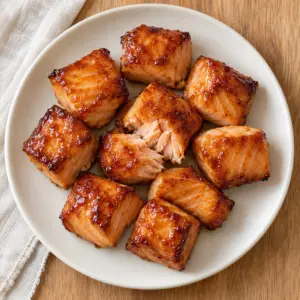
A sweet coating works best when you can still tell what is underneath it. These candied salmon bites use maple syrup and brown sugar for a shiny surface, with soy sauce and cider vinegar keeping the flavor rounded. Cutting the fish into small, evenly sized pieces gives the coating more edges to cling to.

Briefly simmer the glaze, brush once before baking and again partway through, and leave space between the pieces. Cook the thickest bites to 145°F (63°C), then let them stand briefly so the coating settles before serving.
- Pat away surface moisture so the first coating stays on the fish.
- Choose parchment rated for the recipe’s oven temperature, with its edges contained inside the rimmed pan.
This is a home-oven interpretation of candied salmon, served as freshly cooked seafood. Expect flaky centers with firmer, sweet edges rather than a dried texture. I’d choose a thick skinless fillet for this approach: very thin tail pieces give you less room between cooked through and dry.
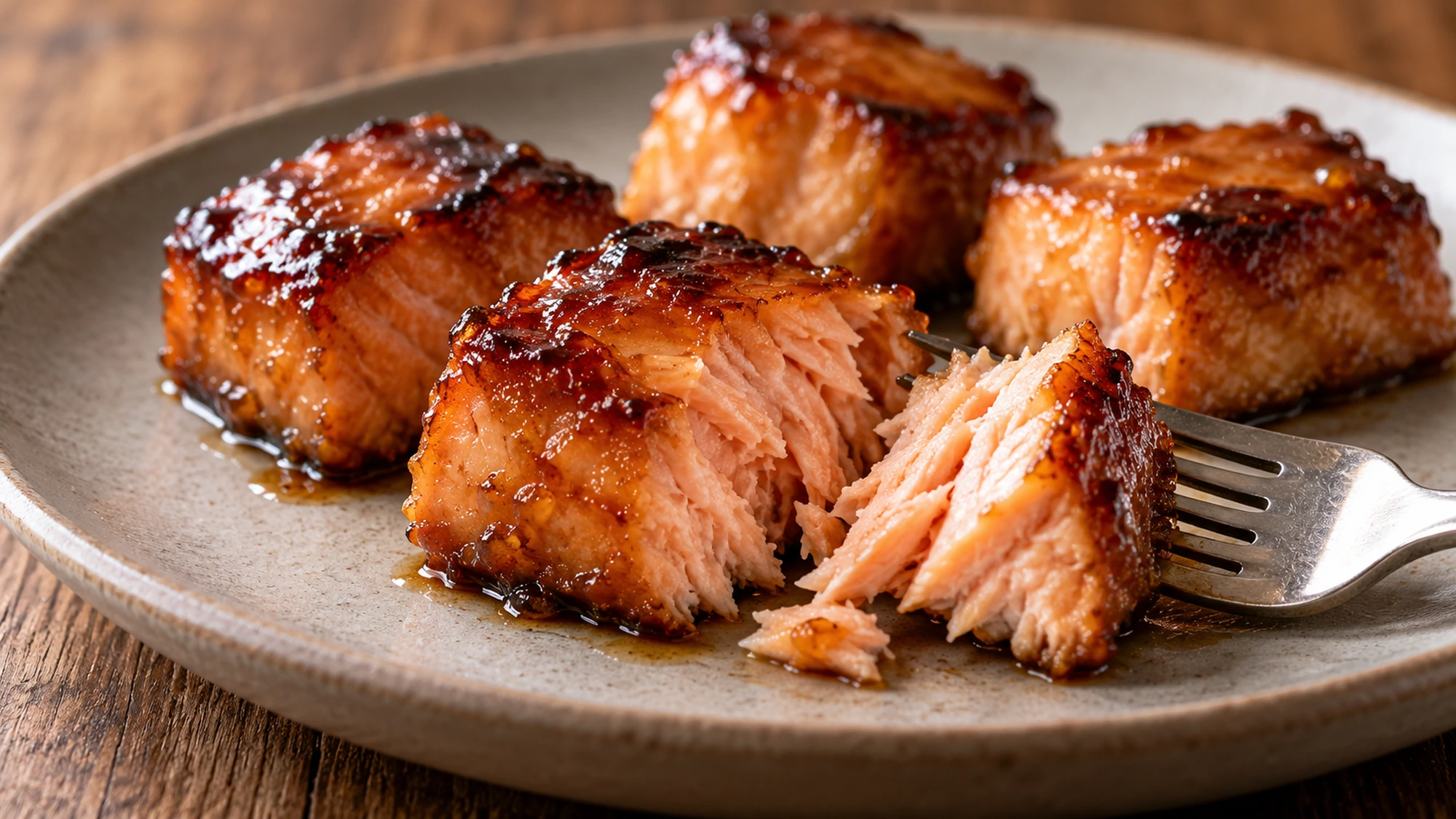
Serving Suggestions for Candied Salmon
Put the bites over plain rice or alongside small boiled potatoes so the sweet coating stays the main seasoning. A cucumber salad or simply steamed broccoli adds a fresher texture. Keep extra sauces off the first plate until you know whether the glaze already supplies enough flavor.
If I were setting these out for guests, I’d divide them into small batches and replenish the platter as needed. Keep waiting portions at 40°F (4°C) or below, or 140°F (60°C) or above. Use a clean serving utensil, separate from anything that touched the uncooked fish.
- For dinner bowls, add the salmon after arranging the rice and vegetables.
- For appetizers, provide small forks or cocktail picks.
- For another fish dinner with a different flavor, try Spoonvale’s baked cod tacos with lime slaw.
Give the sweet fish a simple base and one contrasting vegetable; it needs little decoration.
Candied Salmon Variations That Keep the Method Clear
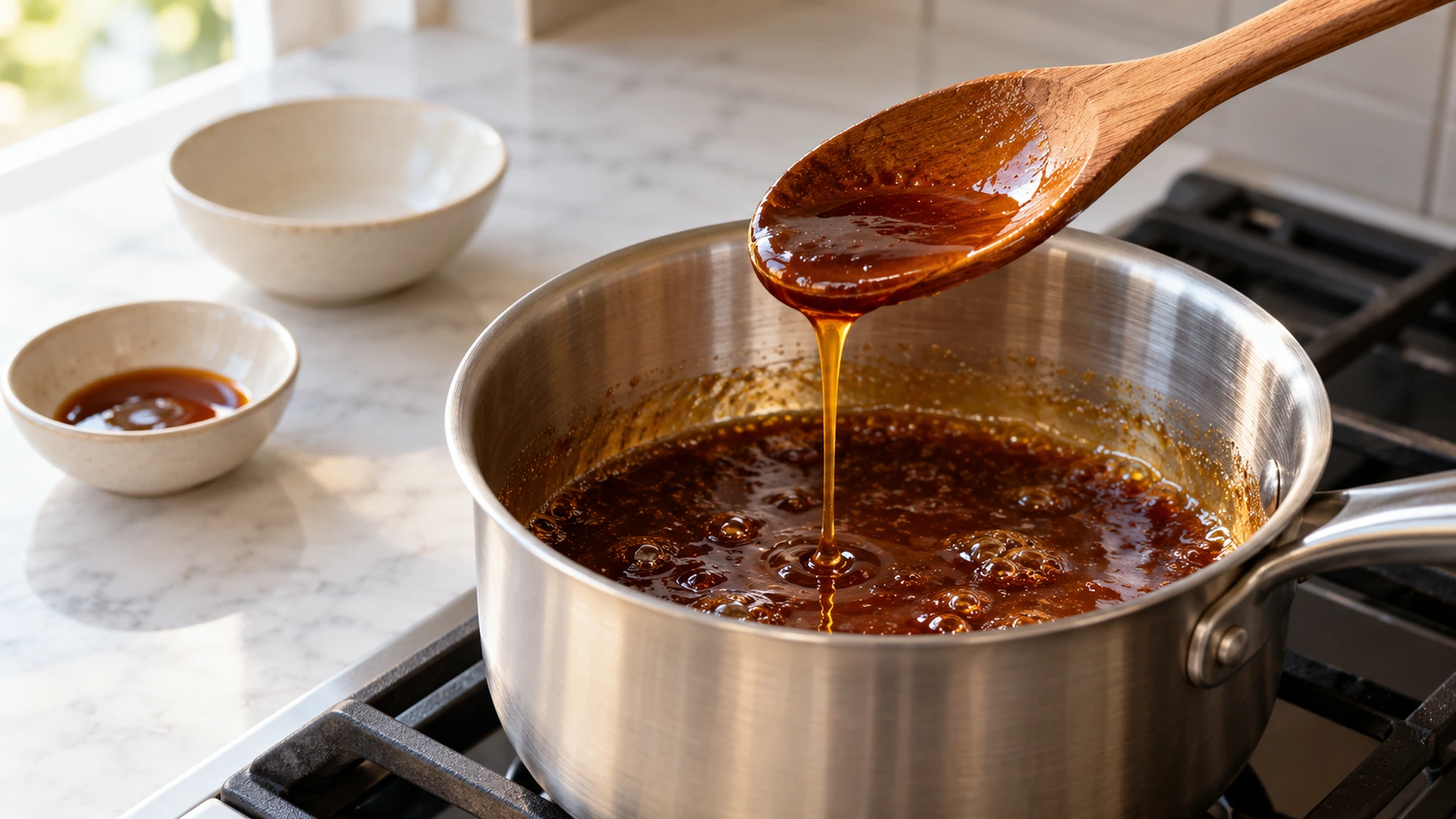
The glaze is deliberately short on ingredients. Pure maple syrup supplies a recognizable flavor, brown sugar helps the coating cling, and the small amount of vinegar sharpens the finish. Keep those roles in mind when considering a change.
| Ingredient choice | Useful option | What changes |
|---|---|---|
| Light brown sugar | The same weight of dark brown sugar | Stronger molasses flavor |
| Cider vinegar | The same volume of unseasoned rice vinegar | A gentler acidity |
| Reduced-sodium soy sauce | Reduced-sodium tamari, checking its label | Flavor and allergen information can differ |
| Fresh salmon | Fully thawed frozen skinless salmon | Dry the surface before coating |
I’d change one ingredient at a time, especially when adjusting the soy sauce. Regular soy sauce can make a reduced glaze noticeably saltier, while sweetened rice vinegar changes both sweetness and acidity. Taste the glaze before it contacts raw fish, when a clean spoon can give useful feedback.
- For a little heat, add a pinch of red pepper flakes to the glaze.
- For smaller bites, begin checking the temperature earlier rather than following the full baking window.
- Keep the reserved finishing glaze separate; discard anything remaining in the brushing bowl after cooking.
Use modest changes and the same thermometer check, rather than assuming every substitution cooks identically.
Health Benefits and Everyday Balance
Salmon provides protein and marine omega-3 fats, including EPA and DHA. The NIH explains these omega-3 fats and why amounts vary among foods. That nutrient contribution belongs alongside the recipe’s added sugars and sodium when considering the whole meal.
A sweet glaze does not extend this fish’s storage life. Follow FDA seafood handling guidance, including the 145°F cooking temperature and separation of raw seafood from ready-to-eat foods. Insert the thermometer from the side into a thick bite to reach its center.
- Refrigerate leftovers promptly in a shallow container, within two hours or one hour above 90°F (32°C).
- Keep them at 40°F (4°C) or below and use within three to four days, following USDA leftover guidance.
- Check soy sauce labels for soy and wheat when those allergens matter.
Enjoy the fish’s nutrients and sweet coating together, with ordinary cooked-seafood handling.
Bottom Line
The useful trick in these candied salmon bites is restraint: a coating that clings, two thin applications, and enough space on the tray. Watch the smaller pieces and stop cooking them when their centers reach the recommended temperature.
Let the glaze settle briefly, then serve the bites with something simple. The recipe card gives the quantities and sequence, including a clean reserved portion of glaze for the finished fish.
Candied Salmon Recipe

Ingredients
- 1.5 lb skinless salmon fillet about 680 g, pin bones removed; cut into approximately 1¼-inch/3 cm pieces
- 0.25 cup pure maple syrup 60 ml
- 0.25 cup packed light brown sugar 50 g
- 2 tbsp reduced-sodium soy sauce 30 ml
- 1 tbsp apple cider vinegar 15 ml
Equipment
- 18-by-13-inch rimmed half-sheet pan
- Oven-safe parchment paper
- Small 1-quart saucepan and wooden spoon
- Two small bowls
- Silicone pastry brush
- knife and cutting board
- Measuring cups and spoons; kitchen scale for gram measures
- Instant-read food thermometer
Instructions
- Heat the oven to 375°F (190°C) with a rack in the center.
- Line the rimmed half-sheet pan with parchment rated for this temperature. Pat the salmon pieces dry and arrange them at least 1 inch apart in a single layer.
- Combine the maple syrup, brown sugar, soy sauce, and vinegar in the small saucepan. Bring to a gentle simmer over medium heat, stirring until the sugar dissolves. Simmer for about 3 minutes, just until lightly syrupy and coating a spoon; remove from the heat before it becomes thick candy.
- Before any brush touches raw fish, measure 2 tablespoons of glaze into one clean bowl and reserve for serving. Pour the remaining glaze into the second bowl for brushing.
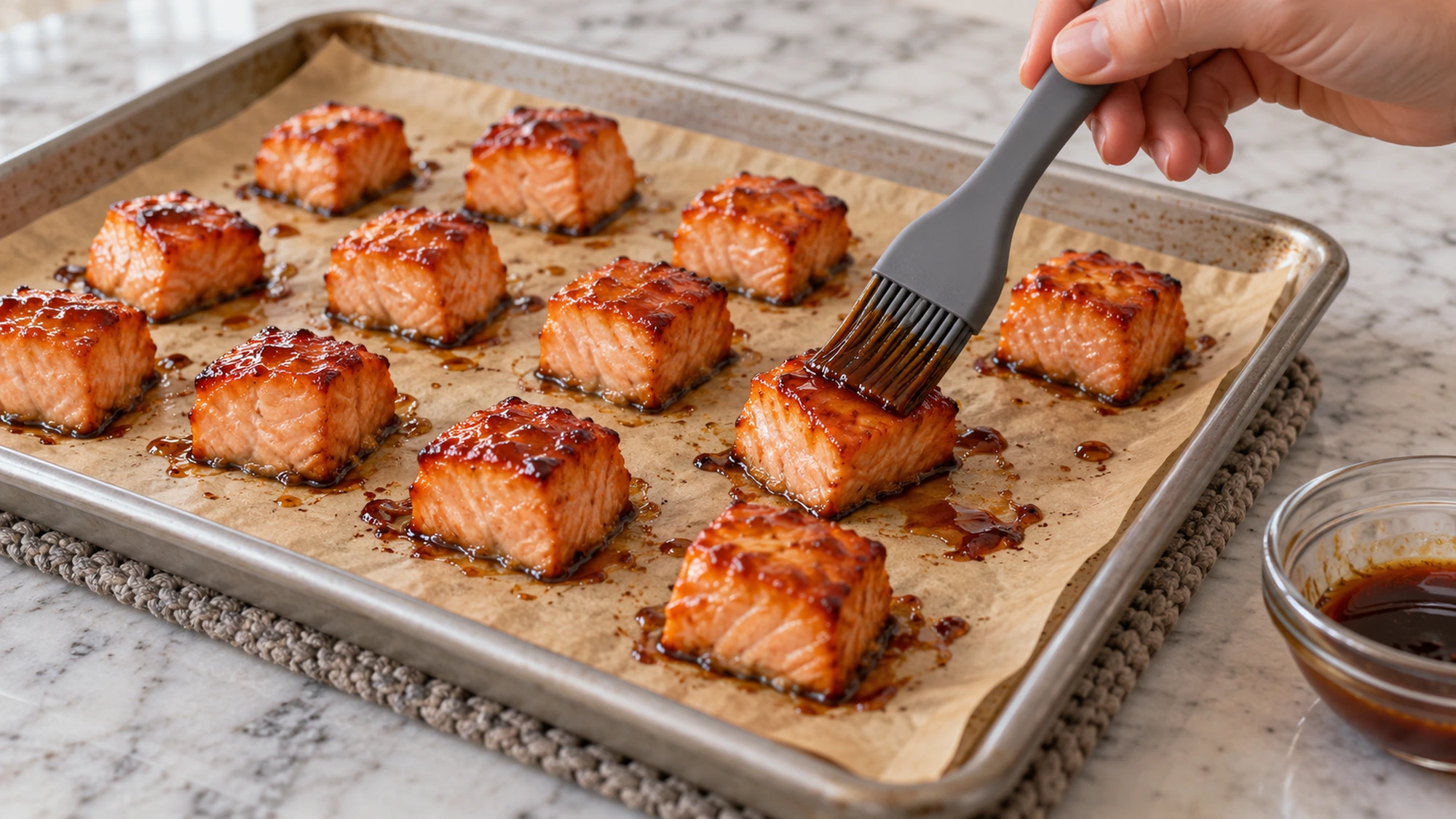
- Brush the salmon tops and exposed sides with a thin coat from the brushing bowl. Bake for 7 minutes, then brush on a second thin coat. Return to the oven and begin checking after another 5 minutes. Continue only until several thick pieces measure 145°F (63°C) in their centers; total baking time is usually about 12–20 minutes. Remove smaller pieces as they reach the temperature.
- Discard glaze remaining in the brushing bowl. Let the cooked bites stand for 5 minutes, then transfer to a clean plate and spoon over the untouched reserved glaze as desired.
Video
Notes
Tried this recipe?
Let us know how it turned out!Emily is Spoonvale’s recipe-writing persona, bringing a warm, practical voice to everyday cooking. Her focus is simple: approachable meals, comforting flavors, and clear instructions that help make time in the kitchen more enjoyable.