
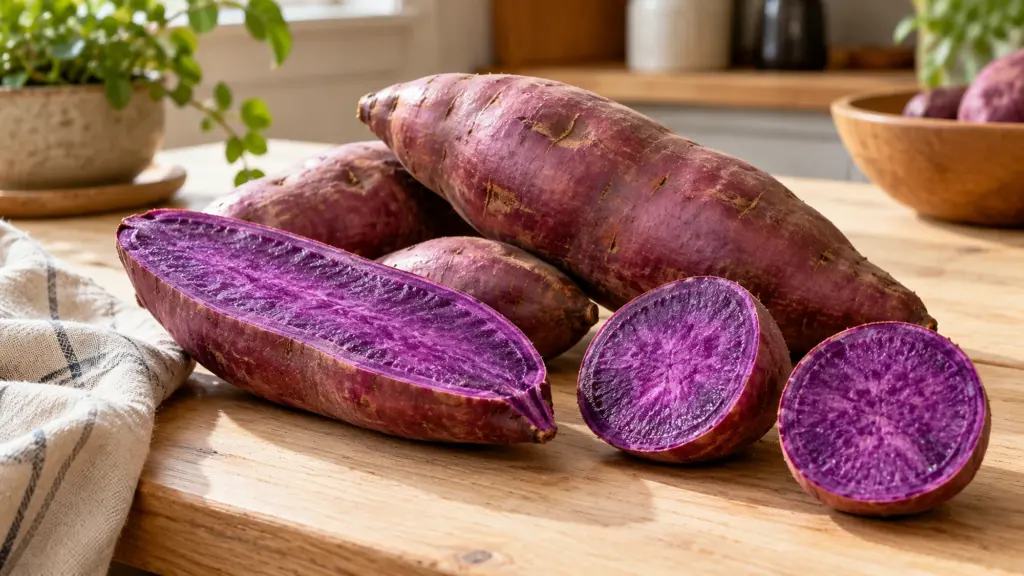
The purple vegetables in the produce bin look promising, but the recipe on your phone calls for ube. Is that the same thing? Before putting a few in your basket, it helps to look past the color and check the name.
A purple sweet potato is a purple-fleshed variety of sweet potato, not ube. Sweet potatoes are Ipomoea batatas; ube is a true yam, Dioscorea alata. Start with the correct ingredient, then follow cooking guidance for the variety you bought.
That distinction matters most when you are following a dessert recipe or expecting a particular texture. For an everyday vegetable side, you have more room to experiment. Here is how to shop with less guesswork and give that vivid interior a useful place on your plate.
What Is a Purple Sweet Potato?
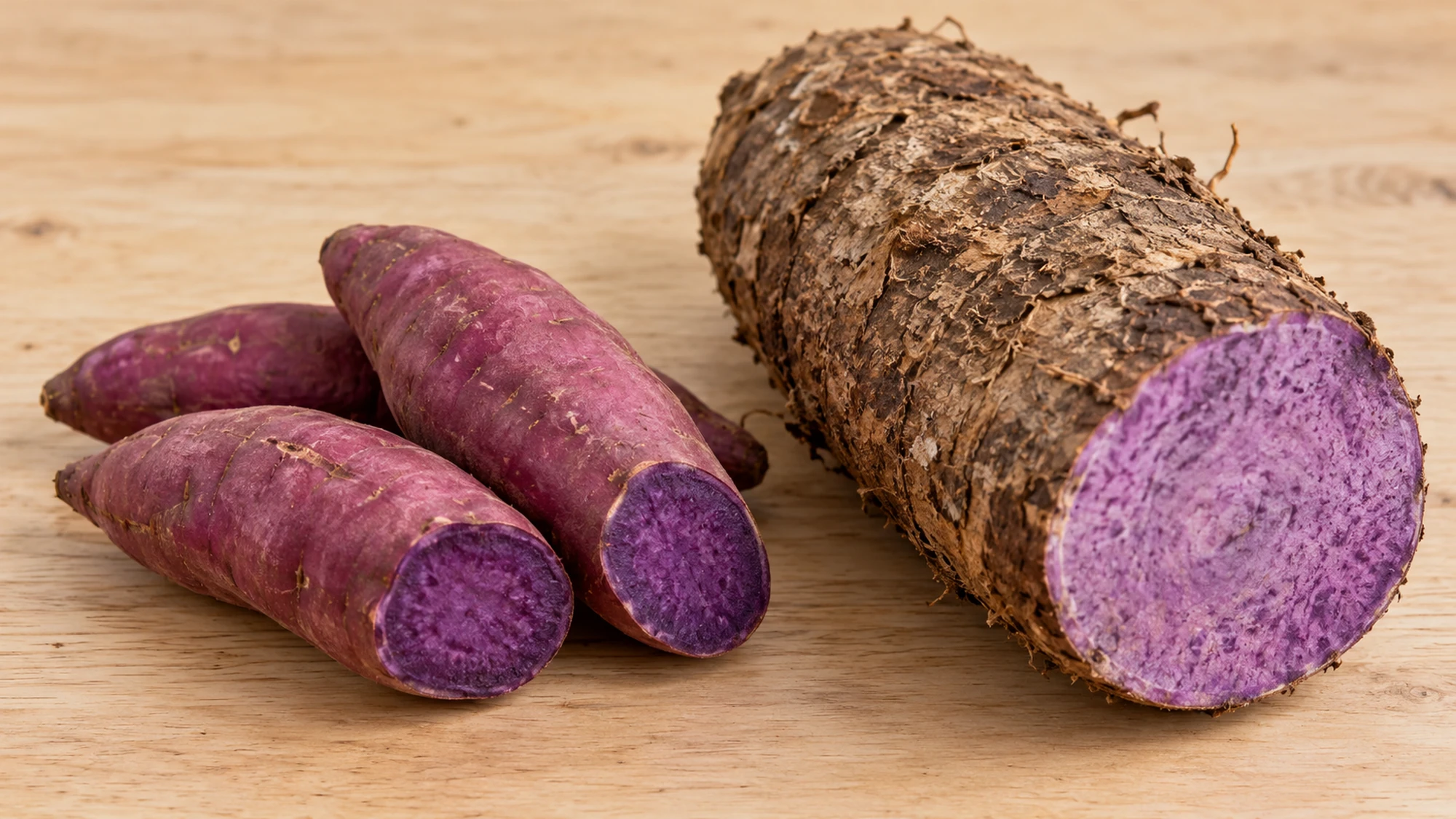
Purple describes the flesh, not one universal variety. University of Florida Extension explains that sweet potatoes have edible storage roots and come in several flesh colors, including purple. They belong to the morning glory family, rather than the true-yam group.
One named example is Stokes Purple, which has both purple skin and purple flesh, according to its distributor, Frieda’s. Do not turn that description into a rule for every sweet potato with reddish or purplish skin. If the interior color matters to your dish, look for a variety label or ask the produce staff.
- Check the variety name, not just a shelf sign that says “sweet potato.”
- Ask whether the flesh is purple when the label leaves that unclear.
Purple Sweet Potato vs. Ube: Check the Ingredient
Ube and purple sweet potato can share a striking color without being the same food. The University of Puerto Rico’s yam guide identifies purple-fleshed Dioscorea alata varieties as ube in the Philippines. That botanical distinction is more useful than trying to identify an ingredient from a purple dessert photo.
I would follow the named ingredient in a baking recipe rather than choose whichever purple option is available. A whole vegetable, sweetened spread, powder, and extract also need separate instructions; matching names do not make different forms interchangeable.
| Check | Purple sweet potato | Ube |
|---|---|---|
| Plant identity | Ipomoea batatas | Dioscorea alata |
| Ingredient group | Sweet potato storage root | True yam tuber |
| What to verify | Purple flesh and named variety | Ube identity and product form |
| Recipe starting point | Instructions for your sweet potato variety | Instructions for the exact ube product |
Similar color is not a promise of the same result in a recipe.
Let Texture Guide the Finishing Touches
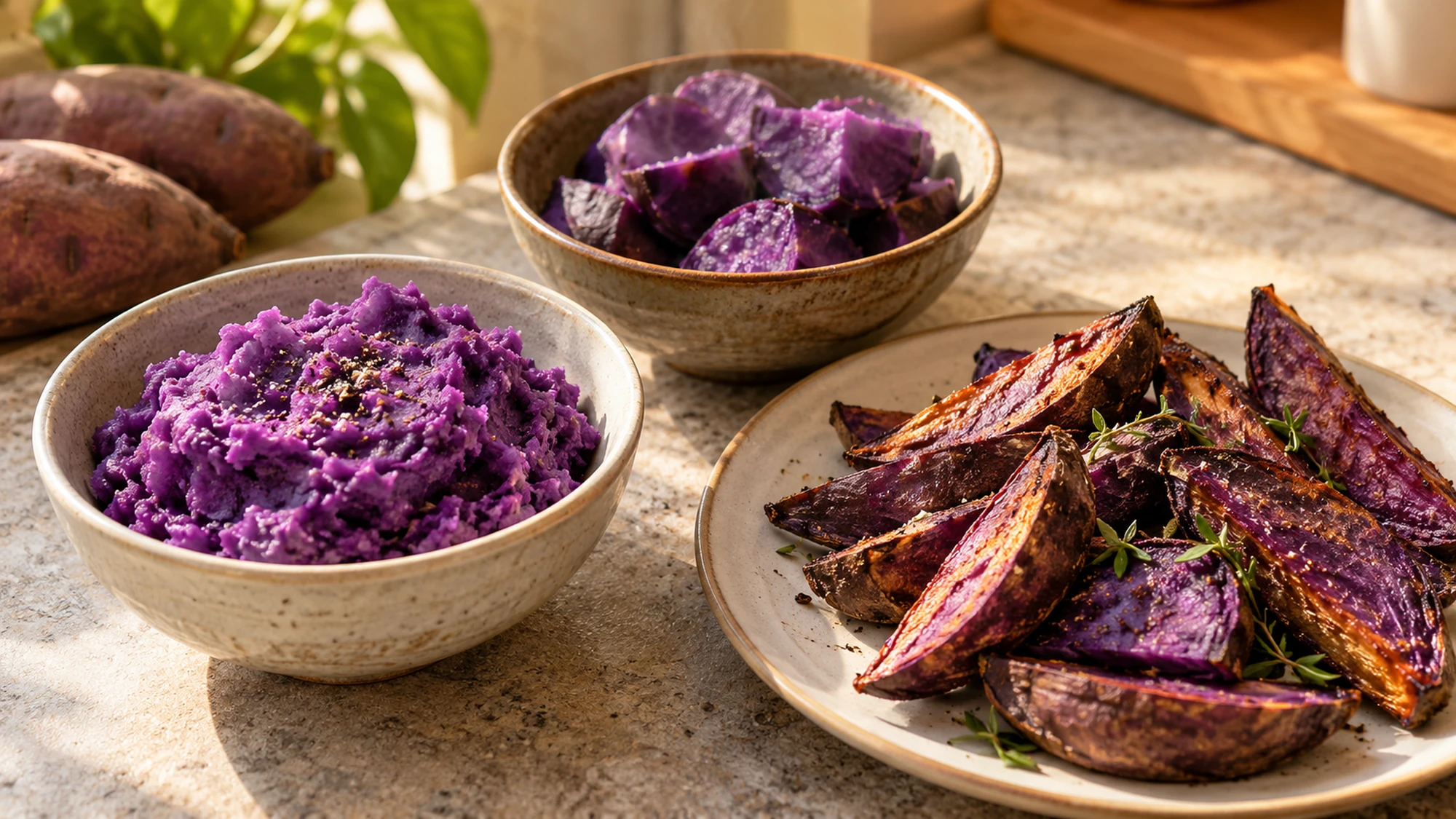
Avoid expecting every purple variety to cook exactly like your usual orange sweet potato. University of Florida Extension notes that some purple-fleshed varieties are drier. Rather than deciding how much liquid or topping you need in advance, first check the cooked flesh: does it mash easily, hold together firmly, or need a little help to become smooth?
My preference for a first serving would be a simple savory finish, so you can judge the vegetable before adding sweetness. Try olive oil or butter and salt, then consider a creamy topping, fresh herbs, or something crunchy alongside it.
- For mash: add your chosen liquid gradually, stopping when the texture suits the meal.
- For a baked side: split the cooked potato and check the center before adding toppings.
- For cakes or pies: choose a recipe written for that ingredient instead of assuming a one-for-one swap will work.
Taste and texture are more useful cooking cues than the shade of purple.
Buy, Store, and Cook With Fewer Surprises
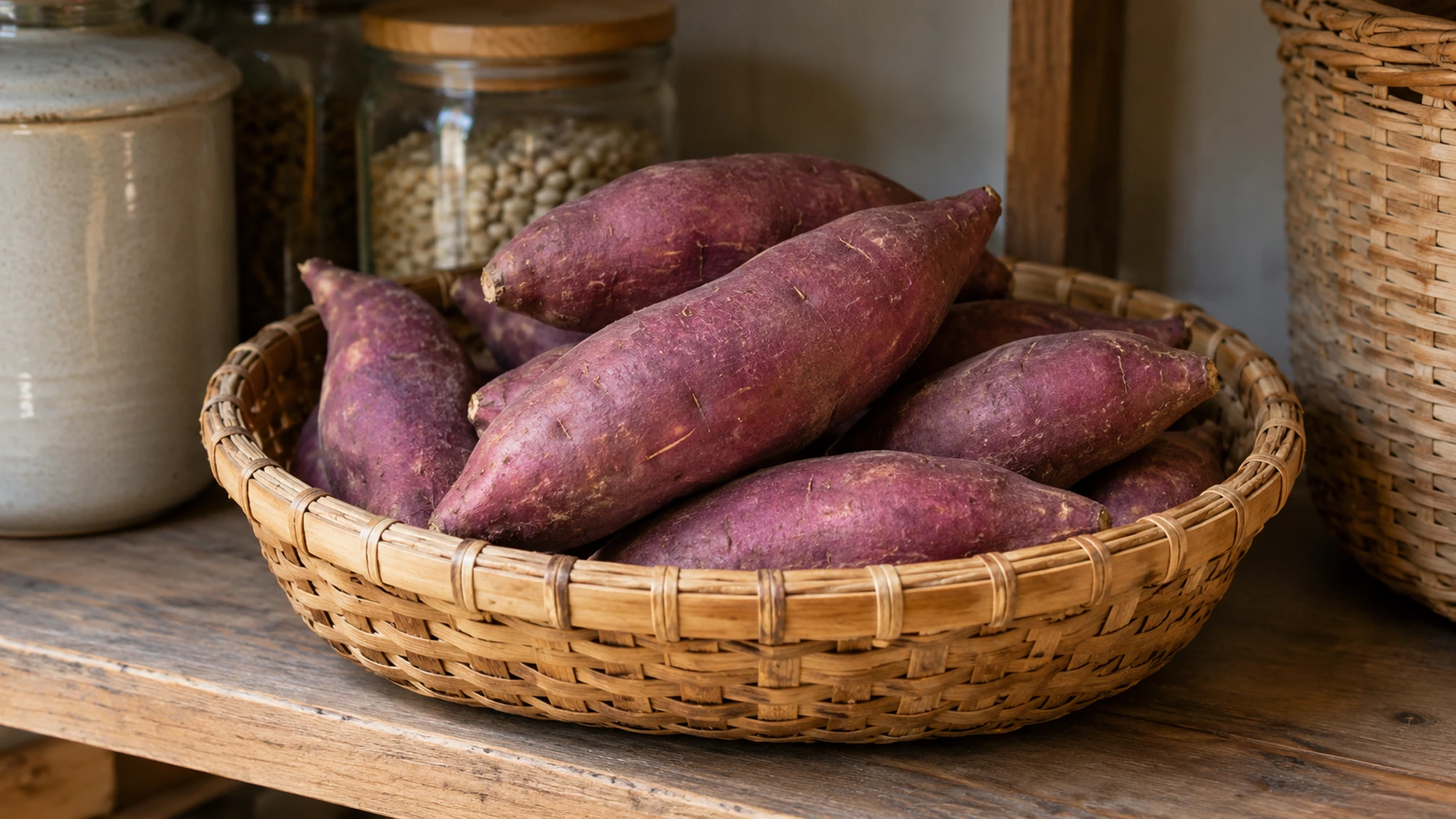
Choose similar-size potatoes when you plan to cook them together, so you are not comparing a small one with a much thicker neighbor. For storage, University of Florida Extension recommends a cool, dry pantry rather than the refrigerator. Frieda’s gives its Stokes Purple product a two-week use window in cool, dry storage; treat that as product-specific guidance, not a guarantee for every potato.
Read any supplier cooking directions before choosing your method. For Stokes Purple specifically, Frieda’s recommends rinsing, wrapping in foil, and baking at 350°F for one to two hours. That is a broad range, so build some flexibility into dinner and check the center rather than treating the first time on the clock as a promise.
- Match the method to the plan: a whole baked potato for a simple side, or a recipe-specific preparation for dessert.
- Check tenderness in the thickest part; a fork or skewer should enter easily before you call it ready.
- Taste the cooked vegetable before deciding how much sweetener or seasoning to add.
Follow the variety’s directions, then check the potato rather than only the clock.
Bottom Line
Choose purple sweet potato for the ingredient it is, not as a shortcut to anything purple. Verify the variety, keep raw potatoes in suitable pantry storage, and let tenderness guide cooking. For ube desserts or precise baking, buy the ingredient and product form the recipe actually names.
Watch Georgia Cooking For The Soul’s purple sweet potato video for a related cooking demonstration.
Sources
- University of Florida IFAS: Sweet Potatoes
- Frieda’s: Organic Stokes Purple Sweet Potato
- University of Puerto Rico: Yam Guide, page 5

Emily is Spoonvale’s recipe-writing persona, bringing a warm, practical voice to everyday cooking. Her focus is simple: approachable meals, comforting flavors, and clear instructions that help make time in the kitchen more enjoyable.