
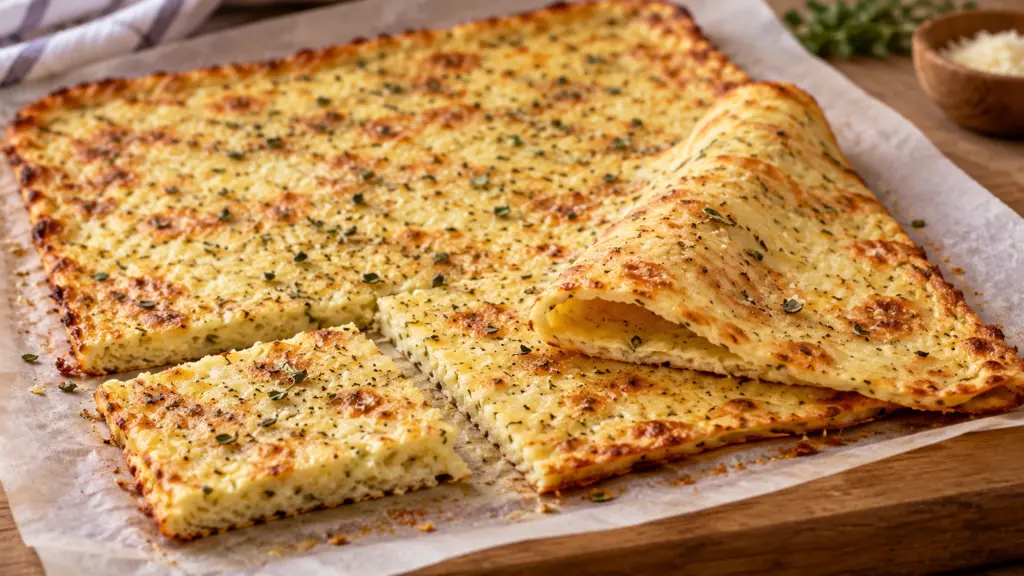
A flatbread that folds without flour sounds improbable until the egg and cottage cheese form a thin baked sheet. This cottage cheese flatbread is closer to a savory egg wrap than a chewy wheat loaf: lightly golden, flexible when handled gently and useful for a quick filling or an open-faced lunch.

Blend plain cottage cheese with two eggs, Parmesan and a little Italian seasoning, then spread the mixture evenly in a parchment-lined 9-by-13-inch pan. Bake at 350°F (177°C) until the sheet is set and the edges color. A five-minute rest helps it release and fold without tearing.
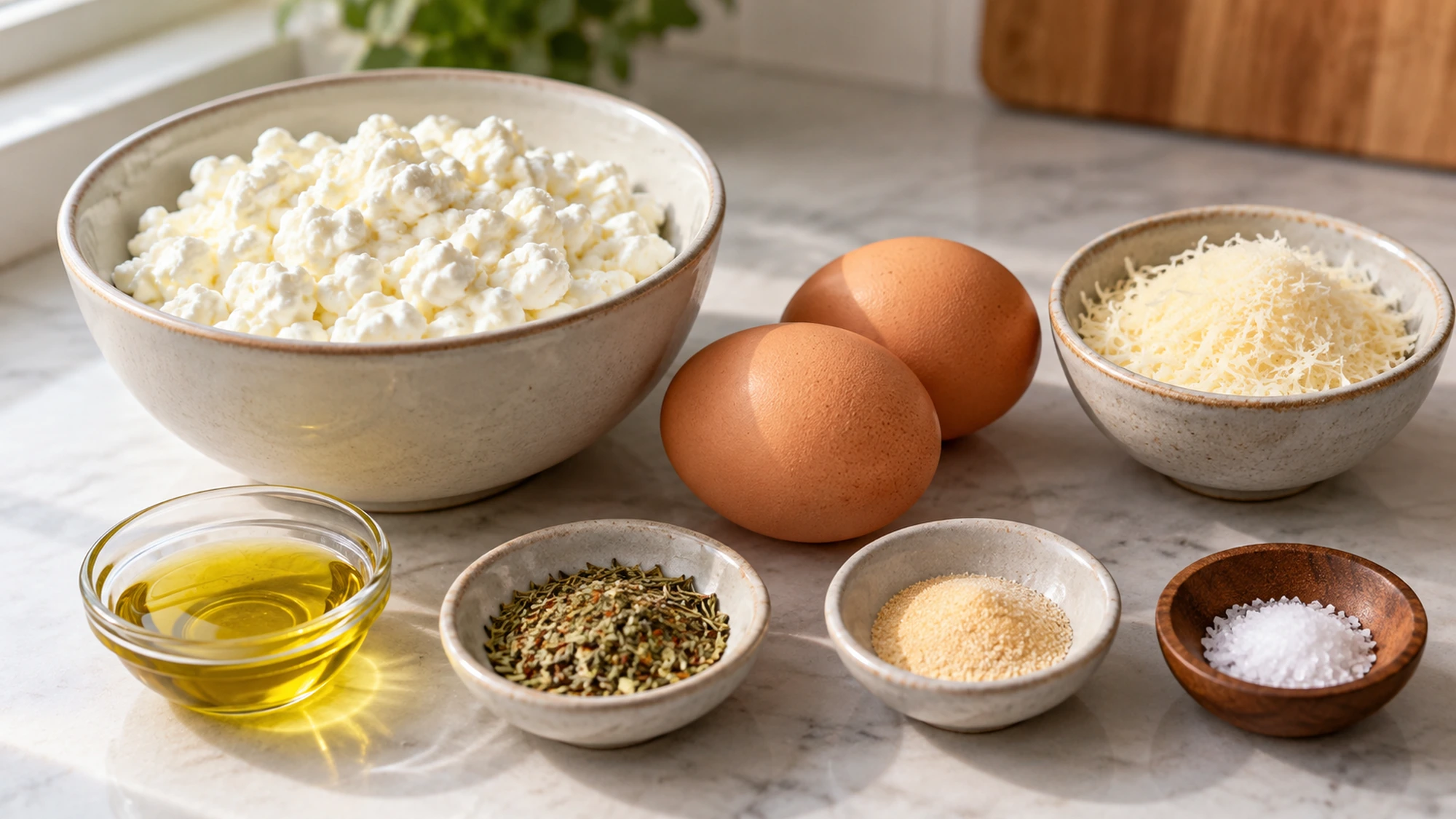
I would keep the layer even before it goes in the oven. A thick corner can remain soft while a thin edge becomes brittle. The spatula work takes less than a minute, but it determines whether you get two tidy wraps or a patchwork of fragile pieces.
Serving Suggestions for Cottage Cheese Flatbread
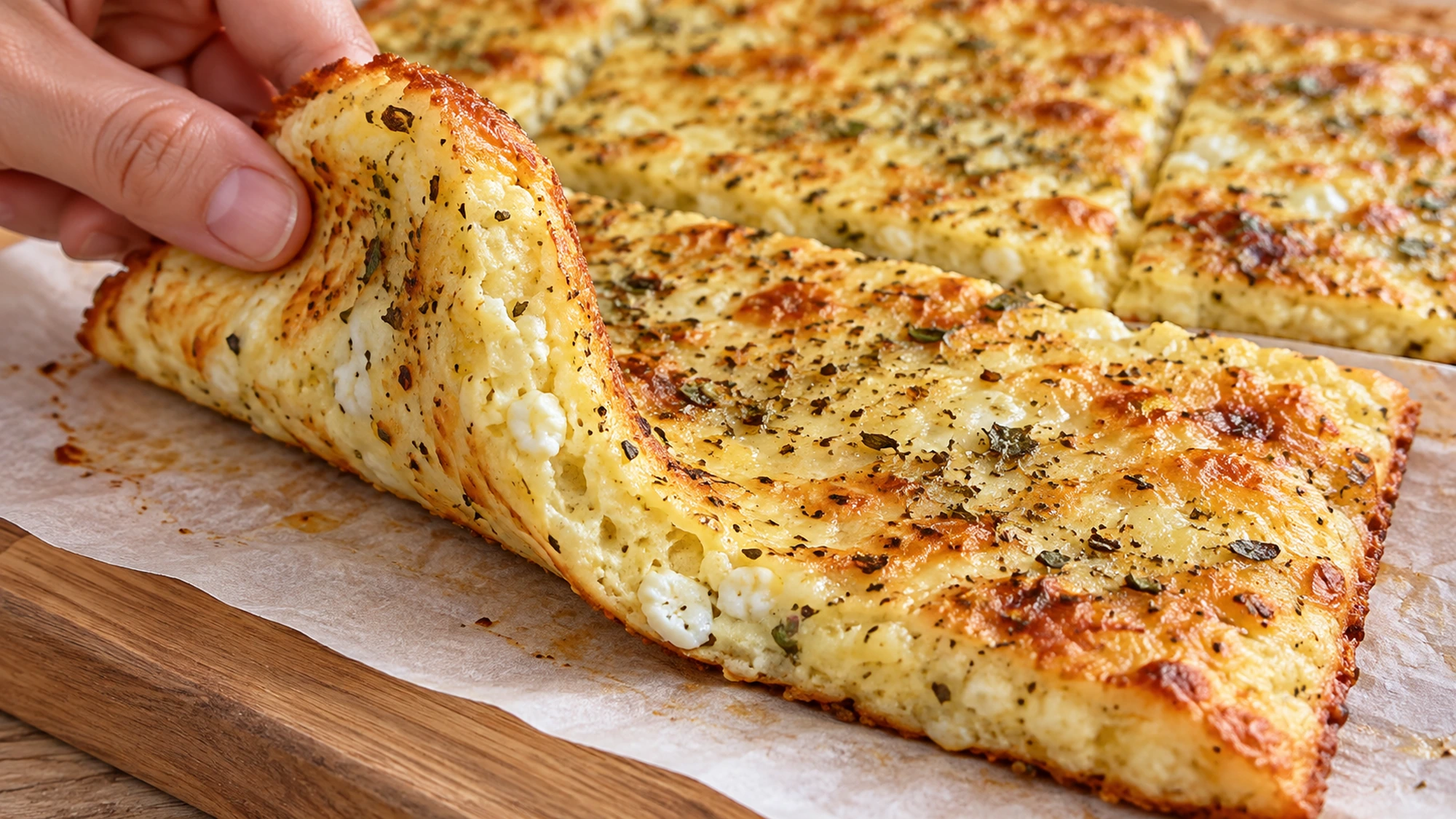
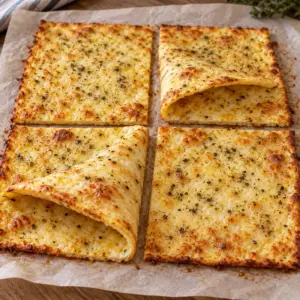
Cut the finished sheet into two large rectangles for wraps or four smaller squares for open-faced portions. Add cooled fillings just before serving so the flatbread does not become wet. Lettuce, sliced tomato and cooked chicken make a simple lunch, while roasted vegetables and a spoon of Spoonvale’s guacamole offer another direction. Those fillings are serving ideas, not part of the recipe card.
This sheet is not meant to mimic the chew of a flour tortilla. It bends when warm or at room temperature, but it can tear if folded sharply around a large filling. I would start with a modest amount and roll or fold gently.
- Cut two long rectangles for smaller, lightly filled wraps.
- Cut four squares and serve open-faced to avoid bending the sheet.
- Place wet tomatoes or sauce over lettuce, not directly against the flatbread.
- Use a knife or pizza wheel only after the sheet has rested and released.
Treat it as a tender egg-and-cheese wrap; modest fillings protect its flexible texture.
How to Bake an Even, Flexible Sheet
Blend the cottage cheese, eggs, Parmesan, seasoning, garlic powder and a small pinch of salt until smooth. Oil the parchment lightly and spread the batter into a roughly even rectangle. A raised rim on the pan helps contain the mixture, but keep the layer away from the very edge of the pan so it does not run underneath the paper.
Bake at 350°F (177°C) for about 25 to 30 minutes. Look for a set center and lightly browned edges, then check that the center reaches 160°F (71°C) because this is an egg dish. U.S. Dairy’s cottage cheese and egg flatbread shows the same broad method of blending and baking; this version adds its own Parmesan and herb balance. Allow the sheet to rest before peeling it from the parchment.
| Sheet condition | Likely reason | Useful adjustment |
|---|---|---|
| Wet center | Layer is thick or underbaked | Keep baking; check 160°F at center |
| Crisp, brittle edges | Layer is too thin at the edge | Spread the next sheet more evenly |
| Sticks to parchment | Sheet has not rested enough | Cool briefly, then peel slowly |
| Tears when filled | Filling is heavy or wet | Use less filling or serve open-faced |
- Line a 9-by-13-inch rimmed pan with parchment before blending.
- Brush the parchment with a little oil so it releases more easily.
- Use a spatula to move batter into corners without leaving thick ridges.
- Check the center with a food thermometer rather than judging only the browned edge.
An even layer, a fully set center and a short rest matter more than chasing a dark crust.
Ingredients, Safety and Storage
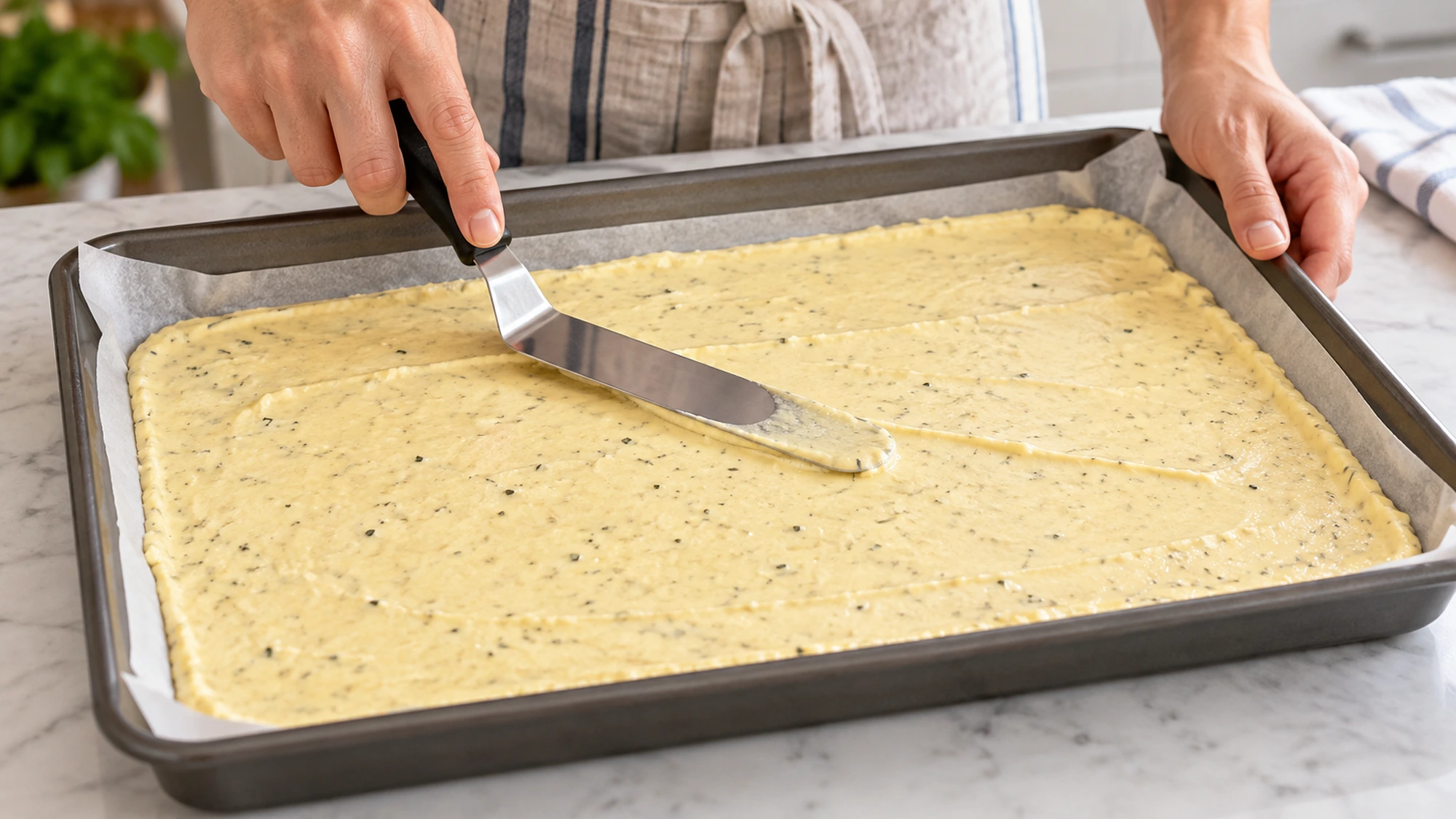
Cottage cheese brands vary in moisture and salt, so the sheet may bake a little differently each time. Parmesan adds savory flavor, while eggs supply the structure that lets the finished piece bend. This version uses no flour, but check every package if you need a specific allergen-free product; it contains both eggs and milk.
FoodSafety.gov lists 160°F (71°C) for egg dishes. Cool the baked sheet briefly, then refrigerate any uneaten portions promptly in a covered container. Reheat leftovers thoroughly before using them as wraps. I would not promise a precise protein total without the nutrition labels for the cottage cheese and Parmesan you choose.
- Measure cottage cheese by volume and keep the ingredient brand in mind if the batter seems unusually thin.
- Use a clean thermometer at the center of the baked sheet.
- Refrigerate any leftover flatbread rather than leaving the egg-and-cheese sheet on the counter.
- Warm a chilled piece gently before folding; cold sheets may feel less flexible.
It is an egg-and-dairy wrap, so cook the center fully and keep leftovers refrigerated.
Bottom Line
Cottage cheese flatbread works best as a thin, tender baked sheet rather than a stand-in for chewy bread. Blend the ingredients smooth, spread the batter evenly and bake until the center reaches 160°F. After a short rest, cut the sheet for wraps or squares and fill it lightly so it stays intact.
Cottage Cheese Flatbread Recipe

Ingredients
- 1 cup plain cottage cheese about 225 g
- 2 large eggs
- 2 tbsp finely grated Parmesan about 15 g
- 1 tsp Italian herb seasoning
- 0.25 tsp garlic powder
- 1 pinch fine salt adjust to cheese saltiness
- 1 tsp olive oil for the parchment
Equipment
- 9-by-13-inch rimmed baking pan
- Parchment paper
- Blender
- Offset spatula
- Measuring cups and spoons
- Food thermometer
Instructions
- Heat the oven to 350°F (177°C). Line a 9-by-13-inch rimmed baking pan with parchment and brush the paper lightly with olive oil.
- Blend the cottage cheese, eggs, Parmesan, Italian herb seasoning, garlic powder and a pinch of salt until smooth. Pour onto the prepared parchment and spread into a thin, even rectangle with a spatula.
- Bake for about 25 to 30 minutes, until the center is set, the edges are lightly golden and a food thermometer inserted at the center reads 160°F (71°C).
- Rest the sheet in the pan for 5 minutes. Gently peel away the parchment and cut into two large wrap pieces or four small squares. Serve warm or refrigerate leftovers promptly in a covered container.
Notes
Tried this recipe?
Let us know how it turned out!Emily is Spoonvale’s recipe-writing persona, bringing a warm, practical voice to everyday cooking. Her focus is simple: approachable meals, comforting flavors, and clear instructions that help make time in the kitchen more enjoyable.