
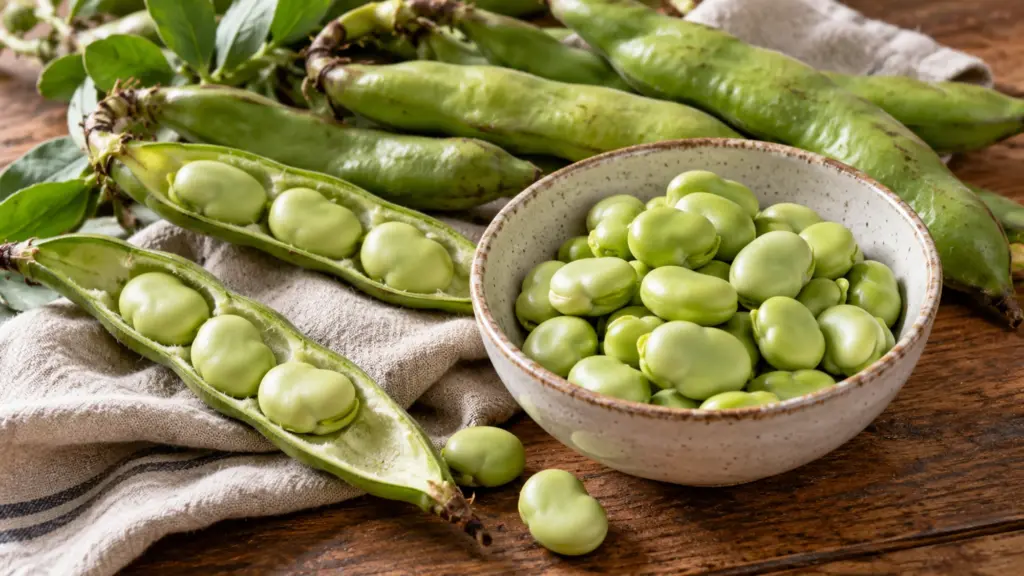
A pile of broad green pods can look like plenty for dinner, right up until you open them. Fava beans come with a little unpacking to do, and the instructions get confusing when one recipe says “shell” while another says “peel.” Those are two different jobs.
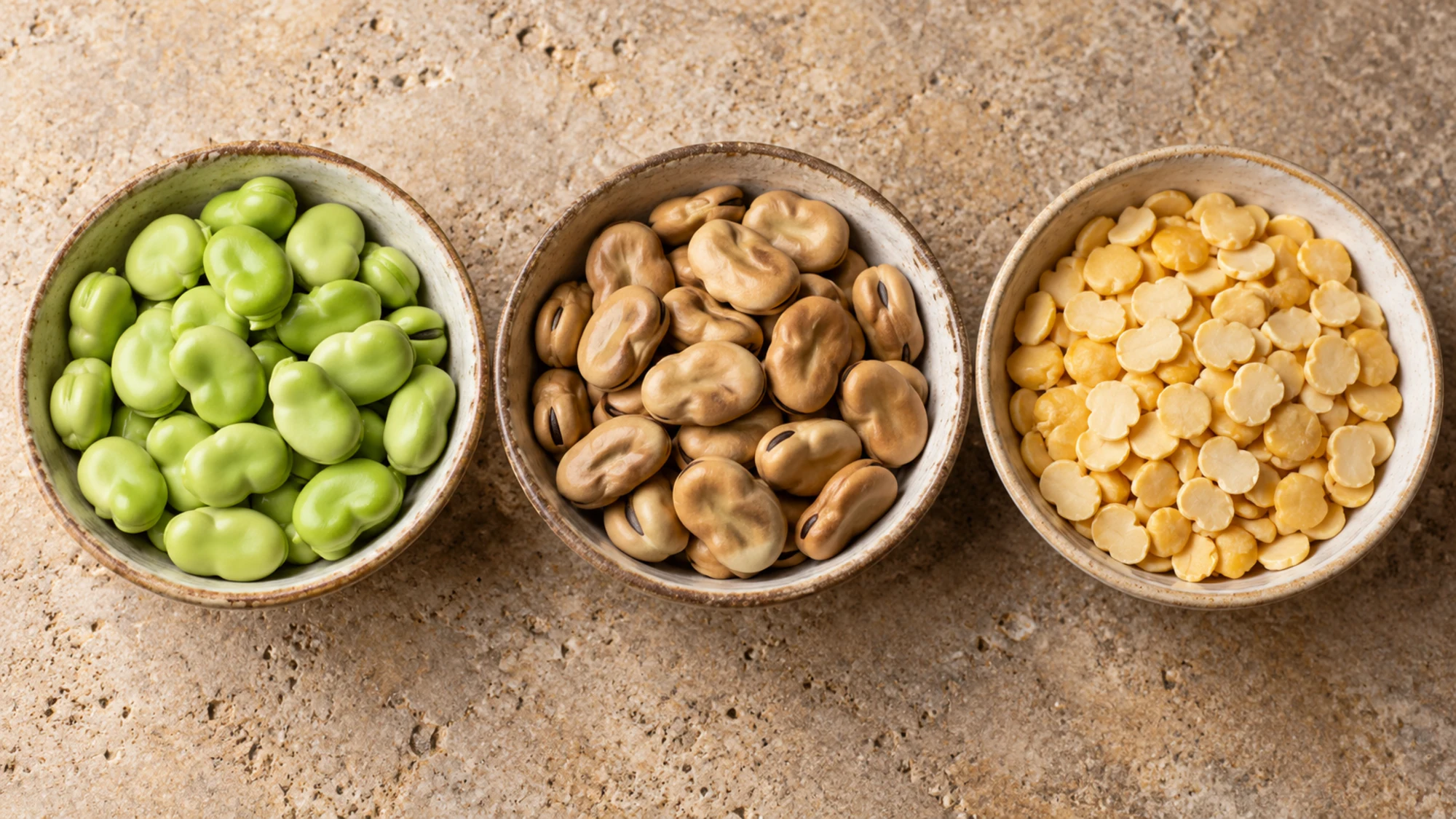
Fava beans, also called broad beans, are sold fresh, frozen and dried. Remove fresh beans from their pods first; peeling each bean’s individual skin is a separate texture choice. Dried whole and split beans need different preparation, so identify your package before following a method.
Important: if you have diagnosed G6PD deficiency, avoid fava beans and follow your clinician’s advice. Peeling, soaking or cooking is not a safety workaround. This warning concerns fava beans specifically, not a blanket ban on all beans; King’s College Hospital explains the distinction.
What Are Fava Beans?
Fava beans are broad beans, with fresh green and mature dried forms that belong in different kitchen conversations. A bag of dry beans is not a ready substitute for the same weight of fresh shelled beans: it needs its own preparation, and the finished texture changes what you can do with it.
Start with the dish you want rather than the package that happens to be closest. I’d choose fresh green favas for a plate where their shape and color matter, and split dried beans when a soft, spoonable finish is the point. Neither choice needs a complicated supporting cast.
- For a green vegetable element: consider cooked fresh or frozen favas alongside rice, pasta or other vegetables.
- For a rustic bean dish: whole dried favas offer a different starting point from tender green favas.
- For a soft mash or thick soup: peeled split dried favas are worth considering.
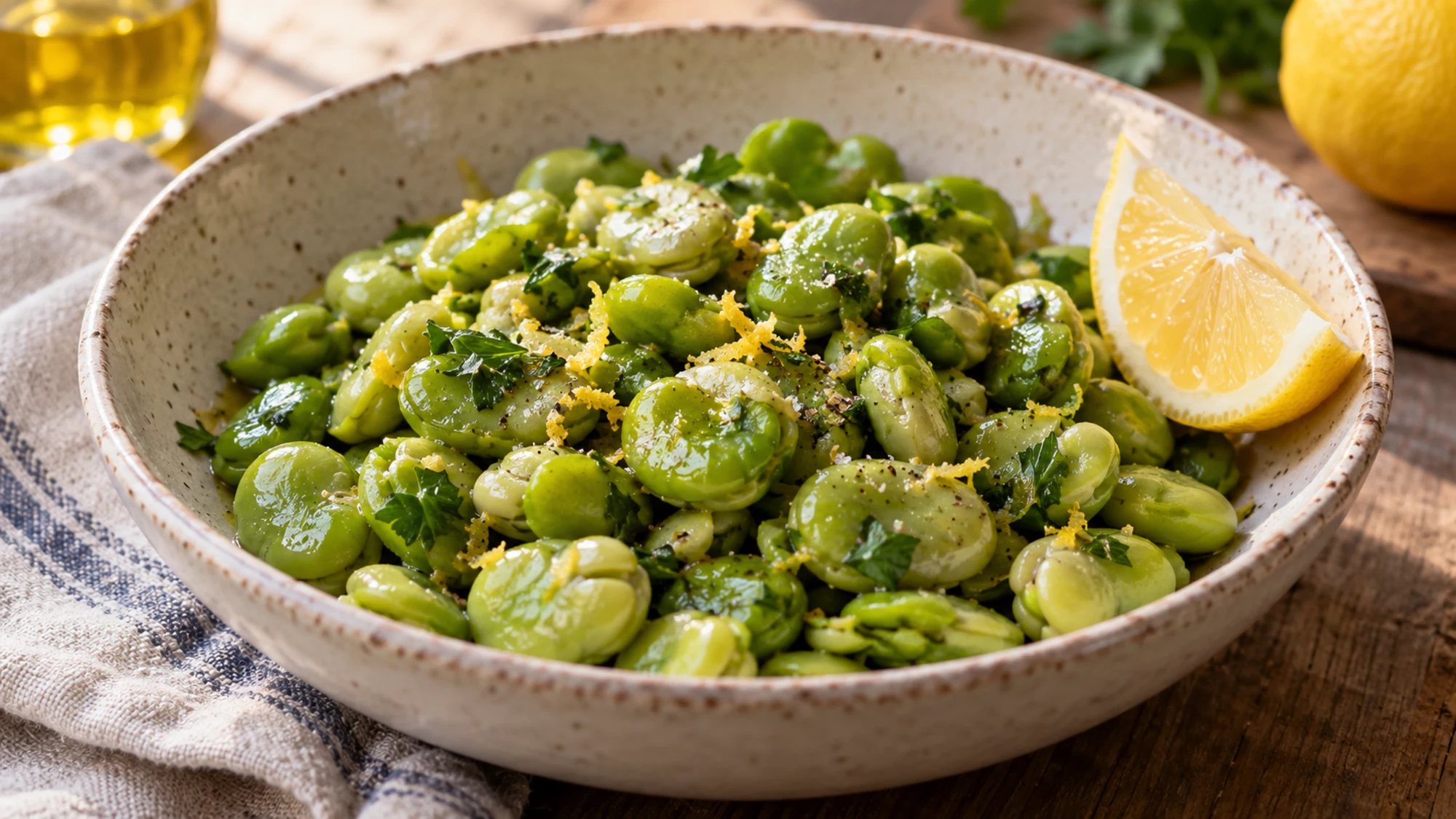
- For simple seasoning: try lemon, olive oil and chopped herbs, adjusting after the beans reach the texture you want.
Fresh, Frozen and Dried Fava Beans Are Not Interchangeable
Read beyond the large name on the bag. “Shelled” can mean the pods are gone without promising that the individual skins have been removed; “peeled” supplies a different piece of information. With frozen beans, check both the preparation description and the cooking instructions rather than assuming they are ready to eat.
Hodmedod’s whole-bean instructions call for soaking, while its split-bean guidance does not require it. Those product differences matter more than a single cooking time copied from another recipe.
| Form | What to check | Preparation direction |
|---|---|---|
| Fresh, in pods | Pod and bean skin are separate layers | Shell first; use a fresh-bean method. |
| Frozen | Shelled, peeled and cooking directions | Follow the package; check skins for texture. |
| Dried whole | Whether the skins remain | Follow package soaking and cooking directions. |
| Dried split | Peeled or skinless wording | Often no soaking; follow package directions. |
Choose a method for the beans you have, not just a recipe with a similar name.
When Should You Peel Fava Beans?
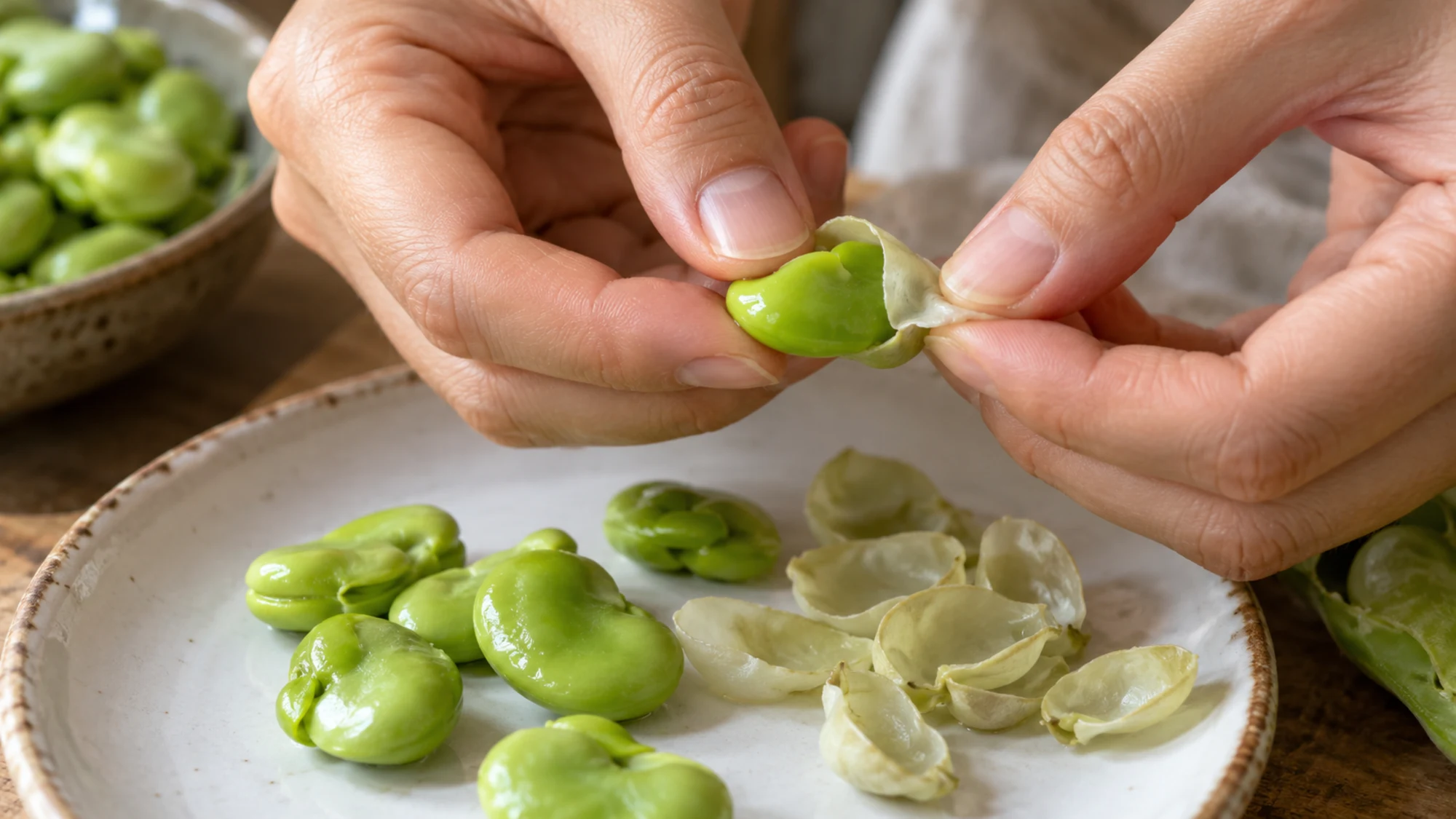
For fresh beans, begin with the pod: open its seam and lift out the beans. Each bean still has its own skin, which is why a bowl of shelled favas may not look like the bright green beans in a finished dish. Kikkoman’s preparation guide treats pod removal and skin removal as separate steps.
I’d spend the extra peeling effort when the beans are the main attraction or a smooth texture matters. For a more rustic preparation, follow a method that deliberately leaves the skins on rather than assuming every fava must be double-peeled. The decision is about the dish, not a kitchen entrance exam.
- Removing pods does not remove the skin around each bean.
- For skin removal, Kikkoman suggests starting near the dark line on the bean.
- If using a blanch-and-peel method, follow its directions and let the beans become comfortable to handle.
- Judge doneness by the intended texture as well as timing; a whole-bean salad and a mash have different goals.
- Do not apply fresh-bean peeling instructions automatically to dried beans, which may already be peeled and split.
Peeling changes texture. It does not remove the G6PD-related risk.
Fava Beans and G6PD Deficiency
G6PD is an enzyme that helps protect red blood cells. In people with G6PD deficiency, eating fava beans can trigger premature red-blood-cell breakdown, called hemolysis, according to MedlinePlus Genetics. That is a medical issue, not ordinary digestive discomfort.
If this diagnosis applies to you, skip favas rather than experimenting with smaller portions or different preparation methods. When cooking for someone who avoids them, check the ingredient identity and respect their dietary instructions; the alternative should suit that person, not just resemble the beans.
For someone with G6PD deficiency, choosing a suitable alternative is the practical answer.
Bottom Line
Choose the form that fits dinner, then read its preparation directions. Fresh pods, individual skins and dried split beans are different considerations, not one universal peeling rule. A clear label and an appropriate method help more than a borrowed stopwatch. If you have G6PD deficiency, avoid fava beans.
Howcast: How to Cook Fava Beans. This culinary demonstration does not replace the G6PD guidance above.
Sources
- Kikkoman: Fava bean preparation
- Hodmedod’s: Whole fava beans
- Hodmedod’s: Split fava beans
- MedlinePlus Genetics: G6PD gene
- King’s College Hospital: G6PD deficiency

Emily is Spoonvale’s recipe-writing persona, bringing a warm, practical voice to everyday cooking. Her focus is simple: approachable meals, comforting flavors, and clear instructions that help make time in the kitchen more enjoyable.