
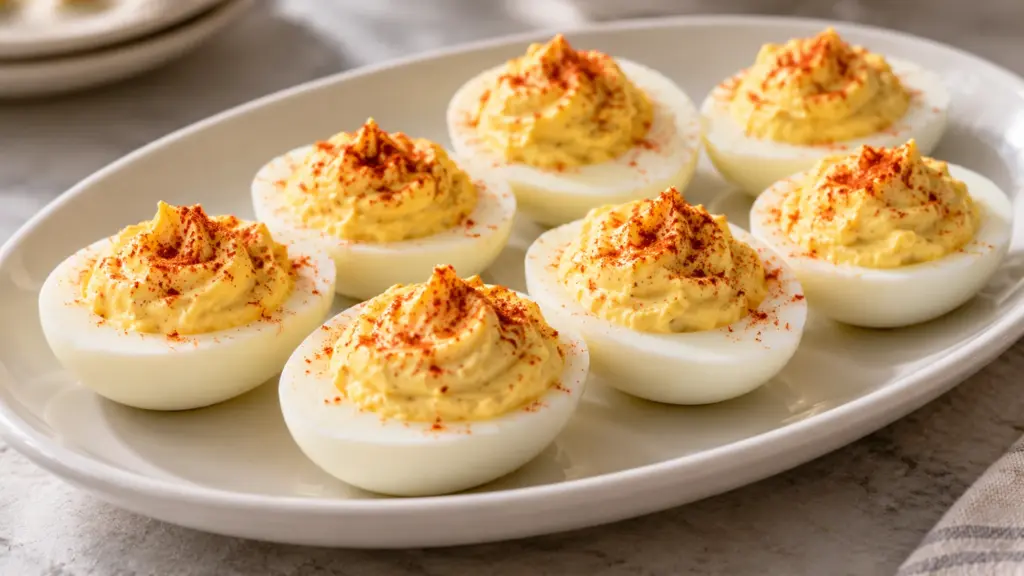
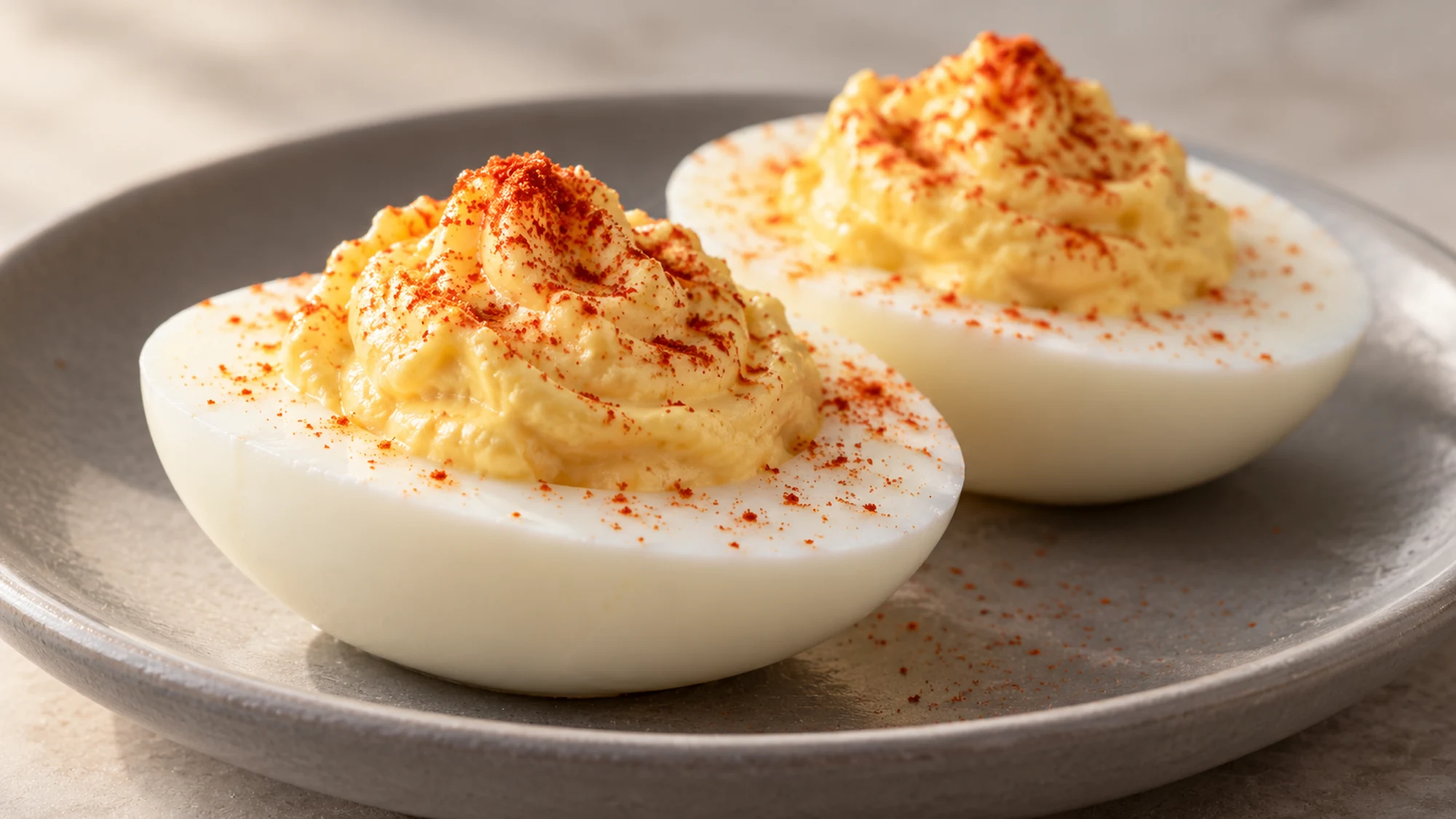
The platter is nearly ready, but the egg filling looks crumbly instead of creamy. A few careful presses with a fork can make more difference than an elaborate garnish. This deviled eggs recipe combines fully cooked yolks with mayonnaise, Dijon and a little vinegar for a smooth, tangy filling.
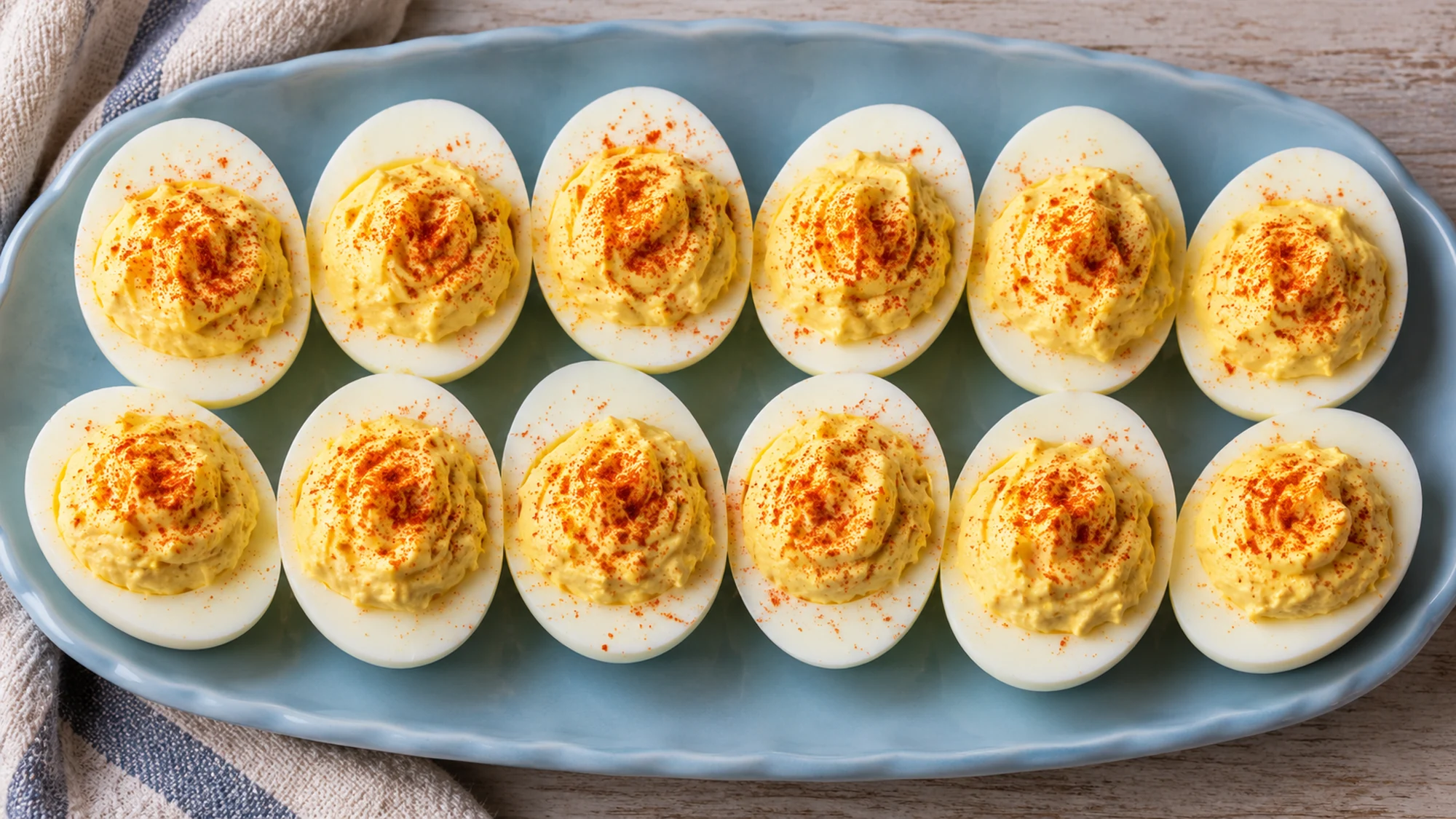
Cool the hard-cooked eggs thoroughly, mash the yolks before adding the other ingredients and fill the whites gently. A light dusting of paprika finishes the twelve halves without covering their flavor.
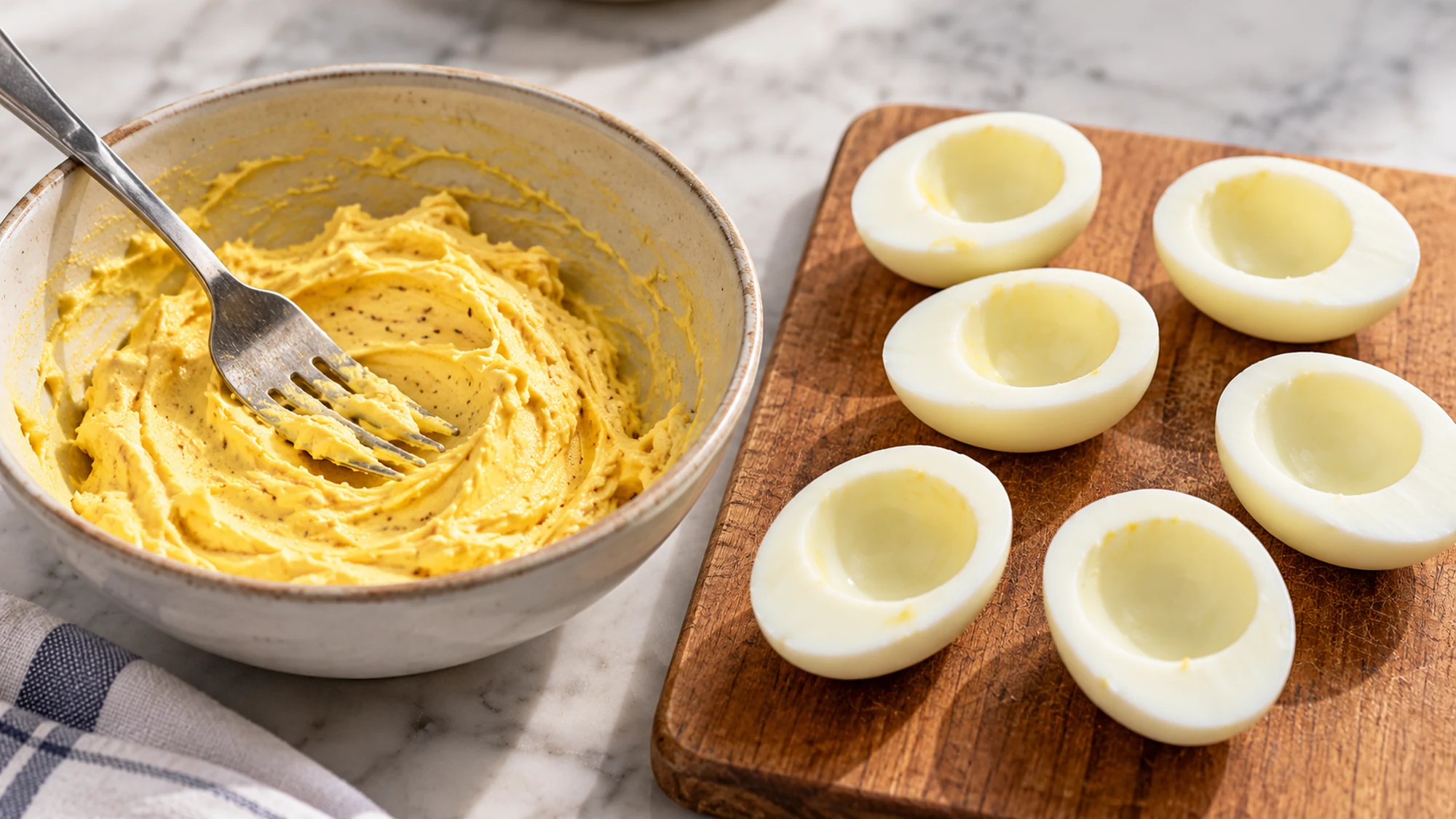
I’d choose a simple spoon over a piping bag unless neat ridges are part of the fun. Both work, and neither fixes a filling that still contains large yolk lumps. Start with the texture in the bowl; the presentation becomes much easier afterward. Keep the finished eggs chilled until you are ready to serve.
Serving Suggestions for This Deviled Eggs Recipe
Arrange the halves in a single layer on a platter that fits comfortably in the refrigerator. A dish with shallow wells keeps them upright, but an ordinary plate works if you avoid piling them together. Cover carefully so a lid or wrap does not flatten the filling.
I’d pair the rich eggs with something crisp and fresh: cucumber rounds, radishes or a leafy salad. For a broader lunch spread, pass thin slices of baguette separately. The bread is optional, and the eggs are easy to enjoy on their own.
- For a buffet: bring out a small platter and replenish from the refrigerator instead of leaving the whole batch on the table.
- For a lunch plate: serve two halves alongside vegetables and another component that suits your appetite.
- For a picnic: transport the covered platter in an insulated cooler with plenty of ice packs, then keep it cold until serving.
Plan where the platter will chill before you begin filling. A clear refrigerator shelf is more useful than a last-minute balancing act.
Deviled Eggs Recipe Variations and Small Adjustments
Dijon supplies a sharper flavor than plain yellow mustard. The small amount of vinegar adds brightness without making the filling loose. Taste after mixing, then adjust gently; mayonnaise and mustard brands differ in salt and acidity.
Keep additions finely chopped so they fit into the filling and do not tear the whites. A spoonful of a wet ingredient can loosen a small batch surprisingly quickly. Drain it well first, add a little and stop to check the texture before adding more.
| Change | What to try | What to watch |
|---|---|---|
| Milder mustard | Use yellow mustard in place of Dijon | The filling tastes less sharp. |
| Smoky finish | Use smoked paprika for dusting | A little goes a long way. |
| Pickled crunch | Add a small amount of drained, finely chopped pickle | Extra liquid can soften the filling. |
| A simpler presentation | Spoon the filling into the whites | No piping bag is needed. |
Make one small adjustment at a time. The goal is a creamy center that holds its shape, with the egg still clearly part of the flavor.
Health Benefits and Food Safety Considerations
Eggs provide protein, while mayonnaise contributes much of the filling’s added fat. The portion and the rest of the meal matter more than treating a single appetizer as automatically healthy or unhealthy. Adding vegetables alongside gives the plate variety without changing the filling.
Food safety deserves as much attention as the garnish. The FDA’s egg-safety guidance recommends thorough cooking and cold storage. Keep both whites and filling refrigerated when working ahead, and use clean utensils when combining them.
- Check allergens: this recipe contains eggs, and prepared mustard or mayonnaise may contain other ingredients that need checking on the label.
- Keep cold: use a refrigerator at 40°F (4°C) or below, and return the platter promptly after serving.
- Watch time at the table: discard perishable eggs left out longer than two hours, or one hour above 90°F (32°C), following FDA storage guidance.
Enjoy the eggs as part of a varied meal, and protect their quality by keeping the batch cold rather than stretching its time on display.
Bottom Line
A useful deviled eggs recipe keeps the focus on tender whites, smooth filling and a little tang. Mash first, season gradually and use whichever filling method feels comfortable. Paprika adds the finishing color; reliable chilling does the less glamorous work of keeping the platter ready for the table.
Deviled Eggs Recipe

Ingredients
- 6 large eggs shells intact
- 45 g mayonnaise about 3 tbsp; check the brand’s weight
- 10 g Dijon mustard about 2 tsp
- 1 tsp apple cider vinegar 5 ml
- 0.125 tsp fine salt 0.75 g, or to taste
- 0.125 tsp black pepper about 0.25 g
- 0.25 tsp paprika about 0.5 g, for dusting
Equipment
- 1 Saucepan with lid large enough for 6 eggs in one layer
- 1 Slotted spoon
- 2 mixing bowls one large bowl for ice water, one for filling
- 1 knife and cutting board
- 1 Fork
- Measuring spoons and kitchen scale
- 1 Small spoon or a piping bag for filling
Instructions
- Place the 6 eggs in one layer in a saucepan. Cover with cool water by 1 inch. Bring to a full boil, remove from the heat and cover. Leave for 12 minutes.
- Transfer the eggs to a bowl of ice water with a slotted spoon. Cool for 10 minutes, adding more ice if needed. Peel carefully, then halve lengthwise.
- Lift the yolks into a clean bowl without tearing the whites. Mash the yolks thoroughly with a fork until no large lumps remain.
- Stir in the mayonnaise, Dijon, vinegar, salt and pepper until smooth. Taste and adjust salt cautiously.
- Spoon or pipe the filling evenly into the 12 egg-white halves. Dust lightly with paprika.
- Cover and refrigerate at 40°F (4°C) or below until serving. For best quality, use within 2 days. Keep cold and discard if left at room temperature for more than 2 hours, or 1 hour above 90°F (32°C).
Nutrition
Video
Notes
Tried this recipe?
Let us know how it turned out!Emily is Spoonvale’s recipe-writing persona, bringing a warm, practical voice to everyday cooking. Her focus is simple: approachable meals, comforting flavors, and clear instructions that help make time in the kitchen more enjoyable.