
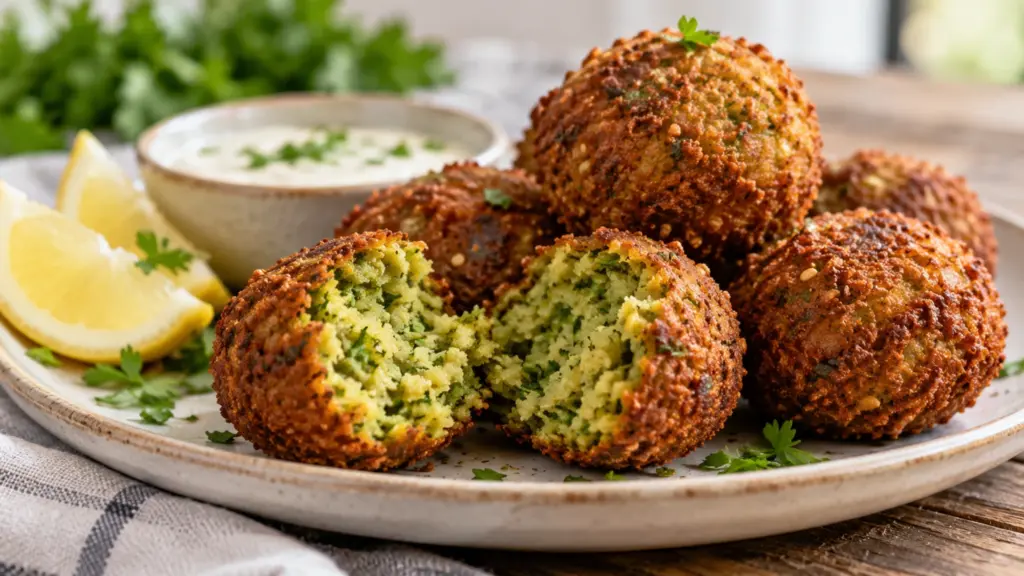
A warm pita arrives with golden fritters tucked between vegetables and sauce. The outside looks crisp, the middle may be green with herbs, and the first question is simple: what is actually inside falafel?
Falafel is a seasoned fritter made from ground chickpeas, fava beans, or a combination, usually shaped into balls or patties. Herbs and spices vary, and the bread, sauces and toppings are separate parts of the meal.
I’d think of falafel as the center of a plate rather than a complete description of everything served with it. That makes it easier to choose accompaniments, understand different versions, and ask useful questions about ingredients.
What Is Falafel Made From?
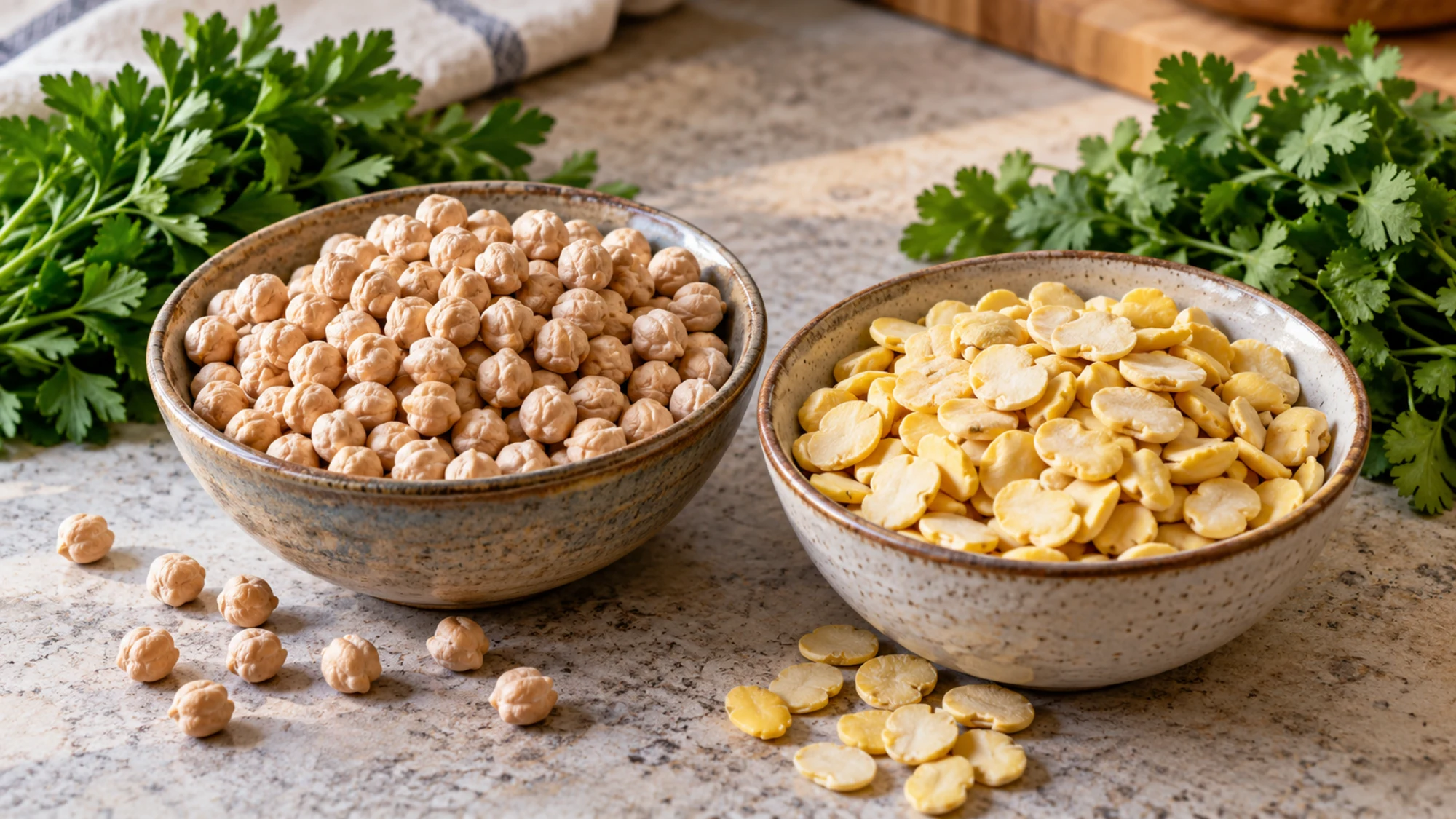
Cook and author Suzy Karadsheh’s falafel guide describes the familiar chickpea or fava-bean base with herbs and spices. Her demonstrated version uses chickpeas; it is one specific preparation, not a rule that every falafel must follow.
The base can change, as can the balance of herbs, seasoning and shape. A greener interior may reflect the herbs used, but its color does not reveal the whole ingredient list. If the exact beans matter to you, ask rather than identifying them from a photograph.
- Chickpea-based versions start with chickpeas as the principal legume.
- Fava-based versions use broad beans, also called favas.
- Mixed versions can combine legumes.
- Prepared mixes and restaurant versions may contain additional ingredients.
The name tells you the kind of dish, not every ingredient in a particular serving.
Expect Contrast Between the Outside and the Middle
The appealing contrast is a crisp exterior around a more tender, textured center. Herbs and spices contribute aroma and flavor, while the preparation determines how pronounced that crust becomes. A baked version should not be expected to behave exactly like a freshly fried one.
When choosing a meal, consider what you enjoy about the fritter itself. If the crispness is the draw, I’d keep some sauce on the side instead of covering everything at once. If you prefer a soft sandwich, a dressed pita may be exactly the point.
- For crisp contrast, serve or order sauce separately when that suits the meal.
- For a softer bite, combine falafel with bread and moist vegetables.
- Choose seasoning and accompaniments you enjoy rather than assuming every version tastes identical.
- Do not use appearance alone to infer the beans, binder or cooking oil.
Let the texture guide how you serve it, without turning one version into the only correct version.
Build the Meal Around the Falafel
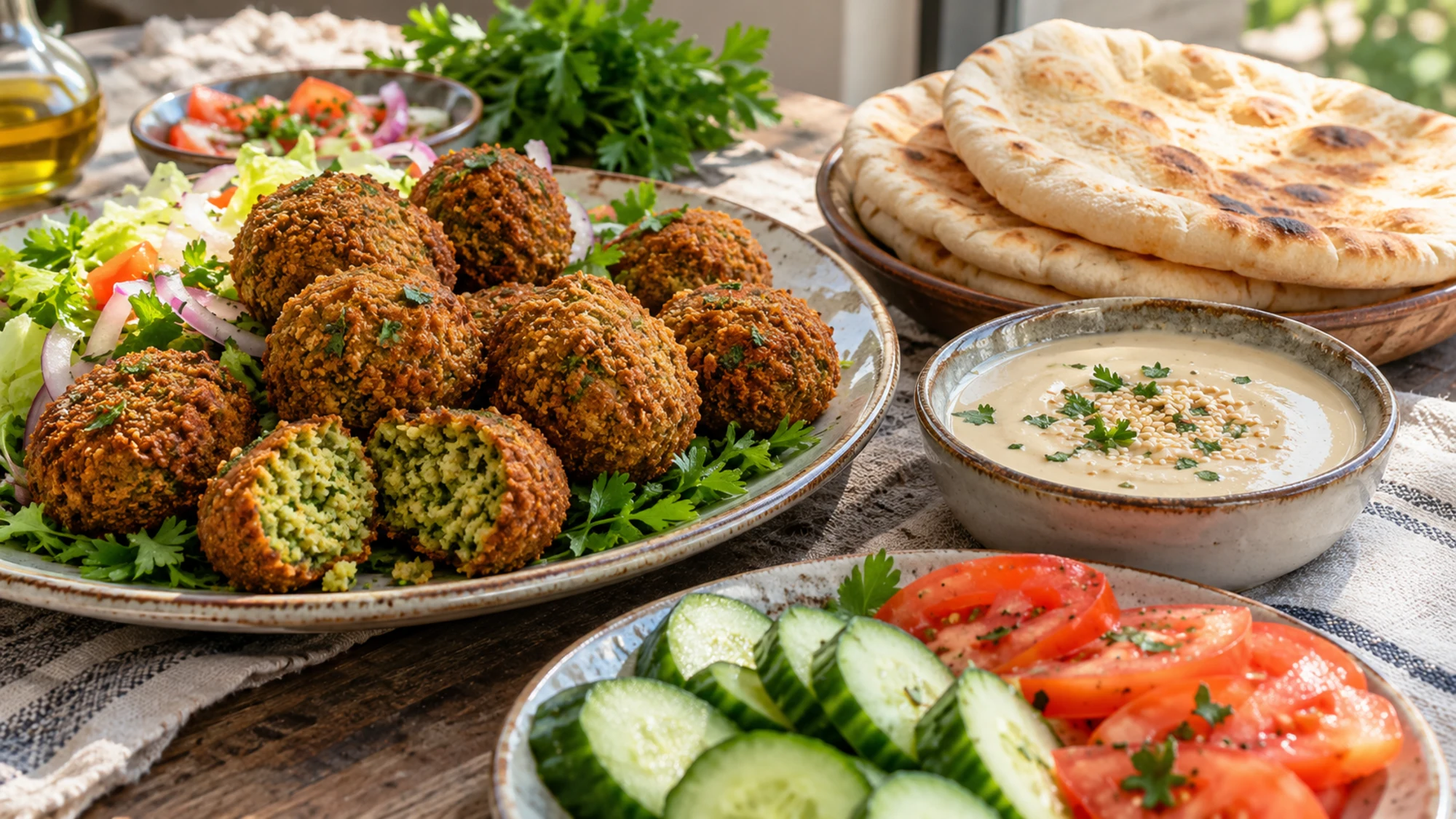
Falafel can be served in pita, on a plate with vegetables, or as one component of a larger spread. A crunchy vegetable, a creamy sauce and a little brightness offer different jobs on the plate. You do not need every topping available to make the combination interesting.
I’d choose one main sauce first, then build around it. That makes it easier to notice the herbs and seasoning rather than ending up with a sandwich that tastes only of its condiments.
| Meal component | What it contributes | What to check |
|---|---|---|
| Falafel itself | The legume-and-herb fritter | Bean base and any binder |
| Pita or other bread | A handheld meal | Wheat and other ingredients |
| Tahini-based sauce | A creamy sesame element | Sesame and the complete formula |
| Yogurt-based sauce | A tangy, creamy contrast | Dairy and other ingredients |
| Vegetables or pickles | Crunch, moisture or sharpness | Dressings and individual preferences |
For a plate, keeping the components separate also lets people choose the balance they prefer. It is a serving option, not a guarantee against allergen cross-contact; preparation practices still need to match anyone’s dietary requirements.
Choose accompaniments deliberately, then check the whole meal rather than only the fritter.
Ask About Gluten, Allergens and Fava Beans
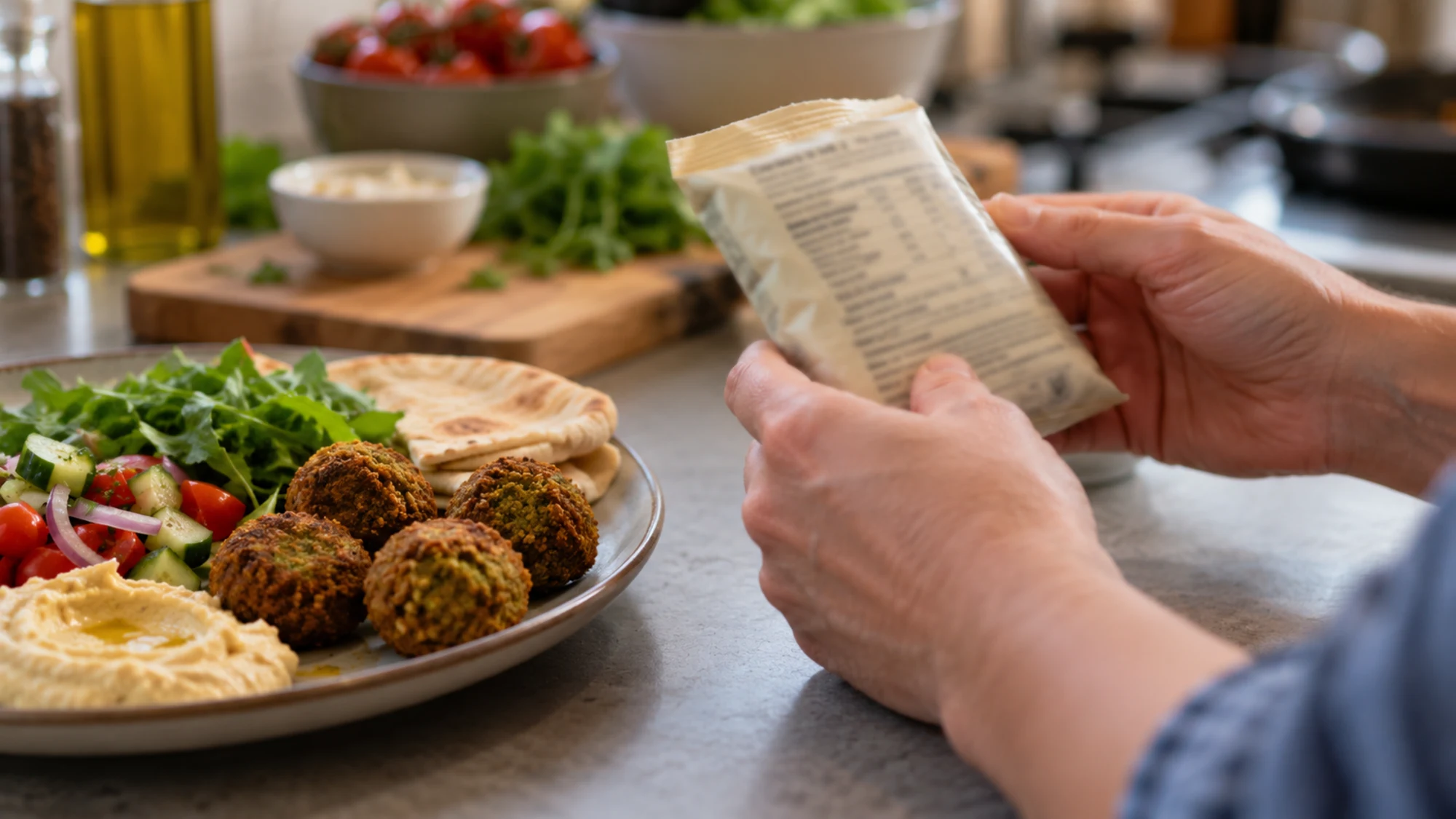
A chickpea or fava base does not automatically make the finished dish gluten-free. Flour-containing binders, bread and shared preparation can matter. The FDA’s gluten-free labeling guidance is about the complete food meeting its requirements, not one ingredient sounding suitable. Vegan suitability likewise depends on the full preparation and accompaniments.
For people with G6PD deficiency, fava beans are a separate concern. MedlinePlus explains that fava consumption can trigger red-blood-cell breakdown in this condition. People diagnosed with it should avoid favas and follow their clinician’s advice; ask which beans are used rather than assuming falafel means chickpeas.
- Ask about the legume base, binder, sauces and bread.
- Mention specific allergies or medically required avoidance clearly.
- Ask about preparation and shared equipment when relevant to your needs.
- If the seller cannot confirm the needed information, choose something whose ingredients can be established.
A useful ingredient question is better than a reassuring assumption.
Bottom Line
Falafel is a versatile legume-and-herb fritter, with chickpea, fava and mixed versions. Enjoy its crisp-and-tender contrast and choose the sides that suit your meal. When dietary needs matter, check the actual ingredients and preparation, including the sauces and bread, rather than relying on the name alone.
Suzy Karadsheh of The Mediterranean Dish demonstrates her chickpea falafel preparation; other versions can use different legumes.
Sources
- The Mediterranean Dish: Falafel Guide
- FDA: Gluten-Free Labeling Questions and Answers
- MedlinePlus Genetics: G6PD Gene

Emily is Spoonvale’s recipe-writing persona, bringing a warm, practical voice to everyday cooking. Her focus is simple: approachable meals, comforting flavors, and clear instructions that help make time in the kitchen more enjoyable.