
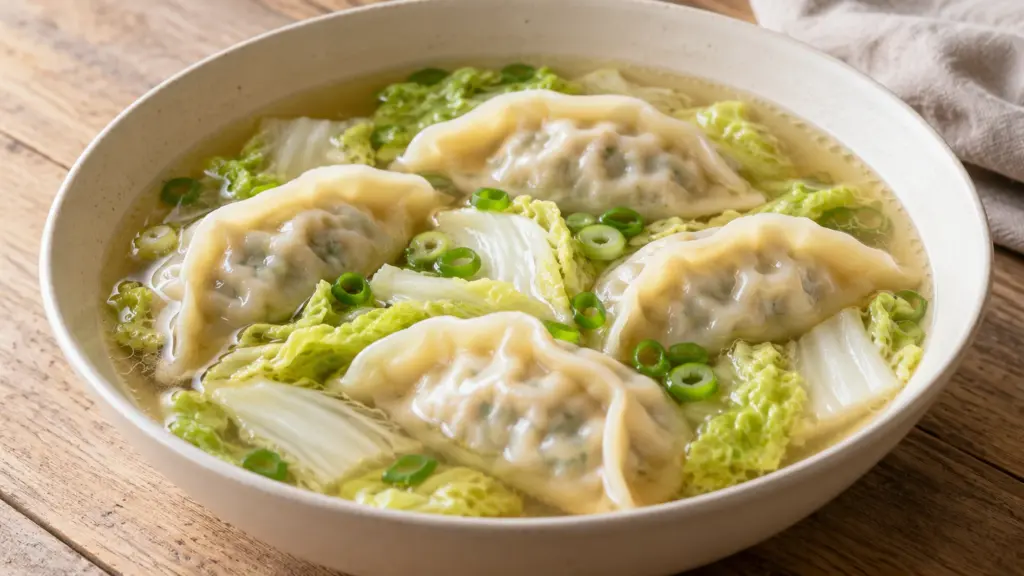
A bag of frozen dumplings and a wedge of cabbage can look like two unrelated dinner plans. A gingery broth brings them together: the wrappers turn silky, the napa softens, and scallions keep the bowl tasting fresh. There is plenty of comfort here without making dough or folding a single dumpling.
This cabbage dumpling soup pairs frozen pork-and-vegetable mandu with napa cabbage, chicken broth, garlic, ginger, and a small finishing splash of rice vinegar. Give the firm cabbage stems a head start, add the leaves later, and check the dumpling centers before serving.
The recipe specifies fully cooked Bibigo Pork & Vegetable Mandu, which go into the pot frozen. Other dumplings can have different fillings, sizes, and cooking requirements. The manufacturer's boiling directions are a useful starting point, but the directions on your own bag take priority.
Serving Suggestions for Cabbage Dumpling Soup
Serve the soup soon after the dumplings finish heating, while their edges are supple and the napa still has some shape. Divide the dumplings among four bowls first, then ladle over the cabbage and broth. That small bit of organization prevents the final bowl from becoming mostly liquid.
If I were choosing a side, I'd keep it crisp and simple: sliced cucumber or a small carrot salad gives a welcome change from soft wrappers. Rice is optional; the dumplings already bring a substantial wheat wrapper. Put any extra soy sauce on the table so each person can decide whether the bowl needs it.
- Use a soup spoon alongside chopsticks or a fork; a slippery dumpling deserves a sensible backup plan.
- Add scallion greens just before eating for a fresh onion note.
- For staggered dinners, prepare the cabbage broth ahead and heat only the dumplings needed for the first serving.
- Serve a slice of baguette alongside if you would like bread for the broth.
Refrigerate leftovers promptly in shallow containers rather than leaving the full pot on the stove. Safe food handling guidance calls for refrigeration within two hours, or one hour above 90°F, and reheating leftovers to 165°F. Bring the broth back to a boil and check the dumpling centers too.
Variations That Keep the Broth Balanced
Napa is the first choice here because its crinkled leaves soften quickly and its stems remain pleasantly substantial. If I had green cabbage instead, I'd slice it much thinner and allow it extra cooking time before introducing the dumplings. Different cabbage should change the timing, not force the dumplings to wait around and fall apart.
Use this guide when choosing an alternative.
| Change | What to expect | Adjustment |
|---|---|---|
| Green cabbage for napa | Firmer leaves and a more pronounced cabbage flavor | Shred thinly; soften before adding dumplings |
| Chicken dumplings for pork | A different filling and possibly a different size | Follow that bag's directions; check the center |
| Vegetable dumplings and vegetable broth | A meat-free direction if both labels confirm it | Check fillings and seasonings; retain their cooking directions |
| Chili crisp at the table | Extra heat, crunch, oil, and often salt | Offer separately so the whole pot stays mild |
Keep the vinegar measured at first. It should sharpen the broth without turning dinner into a hot-and-sour soup. Toasted sesame oil has a strong aroma, so the small finishing amount matters more than a generous pour.
Health Benefits and Practical Trade-Offs
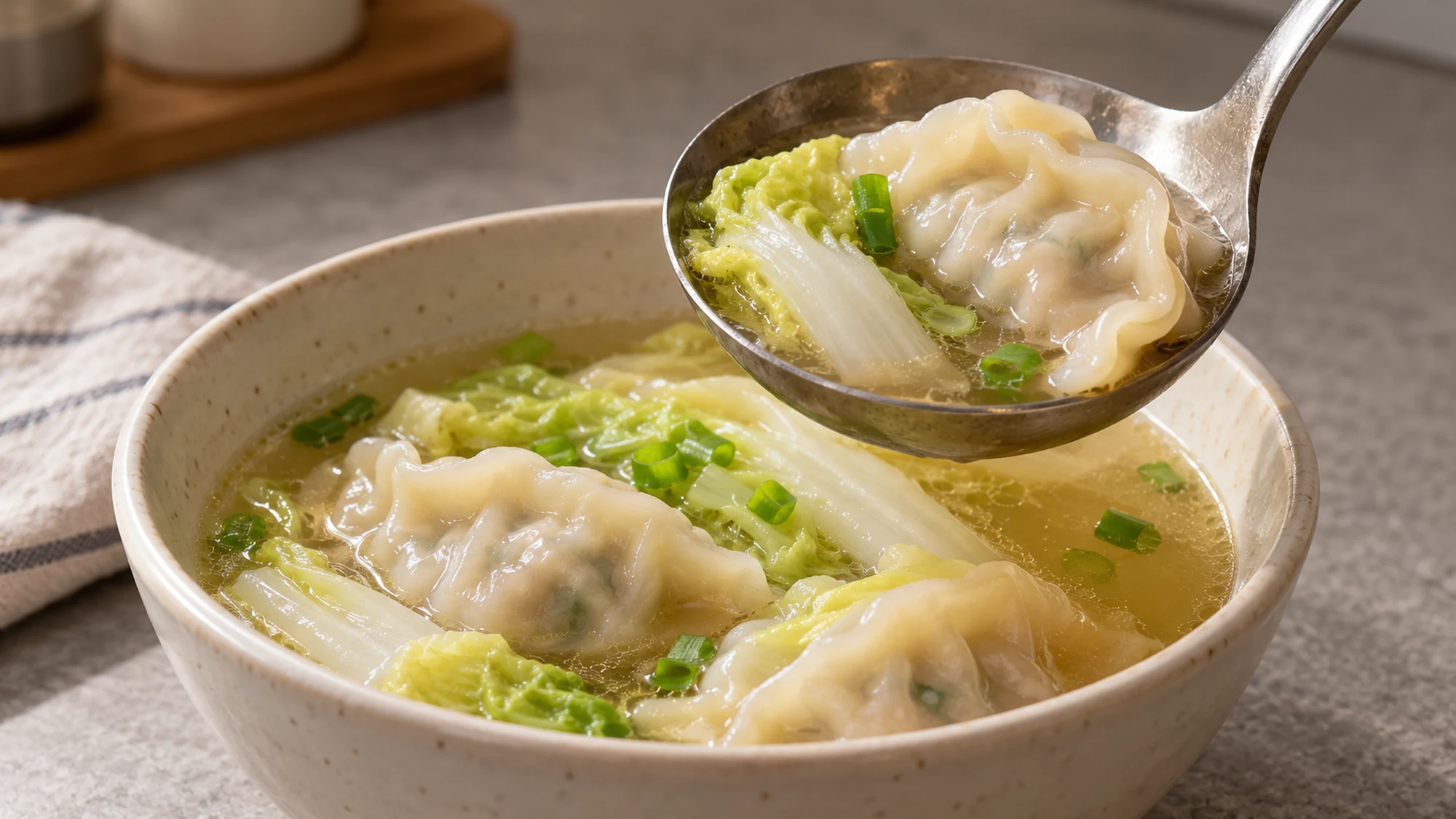
The napa makes vegetables a substantial part of the bowl rather than a token garnish. Vegetables contribute fiber and a variety of vitamins and minerals, as explained in MyPlate's vegetable guide. The amounts depend on the dumplings, broth, and portions you use, so compare those ingredients rather than assuming every version has the same nutritional profile.
The dumpling filling contributes pork and soy ingredients, while its wrapper supplies starch. Broth, dumplings, and soy sauce all affect the final sodium level, even when some labels say reduced sodium. I'd compare those labels before adding extra seasoning; ginger, garlic, and vinegar bring their own distinct flavors.
- Choose a broth labeled lower sodium and a reduced-sodium soy sauce.
- Check every dumpling ingredient list when cooking for allergies; this version contains wheat, soy, and sesame.
- Treat a change of dumpling brand as a change in nutrition too.
The useful goal is a satisfying bowl with plenty of cabbage and seasoning you can adjust. The dumpling label is the practical place to start when comparing one version with another.
Bottom Line
Cabbage dumpling soup works best when each ingredient gets the attention it needs: stems first, leaves later, and dumplings heated according to their own package directions. Keep the broth lightly seasoned, finish with vinegar and scallion greens, and serve while the wrappers are tender. Frozen dumplings do the labor; the cabbage and ginger make the bowl feel complete.
Cabbage Dumpling Soup Recipe
Ingredients
- 1 lb napa cabbage 454 g
- 2 scallions about 30 g
- 2 tsp canola oil 10 ml
- 1 Tbsp finely grated fresh ginger 6 g
- 2 cloves garlic 6 g; minced
- 6 cups low-sodium chicken broth 1.4 L
- 1 24-oz package fully cooked Bibigo Pork & Vegetable Mandu 680 g; keep frozen; use the US 24-oz product and follow your own bag’s directions
- 1 Tbsp reduced-sodium soy sauce 15 ml
- 2 tsp rice vinegar 10 ml
- 1 tsp toasted sesame oil 5 ml
Equipment
- 6-quart soup pot with lid
- Colander
- Cutting board and chef’s knife
- Measuring jug and spoons
- Ladle
- Slotted spoon
- Instant-read food thermometer
Instructions
- Rinse the napa cabbage and scallions under cool running water, then drain them in a colander.
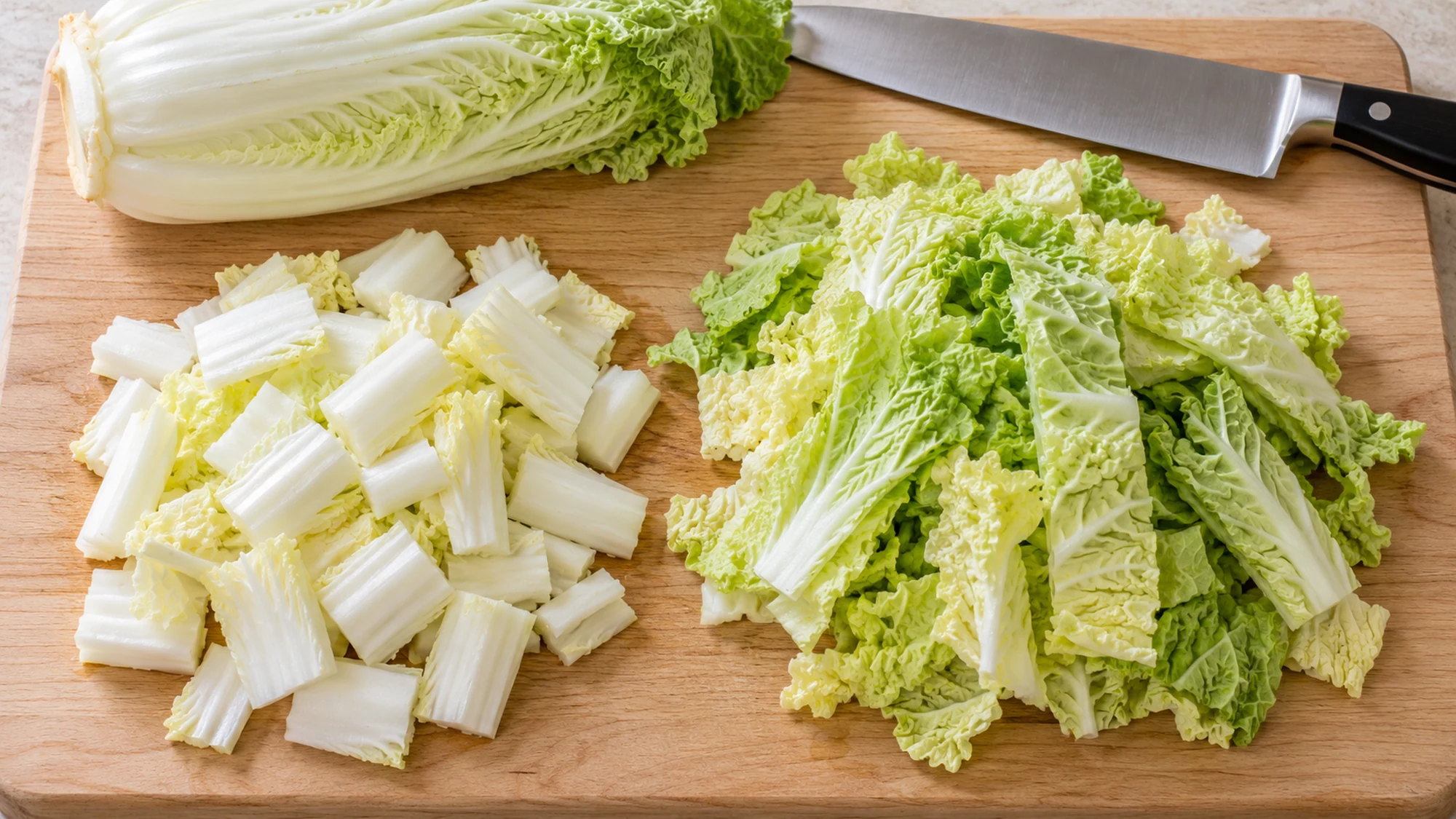
- Cut the firm napa stems crosswise into ½-inch (1.3-cm) pieces and the leaves into 1-inch (2.5-cm) pieces, keeping them separate. Thinly slice the scallions, separating the white and light-green parts from the dark-green tops. Peel and finely grate the ginger, then peel and mince the garlic.
- Heat the canola oil in the 6-quart pot over medium heat. Add the scallion whites, ginger and garlic and stir for about 30 seconds, just until fragrant. Add the napa stems and cook, stirring, for about 3 minutes.
- Pour in the chicken broth and reduced-sodium soy sauce. Increase the heat and bring the broth to a full boil.
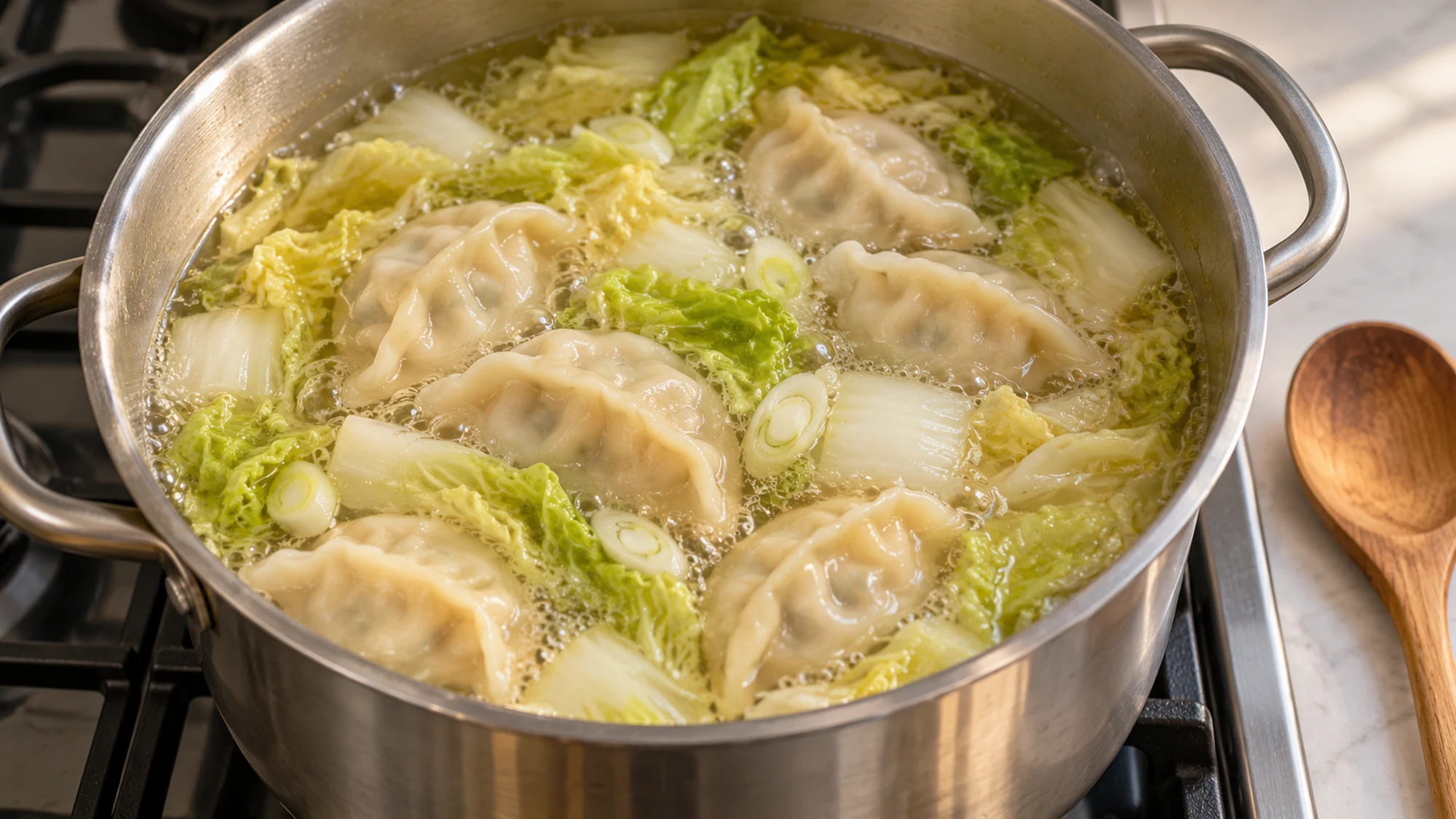
- Add the frozen mandu and napa leaves, gently separating the dumplings with the slotted spoon. Let the soup return to a boil, then boil for 6 minutes, stirring gently occasionally to prevent sticking. This timing follows the manufacturer’s boiling method for the specified US 24-oz fully cooked pork-and-vegetable mandu. Check the centers of several dumplings with the thermometer: they should reach 165°F (74°C). If needed, continue boiling and check again; floating alone does not establish that they are hot enough. If your package directions differ, follow those directions and check the centers.
- Turn off the heat and stir in the rice vinegar and toasted sesame oil. Divide the dumplings among four bowls, then ladle over the napa cabbage and broth. Scatter the reserved scallion greens over the bowls and serve promptly.
Nutrition
Video
Notes
Tried this recipe?
Let us know how it turned out!Emily is Spoonvale’s recipe-writing persona, bringing a warm, practical voice to everyday cooking. Her focus is simple: approachable meals, comforting flavors, and clear instructions that help make time in the kitchen more enjoyable.