
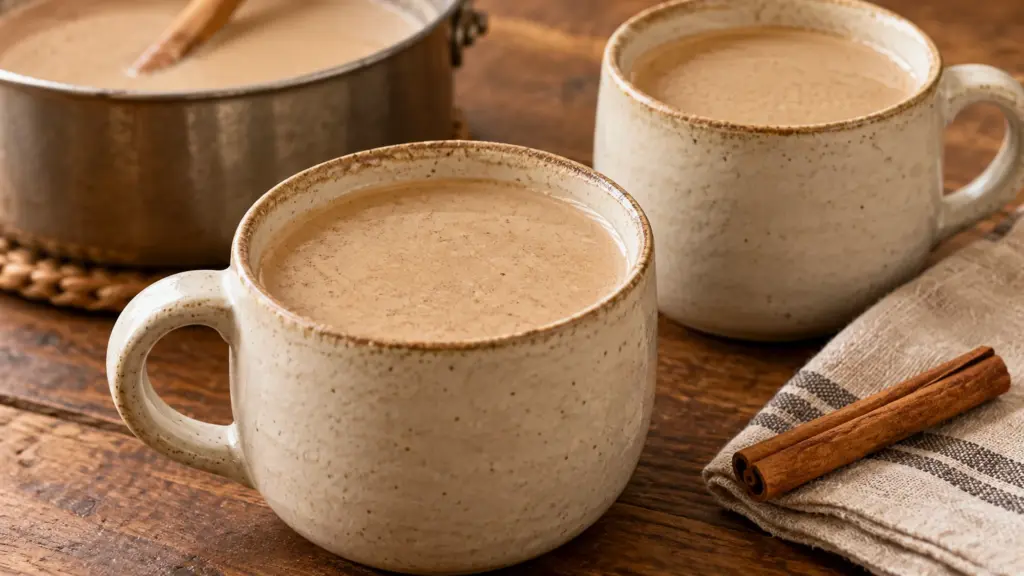

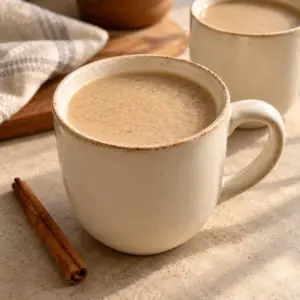
The first thing to look for is the word toasted. Atole de pinole gets its warm corn flavor from pinole, finely ground toasted corn, rather than a packet of ordinary tortilla flour. A little milk rounds out this version, while cinnamon and brown sugar give the drink a gentle sweetness. The result should pour into a mug, with a lightly creamy body rather than the stiffness of porridge.
This atole de pinole makes four small mugs from plain, unsweetened toasted-corn pinole. Mix the powder with cool water before it meets the hot liquid, then keep the heat gentle and stir as it thickens. Check the pinole label first: a sweetened or spiced blend needs different seasoning decisions.
I would choose a plain pinole for the first pot because it makes the sweetness easier to control. White or yellow corn gives a beige drink; blue-corn pinole changes the color. The measurements below are for the plain version, so there is no need to guess how much sugar a flavored mix already contains.
Serving Suggestions for Atole de Pinole
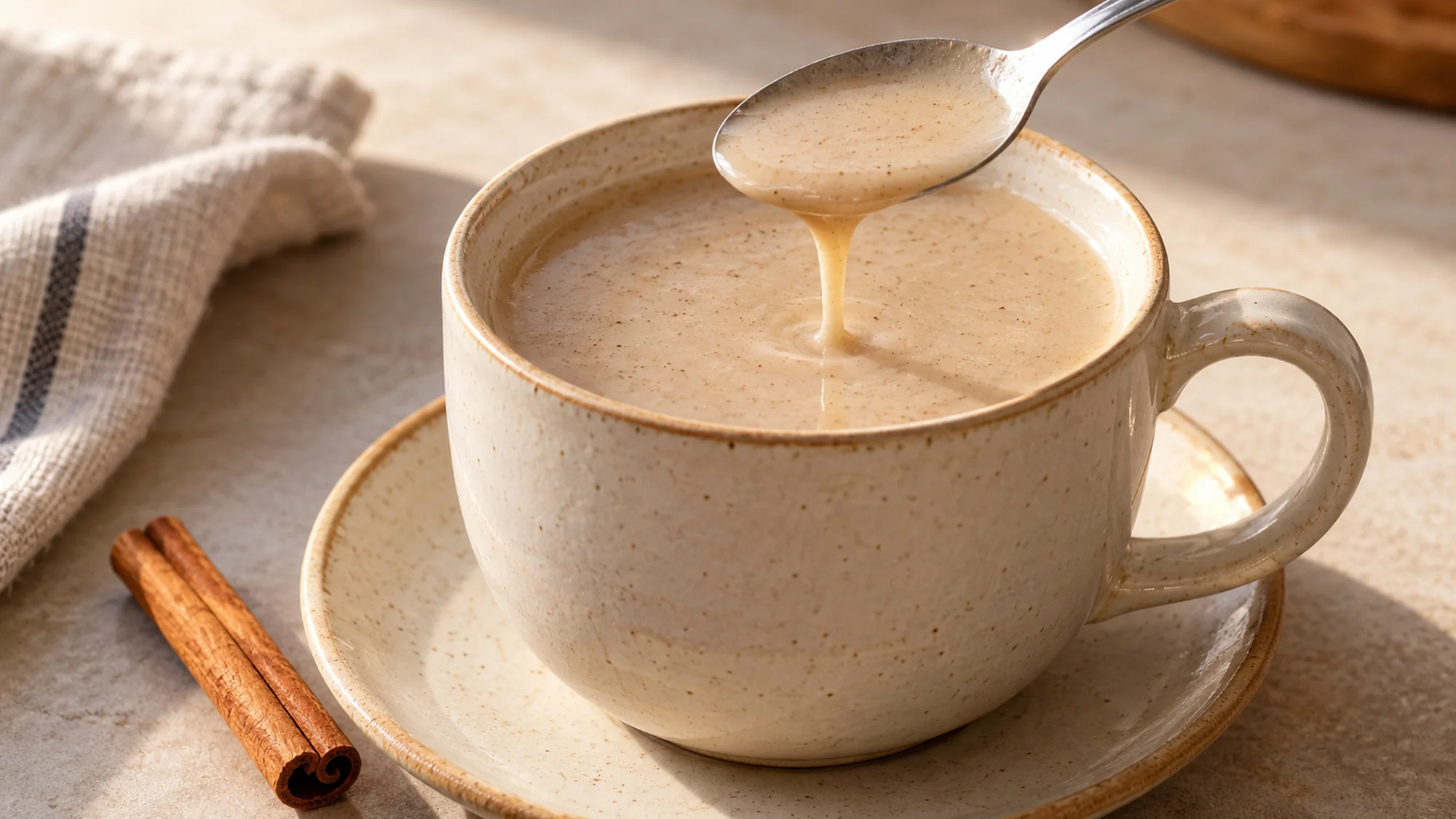
Serve the atole warm, after giving the pot a final stir. Small mugs suit its lightly thickened texture, and a spoon is useful if the corn settles a little as you drink. Let it cool to a comfortable sipping temperature. There is no prize for meeting the first mouthful before it is ready.
- For a simple breakfast, pair a modest mug with food you already enjoy rather than treating the drink as a complete meal.
- For a slightly lighter serving, use smaller cups and offer seconds while the pot is still warm.
- Stir the pot before refilling cups so the last serving has the same texture as the first.
If you want another warm breakfast option for a different morning, try Spoonvale’s apple cinnamon baked oatmeal. It keeps the grain texture in a sliceable bake, while this recipe is meant for sipping. For leftovers, cool and refrigerate the atole promptly; avoid repeatedly warming the whole pot for a single cup.
Keep the serving small enough to stay pleasantly warm, stir before pouring, and give the drink a moment to cool before sipping.
Variations and Choosing the Right Pinole
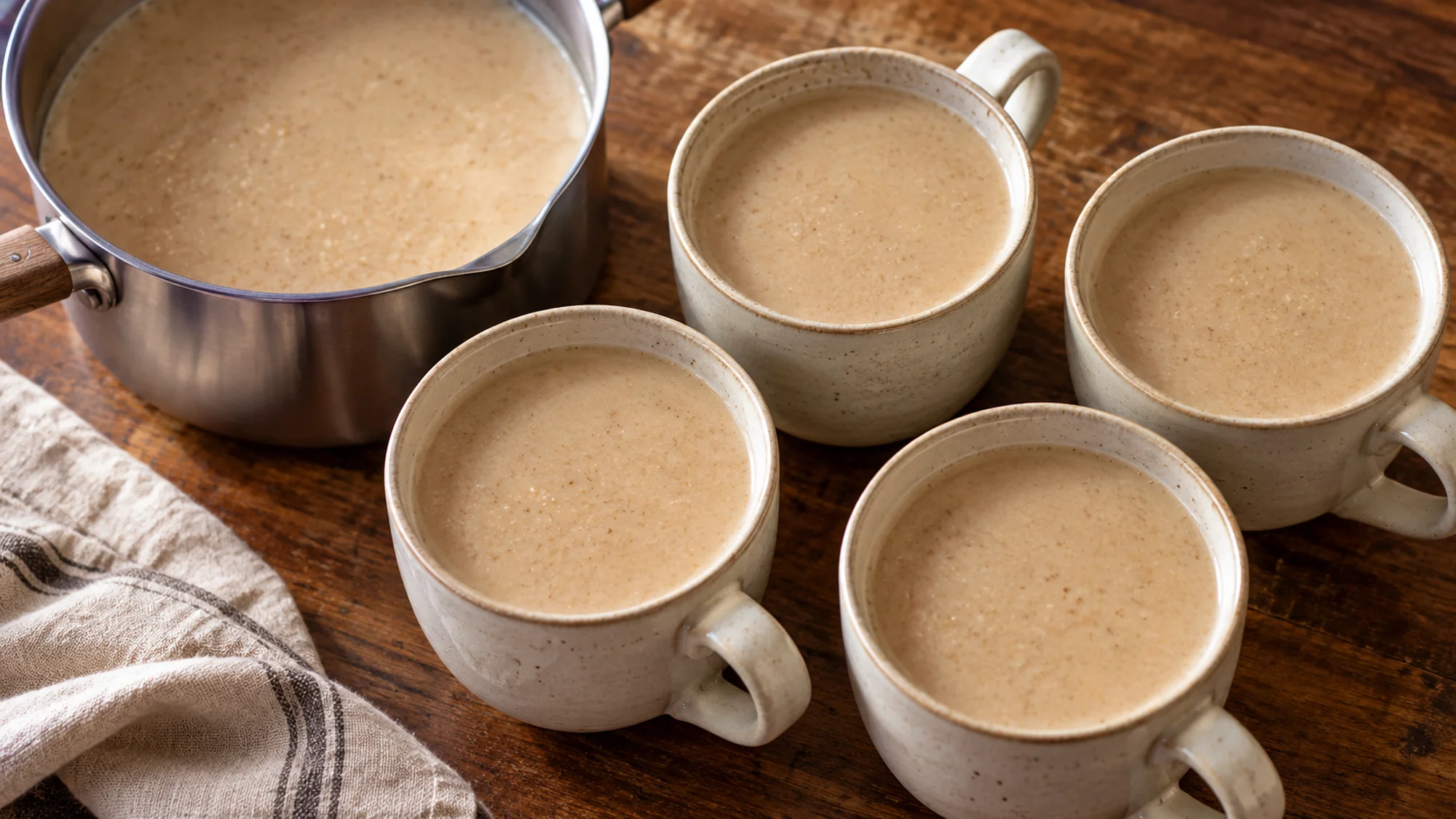
Atole varies across Mexican regions and kitchens. Larousse Cocina’s atole de pinole entry describes versions made with water, milk, cinnamon, and different sweeteners. This recipe uses a little milk and brown sugar; it is one practical version, not a claim that every household makes it the same way.
| Bag label | What changes | What to do |
|---|---|---|
| Plain toasted-corn pinole | No added sweetness or spices | Use the card as written |
| Sweetened pinole | Sugar is already included | Hold back added sugar, then taste after cooking |
| Spiced or mixed-grain pinole | Flavor and thickening can differ | Read ingredients; do not assume an identical result |
| Masa harina | A different corn preparation | Choose toasted-corn pinole for this recipe |
Masa harina is made through a different process; GRUMA’s explanation of nixtamalized masa describes cooking corn with lime. It does not provide the same toasted flavor. For an all-water variation, replace the milk with the same volume of water and expect less richness. A plant-based milk also changes flavor and nutrition.
Start with the ingredient list, then adjust sweetness and liquid deliberately. Different products labeled pinole are not automatically interchangeable.
Health Benefits and Portion Balance
The corn contributes carbohydrate, while the milk adds some protein and calcium. Brown sugar remains added sugar, even though its flavor suits cinnamon. The card’s nutrition is an estimate for one-fourth of the pot, using plain pinole and the measured sugar. Sweetened blends and different milk products change those numbers.
I prefer discussing this as a comforting grain-based drink instead of promising special endurance or health effects. Its place in the meal depends on the serving size and what else you eat. If using a mixed-grain blend, read the ingredients for allergens as well as flavor; the word pinole alone does not describe everything in the bag.
- Follow USDA leftover guidance: refrigerate promptly within two hours, or one hour above 90°F. Use refrigerated leftovers within three to four days.
- Reheat leftovers to 165°F, stirring to distribute the heat. If the drink thickens in storage, loosen it gradually with a little water.
Enjoy the toasted-corn flavor, keep added sugar in view, and treat the mug as part of the meal rather than a nutritional promise.
Bottom Line
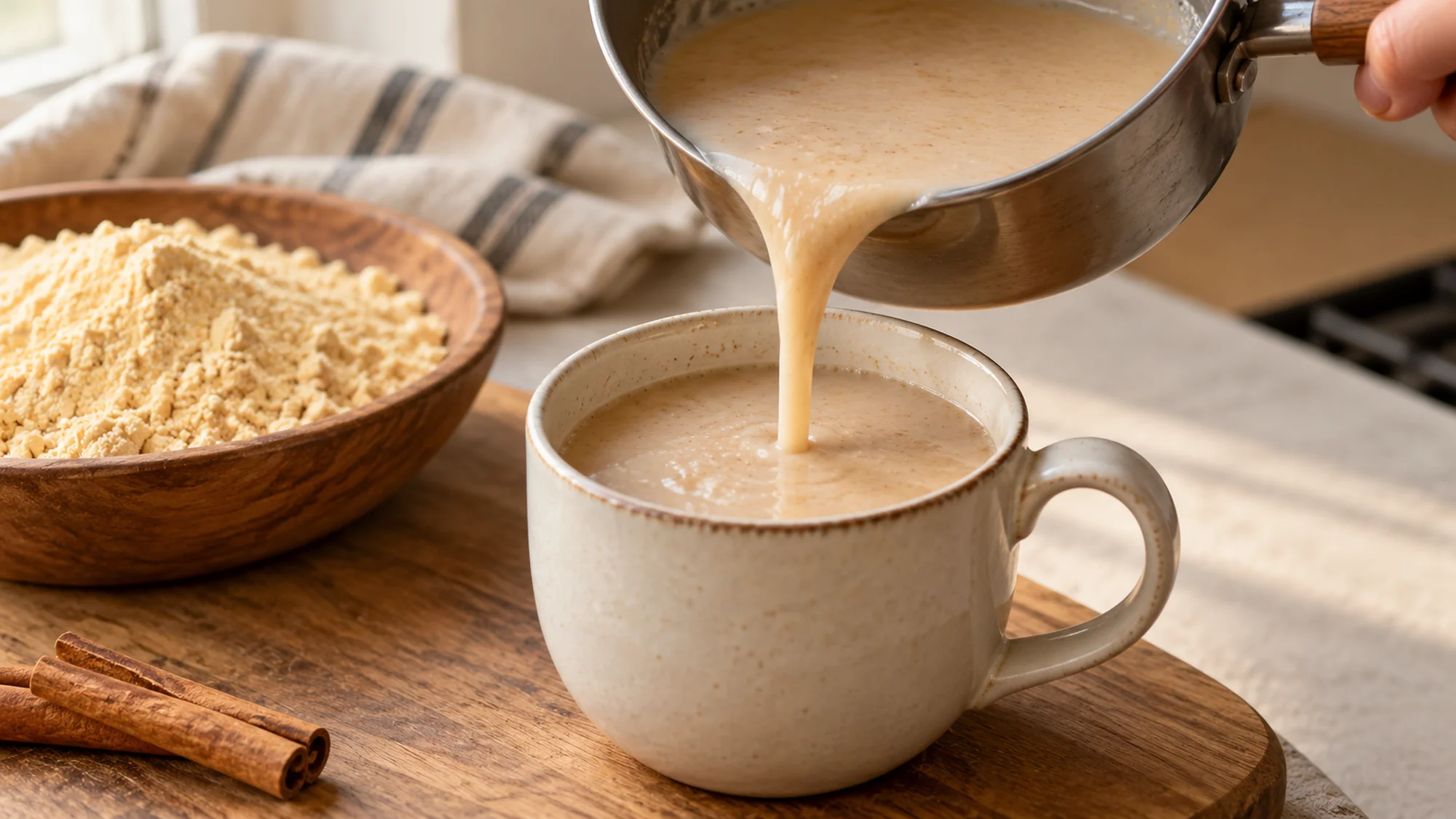
Atole de pinole depends on the right corn ingredient and a little attention at the stove. Choose plain toasted-corn pinole, start with a cool slurry, and stir over gentle heat for a drink that stays pourable. I would serve it simply, with its cinnamon aroma and toasted flavor doing the work.
Atole de Pinole Recipe

Ingredients
- 60 g plain unsweetened toasted-corn pinole about 1/2 cup; weigh for consistency; not masa harina or a sweetened blend
- 3 cups water 720 ml, divided
- 1 cup whole milk 240 ml
- 25 g dark brown sugar about 2 tablespoons
- 1 cinnamon stick about 3 inches long
- 0.125 tsp fine salt
Equipment
- 2-quart saucepan
- Small mixing bowl
- Whisk
- Measuring cups and spoons
- Wooden spoon
- Ladle
Instructions
- In a small bowl, whisk the pinole with 1 cup of the cool water until evenly combined into a smooth slurry.
- In a 2-quart saucepan, combine the remaining 2 cups water, milk, brown sugar, cinnamon stick and salt. Heat over medium heat until gently simmering, stirring to dissolve the sugar. Keep at a gentle simmer for 5 minutes.
- Whisk the pinole slurry again because the corn may settle. Pour it gradually into the saucepan while whisking. Reduce the heat to low and simmer gently for 8–10 minutes, stirring frequently and scraping the bottom with a wooden spoon, until lightly thickened and still pourable. Do not let the milk boil over or scorch.
- Remove and discard the cinnamon stick. Stir, then ladle into 4 small mugs. Let cool to a comfortable sipping temperature before drinking. The atole thickens as it stands; stir in a small splash of water if needed.
Nutrition
Video
Notes
Tried this recipe?
Let us know how it turned out!Emily is Spoonvale’s recipe-writing persona, bringing a warm, practical voice to everyday cooking. Her focus is simple: approachable meals, comforting flavors, and clear instructions that help make time in the kitchen more enjoyable.