
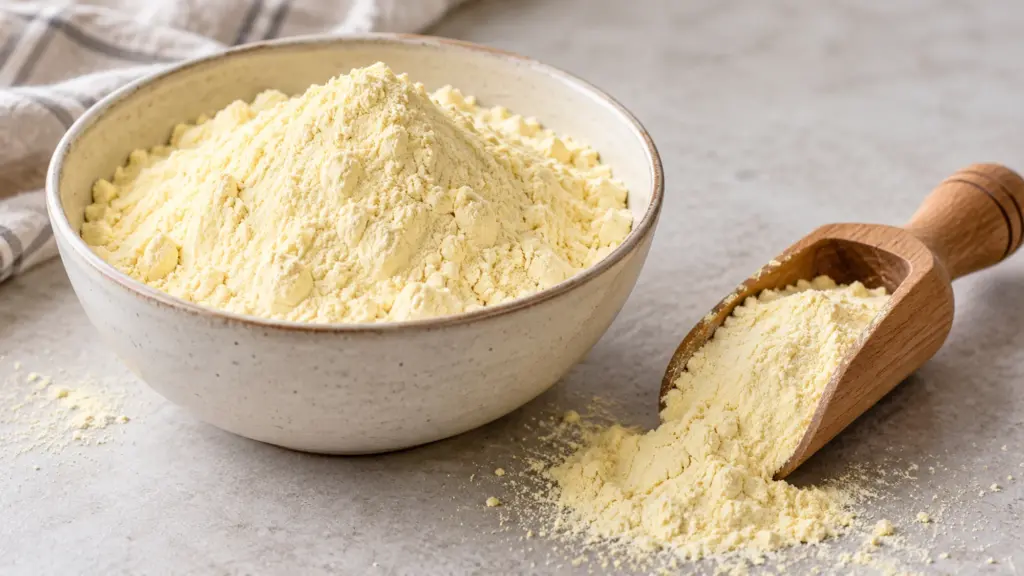
A recipe asks for corn flour, and the bag in your cupboard looks close enough. Before it goes into the bowl, one small detail matters: the same name can describe different products in different countries.
In U.S. recipes, corn flour usually means finely ground dried corn. In British recipes, cornflour commonly means cornstarch. Read the ingredient list and the recipe’s origin before treating those names as interchangeable.
My first check would be the label, not the powder’s color. That simple pause can save a sauce from turning grainy or a tortilla dough from refusing to hold together.
What corn flour means on the label
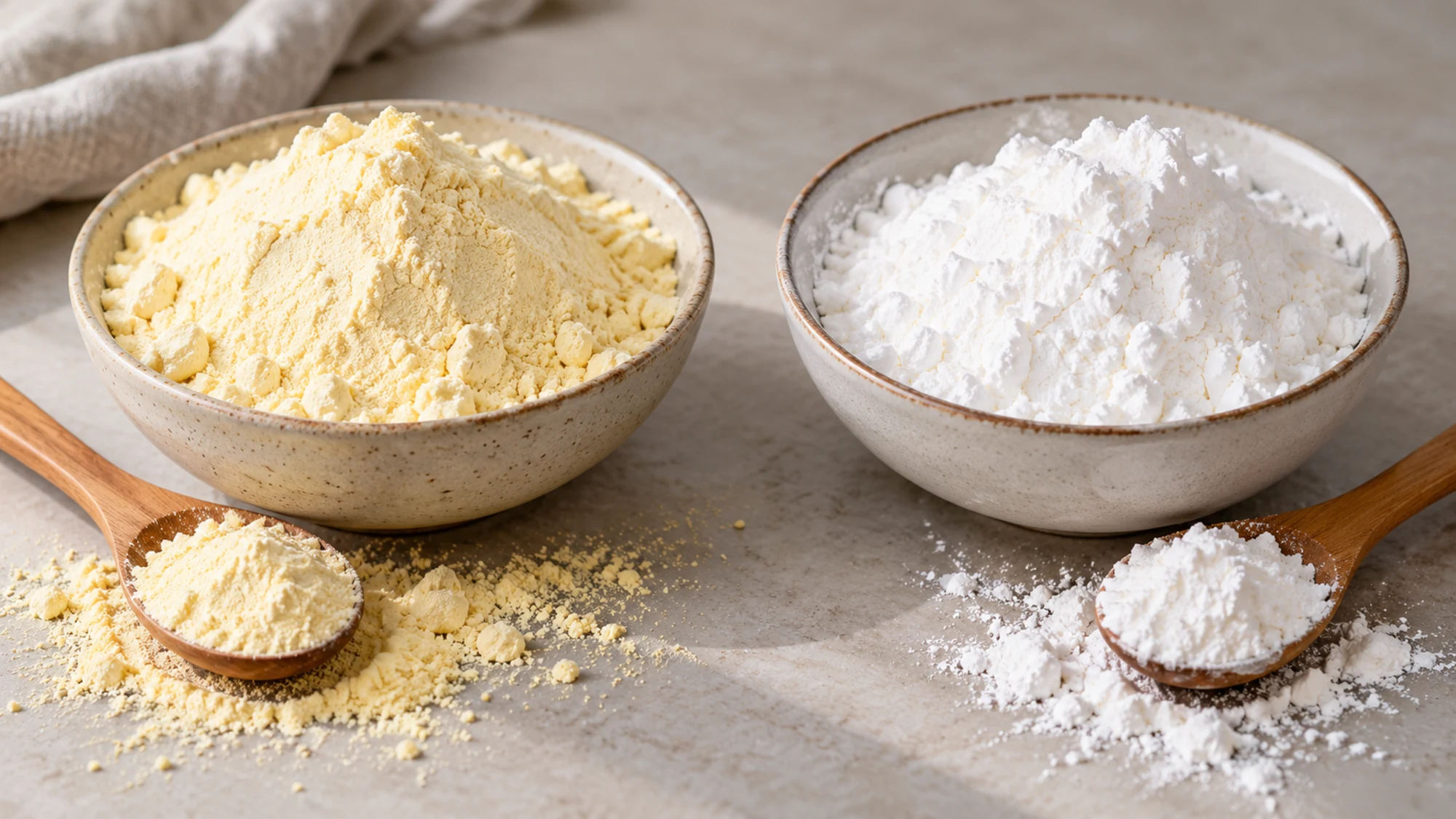
American corn flour is a fine grind of dried corn, generally finer than cornmeal. Some products are whole-grain, but that is a separate label claim rather than something the name guarantees. Bob’s Red Mill describes its corn flour as retaining the bran, germ and endosperm.
By contrast, Doves Farm’s British cornflour is corn starch flour, intended for uses including sauces, gravies and custards. Neither label is necessarily wrong. They belong to different naming conventions, which makes an international recipe worth reading carefully.
| Product | What it is | Common role |
|---|---|---|
| U.S. corn flour | Finely ground dried corn | Baking blends and coatings |
| Cornstarch / British cornflour | Starch from the corn kernel | Thickening sauces and custards |
| Cornmeal | A coarser corn grind | Cornbread and textured coatings |
| Masa harina | Dried flour from nixtamalized corn | Tortilla or tamale dough, depending on product |
Choose the product for the job
For a coating or a corn-flavored baked good, finely ground corn flour can make sense when the recipe calls for it. Its finer texture behaves differently from a coarse meal. Bob’s notes that replacing cornmeal with its corn flour produces a softer, denser cornbread, not an identical result.
For thickening a smooth sauce, check whether the recipe actually means cornstarch. A starch-based thickener and ground corn flour do not have the same composition. I would not swap them simply because both packages mention corn; the texture change is often the whole point of the ingredient.
- Read beyond the front-of-bag name to the ingredients.
- Check whether the recipe is written for a U.S. or British audience.
- Use the stated grind when a coating’s texture matters.
- Follow the recipe’s method for the specific starch or flour it names.
Why masa harina is not an ordinary flour swap
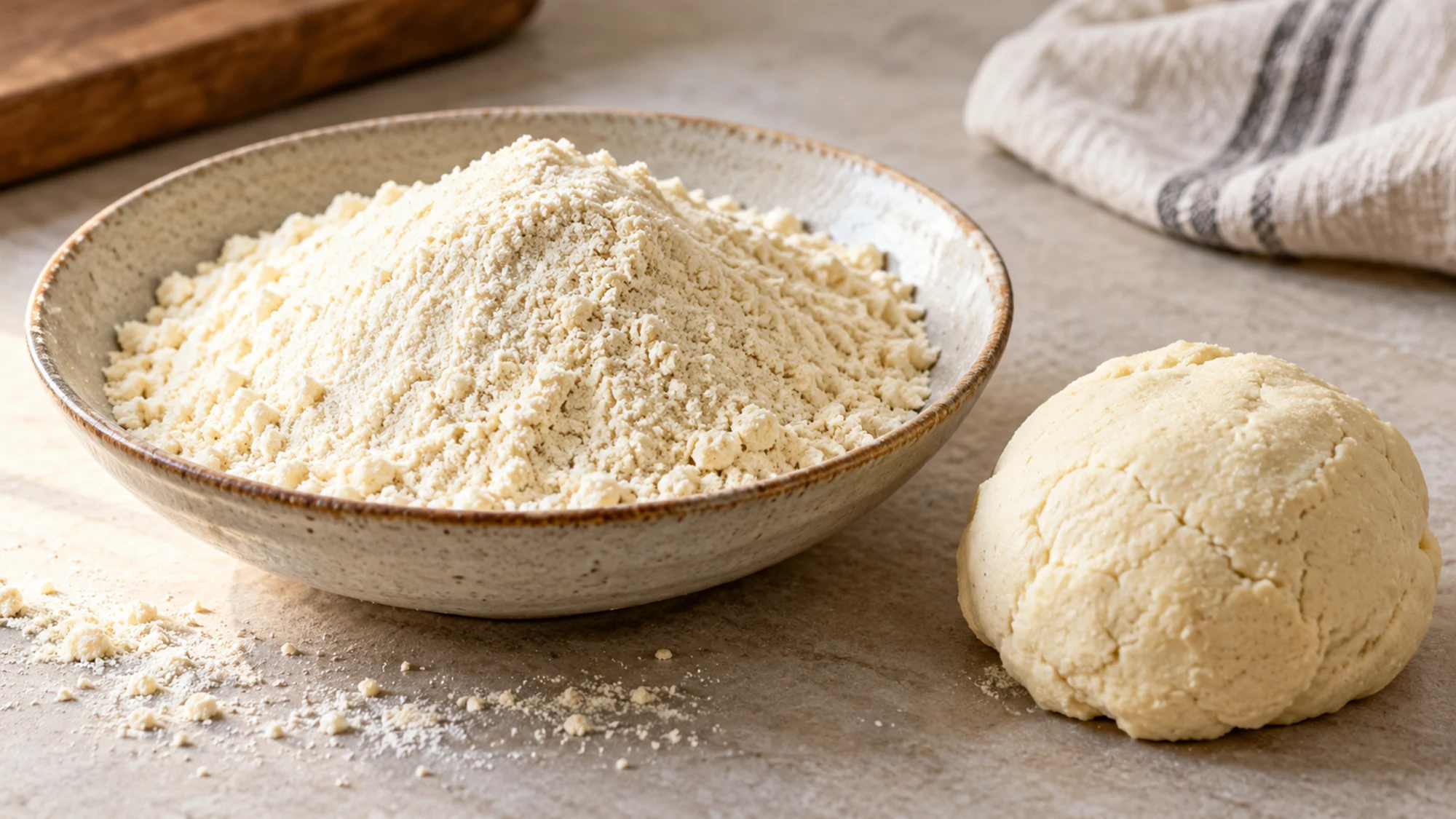
Masa harina starts with corn treated in an alkaline solution, a process called nixtamalization. That treatment changes the corn’s flavor and behavior before it becomes dried flour. In King Arthur’s tortilla guidance with Pati Jinich, masa harina is the appropriate starting point for this kind of corn dough.
The lime involved in nixtamalization is food-grade calcium hydroxide, not citrus juice. Adding lime juice to untreated corn flour does not turn it into masa harina. Also check whether a masa product is intended for tortillas or tamales, since the grind and intended use can differ.
- For tortillas, use the masa harina specified by the recipe.
- Do not replace masa harina with cornstarch.
- Do not expect untreated corn flour and water to behave like masa dough.
- Choose a recipe written for your actual product rather than forcing a one-for-one exchange.
Substitutions and gluten-free checks
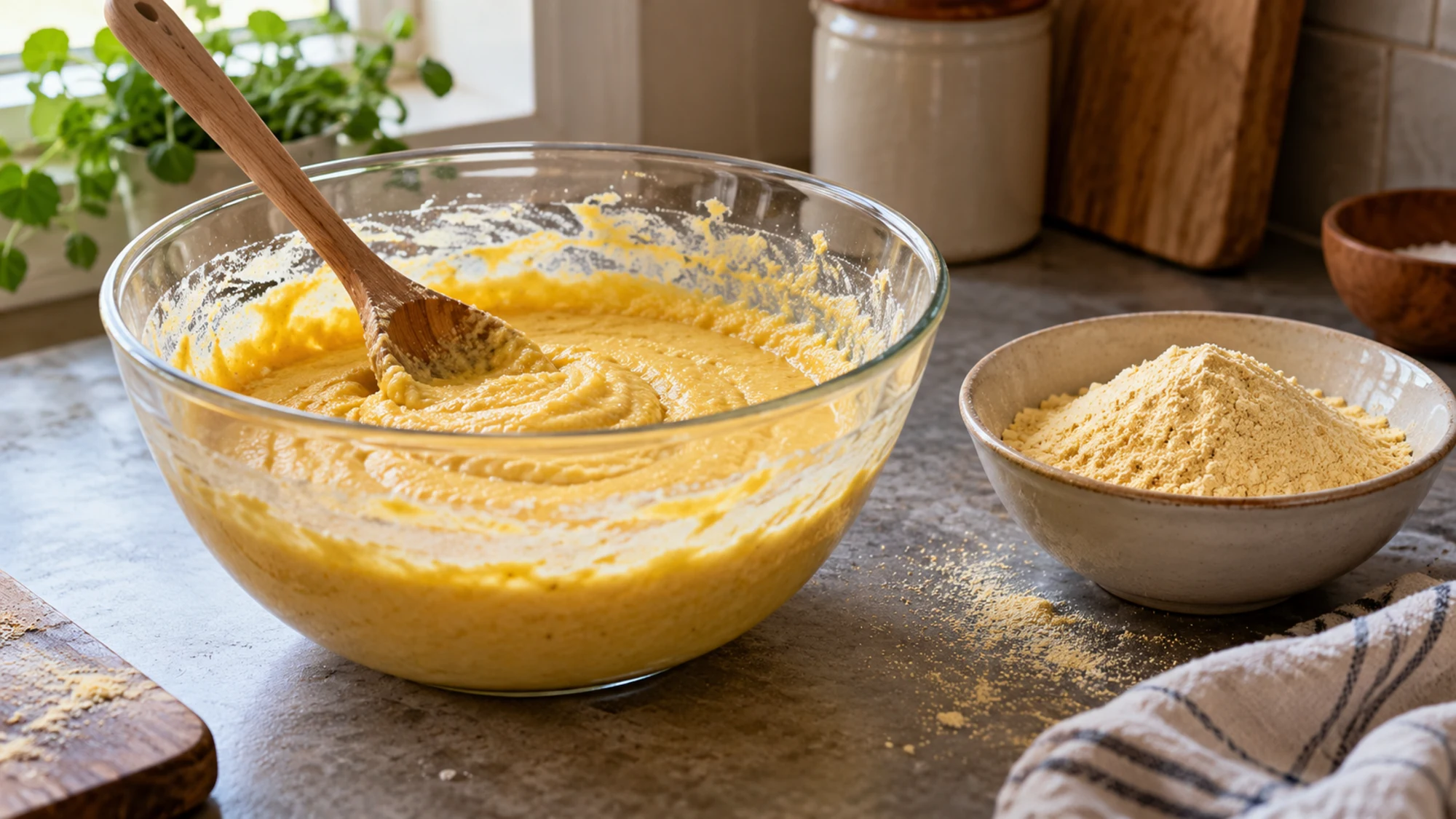
Corn flour does not supply wheat gluten’s structure, so replacing all-purpose wheat flour one-for-one can change how a bake holds together. Some recipes deliberately combine the two; others use a developed gluten-free blend with additional ingredients. A partial substitution suggestion from a manufacturer is a starting point for that product, not proof that every cake or loaf will work.
The same caution applies to cornmeal. A finer grind may suit your preference, but it changes texture and can change how the batter behaves. For a dependable result, I’d choose a recipe designed for corn flour before trying to rewrite a favorite cornmeal recipe.
Corn itself is not wheat, rye or barley, but blends and processing cross-contact still matter, so check the actual ingredient list and gluten-free labeling. The FDA’s gluten-free labeling rule includes less than 20 parts per million for unavoidable gluten along with ingredient requirements; a corn-based name alone is not the same assurance. Our gluten-free bread guide applies the same label-first approach when choosing a finished loaf.
- Keep corn flour, cornstarch and masa in clearly labeled containers.
- Do not assume every corn flour is whole-grain.
- Use a suitable gluten-free-labeled product when gluten avoidance is medically necessary.
- Follow the package’s storage directions and keep the flour dry and protected.
Bottom Line
Match the ingredient to the recipe, not just the word corn. U.S. corn flour is finely ground corn; British cornflour often means cornstarch; masa harina has undergone a different process. Once you identify the bag correctly, choosing a useful recipe or substitution becomes much simpler.
Chef Kunal Kapur’s comparison explains corn flour and cornstarch in Hindi. Keep the regional naming difference above in mind when watching.
Sources
- Bob’s Red Mill: corn flour product and uses
- Doves Farm: British cornflour
- King Arthur Baking and Pati Jinich: masa harina for tortillas
- FDA: gluten-free food labeling requirements

Emily is Spoonvale’s recipe-writing persona, bringing a warm, practical voice to everyday cooking. Her focus is simple: approachable meals, comforting flavors, and clear instructions that help make time in the kitchen more enjoyable.