
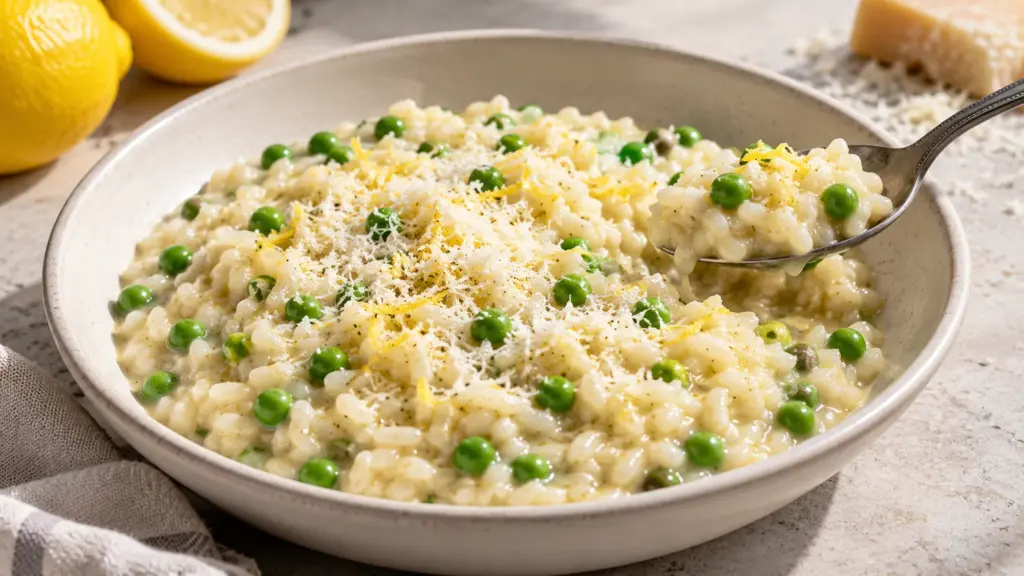
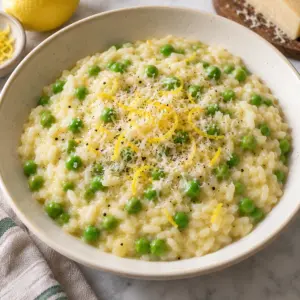
Dinner is nearly ready, but the rice in the pot looks a little too firm to call creamy. Risotto gives you a useful adjustment right at the end: a splash of hot broth can loosen the sauce without adding cream. This version pairs Arborio rice with green peas, lemon and Parmesan for a bright, savory bowl.

Keep the broth warm, stir gently and finish while the rice still has a slight bite. The risotto should spread softly when spooned into a bowl, rather than stand in a stiff mound.
I’d put texture ahead of the clock here. Start tasting a few grains toward the end of cooking; the center should feel tender with a little resistance, never chalky. The measured broth is a working supply, so you may not need every drop. Different pots and simmer strengths change how quickly liquid evaporates.
Serving Suggestions for Lemon-Pea Risotto
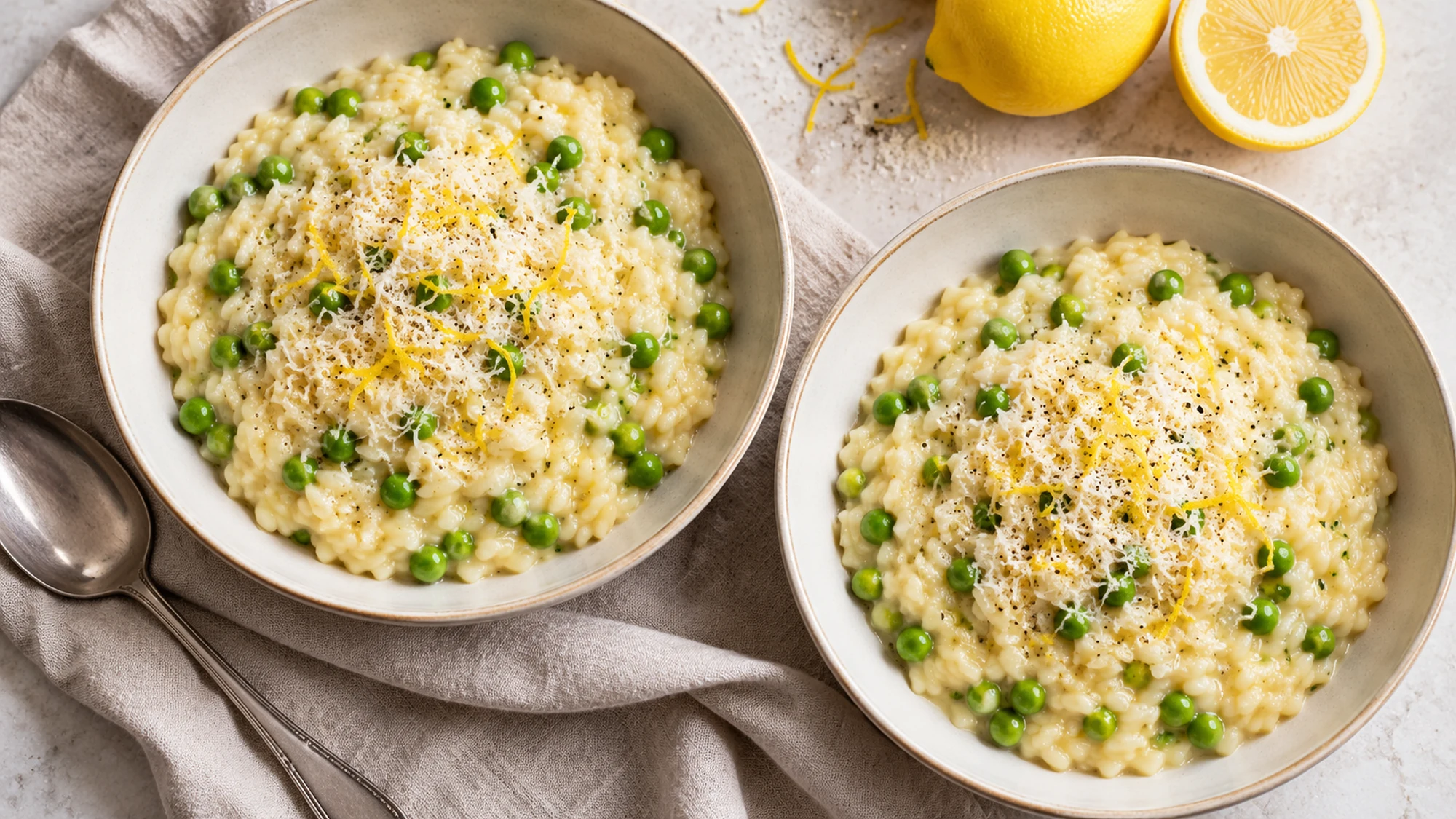
Have bowls and side dishes ready before the final stir. Risotto keeps absorbing liquid as it stands, so a long pause at the stove works against that flowing consistency. A wide, shallow bowl makes it easier to enjoy the rice while it is comfortably warm.
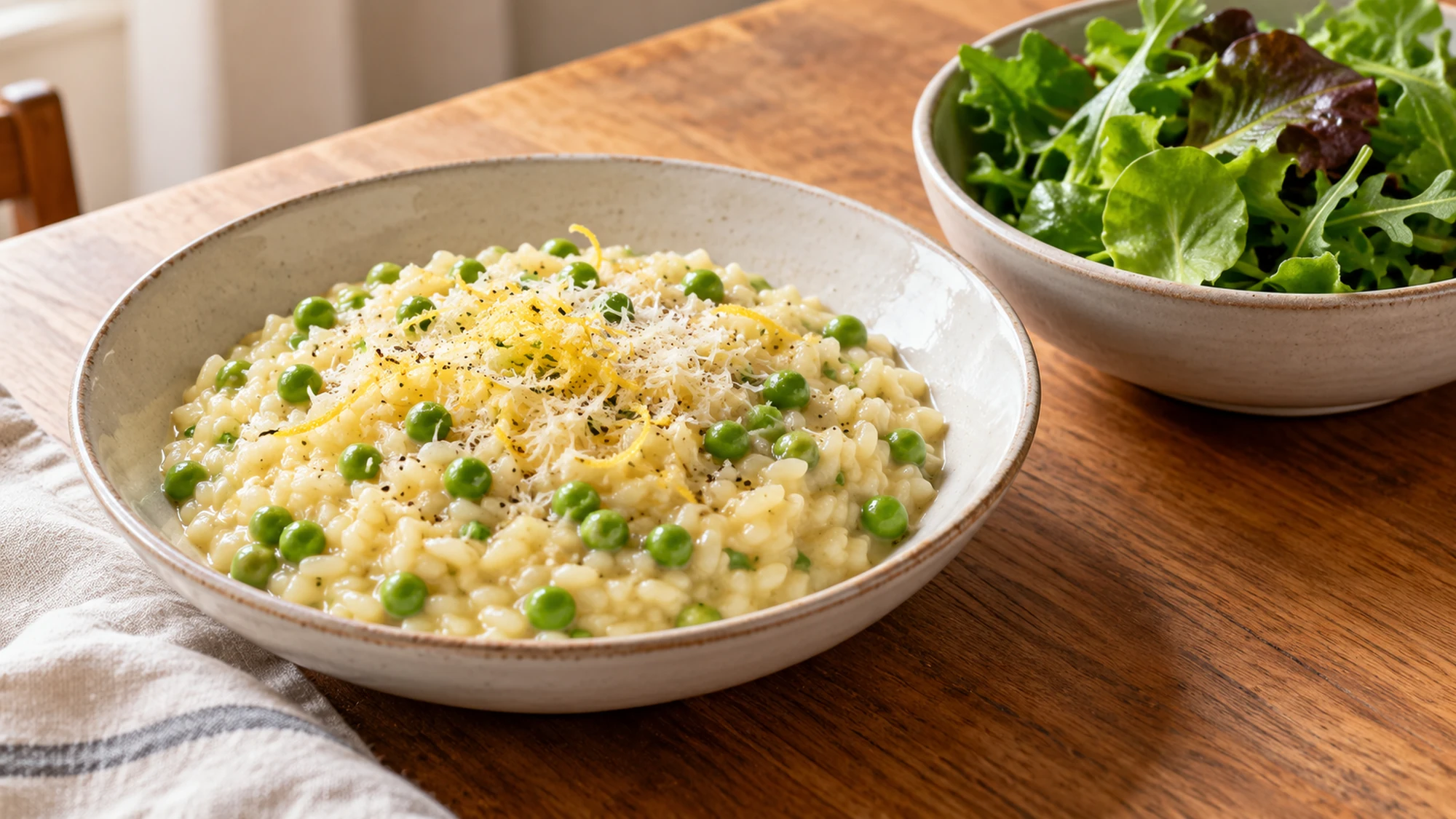
I’d keep the accompaniments simple. The lemon provides brightness and Parmesan brings a savory finish. Choose a crisp or lightly cooked side. For an optional bread basket, slice baguette thinly and pass it separately.
- For a lighter plate: add leafy greens with a little olive oil and lemon, keeping the dressing separate from the rice.
- For a larger meal: serve a smaller scoop beside plainly cooked chicken or fish. Prepare that protein before finishing the risotto.
- For the table: offer a pepper grinder rather than automatically adding more cheese or salt; broth and Parmesan vary considerably.
Serve as soon as the rice is ready. If the pot tightens while you gather the bowls, fold in a little hot broth to restore its soft movement.
Risotto Variations and Useful Swaps
Arborio is the straightforward choice for this recipe. Carnaroli is another risotto rice, but neither is a promise of an identical cooking time. Keep tasting and adjusting the liquid instead of treating a different grain as a timed replacement. The USA Rice cooking guide explains the gradual-stock approach and why extended holding changes the texture.
Make additions with their cooking needs in mind. A handful of raw vegetables stirred in at the end may stay hard while the rice softens. Cook those vegetables separately when necessary, and avoid adding so much that the rice becomes a carrier for a second recipe.
| Change | What to use | What to expect |
|---|---|---|
| A different risotto rice | Carnaroli instead of Arborio | Similar method; check bite and broth needs. |
| A vegetarian cheese choice | Hard cheese labeled suitable for vegetarians | Check rennet and salt information on the package. |
| A dairy-free direction | Olive oil instead of butter; omit Parmesan | Less cheesy richness; adjust seasoning gently. |
| More green vegetables | Separately cooked asparagus pieces | A firmer vegetable bite; fold in near the end. |
Change one main element at a time and keep the rice’s tender bite and loose sauce as your guide.
Health Benefits of Risotto in a Balanced Meal
Think of this as a rice-based meal with vegetables, rather than a special health food. Its nutritional profile depends on the amount served and the particular broth, cheese and fats used. White Arborio rice is a refined grain; choosing it for risotto texture does not make it a whole grain.
Peas bring a vegetable component, while the cheese and butter contribute richness. If you want more vegetables on the plate, a separate side lets you add them without upsetting the rice’s consistency. I’d compare broth labels before reducing every flavorful ingredient; the FDA’s sodium label guide explains how to compare packaged products.
- Watch the whole plate: a modest serving of risotto can sit alongside vegetables and another protein food if that suits your meal.
- Check ingredients: the base recipe contains milk ingredients through butter and Parmesan. A different cheese is not automatically suitable for every allergy.
- Handle leftovers promptly: divide rice into shallow containers and refrigerate rather than leaving a large warm pot on the counter. The food-safety guidance on cooked rice explains why holding temperature matters.
Enjoy the creamy texture while making portion size, broth choice and the rest of the meal work for you.
Bottom Line
A creamy risotto needs attentive heat and a little flexibility more than an elaborate ingredient list. Keep the broth nearby, taste the rice and leave the sauce slightly loose before serving. Lemon and peas give this version its fresh finish; Parmesan adds savory depth without needing a separate cream sauce.
Risotto Recipe

Ingredients
- 6 cups vegetable broth 1.44 liters, plus hot water only if needed; choose lower sodium if preferred
- 2 tbsp olive oil 30 ml
- 1 small yellow onion about 150 g, finely chopped
- 300 g Arborio rice about 1½ cups; do not rinse
- 1 cup frozen green peas 140 g
- 1 tbsp unsalted butter 14 g
- 50 g Parmesan cheese finely grated; about ½ cup, depending on grating
- 1 lemon finely grated zest and 1 tbsp juice
- 0.25 tsp fine salt add only as needed after tasting
- 0.25 tsp black pepper
Equipment
- 1 2-quart saucepan for broth
- 1 Wide heavy 4-quart pot for rice
- 1 Ladle
- 1 Wooden spoon
- 1 knife and cutting board
- 1 Lemon zester
- 1 Cheese grater
- Measuring cups or jug and spoons
Instructions
- Pour the vegetable broth into a 2-quart saucepan. Bring to a gentle simmer, then reduce the heat to low to keep it warm while preparing the rice.
- Heat the olive oil in a wide, heavy 4-quart pot over medium-low heat. Add the onion and cook for 5–7 minutes, stirring, until softened without browning.
- Stir in the dry Arborio rice. Cook for 1–2 minutes, stirring, until the edges look slightly translucent. Keep the grains pale.
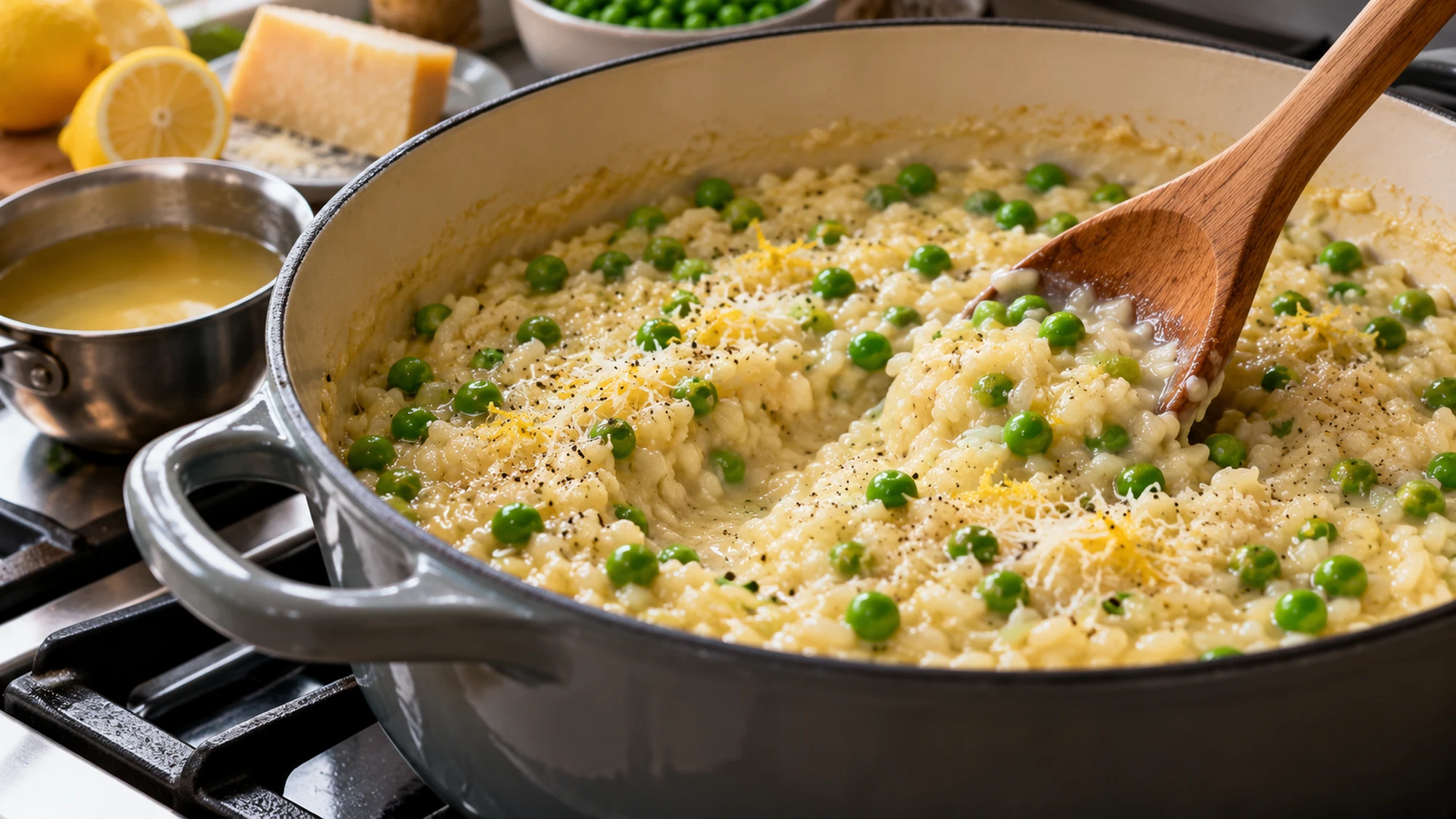
- Add about ½ cup of warm broth. Simmer gently and stir frequently until most of the loose liquid is absorbed, then add another ladle. Continue for about 18–25 minutes, adjusting heat to maintain a gentle simmer. Do not let the pot dry out; start tasting the rice before the time is up.
- When the rice is almost tender, add the frozen peas and another ladle of broth. Simmer for 3–5 minutes until the peas are hot and the rice is tender with a slight bite, with no chalky center. Use more broth as needed; some may remain.
- Remove from the heat. Fold in the butter, Parmesan, lemon zest and 1 tbsp lemon juice. Add the pepper and taste before adding any of the salt. Stir in a little warm broth to make a loose, spoonable sauce.
- Divide among 4 warm bowls and serve immediately. For leftovers, promptly transfer to shallow containers and refrigerate; do not leave the pot at room temperature to cool slowly.
Nutrition
Video
Notes
Tried this recipe?
Let us know how it turned out!Emily is Spoonvale’s recipe-writing persona, bringing a warm, practical voice to everyday cooking. Her focus is simple: approachable meals, comforting flavors, and clear instructions that help make time in the kitchen more enjoyable.