
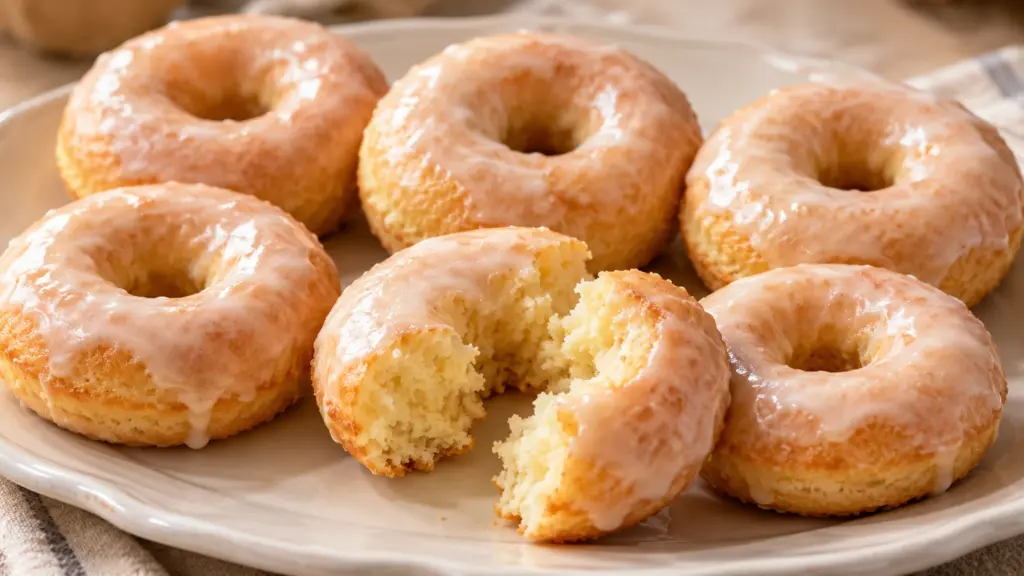
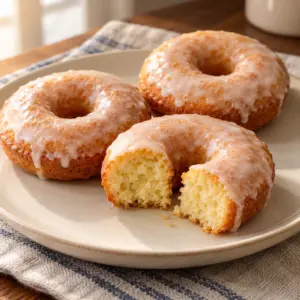
Cake-style donuts can give you the familiar ring and sweet glaze without an afternoon of yeast dough. This version mixes sour cream into a soft batter, adds a little nutmeg, and bakes in standard donut pans. The finish is a thin vanilla glaze that leaves the cake texture easy to see.

For tender baked donuts, fold the batter only until the flour disappears, fill the pan cavities about two-thirds full, and cool the rings before glazing. Use the doneness cues along with the suggested baking time; pan size and ovens vary.
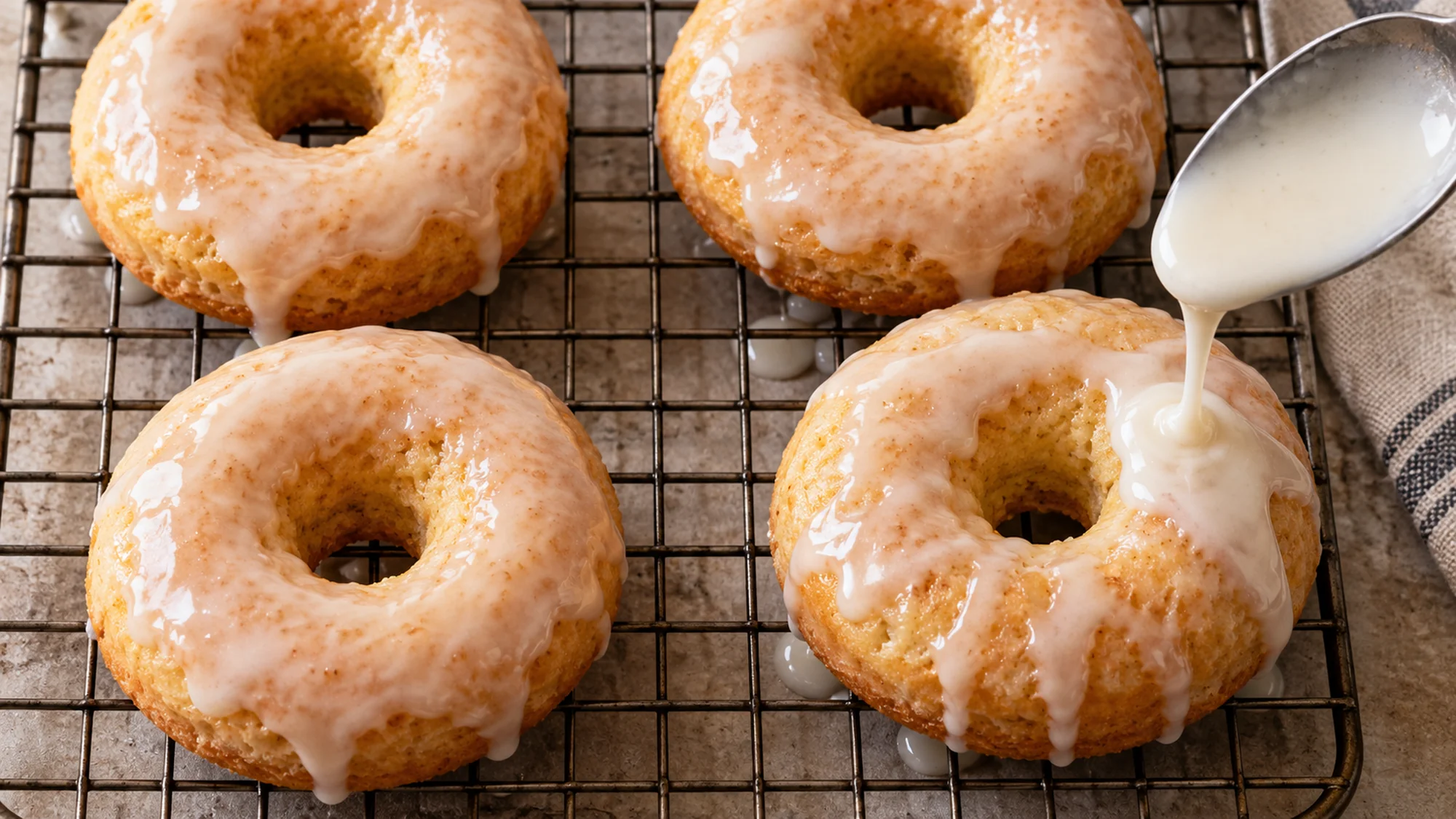
I’d choose a light glaze here rather than a thick coat of icing. It leaves room for the sour cream crumb and the warm spice to come through. Set a rack over a rimmed tray before dipping, and the drips stay in one place instead of becoming a second kitchen project.
Serving Suggestions for Donuts
Serve the donuts once the glaze has settled, when the cake and its sweet coating are easy to enjoy together. They work as a small dessert or part of a breakfast spread; the same ring does not need a different name for every occasion.
If you prefer a sliceable bake for sharing, the apple fritter cake is another cinnamon-scented option for the table.
- Pair with an unsweetened drink. Coffee, plain tea, or milk lets the vanilla and nutmeg remain noticeable.
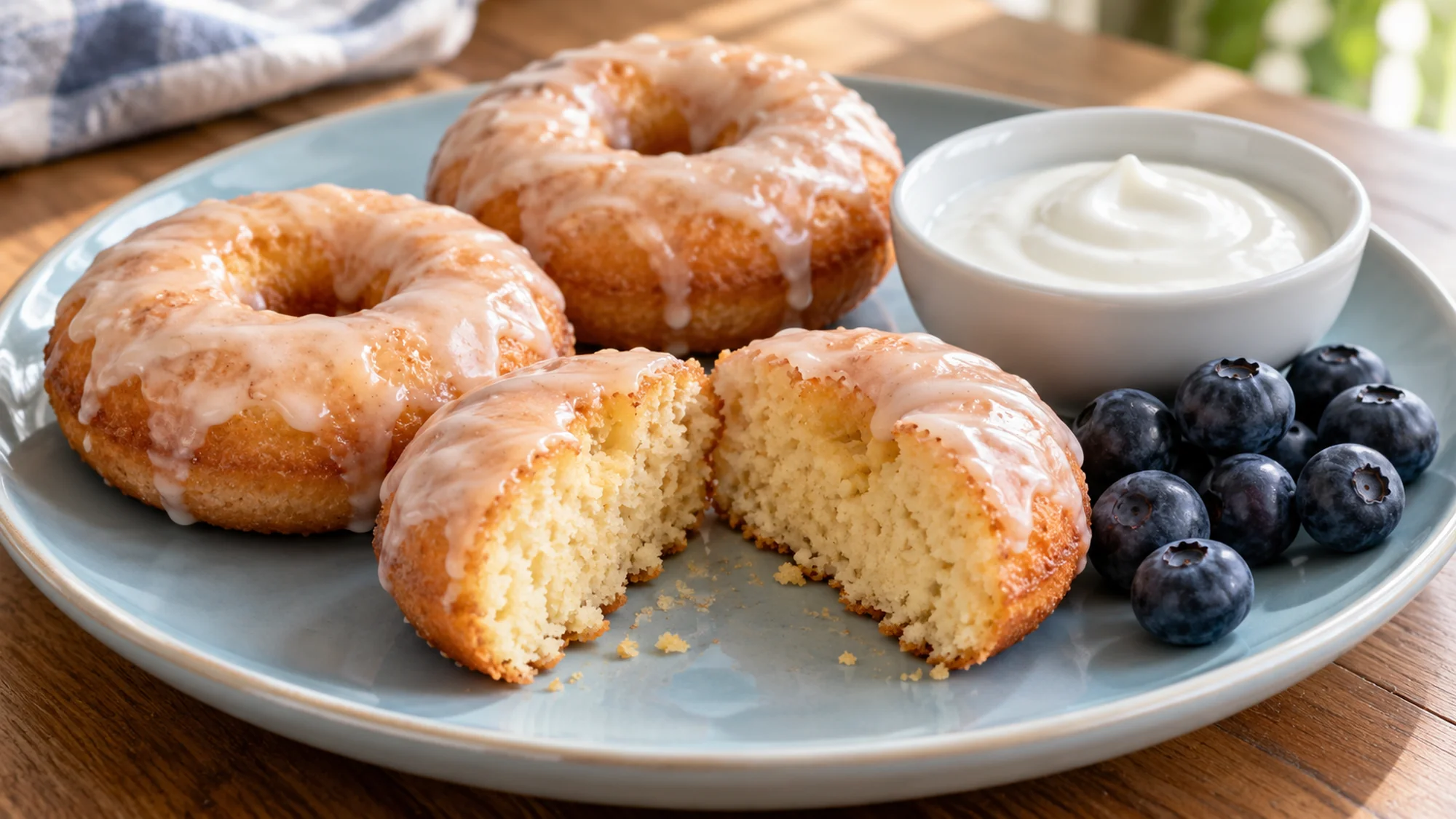
- Offer something fresh. A bowl of blueberries or sliced fruit provides a different texture alongside the soft cake.
- Keep the sides separate. Plain yogurt can accompany a donut without turning the glaze into a heavy topping.
My preference is a simple plate with fruit on the side. It keeps the donut recognizable and gives everyone room to choose the rest of their meal.
Donuts Variations and Texture Cues
Keep the batter method steady before changing the finish. These are baking-powder cake donuts, so a yeast-dough timetable or a deep-frying temperature is not interchangeable with this recipe. Pan dimensions also matter: a miniature cavity needs a different baking time from a standard ring.
| Finish | What to do | What changes |
|---|---|---|
| Plain | Leave the cooled rings unglazed | The sour cream crumb and nutmeg lead |
| Vanilla glaze | Dip only the top of each cooled ring | A thin sweet layer covers the surface |
| Light powdered sugar | Dust shortly before serving | A dry finish that can absorb moisture |
For a quieter spice flavor, omit the nutmeg rather than adding a collection of extra spices. A thicker glaze is a separate choice: it adds more sweetness and changes the coating, so it should not be treated as nutritionally identical.
Refrigerate the cooled, milk-glazed donuts in a covered container within two hours, or within one hour above 90°F (32°C). Keep the refrigerator at 40°F (4°C) or below and use within three days. For longer storage, freeze the unglazed rings airtight, thaw in the refrigerator, and glaze after thawing.
Watch the batter and the cake rather than chasing a perfect minute count. Gentle mixing and avoiding overbaking matter more than an elaborate topping.
Health Benefits and Sensible Donuts Portions
Flour supplies starch, while the egg and dairy contribute some protein. The glaze adds sugar, and butter and sour cream contribute saturated fat. Baking is the method used here; it does not turn a sweet cake into a food with special health benefits.
I’d keep the familiar ingredients and choose a portion that suits the meal. Fruit or yogurt alongside can add variety without requiring the donut itself to do every nutritional job. Ingredient-based nutrition estimates remain estimates, especially when sizes or the amount of glaze eaten vary.
- Check allergens. This recipe contains wheat, milk, and egg; an alternative milk alone does not remove all of them.
- Keep raw batter off the tasting spoon. Uncooked flour and egg need proper cooking before eating.
- Count finishing changes separately. Extra glaze or serving accompaniments change what is on the plate.
Enjoy the texture and flavor, use the ingredient information for your own needs, and keep food handling separate from judgments about how a donut looks.
Bottom Line
These donuts bring together a sour cream cake crumb, a little nutmeg, and a thin vanilla finish. Keep the mixing gentle, use the pan-filling and doneness cues, and give the rings time to cool before glazing. Serve with whatever makes sense for the meal, then refrigerate the milk-glazed leftovers promptly.
Donuts Recipe

Ingredients
- 1.5 cups all-purpose flour 180 g, spooned and leveled
- 0.5 cup granulated sugar 100 g
- 1.5 tsp baking powder about 6 g; brand weights vary
- 0.25 tsp fine salt about 1.5 g
- 0.25 tsp ground nutmeg about 0.5 g
- 1 large egg
- 0.5 cup full-fat sour cream 120 g
- 0.25 cup whole milk 60 ml
- 3 tbsp unsalted butter 42 g, melted and cooled
- 1 tsp vanilla extract
- 1 tsp neutral oil for greasing the pans
- 1 cup powdered sugar 120 g
- 2 tbsp whole milk 30 ml
- 0.5 tsp vanilla extract
Equipment
- Two 6-cavity standard donut pans, about 3-inch rings
- Two mixing bowls
- Whisk
- Silicone spatula
- Piping bag or zip-top bag
- Wire cooling rack
- rimmed sheet pan
Instructions
- Preheat the oven to 375°F (190°C). Lightly grease two standard 6-cavity donut pans with the neutral oil.
- Whisk the flour, granulated sugar, baking powder, salt and nutmeg together in a bowl. In a second bowl, whisk the egg, sour cream, 1/4 cup milk, cooled melted butter and 1 teaspoon vanilla until smooth.
- Fold the wet mixture into the dry ingredients just until the flour disappears. Do not beat smooth or taste the uncooked batter. Transfer to a piping bag and divide between the pans, filling each cavity about two-thirds full.
- Bake for 12–15 minutes, rotating the pans if your oven browns unevenly. The tops should spring back lightly and a toothpick should come out without wet batter. Baking time varies with pan size.
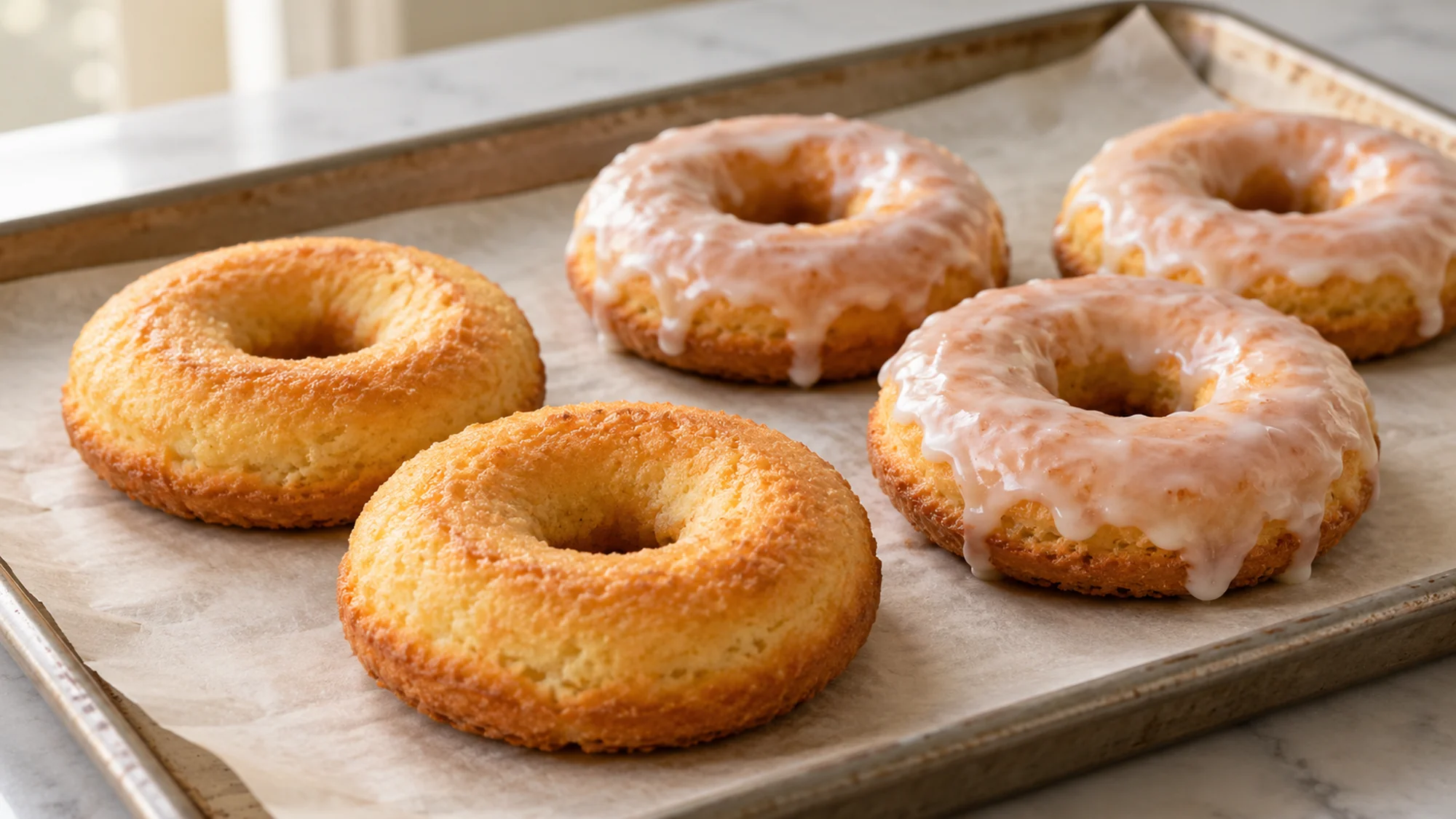
- Cool in the pans for 5 minutes, then turn out gently onto a rack set over a rimmed sheet pan. Let cool completely before glazing.
- Whisk the powdered sugar, 2 tablespoons milk and 1/2 teaspoon vanilla into a smooth glaze. Dip the top of each cooled donut, let excess drip off, and place on the rack until the glaze settles.
Nutrition
Notes
Tried this recipe?
Let us know how it turned out!Emily is Spoonvale’s recipe-writing persona, bringing a warm, practical voice to everyday cooking. Her focus is simple: approachable meals, comforting flavors, and clear instructions that help make time in the kitchen more enjoyable.