
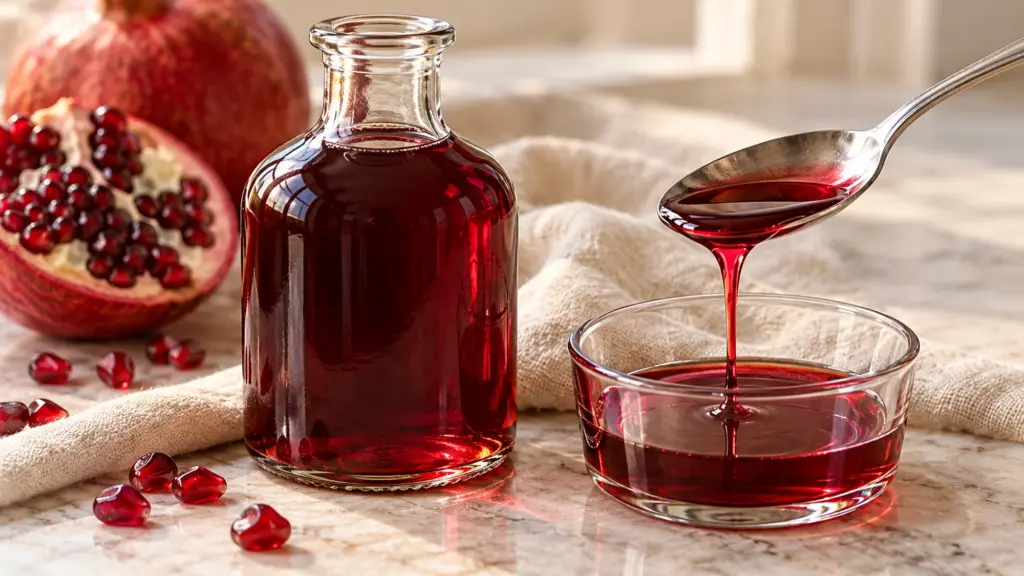
A drink can look beautifully pink and still leave you wondering where the fruit went. Homemade grenadine puts pomegranate first: this version uses juice and sugar, with a brief simmer that turns them into a ruby syrup for drinks and desserts. There is no cherry flavoring or food coloring in the recipe.
For a fruit-forward grenadine, choose pasteurized 100% pomegranate juice, dissolve the sugar gently, and stop after a short simmer. The finished syrup should pour easily; it does not need the thickness of honey.
I’d put the attention into the juice label rather than extra flavorings. Pure pomegranate keeps the result focused; blends containing apple or grape juice bring those flavors along. Expect a natural red that can lean burgundy, depending on the juice. This small refrigerated batch needs no canning equipment.
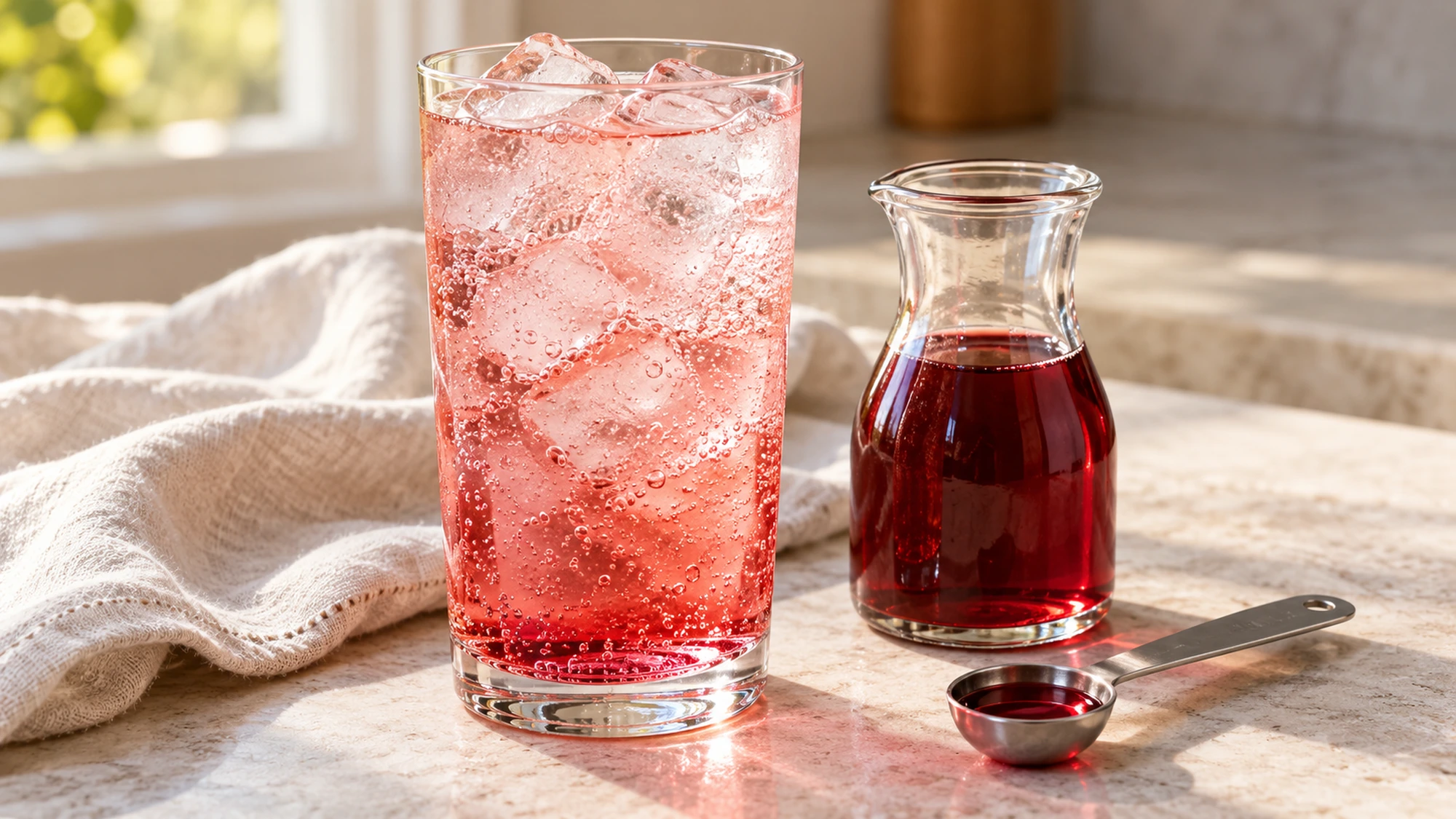
Serving Suggestions for Grenadine
Think of this syrup as a seasoning for something you already enjoy. Measure a little, stir, and taste before adding more, especially when the drink also contains juice or sweetened soda. Starting with less keeps the pomegranate noticeable without losing everything underneath it.
| Serve it with | How to use it | What to expect |
|---|---|---|
| Sparkling water | Stir in a small measured splash | Light bubbles and adjustable sweetness |
| Unsweetened iced tea | Mix into the chilled tea | A tart fruit note beside the tea |
| Plain yogurt or vanilla ice cream | Spoon a little over the top | A ruby ribbon against a creamy base |
My preference is an unsweetened base, because it makes the balance easier to control. For a party, keep the syrup separate so each person can adjust a glass. Add it after the syrup has chilled; warm syrup melts ice and dilutes the drink.
Let the syrup complement the drink or dessert. A small measured addition is easier to adjust than an overly sweet glass. For another homemade drink, atole de pinole offers warm toasted-corn flavor when you are planning a mix of hot and cold drinks.
Variations and Storage for Grenadine
Keep the base simple before changing its flavor. Sugar provides body as well as sweetness, so replacing it is not just a flavor swap. The syrup thickens slightly as it cools; a long reduction makes a different, concentrated product.
- Change the serving first. A squeeze of citrus in the finished drink adds a different edge without changing the bottle. Keep additional ingredients out of the stored base.
- Keep white sugar for a clean flavor. Brown sugar brings a molasses character and changes the color. It is a separate variation, rather than a direct match.
- Skip automatic sugar substitutions. Honey, maple syrup, and non-sugar sweeteners change flavor or texture. Do not assume the same proportions or storage guidance will work with them.
Store the syrup in clean, covered containers at 40°F (4°C) or below, and refrigerate promptly, within two hours. Use within one week, or freeze small portions with room for expansion, following University of California preserving guidance. This is a refrigerated syrup, not a shelf-stable canning recipe. Discard it if mold, unexpected fizzing, or an off odor appears; do not taste questionable syrup.
Make only what you expect to use soon, label the container with the date, and use a clean spoon each time.
Health Benefits: What Grenadine Really Adds
The useful benefit here is control over ingredients and portions, rather than a special health effect. Grenadine is a sweet condiment made from juice and added sugar; the pomegranate name does not make it equivalent to eating the fruit. I’d enjoy it for its flavor and count the sweetness as part of the finished drink.
- Keep portions in context. The syrup’s sugar adds to any sugar already present in lemonade, soda, juice, or dessert.
- Choose treated juice. Use pasteurized or otherwise safety-treated juice. A brief home simmer is not a validated replacement for commercial juice treatment.
- Keep expectations realistic. This recipe makes no detox, immunity, or disease-prevention promise. A spoonful is a flavoring, not a supplement.
Enjoy the color and pomegranate flavor, while treating grenadine as an optional sweet addition rather than a source of medicinal benefits.
Bottom Line
Make grenadine for its clear pomegranate flavor, then keep it pourable and chill it promptly. A small amount adds a sweet-tart ruby accent to drinks and desserts. Choose the juice thoughtfully, measure the sweetness, and keep this simple batch refrigerated.
Grenadine Recipe

Ingredients
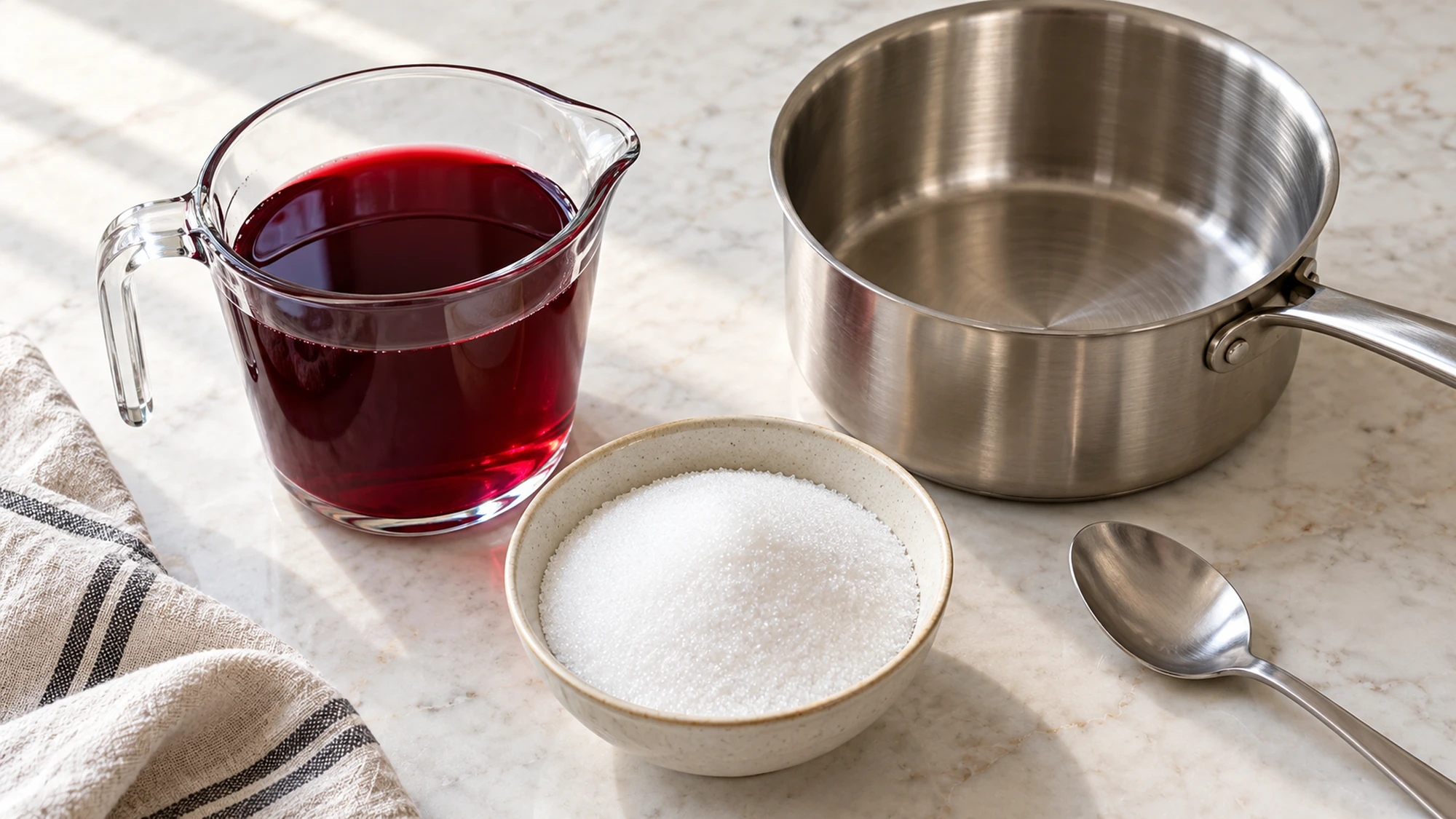
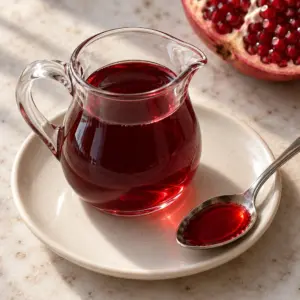
- 2 cups pasteurized 100% pomegranate juice without added sugar
- 1 cup granulated white sugar 198 g
Equipment
- 1 2-quart saucepan
- 1 Wooden spoon
- 1 liquid measuring jug
- 1 dry measuring cup
- 2 clean heat-safe lidded jars
Instructions
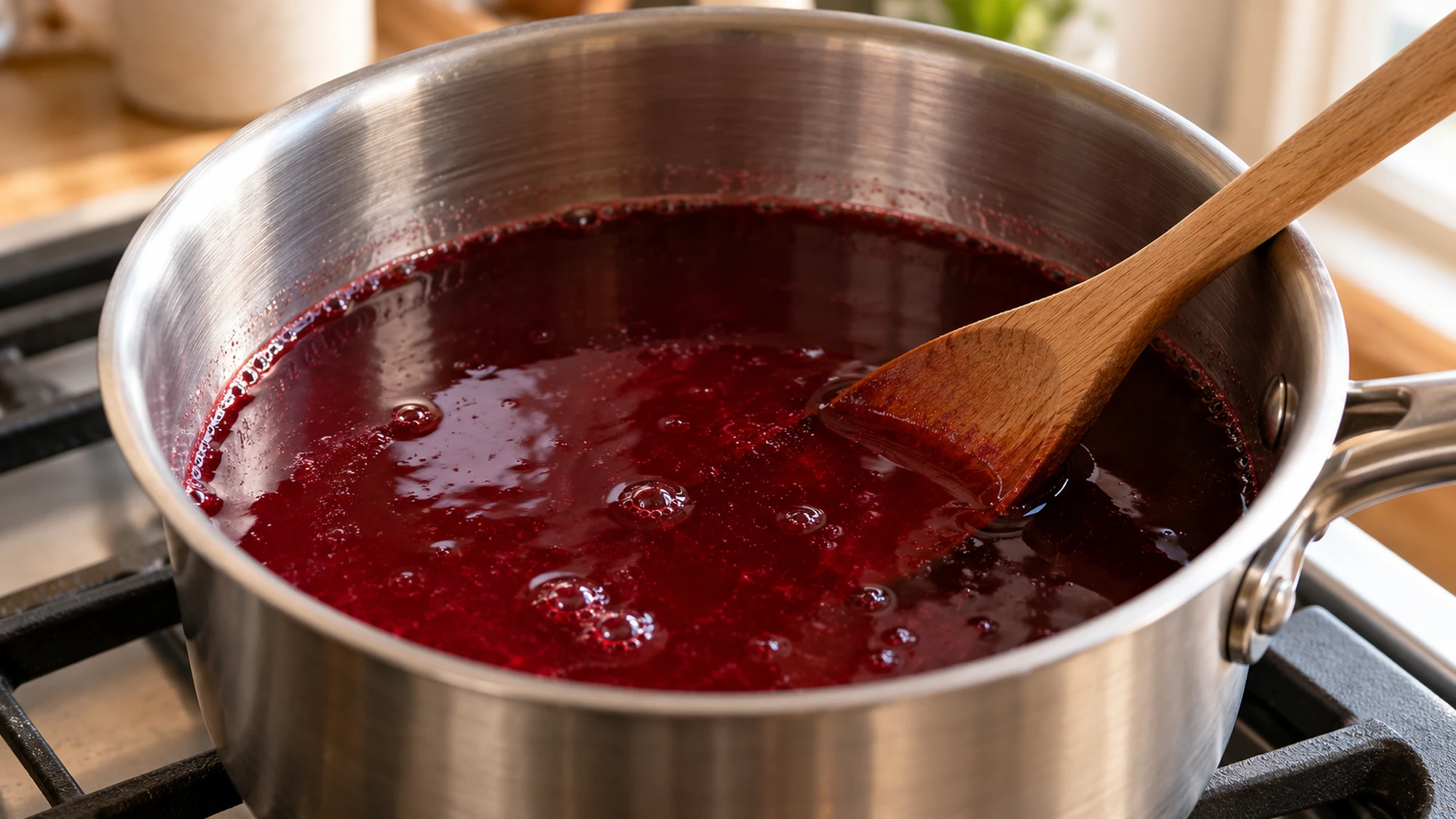
- Combine the pomegranate juice and granulated sugar in a small 2-quart saucepan. Stir until the sugar is evenly moistened.
- Warm over medium-low heat, stirring, until the sugar has completely dissolved, about 5 minutes. Do not let the mixture boil hard.
- Bring just to a gentle simmer and cook for 3–5 minutes. Stop while the syrup is still pourable; it will become slightly fuller as it cools.
- Remove from the heat and divide between clean heat-safe containers. Cool briefly, cover, and refrigerate promptly, within 2 hours of cooking. Chill before serving.
- Keep at 40°F (4°C) or below and use within one week, or freeze small portions with room for expansion. Discard questionable syrup without tasting it.
Nutrition
Video
Notes
Tried this recipe?
Let us know how it turned out!Emily is Spoonvale’s recipe-writing persona, bringing a warm, practical voice to everyday cooking. Her focus is simple: approachable meals, comforting flavors, and clear instructions that help make time in the kitchen more enjoyable.