
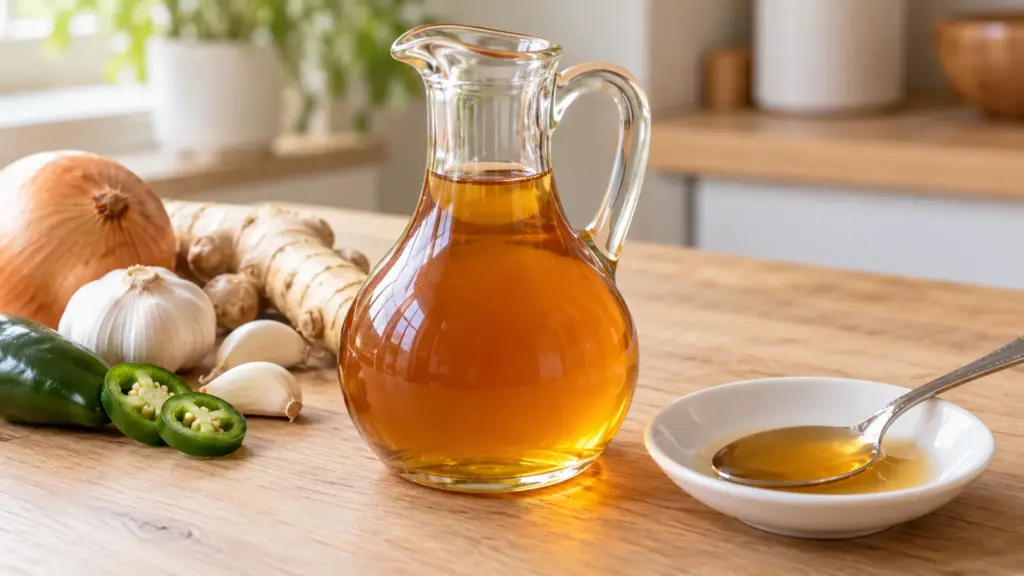
A salad can have crisp vegetables, tender beans and good olive oil and still need one sharp little nudge. Fire cider offers that nudge: apple cider vinegar infused with pungent roots, onion, garlic and a little pepper. Think of it as a boldly flavored condiment you can reach for when plain vinegar feels too quiet.
This fire cider uses thinly sliced aromatics, a measured heating step and a refrigerated infusion before straining. The result is an amber vinegar with ginger warmth and a savory edge, ready for dressings and finishing splashes. It is a cooking ingredient, with no promise to prevent or treat illness.
I’d start with a small batch rather than a refrigerator crowded with jars. Two cups of vinegar give you plenty of chances to learn where that bright, peppery flavor fits. The waiting time does most of the work, but cleanliness and temperature still deserve your attention.
Serving suggestions for fire cider
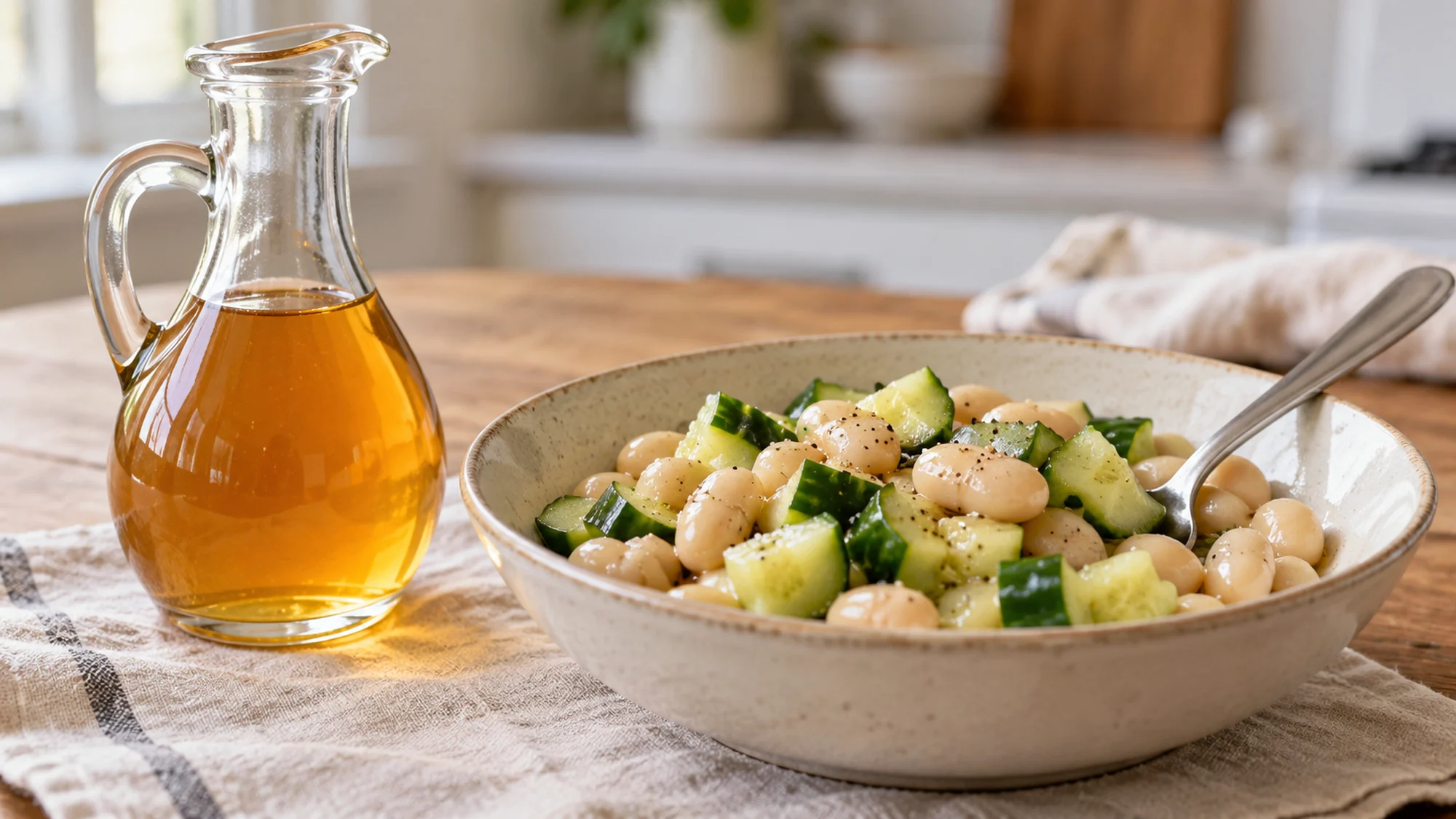
Use the strained vinegar where you already enjoy acidity: a bean salad, a bowl of cooked greens or an oil-based dressing. I prefer adding a little at the end, when you can taste its effect, instead of pouring generously and hoping the rest of dinner catches up.
Keep a clean measuring spoon beside the bottle and adjust the amount to the food. These are starting points, not rules; the vinegar’s final strength depends on your ingredients and infusion time.
- Toss a small splash with cooked white beans and cucumber for a sharp, savory lunch.
- Brighten roasted or boiled potatoes just before serving, then add oil and seasoning as needed.
- Stir a few drops into a tomato-based drink if you enjoy a savory, peppery finish.
| Use | Fire cider to start | How to adjust |
|---|---|---|
| Oil-based dressing | 1 tablespoon | Whisk with 3 tablespoons olive oil; taste. |
| A small bowl of beans | 1 teaspoon | Toss well before adding more. |
| Cooked greens for two | 1 teaspoon | Add off the heat and taste. |
A small amount can sharpen a whole serving. Taste the food after mixing, rather than judging the vinegar by itself.
Fire cider variations that keep the balance
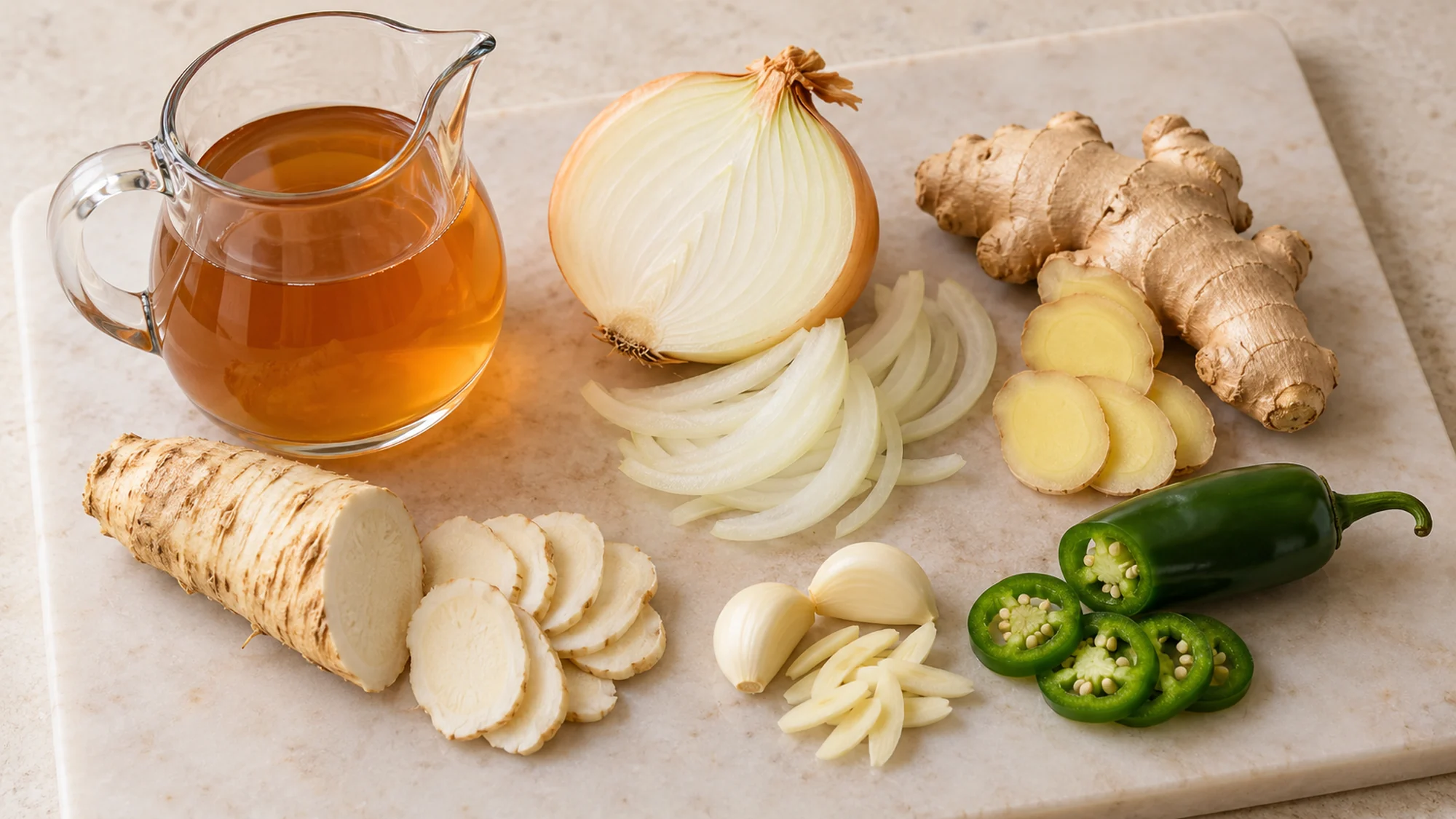
The basic ingredients bring different kinds of punch: ginger is aromatic, horseradish is pungent, and jalapeño supplies chile heat. For a gentler batch, omit the jalapeño or use less; there is no need to replace its volume with extra vegetables. Fresh horseradish is different from a creamy prepared sauce, so check what you are buying.
Keep the measured vinegar quantity unchanged, and use commercially produced vinegar labeled 5% acidity. The University of Minnesota’s fire cider guidance recommends avoiding an overpacked jar and using about one cup of sliced produce for every two cups of vinegar.
- For less chile heat, remove the pepper’s inner pale ribs before measuring it, then wash your hands.
- For a softer flavor in a dressing, sweeten only the portion you are serving.
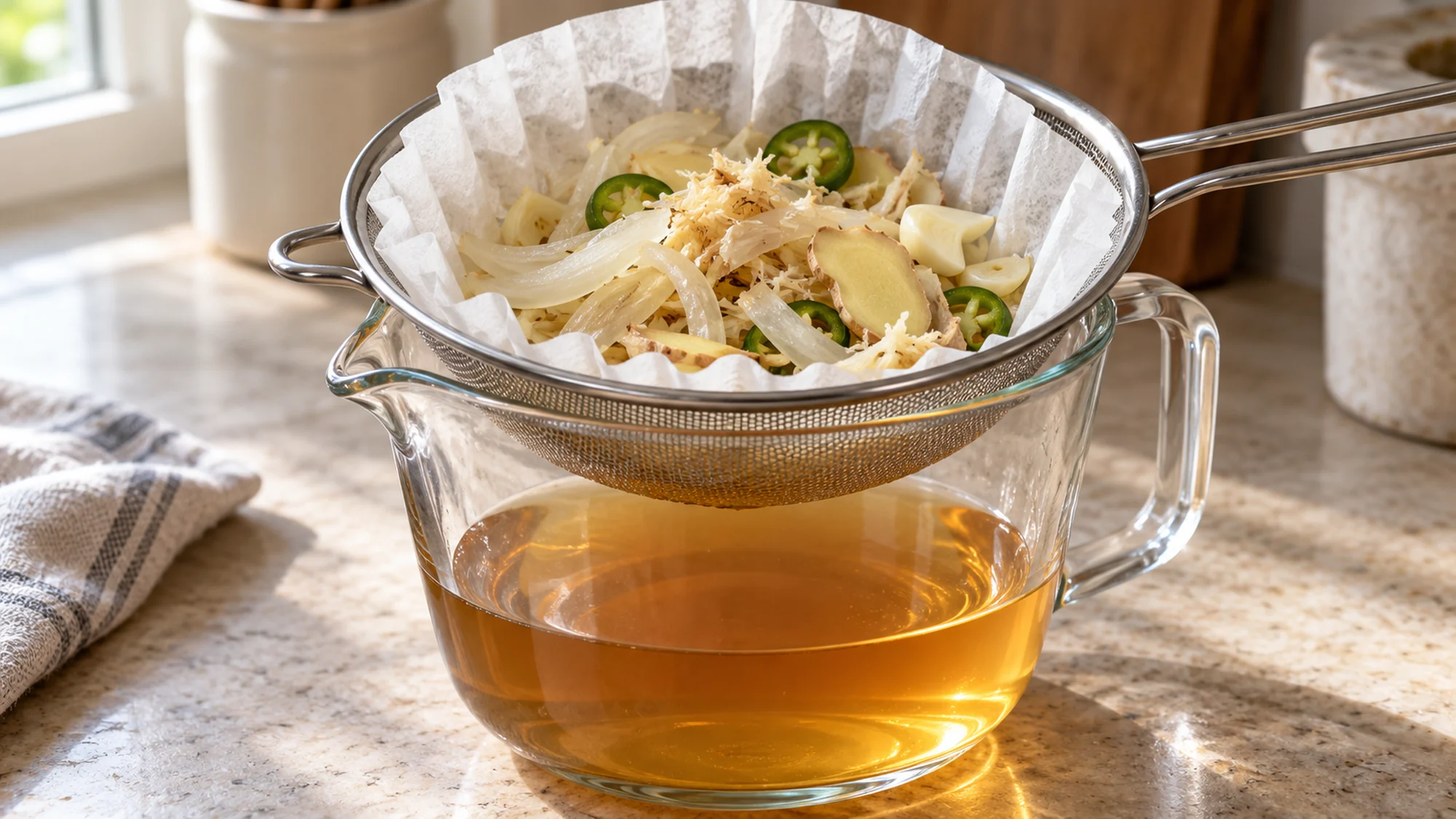
- For a clearer finished vinegar, strain through a coffee filter rather than leaving the chopped solids in the bottle.
Adjust flavor at the table instead of diluting the stored batch with water or juice. This recipe is for refrigerated use, not home canning.
Health benefits of fire cider: keep the claims modest
The useful benefit here is culinary: a flavorful vinegar gives you another way to make vegetables and beans appealing. That does not make it an immunity treatment, a detox or a substitute for medical care. Because the solids are strained out, I would not assume the liquid contains the same fiber or nutrients as eating those ingredients.
Acidity and heat may also be unwelcome for some readers. The National Institute of Diabetes and Digestive and Kidney Diseases identifies acidic and spicy foods among common reflux triggers. If these foods bother you, choose a different condiment rather than forcing this one into a daily routine.
Choose fire cider for its flavor and your own comfort with acidic foods. A stronger taste is not evidence of a stronger health effect.
Bottom Line
Treat fire cider like a carefully prepared flavored vinegar: use sound ingredients, follow the thermometer checks and keep it refrigerated throughout infusion and after straining. Date the bottle and use this batch within three months of preparation. Colorado State University’s flavored-vinegar guidance supports refrigerated storage; discard any batch showing mold, unexpected cloudiness, bubbling or sliminess without tasting it. A measured spoonful in a dressing is a good place to begin.
Fire Cider Recipe

Ingredients
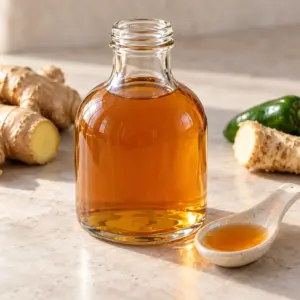
- 2 cups commercially produced pasteurized apple cider vinegar labeled 5% acidity; do not dilute
- 0.5 cup yellow onion peeled and very thinly sliced
- 0.25 cup fresh ginger washed, peeled and very thinly sliced
- 2 tbsp fresh horseradish root washed, peeled and shaved thinly; not prepared horseradish sauce
- 1 tbsp garlic peeled and thinly sliced
- 1 tbsp jalapeño washed and thinly sliced; remove inner ribs for less heat
Equipment
- Heat-safe 1-quart glass jar with an acid-resistant lid
- Deep pot with a jar rack and jar-lifting tongs
- Small stainless steel saucepan
- Digital probe food thermometer
- Cutting board and knife
- Measuring cups and spoons
- Fine-mesh strainer and paper coffee filter
- Clean glass bottle with an acid-resistant cap
Instructions
- Wash your hands, then clean and sanitize the counter, cutting board, knife and other utensils. Wash the 1-quart heat-safe jar and its acid-resistant lid with hot soapy water, then rinse thoroughly.
- Place the washed jar on a rack in a deep pot and cover it completely with water. Gently simmer for 10 minutes, then lift it out carefully and keep it warm. Prepare the lid according to its manufacturer’s directions.
- Rinse the produce under clean running water before peeling and slicing. Slice the onion, ginger, horseradish, garlic and jalapeño very thinly, measure the listed quantities, and place them in the warm jar. The combined produce should occupy 1 cup; do not pack in additional solids.
- Heat the vinegar in the saucepan to 190–195°F (about 88–91°C). Pour it over the sliced produce. Use the probe to verify that all the liquid and the center of the added solids stay above 165°F (74°C) for at least 1 minute 12 seconds. If the temperature is too low, place the jar on a rack in a gently simmering water bath with the water below the jar rim and heat until that measured holding target is met. Use jar-lifting tongs and take care with the hot glass; do not skip the temperature check.
- Allow the jar to cool enough to handle safely, close the lid, and refrigerate within 2 hours. Keep the infusion at 40°F (4°C) or colder for 10–30 days. Swirl the closed jar occasionally; the solids should stay covered by vinegar.
- After 10 days, check the infusion for spoilage before sampling a few drops with food. When the flavor suits you, strain through a coffee filter into a freshly cleaned and sterilized glass bottle. Discard all the solids; do not add fresh garnish to the stored vinegar.
- Close the bottle, date it from the original preparation day and keep refrigerated. Use within 3 months of that date. Discard without tasting if mold, unexpected cloudiness, bubbling or sliminess appears. This recipe is not intended for home canning or room-temperature storage.
Notes
Tried this recipe?
Let us know how it turned out!Emily is Spoonvale’s recipe-writing persona, bringing a warm, practical voice to everyday cooking. Her focus is simple: approachable meals, comforting flavors, and clear instructions that help make time in the kitchen more enjoyable.