
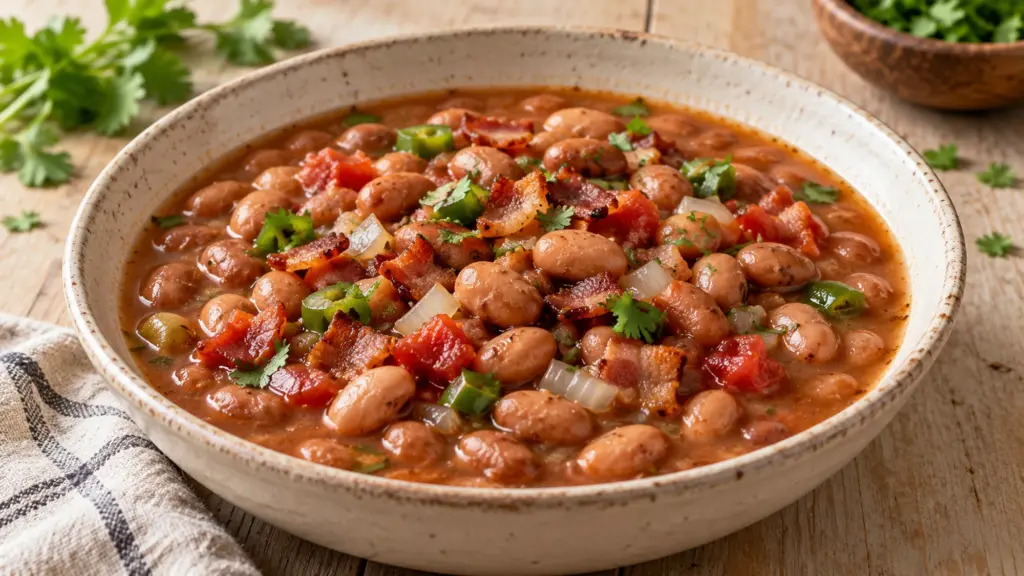
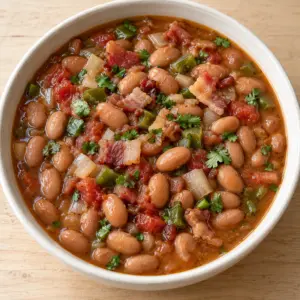
A pot of beans can hold the whole meal together, especially when there is something grilled on the table and a spoon is more useful than a fork. Frijoles charros give pinto beans a savory broth with smoky bacon, softened onion, tomato, and a little jalapeño. This version keeps the beans whole and leaves plenty of broth for the bowl.

These frijoles charros start with unsoaked dried pintos in an electric pressure cooker. Brown the bacon and aromatics first, then cook the beans until completely tender and finish with cilantro. Allow about two hours overall, including the time needed to build and naturally release pressure.
I’d keep the bacon as a seasoning rather than turn this into a mixed-meat stew. The pinto beans still lead, and the tomato brightens a broth that could otherwise feel heavy. Different households make charro beans differently; this is one practical, brothy version with clear instructions for a six-quart cooker.
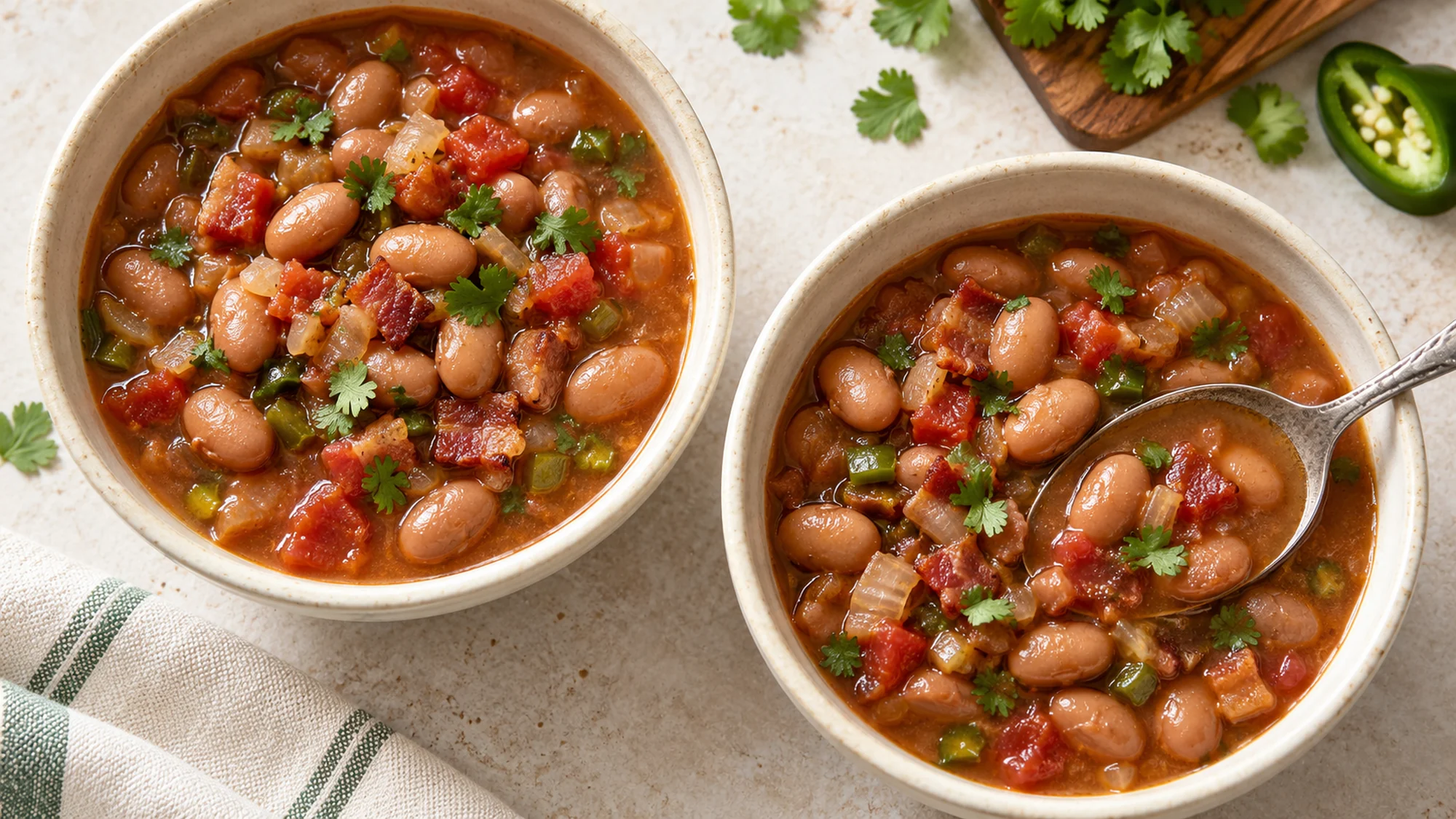
Serving Frijoles Charros With Their Broth
Serve these beans in small bowls, with some of the liquid in every portion. A slotted spoon misses half the point. They sit comfortably beside tacos, grilled vegetables, chicken, or rice, and the cilantro is most fragrant when stirred in close to serving rather than cooked under pressure.
The recipe makes eight side-dish portions. For a simpler meal, use larger bowls and offer warm corn tortillas alongside; the number of portions will change. I prefer a fresh, crisp side with the smoky beans, something with cabbage, cucumber, or a bright dressing to keep the meal varied.
- Ladle from the bottom gently so the beans and bacon are distributed through the servings.
- Stir before tasting: the broth should taste savory without demanding more salt.
- Cool leftovers in shallow containers rather than leaving a large pot on the counter.
Give each serving both beans and broth, and choose a fresh side that lets the smoky pot remain the comforting part of the meal.
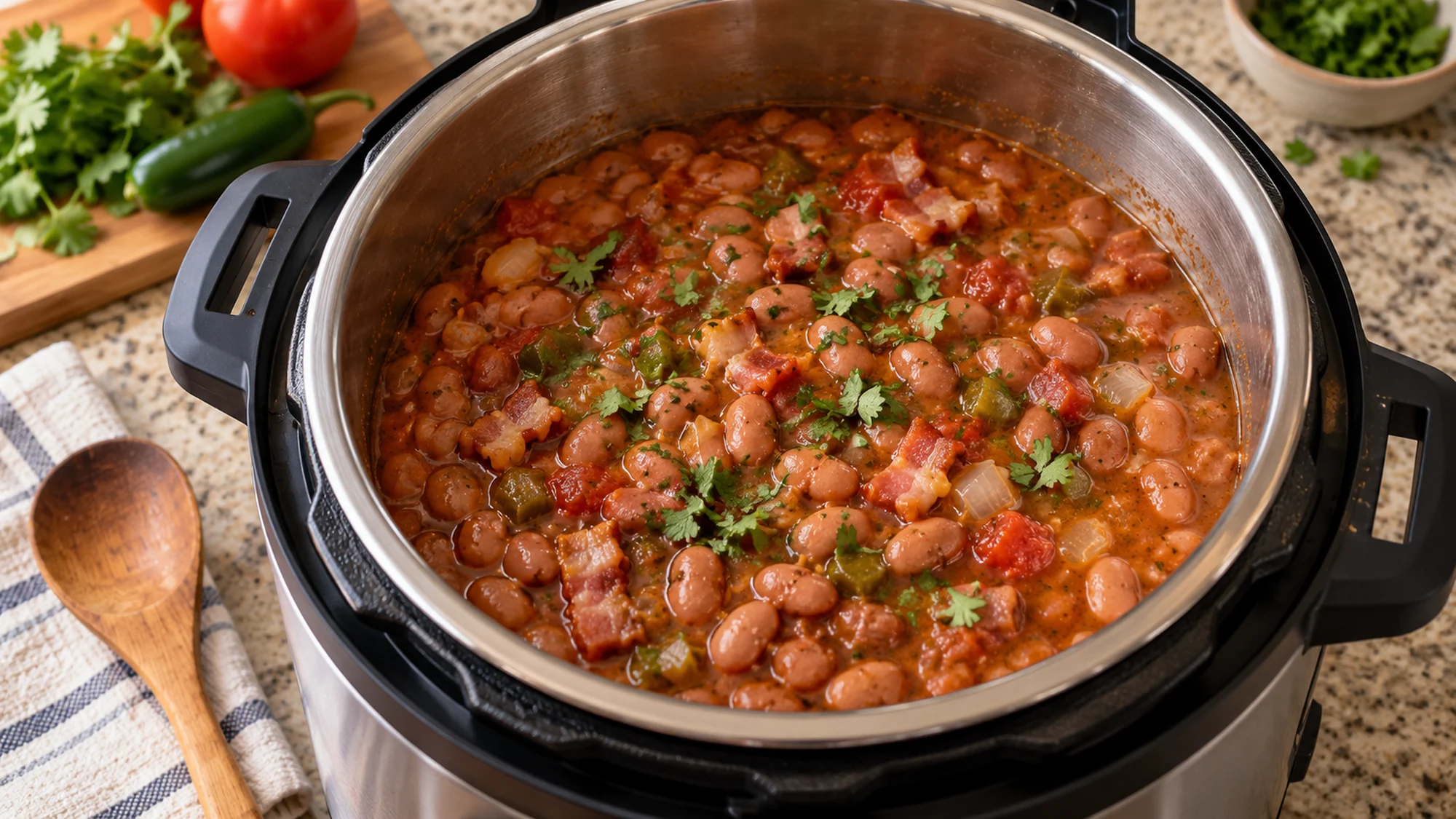
Frijoles Charros Variations and Broth Choices
Small changes can shift the pot without making every version interchangeable. Removing a jalapeño’s ribs and seeds usually softens its heat, although individual peppers vary. If you want a gentle version, start with part of the chile and keep any extra heat for the table.
| Change | How to adjust | Keep in mind |
|---|---|---|
| Gentler heat | Remove jalapeño ribs and seeds | Heat still varies by pepper. |
| More tomato depth | Choose fire-roasted diced tomatoes | Keep the same can size and juice. |
| Thicker broth | Mash a small ladle of tender beans back into the pot | Do this after pressure cooking. |
| Looser broth | Stir in a little hot water after cooking | Taste again before adding salt. |
Canned beans need a different cooking schedule and liquid amount, so do not put them through the long pressure cycle written for dried beans. Likewise, soaked beans cook differently from unsoaked beans. Choose the method you intend to follow before starting, rather than changing the beans halfway through the plan.
Adjust the heat and broth at the end, but keep the dried-bean timing and pressure-cooker limits tied to the method you are actually using.
Health Benefits and Portion Choices
Pinto beans contribute plant protein and fiber, while the bacon provides flavor along with sodium and saturated fat. Those facts make a more useful guide than calling the whole dish automatically healthy or unhealthy. A bean-heavy portion with vegetables alongside can fit a varied meal without requiring a special label.
The nutrition estimate in the card uses the measured ingredients divided into eight portions, including the bacon fat retained in the pot. Bacon and canned-tomato brands can change sodium noticeably. Taste before adding more salt, especially if you are serving these beans with seasoned meat, cheese, or a salty salsa.
- Use a natural pressure release and follow your cooker’s marked limit for expanding foods.
- Refrigerate leftovers promptly, use within 3–4 days, and reheat to 165°F (74°C).
Let the beans supply the substance, use the bacon for its flavor, and consider the whole plate when choosing a portion.
Bottom Line
The best cue for this pot is a tender bean, not an impatient glance at the timer. Let the cooker lose pressure naturally, check more than one bean, and give a firm batch additional cooking. Older dried beans can take longer; that is a reason to allow flexibility, not to serve a chalky center.
Keep the broth, add the cilantro near the end, and bring the beans to the table with something fresh. Frijoles charros offer plenty of flavor without needing every cured meat in the refrigerator.
Frijoles Charros Recipe

Ingredients
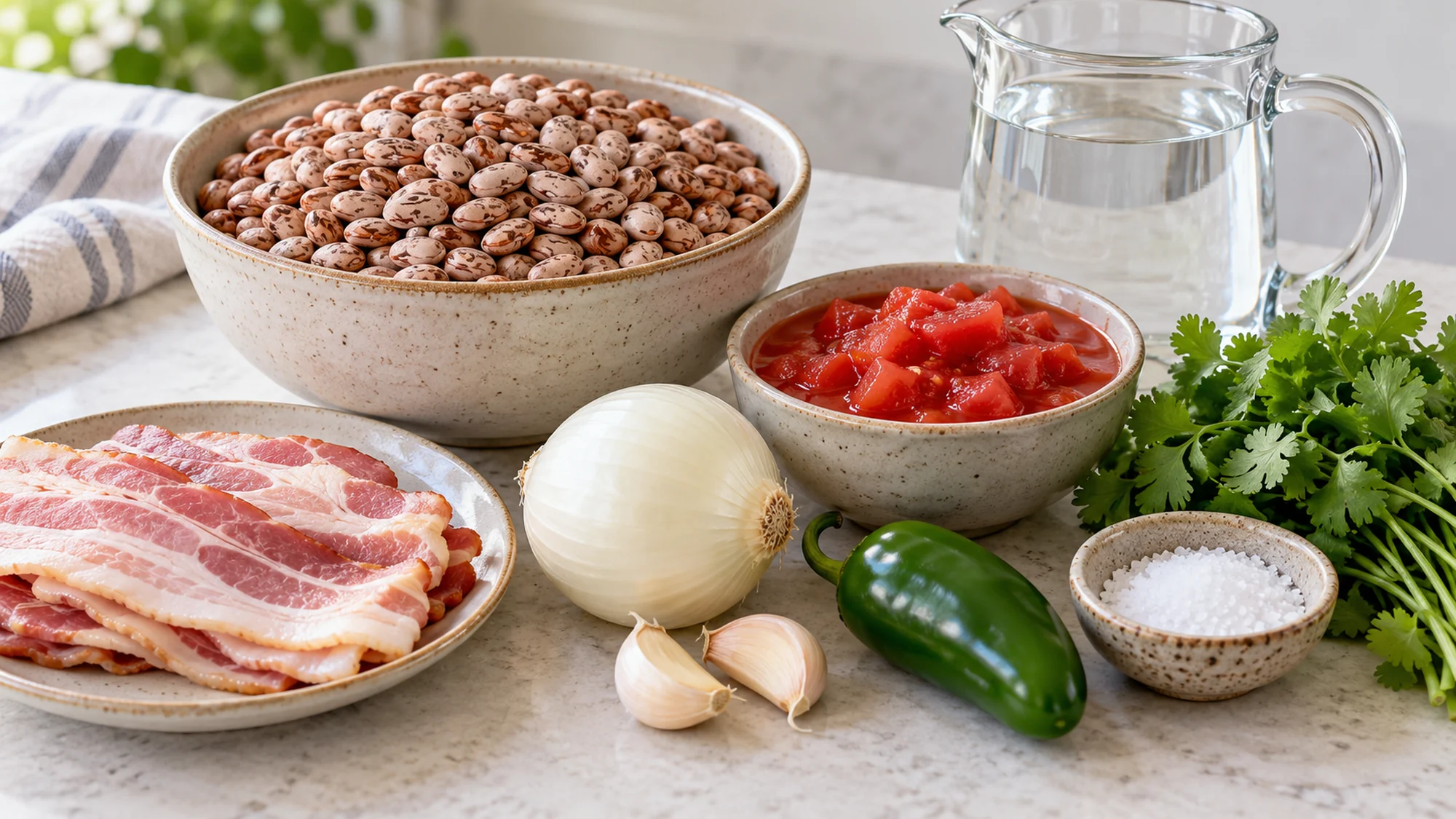
- 1 lb dried pinto beans 454 g, unsoaked
- 4 oz smoked bacon 113 g, cut into 1/2-inch pieces
- 1 medium white onion about 150 g, diced
- 2 cloves garlic minced
- 1 jalapeño stemmed and diced; remove seeds and ribs for less heat
- 1 can diced tomatoes in juice 14.5 oz / 411 g, undrained
- 6 cups water 1.42 liters, plus more only if needed after cooking
- 1 tsp fine salt start with 1/2 tsp if the bacon or tomatoes are very salty
- 0.5 cup chopped fresh cilantro about 8 g
Equipment
- 1 6-quart electric pressure cooker with a sauté setting; follow its bean fill and release instructions
- 1 Fine-mesh strainer
- 1 Chef’s knife
- 1 Cutting board
- 1 Wooden spoon
- Measuring cups and spoons
Instructions
- Pick through the dried pinto beans and discard any stones or damaged beans. Rinse the beans in a strainer under cool running water and drain.
- Select the sauté setting on the 6-quart electric pressure cooker. Cook the bacon for about 7 minutes, stirring, until it has rendered fat and the edges brown. Add the onion and cook for about 6 minutes, until softened.
- Stir in the garlic and jalapeño for 1 minute. Add the measured water and scrape the bottom thoroughly to loosen any browned bits. Stir in the beans, tomatoes with their juice, and salt. Keep the contents below the cooker’s marked limit for beans or other expanding foods; never exceed its manual’s limit.
- Secure the lid and set the valve according to the manufacturer’s instructions. Cook at high pressure for 60 minutes. Let the pressure release naturally until the indicator drops fully; allow about 20–30 minutes and never force the lid open.
- Open the lid away from your face. Check several beans; they should mash easily with no firm or chalky center. If still firm, add water if needed to maintain a brothy mixture and pressure-cook another 5–10 minutes, followed by natural release, according to your cooker instructions.
- Stir in the cilantro. Taste the broth and adjust salt if needed. Serve the whole beans with their broth in 8 side-dish portions. The listed total time is approximate and may lengthen with older beans or a slower cooker.
Nutrition
Video
Notes
Tried this recipe?
Let us know how it turned out!Emily is Spoonvale’s recipe-writing persona, bringing a warm, practical voice to everyday cooking. Her focus is simple: approachable meals, comforting flavors, and clear instructions that help make time in the kitchen more enjoyable.