
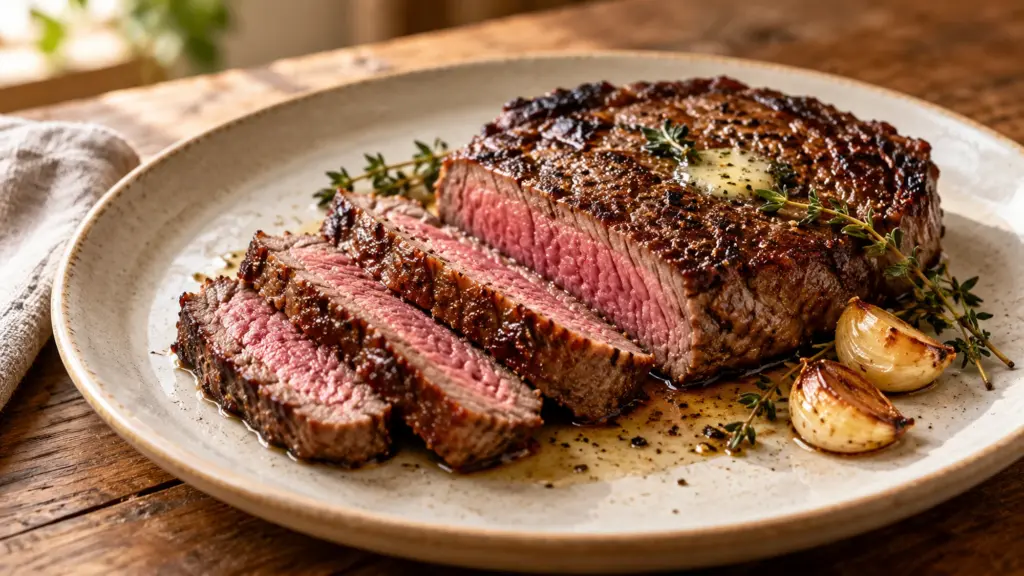
Steak night moves quickly once the meat reaches the pan. Set the garlic, butter and thermometer within reach first. If you’re learning how to cook steak, start with two boneless sirloins of similar thickness, so you can concentrate on the crust and the center without juggling very different cuts.
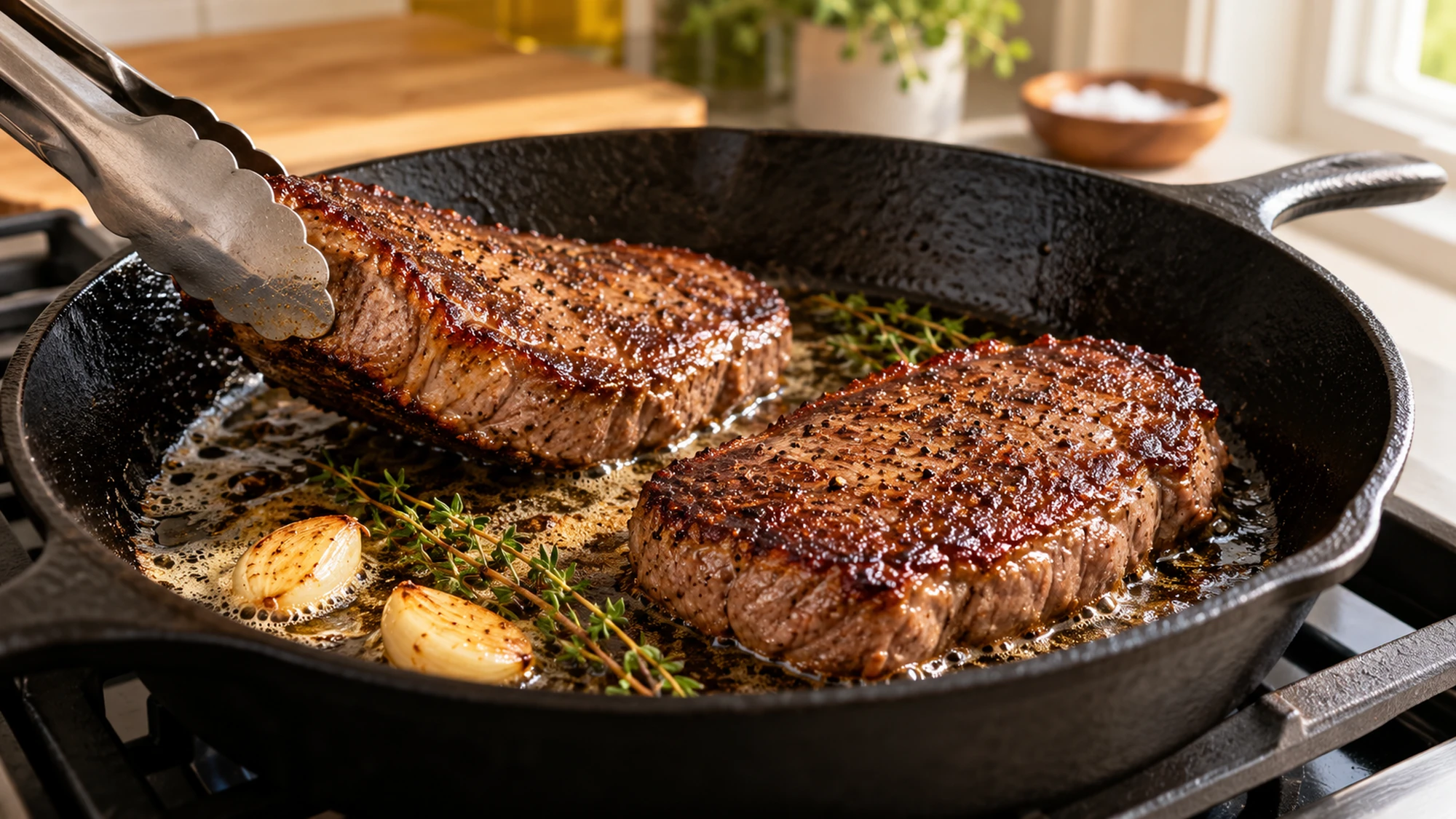
Pat the steaks dry, season just before cooking, and sear in a hot, lightly oiled skillet. Lower the heat before adding butter, garlic and thyme. Cook each center to at least 145°F (63°C) before taking it off the heat, then rest for at least three minutes before slicing.
I prefer a straightforward sirloin for this lesson: its beefy flavor suits the simple seasoning, and you can see what the pan is doing. A thermometer gives you more useful information than poking the steak with a finger. The clock helps you plan, but it cannot measure the middle.
How to Cook Steak: Serving and Resting
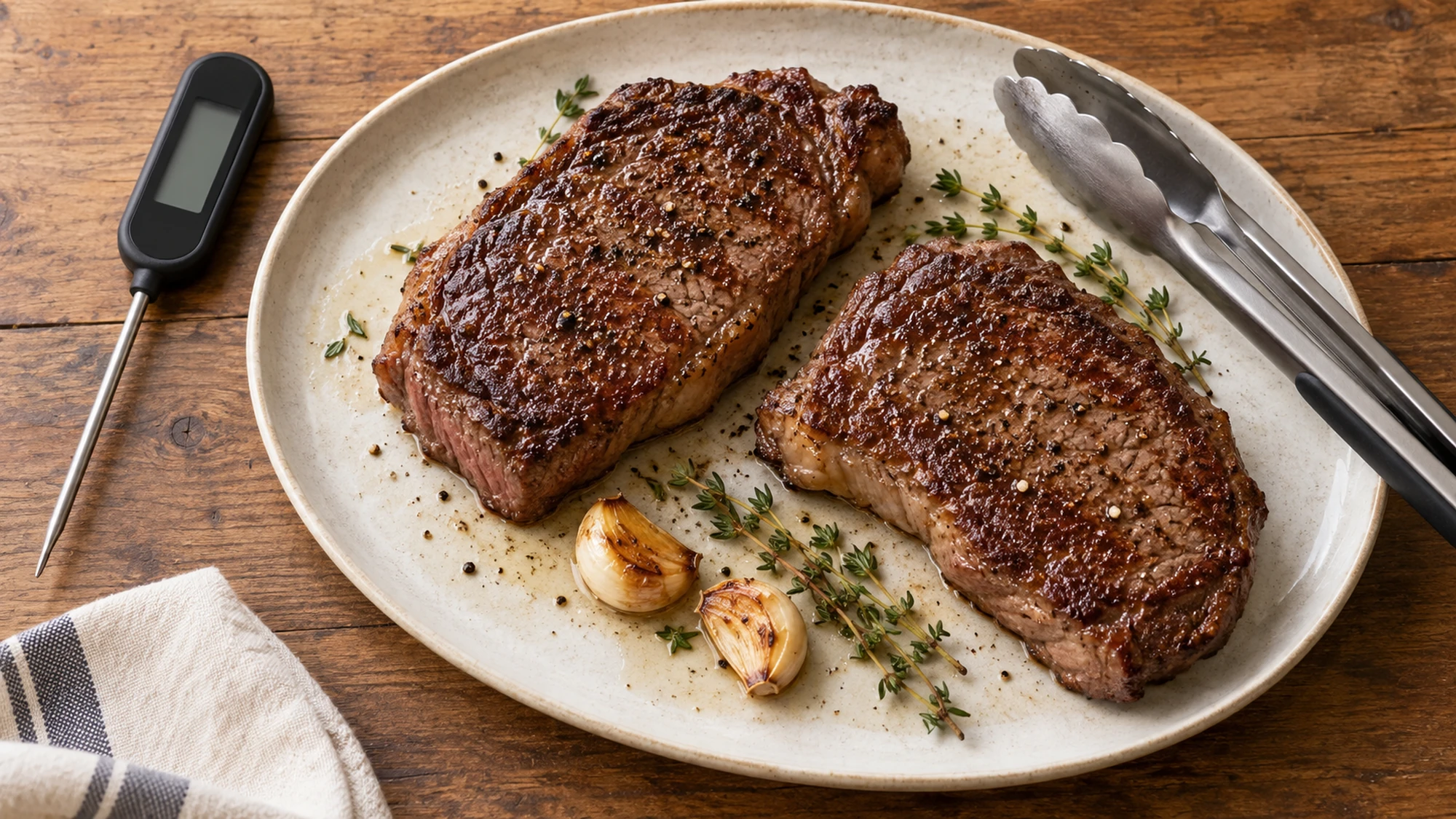
Move the cooked steaks to a clean plate and give them their full rest before cutting. Keep that plate separate from anything that held raw meat. When ready to serve, look for the direction of the muscle fibers and slice across them; shorter fibers make each bite easier to chew.
Have the rest of dinner nearly ready before the skillet comes out. A jacket potato in air fryer can provide a fluffy side, while green beans or a crisp salad offer a different texture. The side dishes are separate from the card’s ingredient and nutrition estimates.
- Warm the plates if you like a slower meal, rather than leaving the steaks on the hot cooking surface.
- Spoon a little of the garlic-thyme butter over the meat if desired; the estimate counts all the measured butter and oil.
- Serve the two steaks as two portions, or slice them to share among more people with additional sides.
I’d put the sides on the table before slicing. That keeps the short resting period useful and lets everyone enjoy the contrast between the browned surface and the interior.
How to Cook Steak: Pan and Thickness Choices
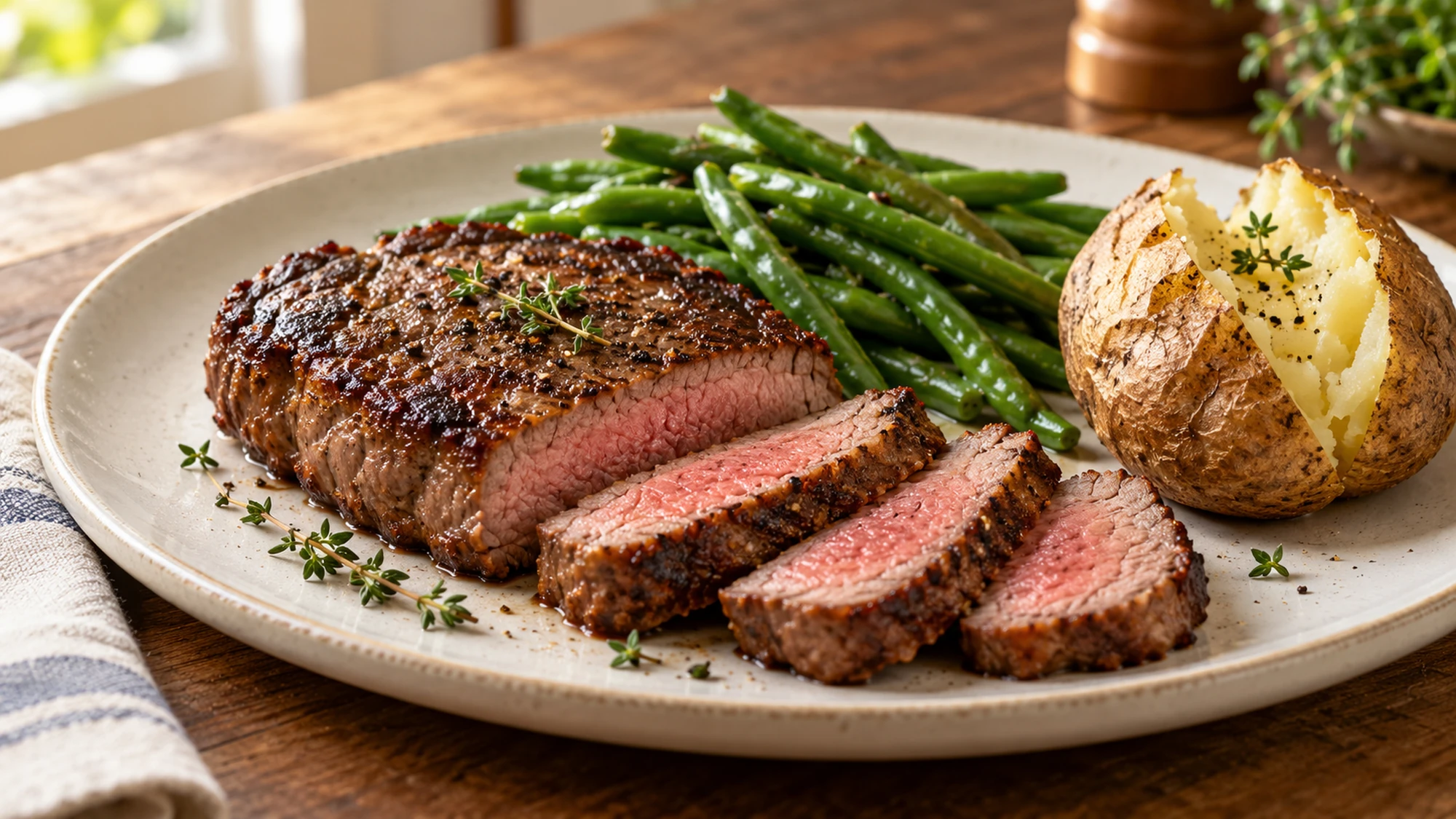
A heavy cast-iron or stainless-steel skillet gives the meat a broad contact surface. These instructions are for boneless steaks about one inch thick. A much thicker steak calls for a different timetable, while a thin steak can pass its target temperature before a generous crust develops.
| What you notice | Likely issue | What to do |
|---|---|---|
| A wet surface | Moisture delays browning | Pat dry before seasoning |
| Steaks touching | The pan is crowded | Use a larger suitable pan or cook separately |
| Butter darkening fast | The finishing heat is too high | Lower the heat and keep the butter moving |
The initial sear and the gentle finish do different jobs. Let the first sides develop color, then reduce the heat for basting. Check each steak individually through the side into the thickest center, keeping the probe away from a fat pocket. A browned exterior alone cannot establish a safe internal temperature.
Refrigerate leftovers in shallow containers within two hours, or within one hour above 90°F (32°C). Keep them at 40°F (4°C) or below and use within three to four days. Reheat leftovers to 165°F (74°C) throughout.
Keep the method focused on these steaks and this thickness. Use temperature to decide when to stop cooking, rather than extending the sear simply to match a photograph.
Health Benefits and Steak Portions
Beef provides protein, while the amount of fat varies with the cut, trimming and individual steak. Butter adds flavor and saturated fat; salt contributes sodium.
The card’s estimates use selected ingredient data and assume that all measured meat, butter and oil are eaten. Actual trimming, drippings and serving sizes change the result. I’d use those figures alongside the rest of the plate, rather than treating them as a laboratory analysis of a particular steak.
- Keep vegetables and other sides in the meal picture; their nutrients are additional to the steak estimate.
- This recipe contains milk from butter. A different basting fat changes both the flavor and the estimate.
- Use clean utensils and a clean serving plate after handling raw beef.
Choose a portion that suits the meal, keep the rich finish in proportion, and use the thermometer and storage guidance consistently. Those practical details matter more than a label such as restaurant-style.
Bottom Line
Learning how to cook steak is easier when the decisions stay clear: dry the surface, build the crust, lower the heat and check the center. This sirloin recipe finishes with garlic-thyme butter and a proper rest. Prepare the sides ahead, slice across the grain and refrigerate any leftovers promptly.
How to Cook Steak Recipe

Ingredients
- 2 boneless top sirloin steaks 8 oz (227 g) each, about 1 inch thick
- 0.75 tsp fine salt
- 0.5 tsp black pepper about 1.15 g
- 1 tsp neutral oil such as canola, about 4.5 g
- 1 tbsp unsalted butter 14 g
- 2 garlic cloves about 6 g, peeled and lightly smashed
- 2 sprigs fresh thyme about 0.5 g edible leaves; discard stems before serving
Equipment
- Heavy 12-inch cast-iron or stainless-steel skillet
- Tongs
- Large spoon for basting
- Instant-read meat thermometer
- Measuring spoons
- Paper towels
- Separate plates for raw and cooked meat
- Cutting board and sharp knife
Instructions
- Pat the steaks dry with paper towels. Season both sides with the salt and pepper just before cooking. Keep raw meat and its juices separate from ready-to-eat foods.
- Heat a heavy 12-inch skillet over medium-high heat for about 2 minutes. Add the oil and swirl to coat. When it shimmers, add the steaks with space between them. Sear for about 2 minutes on the first side, then turn and sear the second side for about 2 minutes.
- Reduce the heat to medium-low. Add the butter, garlic and thyme. Once the butter melts, carefully tilt the pan slightly and spoon the butter over the steaks, turning them every minute. Lower the heat further if the butter darkens quickly.
- Check each steak by inserting an instant-read thermometer through the side into the thickest center, away from fat pockets. Continue cooking gently until each reaches at least 145°F (63°C) before removal. Meat cooking usually takes about 8–12 minutes in total, but thickness and stoves vary.
- Transfer to a clean plate and rest for at least 3 minutes. Discard the thyme stems, slice the steak across the grain and serve with a little pan butter if desired.
Nutrition
Video
Notes
Tried this recipe?
Let us know how it turned out!Emily is Spoonvale’s recipe-writing persona, bringing a warm, practical voice to everyday cooking. Her focus is simple: approachable meals, comforting flavors, and clear instructions that help make time in the kitchen more enjoyable.