
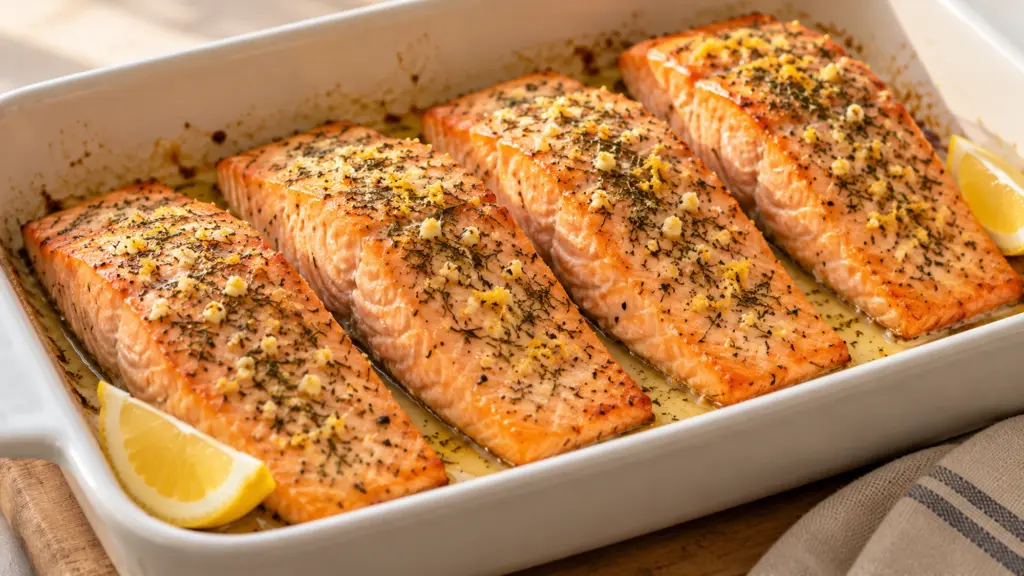
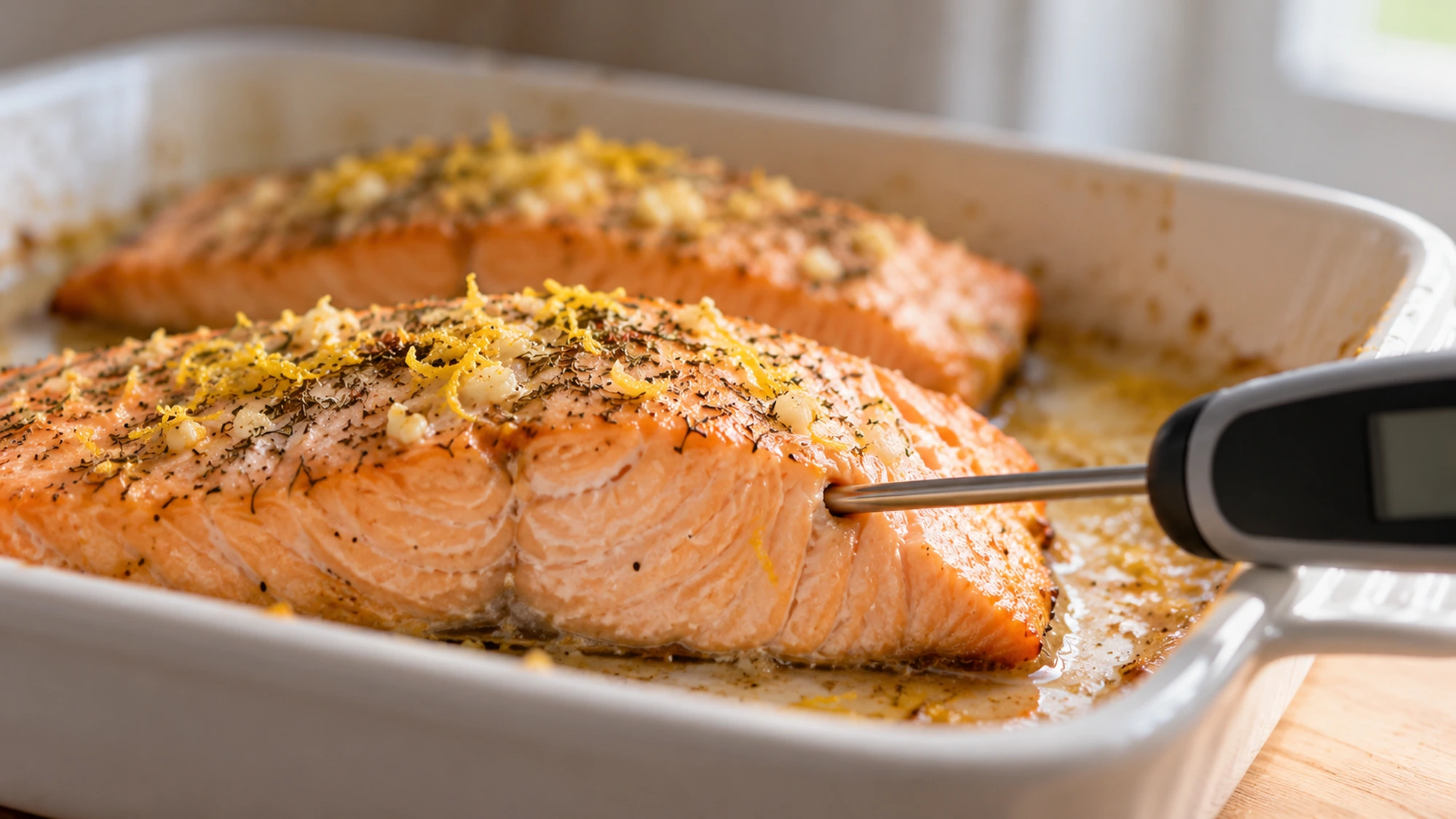
A salmon fillet can look straightforward right up to the moment you wonder whether to flip it. If you are looking for the best way to cook salmon when you want dinner without tending a skillet, I’d choose the oven. This lemon-garlic version pairs a shallow baking dish with a thermometer, so the thickest part of the fish gets the final say.
Roast evenly sized fillets at 400°F (205°C), then check their centers for 145°F (63°C). Lemon zest and dill bring brightness without a separate sauce.
Skinless fillets make serving simple, while olive oil carries the garlic and herbs across their surface. Choose portions of similar thickness rather than chasing identical shapes: a thin tail piece and a thick center cut will not finish together. The goal here is tender flakes and a fragrant topping, rather than a browned crust or crisp skin.
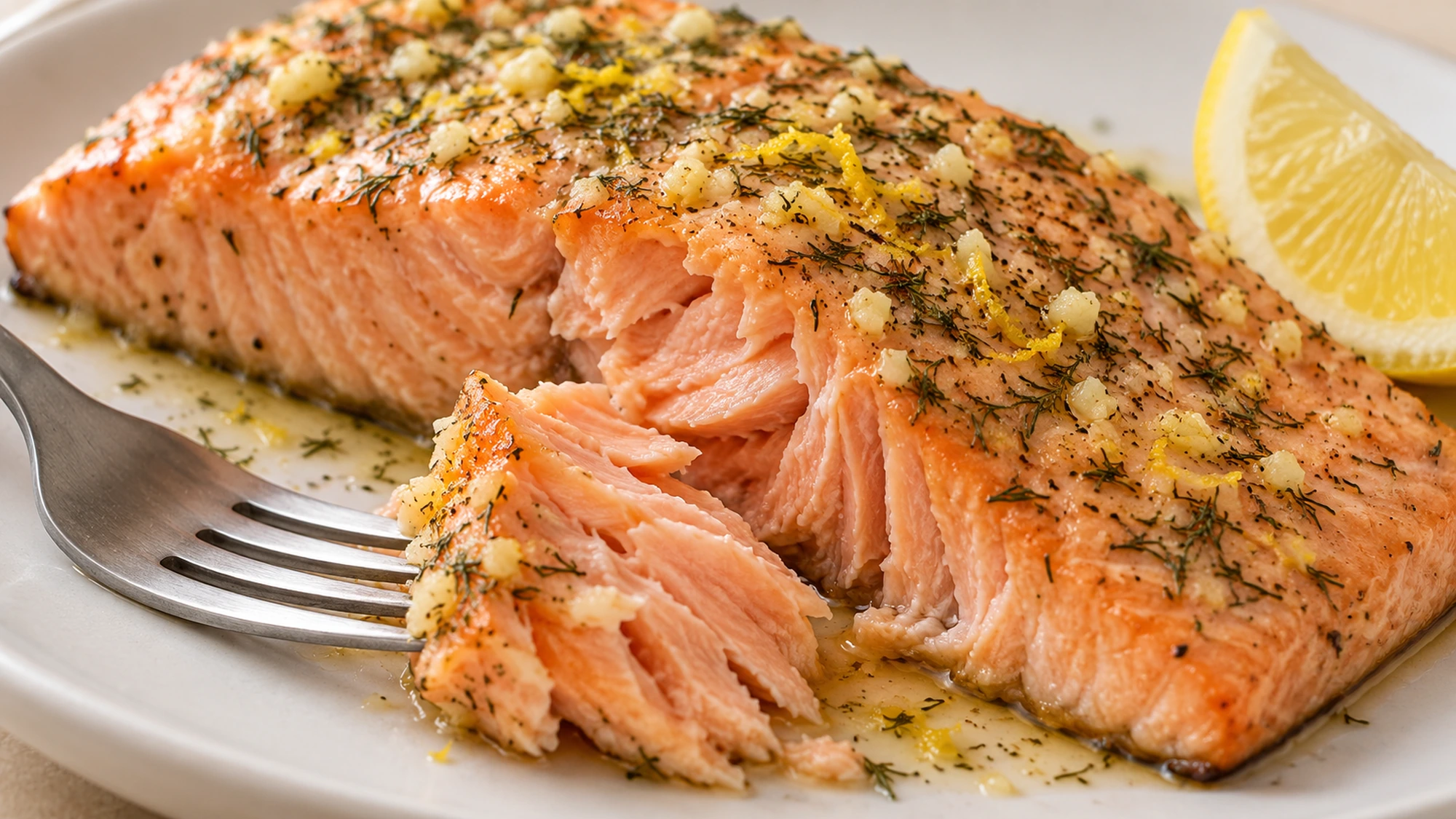
Serving Suggestions for Lemon-Garlic Salmon
Build the plate around something that catches the lemony juices. Rice, couscous, or small boiled potatoes can all do that job; pick one rather than adding several sides that compete for time. The fish cooks relatively quickly, so start any slower starch before it goes into the oven.
For a complete dinner, add a vegetable with a different texture. A crisp cucumber salad contrasts with the soft fish, while steamed green beans keep the preparation simple. I’d choose a stove-top vegetable if the oven is already occupied; there is no prize for squeezing every pan onto one rack.
- For grain bowls, separate the cooked salmon into large flakes and add them just before serving so they stay distinct.
- For a plated dinner, leave each fillet whole and spoon over the juices from its own baking dish.
- For extra brightness, offer the remaining lemon wedges at the table before reaching for more salt.
- For a heartier plate, add a crisp-skinned jacket potato alongside the salmon and greens.
Let the side dishes follow your schedule: start the longest-cooking component first, then keep the salmon as the final hot element.
Best Way to Cook Salmon: Variations for Your Fillets
The oven method can accommodate a few ingredient changes, but thickness still sets the pace. A substitution changes flavor or handling; it does not earn a guaranteed cooking time. Use the same temperature check even when the fish looks opaque.
These swaps keep the recipe recognizable without requiring another shopping trip.
| Ingredient or cut | Useful option | What changes |
|---|---|---|
| Dried dill | The same measured amount of dried parsley | Milder herb flavor; less of dill’s distinctive aroma |
| Skinless fillets | Skin-on fillets of similar thickness | Place skin underneath; expect soft skin with this method |
| Lemon | Lime, measured for the same zest and juice | Sharper citrus character; taste before adding the serving wedges |
| Fresh salmon | Fully thawed frozen salmon | Pat away surface moisture; check the package’s thawing instructions |
- With thinner portions, begin checking earlier and remove each fillet when it reaches the target temperature.
- With a thick center cut, allow more time instead of raising the oven heat to hurry it along.
- For a little warmth, add a pinch of red pepper flakes to the seasoning; they are an optional variation, not part of the base recipe.
Keep the changes modest, and let the thickness of the actual fillet guide your attention.
Health Benefits of This Salmon Dinner
Salmon supplies protein and the marine omega-3 fats EPA and DHA. Its omega-3 content varies with species and feed, so one number should not stand in for every fillet. These fats occur naturally in fish, but a salmon dinner does not carry a promise to prevent or treat disease.
The rest of the plate matters too. Vegetables and a grain or potato add variety, while the measured seasoning lets you adjust the meal to your preferences. Lemon and herbs contribute flavor, but they do not make salmon safe to eat without cooking it thoroughly.
- Cook the fish to the recommended 145°F (63°C), measured in its thickest part.
- Thaw frozen portions in the refrigerator, following any special package directions.
- Keep utensils and surfaces that touched raw fish separate from ready-to-eat sides.
Choose salmon for the meal it makes and the nutrients it provides, while keeping ordinary food safety part of the plan.
Bottom Line
For a no-flipping dinner, lemon-garlic roasting is a practical answer: a small ingredient list, a familiar baking dish, and room to prepare the sides while the fish cooks. Buy similarly thick portions, keep the topping light, and let the thermometer settle the timing. If crisp skin is your priority, choose a method designed for that result; this recipe puts tender, simply seasoned fish first.
Best Way to Cook Salmon Recipe

Ingredients
- 4 skinless salmon fillets 6 oz each; 24 oz / about 680 g total, preferably about 1 inch thick
- 1 tbsp olive oil 15 ml, divided
- 1 medium lemon 1 tsp finely grated zest, 1 tbsp juice, and remaining lemon cut into wedges
- 2 cloves garlic finely minced, about 6 g
- 1 tsp dried dill about 1 g
- 0.5 tsp fine table salt about 3 g
- 0.25 tsp ground black pepper about 0.5 g
Equipment
- Conventional oven
- Shallow 9 × 13-inch baking dish
- Small bowl and spoon
- knife and cutting board
- Fine zester
- Measuring spoons
- Instant-read food thermometer
- Fish spatula
Instructions
- Heat the oven to 400°F (205°C) and place a rack in the middle.
- Spread 1 teaspoon of the olive oil over the bottom of a shallow 9 × 13-inch baking dish.
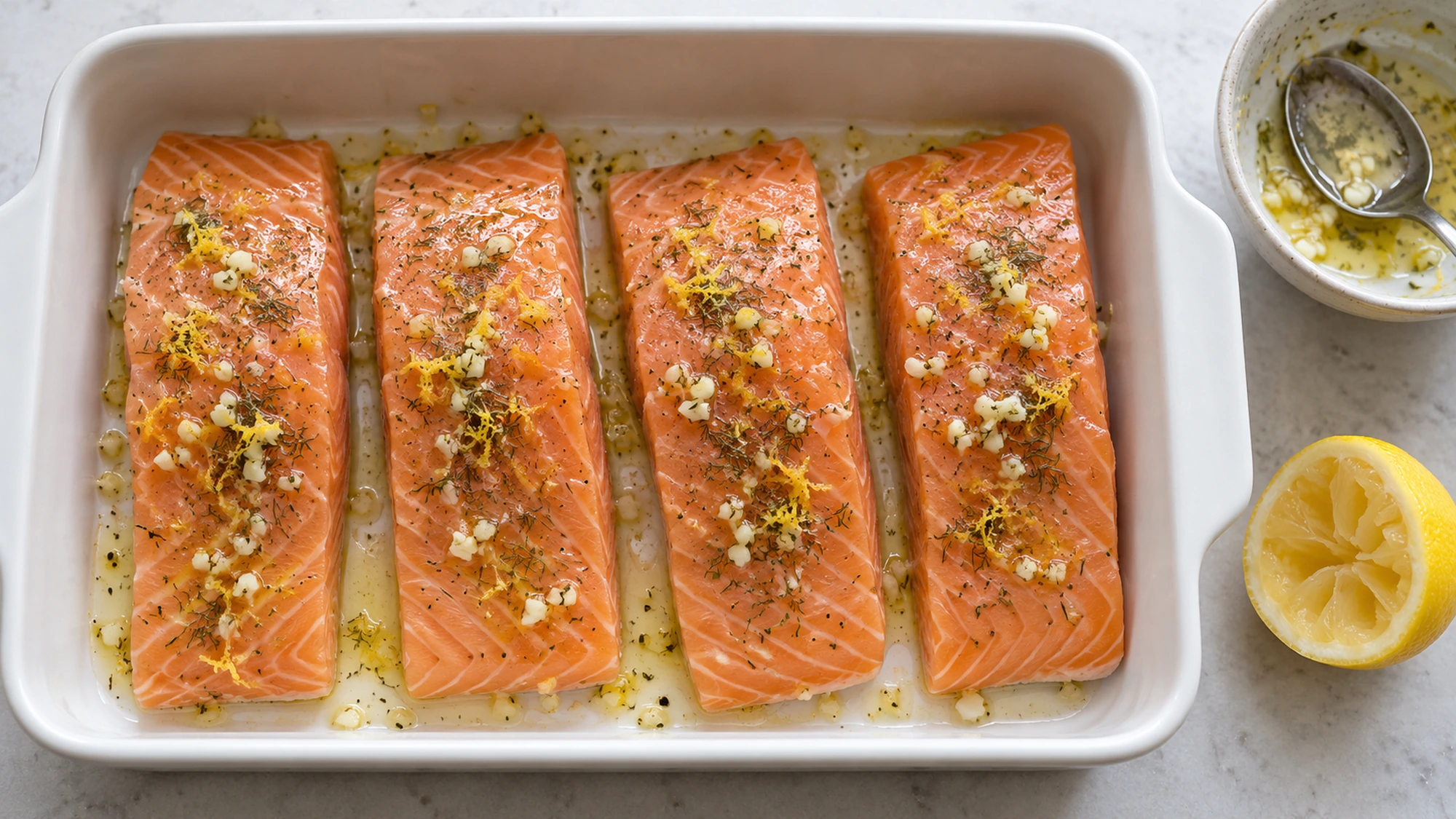
- Pat the salmon dry with paper towels and arrange the fillets in the dish with space between them. Keep thinner and thicker portions identifiable so they can be checked separately.
- In a small bowl, stir together the remaining 2 teaspoons olive oil, lemon zest, lemon juice, minced garlic, dried dill, salt, and black pepper. Divide the mixture over the tops of the four fillets and spread it evenly.
- Roast uncovered for approximately 14–20 minutes. Begin checking after 12 minutes by inserting an instant-read thermometer into the thickest part of each fillet, avoiding the hot dish. Remove each portion when its center reaches 145°F (63°C); thinner portions may finish first. Continue cooking any portion that has not reached that temperature.
- Rest for 2 minutes, then serve with the lemon wedges and juices from the baking dish.
Video
Notes
Tried this recipe?
Let us know how it turned out!Emily is Spoonvale’s recipe-writing persona, bringing a warm, practical voice to everyday cooking. Her focus is simple: approachable meals, comforting flavors, and clear instructions that help make time in the kitchen more enjoyable.