
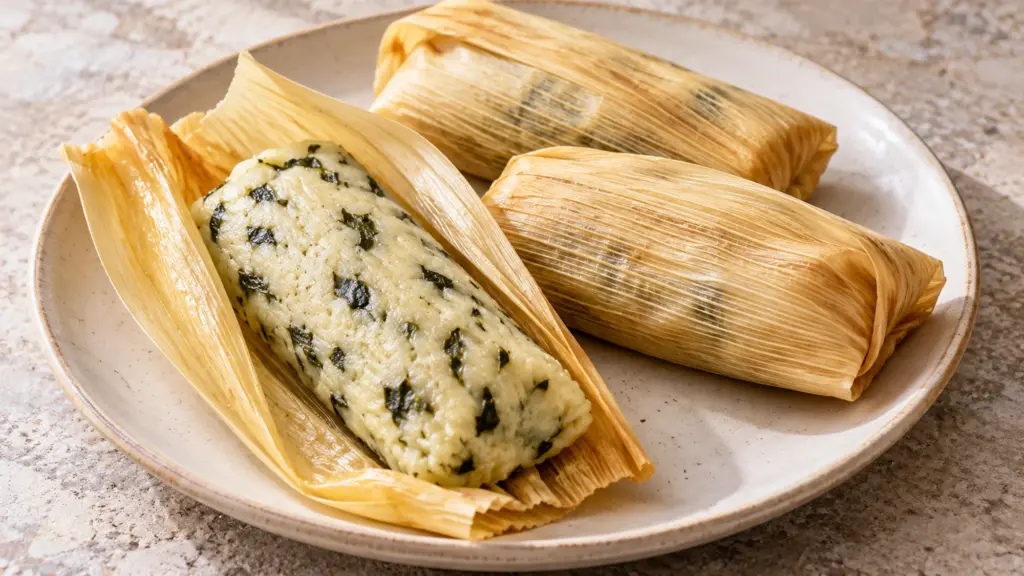
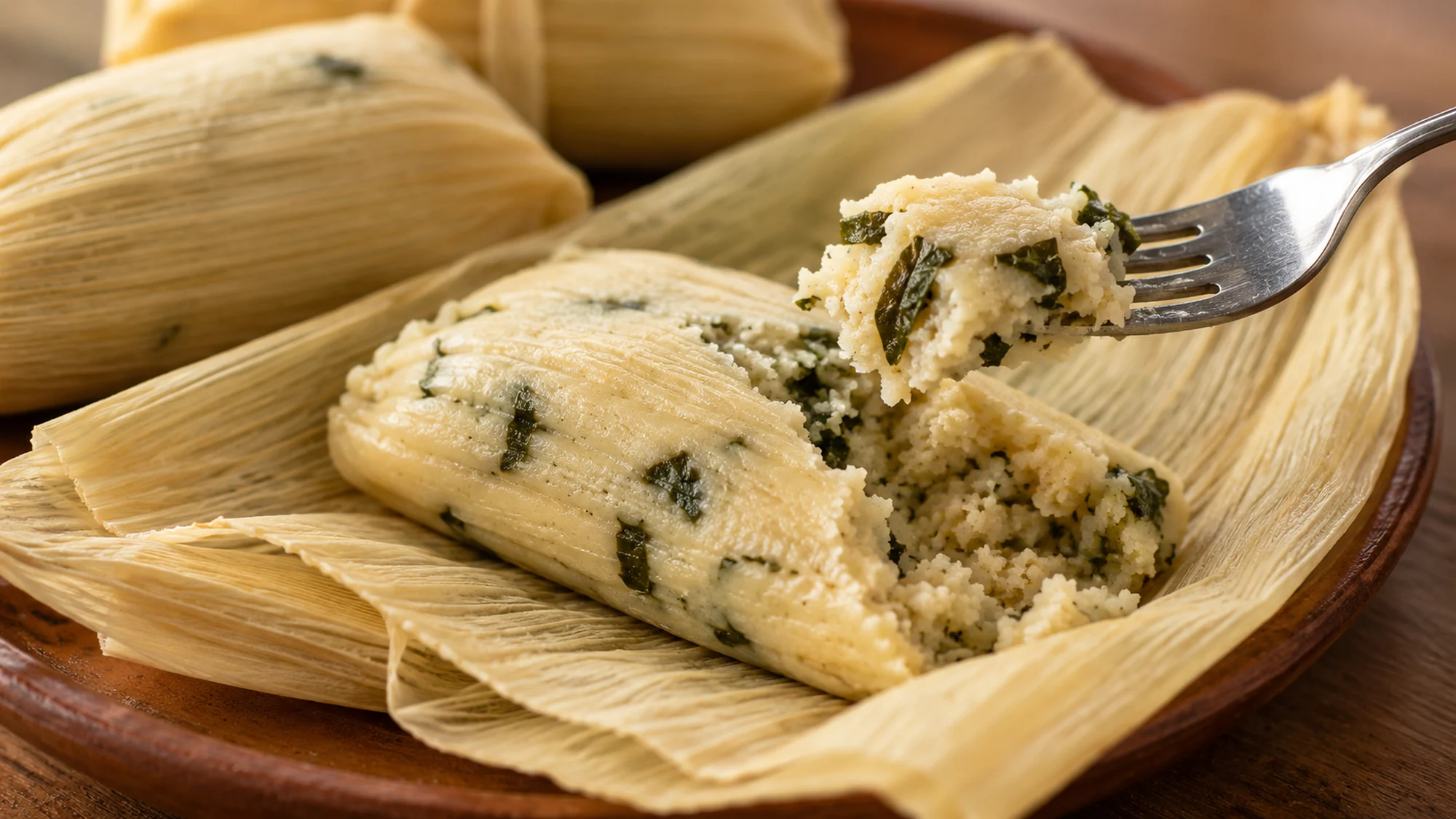
A stack of corn husks can make a modest bowl of dough feel like a project. Chipilín tamales become much more manageable when you make them small and keep the masa unfilled. The leaves run through every bite, bringing a gentle herbal flavor to the soft corn base.
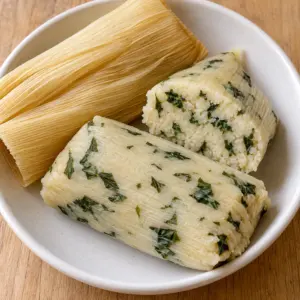
These chipilín tamales use masa harina, food-grade chipilín leaves, neutral oil, salt and water, wrapped in softened corn husks and steamed until set. The batch makes 12 small tamales. Look for spreadable dough before wrapping and masa that releases from the husk after cooking and a short rest.
I’d keep the first batch plain so the greens have room to speak. This corn-husk version takes its cue from small Guatemalan-style tamalitos, one approach to a dish enjoyed across several regional cooking traditions.
Serving Suggestions for Chipilín Tamales
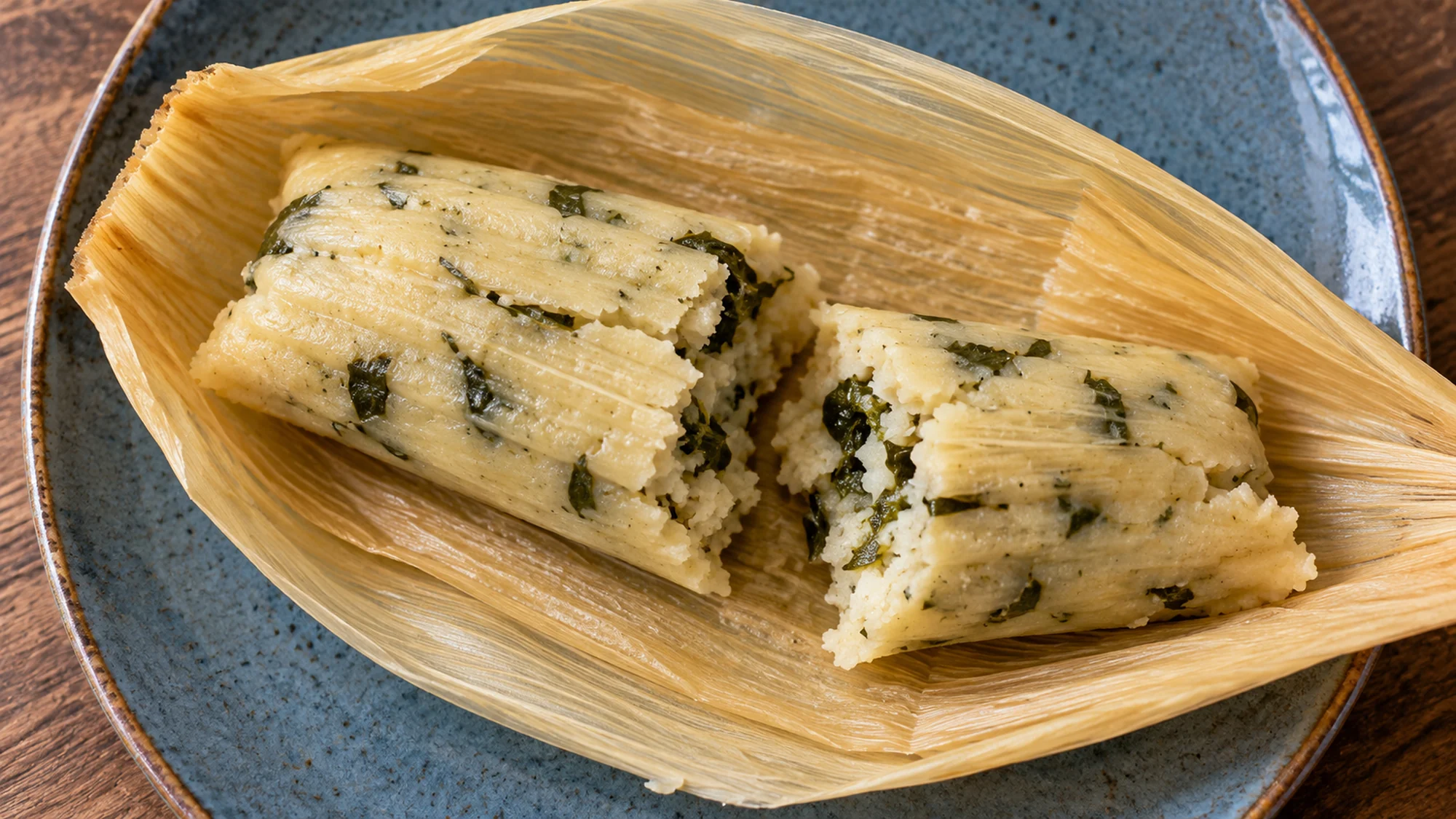
Rest the tamales before opening them: hot masa firms slightly as it stands. Unfold the husk onto a plate, keeping fingers clear of escaping steam, then eat the tamal itself. The aromatic wrapper belongs beside the plate.
A little contrast is welcome here: something bright, something creamy or a spoonful of beans. I’d choose one or two additions rather than a crowded topping bar. Too much sauce hides the delicate green flecks and turns the masa into a supporting act.
- Serve two small tamales with warm black beans and a tomato salad for a more substantial plate.
- Offer a spoonful of tomato salsa on the side, adding it a little at a time so the corn flavor stays noticeable.
- For a creamy finish, use a small amount of crema or plain yogurt; both introduce milk to an otherwise dairy-free ingredient list.
- For a warm drink alongside, Spoonvale’s atole de pinole offers a separate toasted-corn flavor.
Rest the tamales, open the husks carefully and let a few well-chosen accompaniments complement the corn and greens.
Chipilín Tamales Variations and Texture Choices
Use masa harina made from nixtamalized corn, rather than cornmeal or cornstarch. Fresh wet masa also needs a different hydration calculation; swapping it cup for cup would leave you guessing.
Fresh and frozen chipilín can both suit the recipe, provided the leaves are sold for cooking. Remove tough stems and drain thawed leaves well. This chipilín ingredient description explains its use in tamale masa and other dishes; buy an identified food product instead of gathering unfamiliar wild leaves.
| Choice | What changes | Practical cue |
|---|---|---|
| Fresh chipilín | Leaves need washing and stem removal | Drain before measuring |
| Frozen chipilín | Thawing releases water | Drain well before mixing |
| Neutral vegetable oil | Keeps the corn flavor clear | Use the measured amount |
| Crema at the table | Adds tang and dairy | Keep separate until serving |
- If the dough cracks when spread, add water gradually and let it absorb before deciding it needs more.
- If it runs across the husk, pause before wrapping; the dough should stay where the spatula leaves it.
- Patch a torn wrapper with another husk. It is a wrapper, not an origami examination.
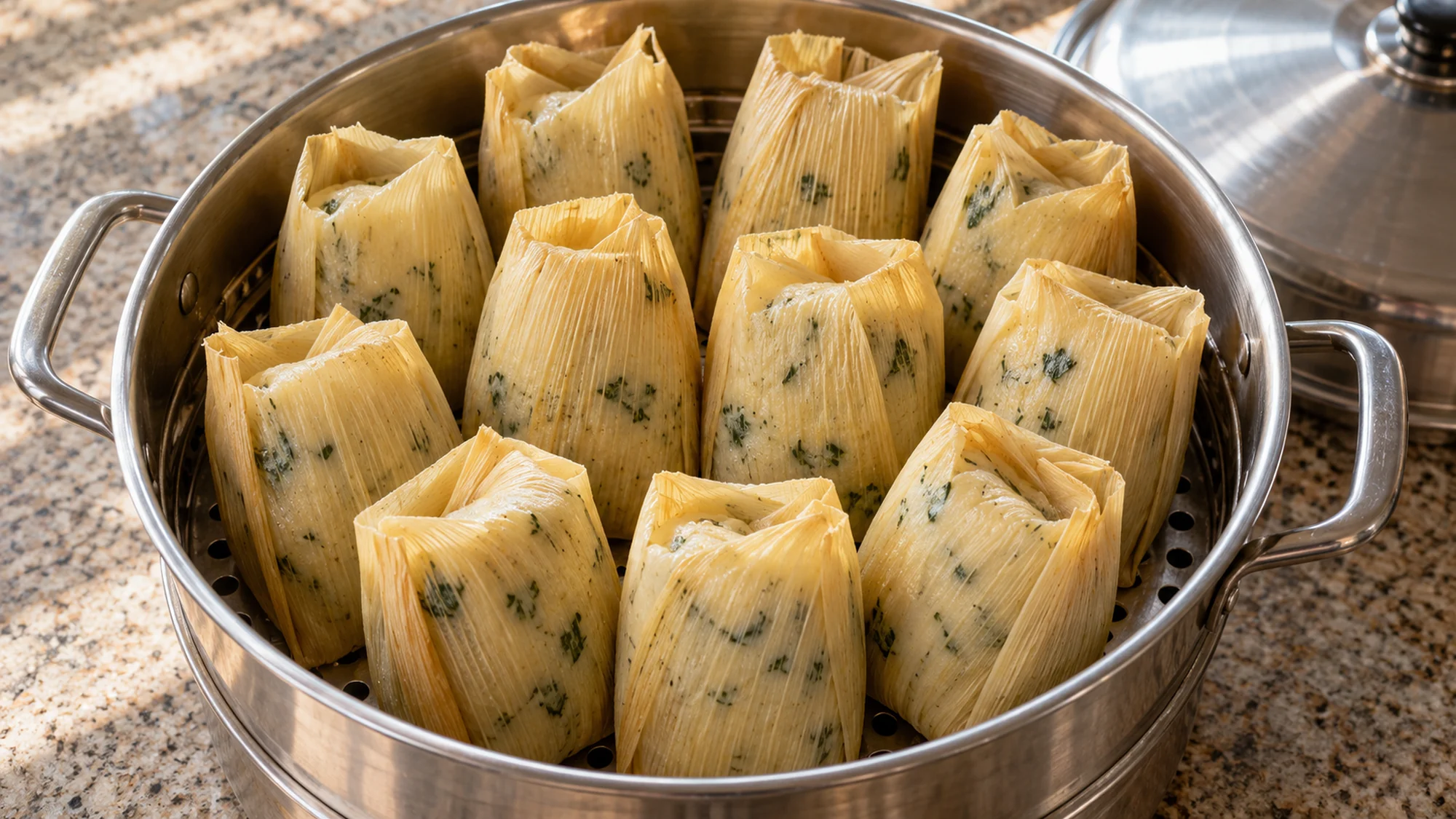
- Keep the tamales above the simmering water and leave paths for steam; tightly wedging the pot slows even cooking.
Use the right corn flour, control the moisture from the greens and judge the dough by how it spreads.
Health Benefits and a Balanced Plate
The masa makes these tamales a starchy part of the meal, while the leaves add flavor and a small quantity of greens. A green-flecked dough does not make a serving equivalent to a generous portion of vegetables. Pairing the tamales with beans and vegetables gives those foods a useful place on the plate.
I prefer a practical discussion of portions to a sweeping health claim. Two small tamales are the suggested serving here, and additions such as cheese, crema or extra oil change the meal. Check packaged ingredients when cooking for allergies; a short ingredient list alone does not establish allergen safety.
- Keep leftovers in shallow containers and refrigerate within two hours; reduce that to one hour when the surroundings exceed 90°F (32°C).
- Use refrigerated leftovers within three to four days and reheat the centers to 165°F (74°C). This leftover-handling guide explains safe cooling, storage and reheating.
- Warm only the portion you need, keeping the remainder chilled. A covered steamer helps prevent the masa drying as it reheats.
Enjoy the corn and chipilín for their flavor, build the rest of the meal around them and handle leftovers promptly.
Bottom Line
Chipilín tamales reward attention to moisture and steam more than elaborate fillings. Start with identified cooking leaves and the right masa harina, keep the dough soft enough to spread and allow the tamales to rest before opening. Serve them simply, with the husks folded back and a bright or creamy accompaniment nearby.
Chipilín Tamales Recipe

Ingredients
- 12 large dried corn husks plus a few extra for lining and patching; not eaten
- 2 cups masa harina 240 g; nixtamalized corn flour for tamales, not cornmeal
- 1 cup chipilín leaves 50 g, thawed if frozen, well drained and coarsely chopped; food-grade leaves only, stems removed
- 0.25 cup neutral vegetable oil 60 ml
- 0.75 tsp fine salt
- 1.5 cups warm water 360 ml, plus up to 1/2 cup (120 ml) more as needed; additional water for soaking and steaming
Equipment
- Large bowl for soaking husks; use a small plate to hold them under water
- Large mixing bowl
- Measuring cups and spoons
- Silicone spatula
- Large pot with steamer insert and fitted lid tall enough for upright tamales
- Tongs
Instructions
- Rinse the corn husks and soak them in warm water for 30 minutes, using a small plate to keep them submerged, until pliable. Drain them before filling.
- Mix the masa harina and salt in a large bowl. Stir in the oil and 1 1/2 cups warm water, then fold in the drained chipilín. Rest 10 minutes. Add the remaining water a tablespoon at a time only as needed to make a soft, spreadable dough that holds its shape without dry cracks.
- Pour water into the steamer pot to just below the insert. Line the insert with spare husks and bring the water to a simmer. Keep the water below the tamales.
- Divide the dough into 12 portions. Spread each portion over the wide end of a drained husk in a rectangle about 3 by 4 inches, leaving the edges clear. Fold the long sides over the masa, then fold the narrow end up; leave the top open. Patch torn husks with a second husk.
- Stand the tamales upright, folded ends down, in the insert with a little room for steam to circulate. Cover with spare husks and the fitted lid. Steam at a steady simmer for 60–75 minutes, checking the water level carefully and adding hot water down the side of the pot as needed. Do not let the pot boil dry.
- Remove one tamal with tongs and let it stand 5 minutes before opening. The masa should feel set and pull away from the husk rather than smear like raw dough. If needed, steam the batch another 10–15 minutes and check again. Rest the finished tamales off the heat for 10 minutes before serving; discard the husks.
Notes
Tried this recipe?
Let us know how it turned out!Emily is Spoonvale’s recipe-writing persona, bringing a warm, practical voice to everyday cooking. Her focus is simple: approachable meals, comforting flavors, and clear instructions that help make time in the kitchen more enjoyable.