
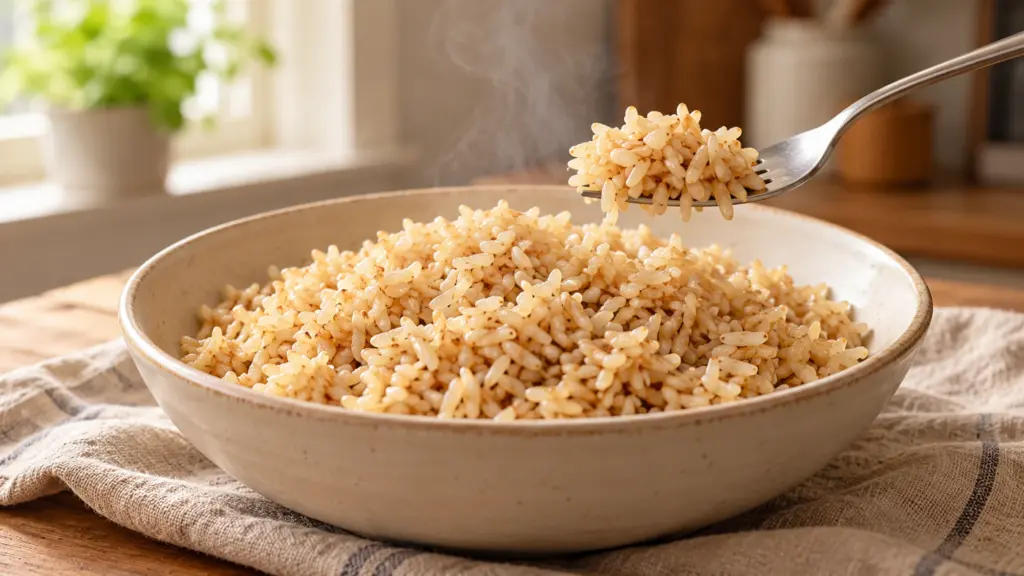
Dinner is almost ready, and the rice is the part still making you pause. A grain can look plump while its center remains hard, and a wet pot gives few clues. Learning how to cook brown rice with an abundant-water method makes tenderness easier to judge before the final rest.
Boil regular long-grain brown rice in plenty of water until the center is tender, drain it thoroughly, then cover the warm pot off the heat for 10 minutes. The grains should keep a pleasant chew and separate easily when fluffed.
The aim is a flexible side with distinct grains. Start checking a little before the suggested cooking time, because brands and grain sizes vary. A fine-mesh strainer matters as much as the saucepan: it lets you remove surface water instead of carrying a puddle into the covered rest.
How to Cook Brown Rice for Bowls and Sides
Give this rice a clear job on the plate. Its nutty flavor stands up to beans, roasted vegetables, and a spoonful of sauce. For a bowl, build around the rice with a protein and something crisp, then add dressing gradually so the grains stay defined.
| Serve it as | Pair it with | A useful finishing detail |
|---|---|---|
| A vegetable bowl | Roasted vegetables and chickpeas | Add toppings just before serving |
| A simple side | Bean stew or tomato lentils | Let the sauce season the grains |
| A grain salad | Cucumber, herbs, and lemon | Use promptly cooled, refrigerated rice |
Keep the first batch plain while you learn the grain’s texture. That leaves you free to finish individual portions with herbs, lemon, toasted seeds, or a small pat of butter. Add those extras after draining, when their flavor can stay with the rice rather than disappear down the sink.
Serve a modest mound beside the rest of the meal, and let toppings provide contrast. The rice can be a useful background without needing to carry every flavor itself. This rice also makes a mild base beside apricot chicken with Dijon glaze, where the grains can catch the sauce.
Variations and Storage for Brown Rice
Choose regular uncooked long-grain brown rice for this method. Instant, parboiled, short-grain, and brown basmati products can behave differently, so the same timing is not a universal rule. Read the package to identify what you have, then use the tender center as the deciding cue.
- If a grain is chalky inside, keep boiling and check again with a clean spoon. A covered rest cannot reliably finish a hard, undercooked center.
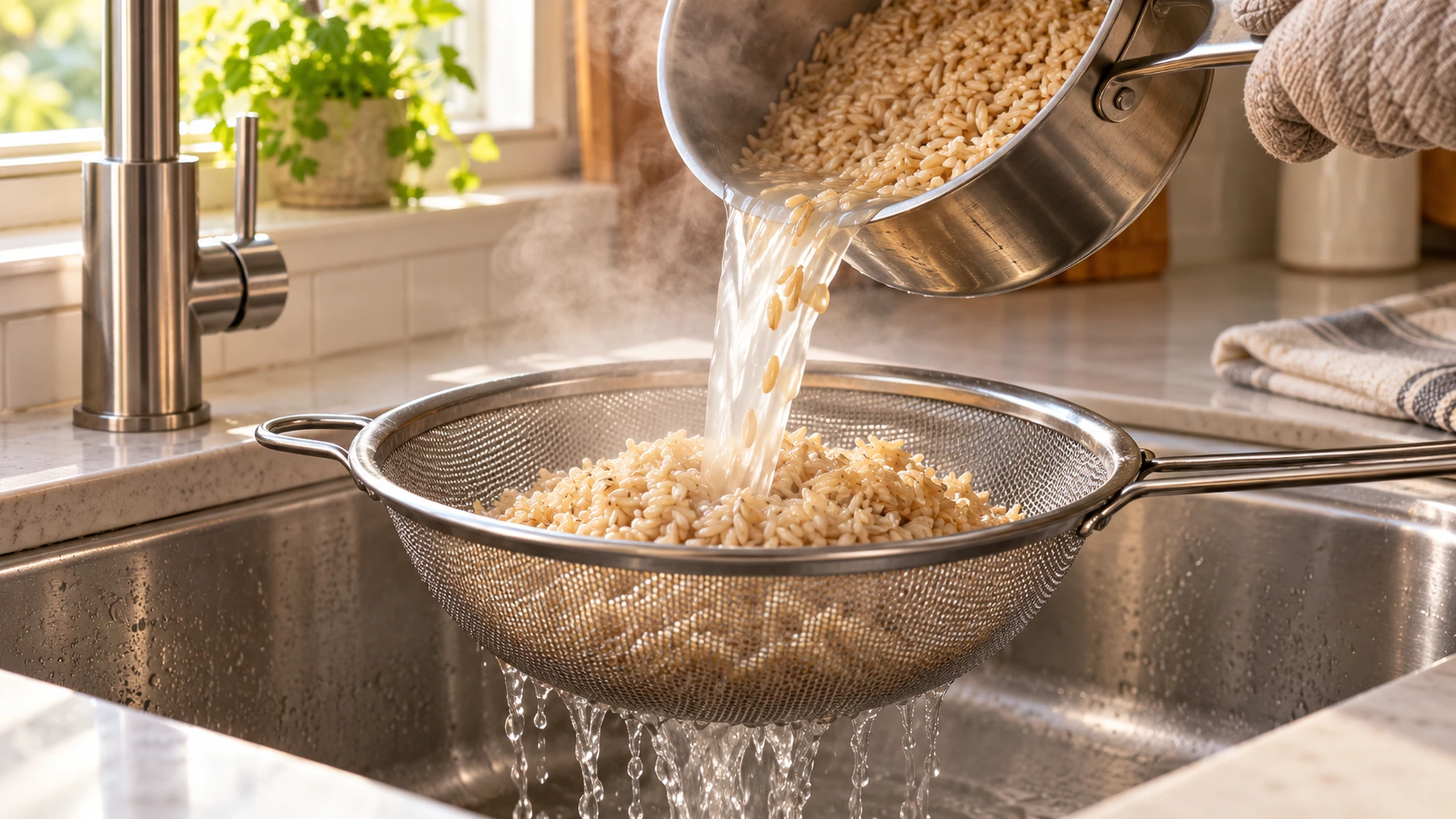
- Drain well, then empty any water left in the pot before returning the rice. The final covered rest uses the moisture already clinging to the grains.
- Season after cooking. Salt, herbs, or a little oil can suit the meal, but they are serving variations and are not included in the plain recipe’s nutrition estimate.
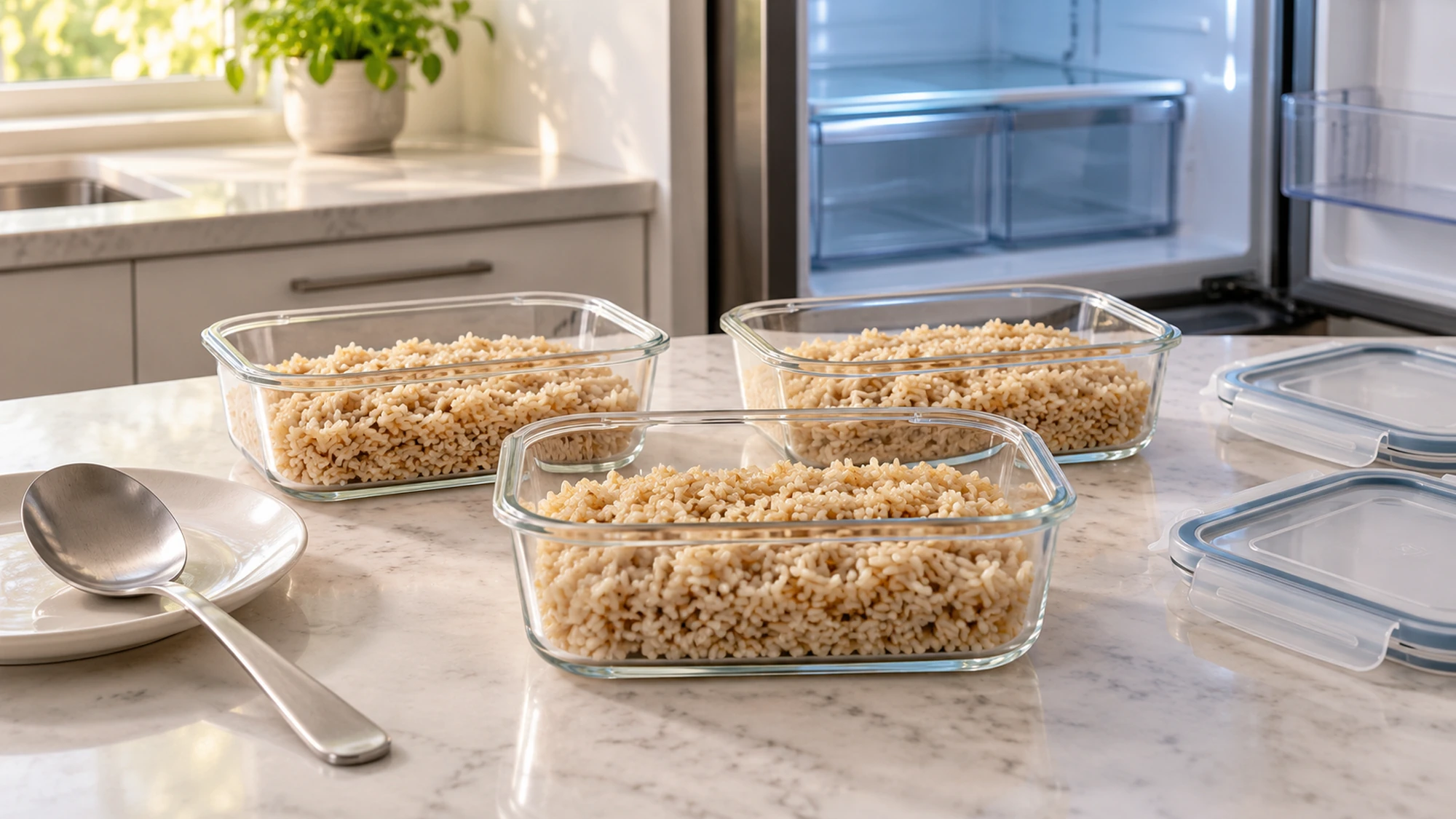
For leftovers, use clean shallow containers and refrigerate promptly, ideally within one hour. Keep at 40°F (4°C) or below and use within 24 hours, following the Food Standards Agency’s rice guidance. Freeze promptly if you need longer storage. Reheat only the portion you need, just once, until steaming throughout and 165°F (74°C). Prompt cooling matters: rice left out too long should be discarded, because reheating cannot reliably make it safe.
Plan the storage before making a large batch. Small portions cool more quickly and keep the next meal straightforward.
Health Benefits of Keeping Brown Rice Simple
Brown rice is a whole grain, with its bran and germ retained. It contributes carbohydrate to a meal, plus some fiber and a modest amount of protein. That makes it a useful base to pair with beans, lentils, fish, tofu, or another protein, rather than expecting the rice to supply everything.
- The plain base keeps added fat and sodium under your control. Sauces, broth, butter, and toppings change those totals.
- An ingredient-based estimate is a guide, not a measurement of the finished pot. Grain variety, draining, portion size, and additions affect the result.
Enjoy brown rice for its nutty taste and whole-grain texture, alongside a varied meal. The useful benefit is an adaptable staple.
Bottom Line
To make this method work for you, pay attention to the grain, the drain, and the covered rest. Use regular long-grain brown rice, stop when the center is tender, and remove the extra water thoroughly. Then serve promptly or chill small portions quickly.
How to Cook Brown Rice Recipe

Ingredients
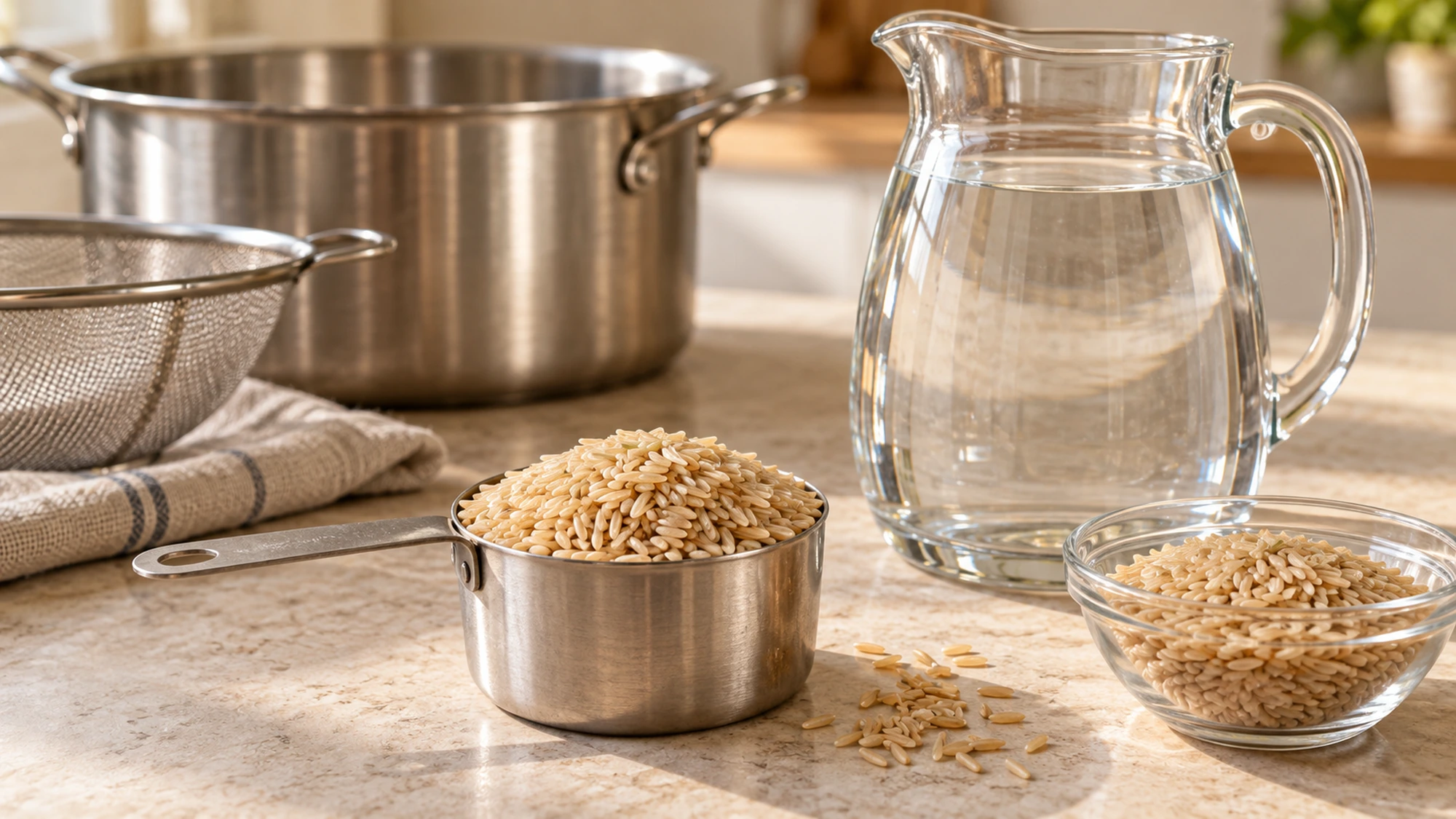
- 1 cup regular long-grain brown rice 185 g; uncooked, not instant or parboiled
- 8 cups water for boiling; excess is drained
Equipment
- 1 4-quart saucepan with a tight-fitting lid
- 1 Fine-mesh strainer
- 1 dry measuring cup
- 1 liquid measuring jug
- 1 Wooden spoon
- 1 Fork
Instructions
- Put the rice in a fine-mesh strainer and rinse briefly under cool running water, about 30 seconds. Let it drain while you prepare the pot.
- Bring the water to a full boil in a 4-quart saucepan. Add the rice and stir once. Keep it at a steady uncovered boil.
- Start checking after 25 minutes. Continue cooking until the center is tender and the grain still has a pleasant chew, usually about 30 minutes total. Use a clean spoon each time.
- Pour the rice into the fine-mesh strainer and let the excess water drain away. Empty any remaining water from the pot, then return the drained rice to the warm pot.
- Cover and leave off the heat for 10 minutes. Uncover, fluff gently with a fork, and serve. For leftovers, transfer to shallow containers and refrigerate promptly, ideally within one hour.
Nutrition
Video
Notes
Tried this recipe?
Let us know how it turned out!Emily is Spoonvale’s recipe-writing persona, bringing a warm, practical voice to everyday cooking. Her focus is simple: approachable meals, comforting flavors, and clear instructions that help make time in the kitchen more enjoyable.