
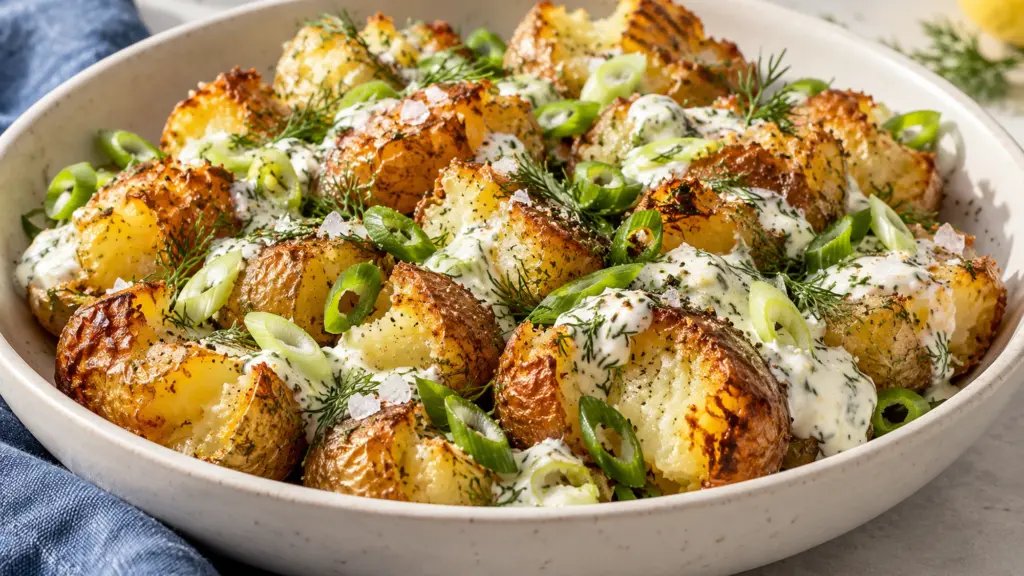
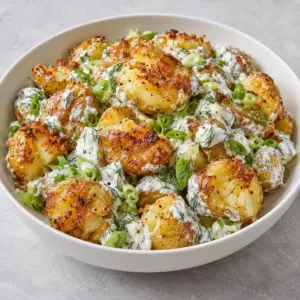
Crispy potatoes and creamy dressing pull in different directions: one needs dry edges, while the other brings moisture. This crispy smashed potato salad makes that contrast the point. Small gold potatoes are boiled, pressed into rough discs and roasted until browned, then meet a cool dressing of Greek yogurt, lemon, Dijon and dill just before serving.

Let the potatoes dry before roasting, give them room on the pan, and add the dressing at the table. Those three choices protect the crisp edges without sacrificing a creamy finish.
I’d leave a few potatoes only lightly coated, because the browned ridges are worth keeping in view. The centers should remain soft, so each bite has something more interesting than crunch alone. A thin rim may brown before the thickest center, so judge the whole potato rather than chasing the darkest patch.
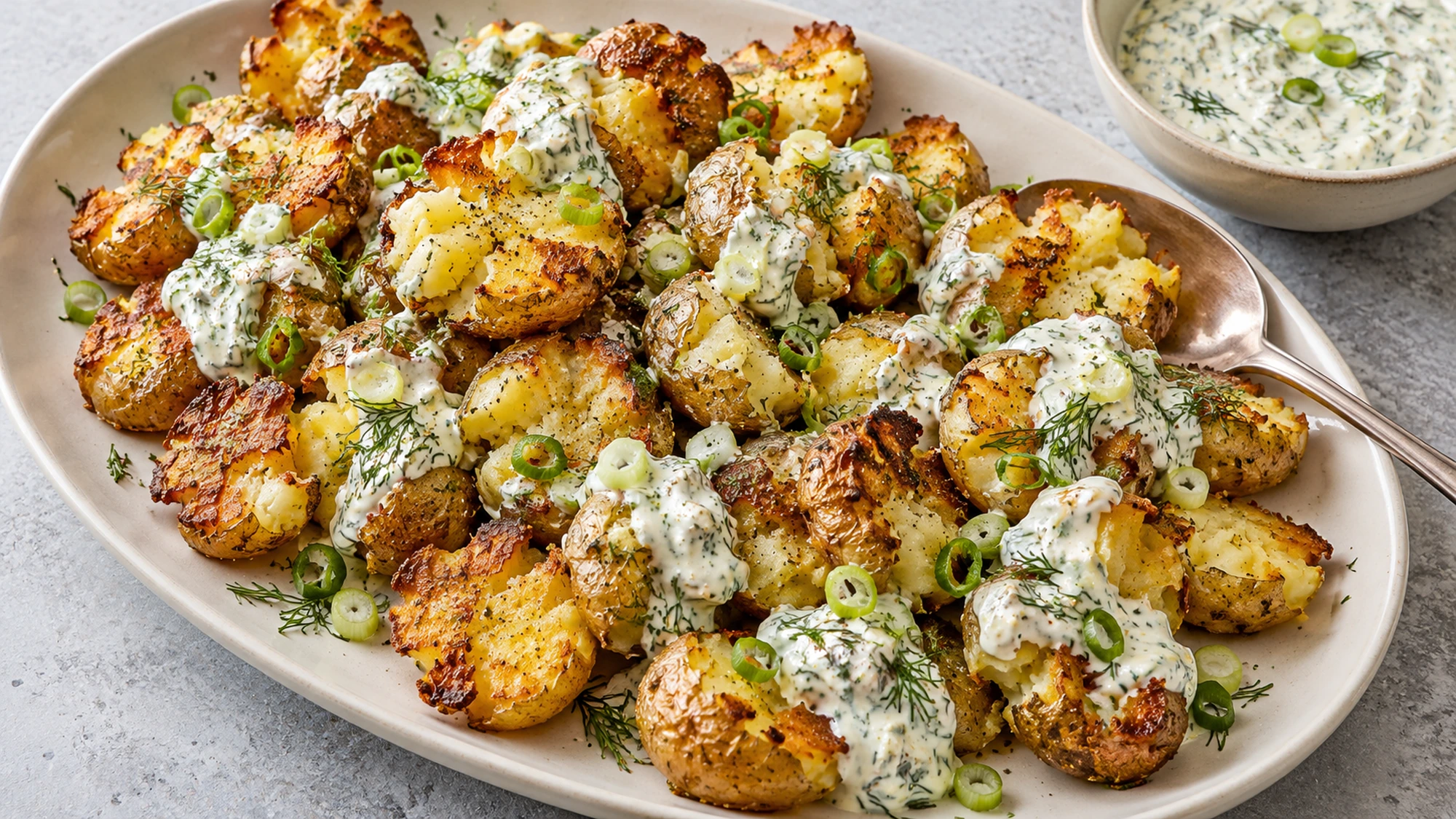
Serving Suggestions for Crispy Smashed Potato Salad
Serve this as a warm side with grilled chicken, baked fish or a simple bean dish. The lemon and yogurt provide a tangy contrast to richer mains, while dill keeps the flavor fresh. A wide platter works better than a deep bowl when you want dressing and crisp potato edges in the same forkful.
- Bring the dressing separately: Spoon it over the potatoes just before everyone eats.
- Keep some crisp pieces back: Scatter them over the dressed portion for a useful texture contrast.
- Make it a small spread: Add vegetables and your preferred protein rather than increasing the dressing.
- For a picnic: Transport chilled components separately in a cooler and combine shortly before serving.
Freshly dressed potatoes are the crispest. Once coated, they gradually soften; that is a texture change to plan around, not a reason to leave the salad sitting out. Serve smaller portions and refill the platter if the meal is leisurely.
Dress only what you are ready to serve, and keep the remaining components safely chilled.
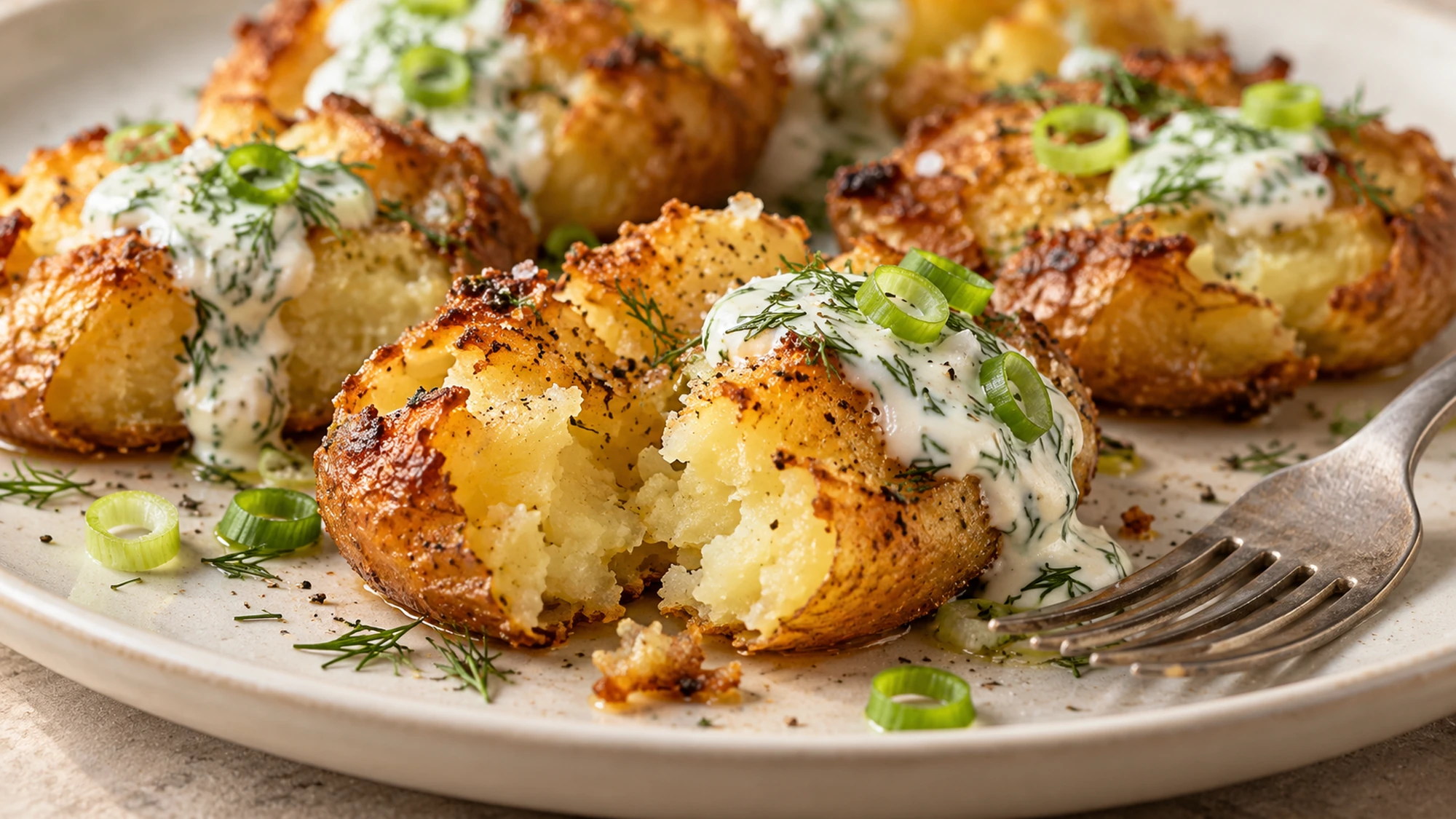
Variations and Texture Choices
Small potatoes of a similar size are easier to cook evenly and press without losing their shape. Gold potatoes are the starting point here; the guide to potato types explains how varieties differ. I would keep the first batch simple before adding strong flavors that compete with the dill.
| Change | How to approach it | What to expect |
|---|---|---|
| Small red potatoes | Choose similar-size potatoes | More noticeable skins |
| Whole-milk Greek yogurt | Use the same measured amount | A richer dressing |
| Parsley for dill | Use the same chopped volume | A gentler herbal flavor |
| More tang | Add lemon juice a little at a time | A thinner, sharper dressing |
The important limit is moisture: a dressing with added liquid softens the potatoes faster. If you would rather keep the potatoes whole, Spoonvale’s jacket potato in air fryer offers another way to pair crisp skin with a fluffy center.
Adjust the flavor of the dressing, but keep it thick enough to cling lightly rather than pool.
Health Benefits and Practical Trade-offs
Potatoes contribute carbohydrate, potassium and some fiber, while Greek yogurt adds protein and calcium. The potato nutrition reference describes the plain ingredient; oil and dressing change the finished dish. Oil and yogurt make this a more substantial side, so the serving size and accompaniments are part of the balance.
- Leave the skins on: They are part of the recipe’s texture and fiber contribution.
- Measure the oil: It helps the edges brown and contributes to the recipe’s calories.
- Check the dairy: The dressing contains milk; a replacement needs its own flavor and nutrition assessment.
- Consider the plate: Pair potatoes with vegetables and a protein source for a more varied meal.
Follow USDA’s leftover guidance: refrigerate within two hours, or one hour above 90°F (32°C), and use refrigerated leftovers within three to four days. Keep components separate when possible and respect an earlier ingredient use-by date.
Enjoy the contrast of crisp potatoes and tangy yogurt while keeping portions, accompaniments and safe storage in perspective.
Bottom Line
Crispy smashed potato salad works best when the potatoes finish dry, golden and well spaced on the baking sheet. Give them a short pause after roasting, then add just enough dill dressing to coat the serving you plan to eat. The creamy sauce and rough potato edges do different jobs, and neither needs to take over. Keep the remaining components separate for later, and expect dressed leftovers to be softer than the freshly assembled salad.
Crispy Smashed Potato Salad Recipe

Ingredients
- 1 1/2 pounds small baby gold potatoes 680 g; scrubbed, similar in size, about 1–1½ inches across
- 3 tablespoons olive oil 45 ml; divided
- 1/2 teaspoon fine salt 3 g; divided
- 1/4 teaspoon ground black pepper
- 1/2 cup plain nonfat Greek yogurt 120 g
- 1 tablespoon fresh lemon juice 15 ml
- 1 teaspoon Dijon mustard 5 g
- 2 scallions About 30 g; thinly sliced
- 2 tablespoons chopped fresh dill About 3 g; tough stems removed
Equipment
- 1 Large saucepan Large enough to cover the potatoes with water.
- 1 Colander
- 1 18 × 13-inch rimmed baking sheet Use a second sheet if the potatoes cannot sit with space between them.
- 1 Sturdy flat-bottomed glass For pressing the cooked potatoes.
- 1 Medium mixing bowl
- 1 Whisk
- 1 Spatula
- Measuring cups and spoons
- knife and cutting board
Instructions
- Scrub the potatoes, put them in a large saucepan, and cover with cold water by 1 inch (2.5 cm). Preheat the oven to 425°F (220°C).
- Bring the potatoes to a boil, then reduce to a steady simmer. Cook for about 15–20 minutes, until a small knife slides easily through the centers. Drain thoroughly and let steam escape for 5 minutes. The surface should look dry before pressing.
- Spread 1 tablespoon of the oil over the baking sheet. Arrange the potatoes with space between them. Press each with the flat bottom of a sturdy glass to about ½ inch (1 cm) thick, keeping the rough edges. Brush with the remaining 2 tablespoons oil. Season with ¼ teaspoon of the salt and all of the pepper.
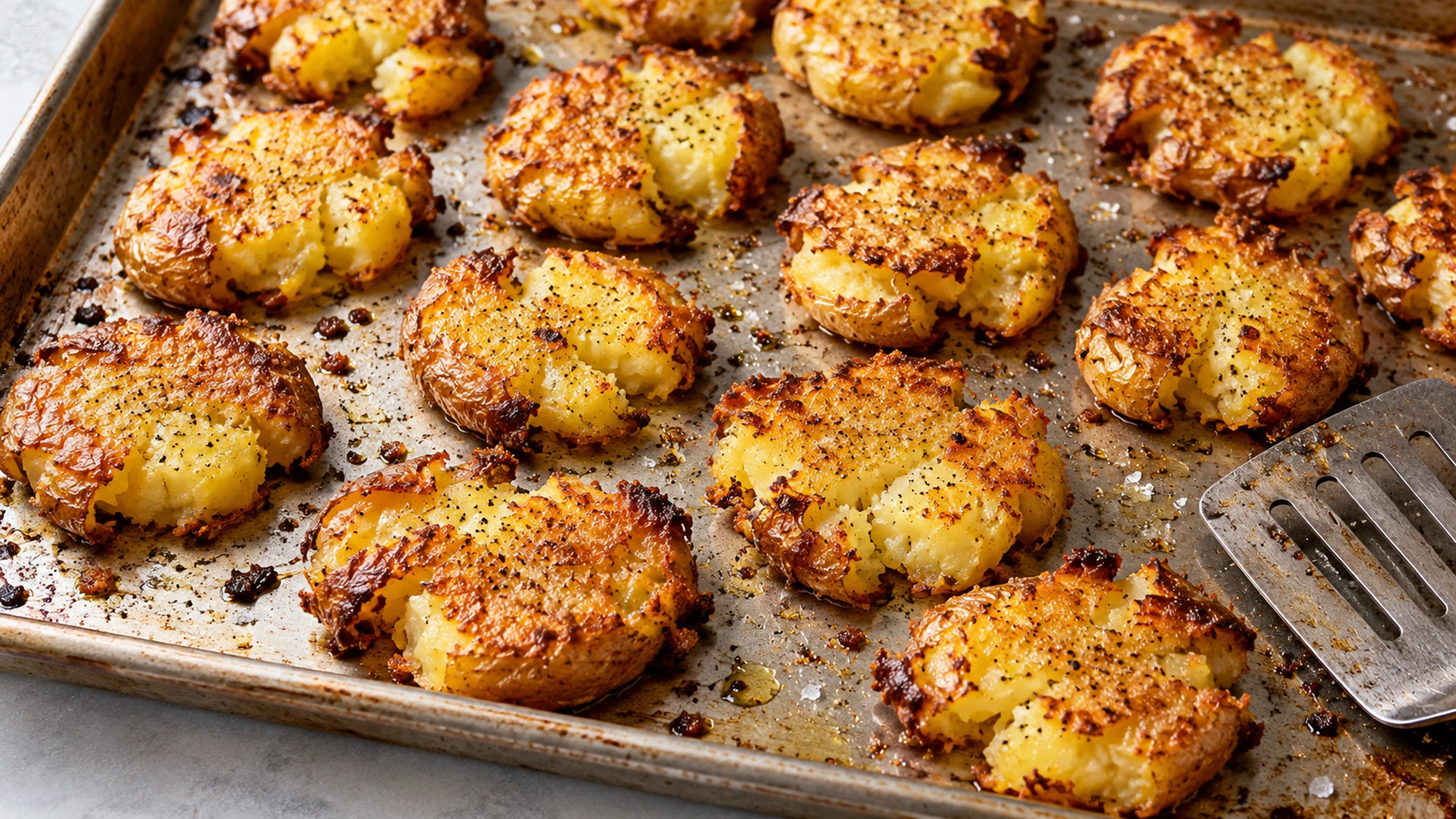
- Roast for about 40–45 minutes, until the exposed edges and undersides are golden and crisp. Rotate the pan halfway through if your oven browns unevenly. Use a second pan if needed to avoid crowding; roasting time varies with potato thickness and the oven.
- While the potatoes roast, whisk together the yogurt, lemon juice, Dijon and remaining ¼ teaspoon salt. Fold in the scallions and dill. Refrigerate the dressing until needed.
- Let the potatoes cool on the pan for about 5 minutes. Transfer the portion you plan to eat to a wide platter and spoon over enough dressing to coat lightly. Serve promptly, with any extra dressing alongside.
Nutrition
Video
Notes
Tried this recipe?
Let us know how it turned out!Emily is Spoonvale’s recipe-writing persona, bringing a warm, practical voice to everyday cooking. Her focus is simple: approachable meals, comforting flavors, and clear instructions that help make time in the kitchen more enjoyable.