
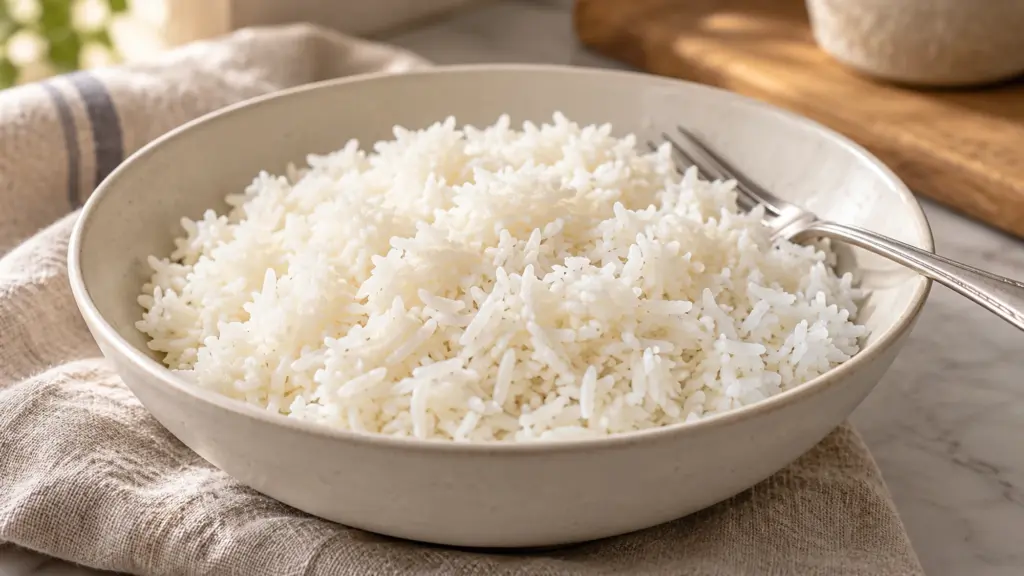
Dinner is nearly ready, but the rice still seems to need your attention. The useful move is often to leave the lid alone. This stovetop method is for regular long-grain white rice: measured water, a gentle covered simmer and a short rest before fluffing.
For regular long-grain white rice, use the measurements in the card, cover for a gentle simmer, and rest the pan off the heat for 10 minutes. This is a plain base for everyday meals; other rice types may need different instructions.
When deciding how to cook rice, I’d check the bag before the stove. This recipe uses regular long-grain white rice, rather than instant, parboiled, sushi rice or brown rice. Keeping those boundaries clear makes an ordinary side easier to understand. With a plain base, you can let the rest of dinner supply the spice.
Serving Suggestions for Rice
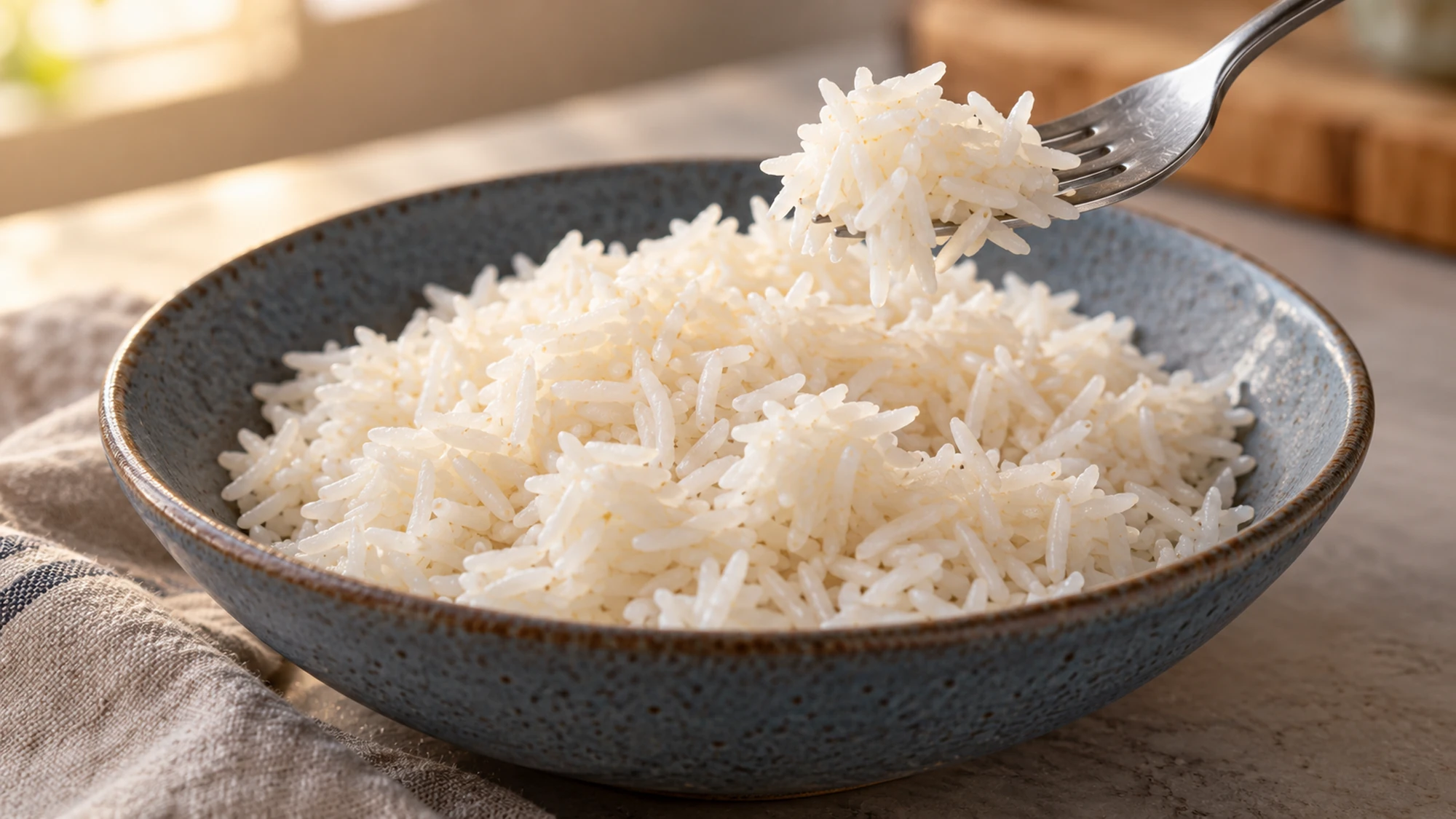
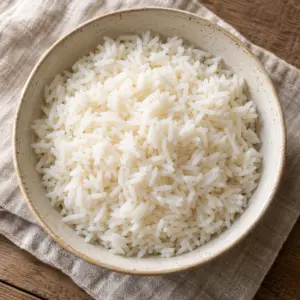
Fluff the rice gently with a fork after the rest, then bring it to the table while hot. A shallow serving bowl makes it easy to spoon alongside everything else without packing the rice into a firm mound.
I prefer keeping this batch plain beside a bolder meal. Spoonvale’s apricot chicken recipe has a tangy Dijon glaze that makes good company for rice. Vegetable stir-fries and stewed beans are equally useful directions.
- Spoon rice beside beans or lentils and crisp vegetables for a varied plate.
- Serve it under saucy chicken, tofu or fish, adding the sauce just before eating.
- Offer lemon wedges or chopped herbs at the table so everyone can choose the finish.
- Cook an amount you can serve promptly, and make a plan for any leftovers.
Finish with a gentle fluff, serve hot, and add stronger flavors where you want them.
How to Cook Rice: Adjustments and Common Problems
A ratio for standard long-grain white rice is a starting point for that product, not a promise for every bag. Jasmine, basmati and rice-cooker instructions can differ. Follow the packet when its liquid quantity or timing differs from a general guide.
Rinsing is not always required. Washing and draining enriched U.S. rice can remove added nutrients. If its label does not ask for rinsing, this method leaves the enrichment in place. I’d spend that attention on a tightly fitting lid and a gentle simmer.
A hard-rattling lid and steam rushing from the rim suggest too much heat. Turn it down; the pan only needs a gentle simmer.
- Broth: replace the measured water with the same volume of a suitable broth, considering its seasoning before adding anything else.
- Herbs or citrus: fold in chopped fresh herbs or a little finely grated lemon zest after cooking.
- Other grains: brown rice and wild rice need their own instructions and longer cooking; they are separate preparations.
Use the texture as a clue, then make a small correction.
| What you notice | What to check | Next move |
|---|---|---|
| Hard center | Is the pan dry? | Add a little hot water; cover and continue gently |
| Liquid remains | Is the rice still firm? | Replace the lid; cook 2–4 minutes longer |
| Sticky clumps | Water ratio and stirring | Fluff gently; adjust those variables next time |
Match the rice to the written method, and keep steam in the pan while it cooks.
Rice, Nutrition and Safe Leftovers
Rice provides carbohydrate for energy and works as one part of a meal. The plain recipe contains no added fat or salt; what you serve with it still matters. Add vegetables and a protein source to suit the meal.
Leftovers need more care than their plain appearance suggests. Rice can carry bacterial spores that survive cooking, so prompt cooling matters. Reheating does not repair rice that has been left warm too long.
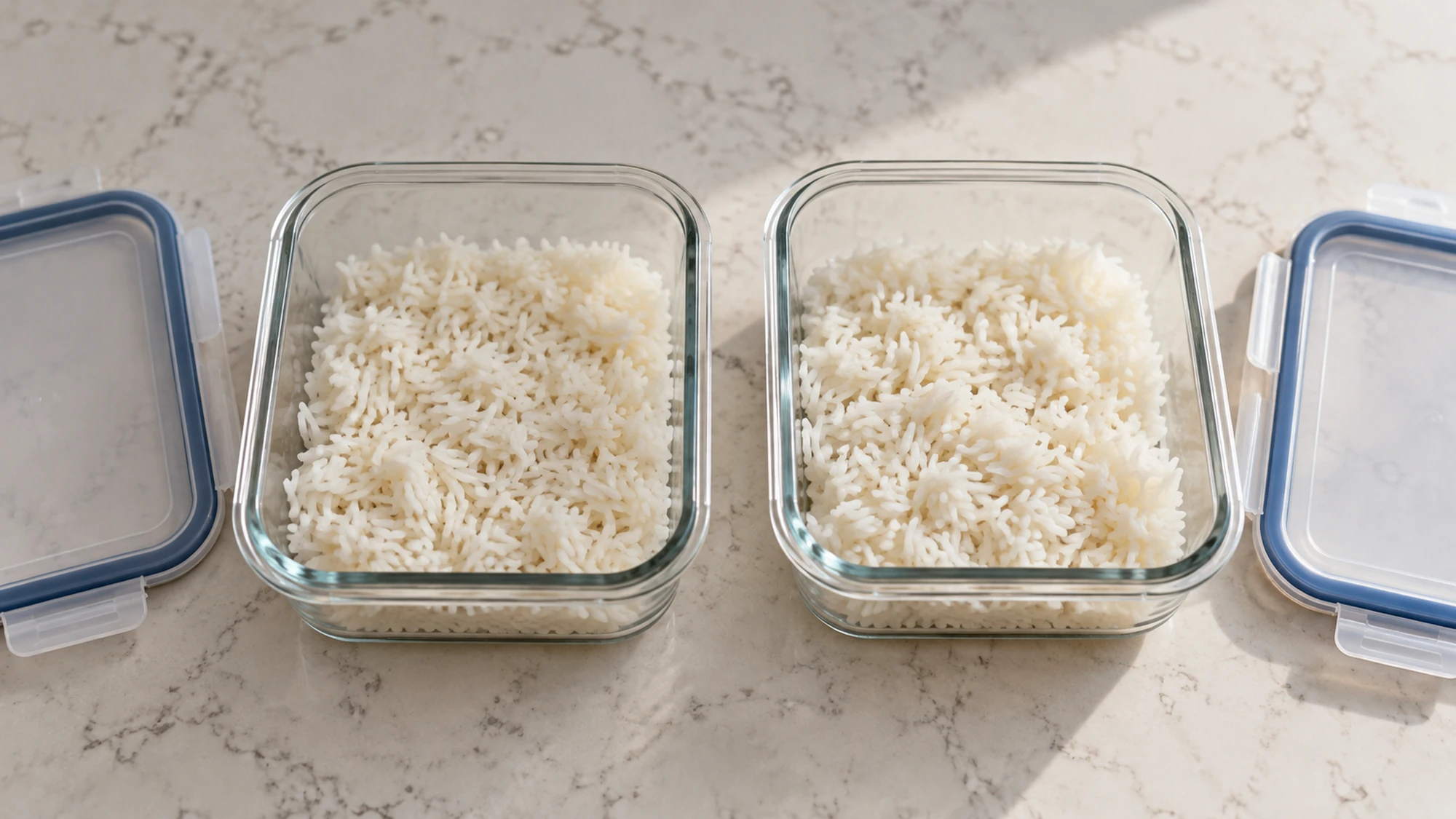
- Divide leftovers into small, shallow containers; cool and refrigerate within one hour of cooking.
- Store at 40°F or below and use within 24 hours.
- Reheat only once, until steaming hot throughout. Throw away rice left at room temperature overnight.
Make leftovers part of the plan: small portions, prompt chilling and one thorough reheat.
Bottom Line
The quiet finish is part of the work. A covered pan and a short rest let you fluff the rice gently at the end. You need a measured start and steady heat, with less fuss once the lid goes on.
Begin with a small batch, check the packet, and look at the grains’ texture before serving. Serve hot or cool any extras promptly. A straightforward pan of white rice can make the rest of a weeknight meal feel easier.
How to Cook Rice Recipe

Ingredients
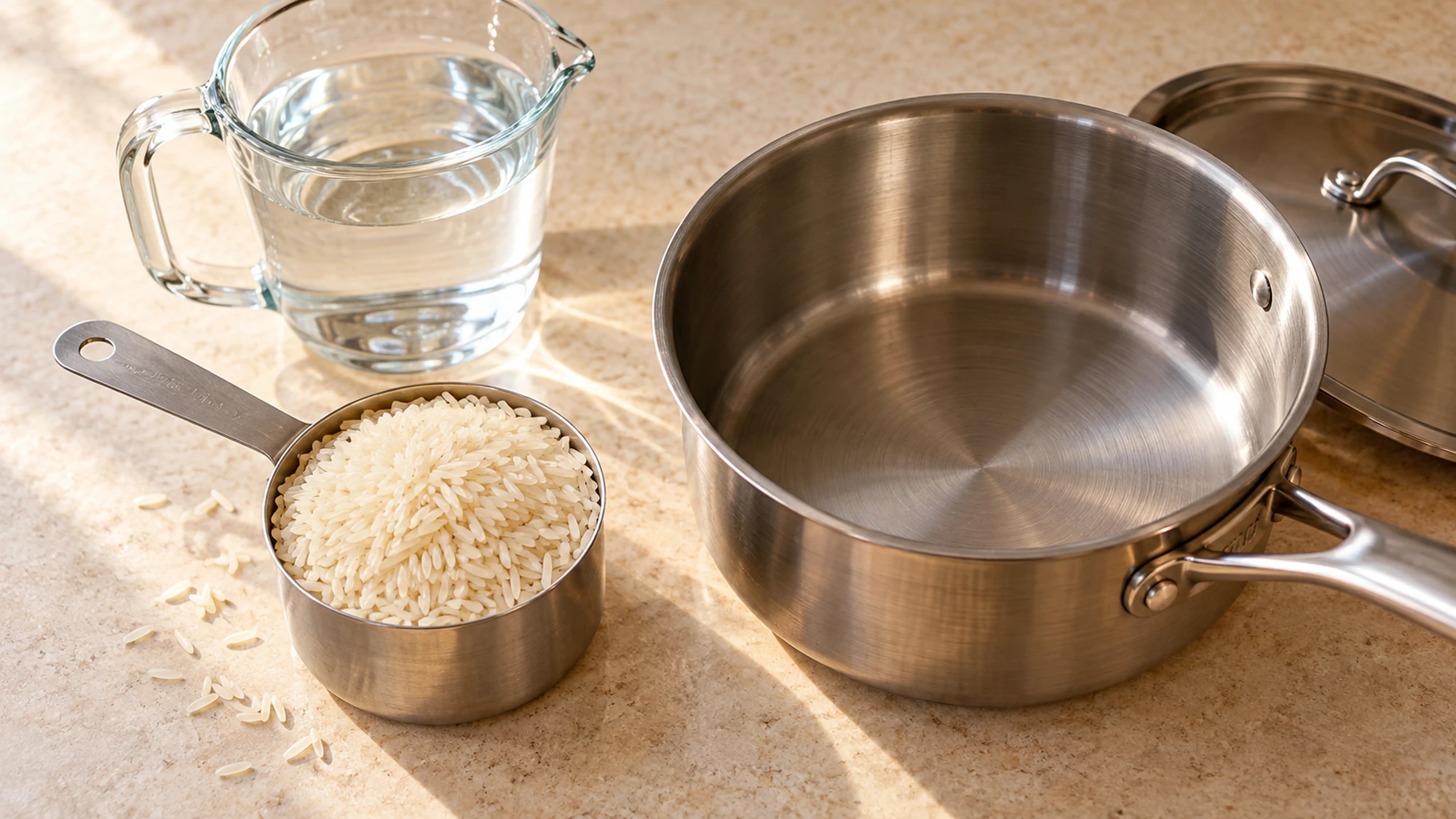
- 185 g regular long-grain white rice about 1 US cup; enriched rice, not instant or parboiled
- 475 ml water 2 US cups; plus up to 30 ml (2 tablespoons) hot water only if needed
Equipment
- 1 Heavy 2- to 3-quart saucepan with tight-fitting lid
- 1 Measuring cup or jug
- 1 kitchen scale optional, for measuring rice by weight
- 1 Stirring spoon
- 1 Fork for fluffing
Instructions
- Measure 185 g rice (about 1 level US cup) and 475 ml water (2 US cups) before heating. Use regular long-grain white rice. Check the packet first; follow its directions if they differ, and do not rinse enriched rice unless the packet asks you to.
- Pour the measured water into a heavy 2- to 3-quart saucepan and bring to a full boil over medium-high heat, about 5 minutes.
- Stir in the rice once. Let the water return to a gentle boil, reduce the heat to low, and cover with a tight-fitting lid. Simmer for 20 minutes without stirring or repeatedly lifting the lid.
- Check that the grains are tender through the center and the visible water has been absorbed. If rice is still firm or water remains, replace the lid and cook 2–4 minutes longer. If the pan is dry but the grains are hard, add up to 30 ml (2 tablespoons) hot water, cover and continue gently until tender.
- Remove the pan from the burner and leave it covered for 10 minutes. Uncover carefully, fluff gently with a fork and serve hot.
- For leftovers, divide into small, shallow containers and cool and refrigerate within one hour of cooking. Keep at 40°F or below and use within 24 hours. Reheat only once until steaming hot throughout; discard rice left at room temperature overnight.
Nutrition
Video
Notes
Tried this recipe?
Let us know how it turned out!Emily is Spoonvale’s recipe-writing persona, bringing a warm, practical voice to everyday cooking. Her focus is simple: approachable meals, comforting flavors, and clear instructions that help make time in the kitchen more enjoyable.