
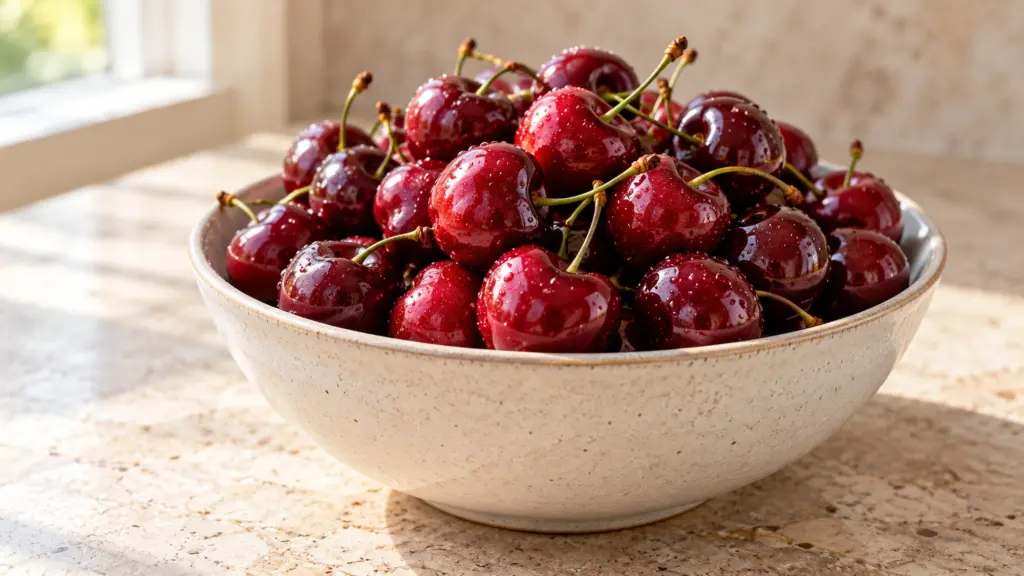
A bowl of glossy cherries needs very little encouragement to disappear. The harder choice often comes later, when a bottle of tart cherry concentrate promises more than a pleasant drink and suddenly an ordinary fruit feels like a supplement decision.
Yes, cherries can be a useful part of a varied diet. Whole cherries, dried cherries, and tart cherry juice are different foods, and studies of concentrated products do not prove that a bowl of fruit treats a health condition.
I’d give the fruit room to be food first: juicy, sweet or tart, and easy to add to something you already enjoy. The research is worth understanding, but it should help you make a sensible choice rather than turn every snack into a treatment plan.
Are Cherries Good for You as an Everyday Fruit?
Cherries can add variety to your fruit choices, with different flavors and textures depending on the variety and form. Sweet cherries work well eaten on their own; tart cherries offer a sharper flavor that can suit prepared dishes. Neither needs a dramatic health claim to be useful.
- Choose whole cherries when you want fruit you can enjoy as a snack or add to a meal.
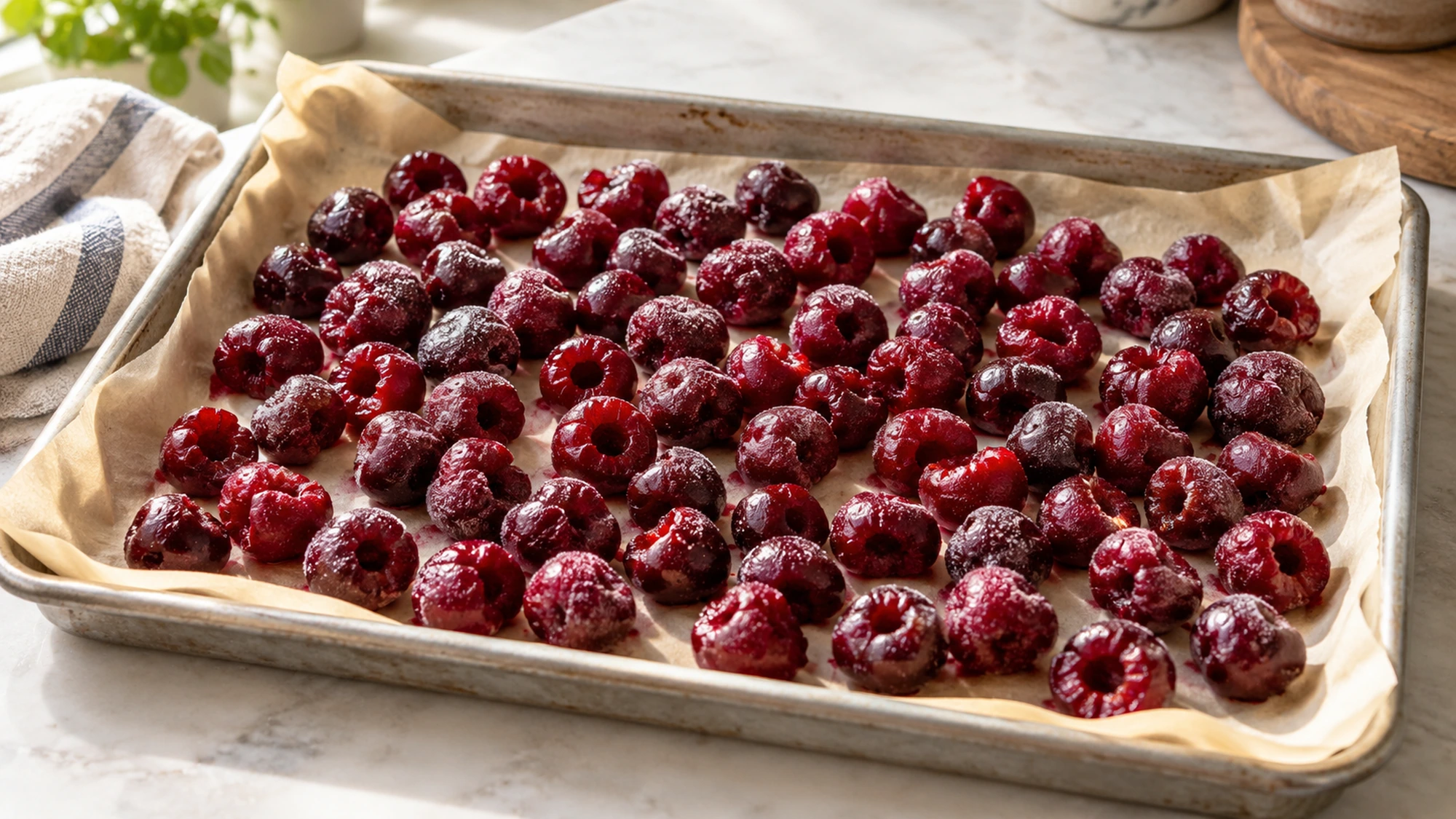
- Consider unsweetened frozen cherries when fresh fruit is unavailable or inconvenient.
- Look at ingredients when buying a prepared cherry product; the fruit’s name does not describe everything else in the package.
- Choose an amount and form that fit your meal, preferences, and any individual dietary advice.
I’d put flavor and practicality ahead of a “superfood” label. A fruit that works with your breakfast or snack routine is more useful than an expensive concentrate bought for a benefit it has not reliably demonstrated.
Cherries do not need to outperform every other fruit to be a worthwhile choice.
What Cherry Research Actually Shows
A review of human cherry research covered studies using different cherry varieties and forms, including juice and concentrates. Many studies were small or brief. That makes the product, dose, population, and outcome important when interpreting an appealing headline.
- Blood pressure: a meta-analysis of seven randomized trials found no significant overall reduction in systolic or diastolic blood pressure. Cherries should not be presented as a replacement for treatment.
- Sleep: a small trial in female field-hockey players investigated tart cherry juice around exercise. Results in that specific setting do not establish a remedy for everyday insomnia.
- General wellness: a change in a measured biomarker is not automatically proof that a food prevents illness or improves how everyone feels.
This does not mean every positive finding is meaningless. It means the confidence of the advice should match the study. If a headline jumps from a concentrated product in a short trial to “eat these cherries to cure your sleep,” an important part of the explanation has gone missing.
Enjoy cherries for their place in your diet, and keep medical claims proportionate to the evidence.
Fresh, Frozen, Dried, or Tart Cherry Juice?
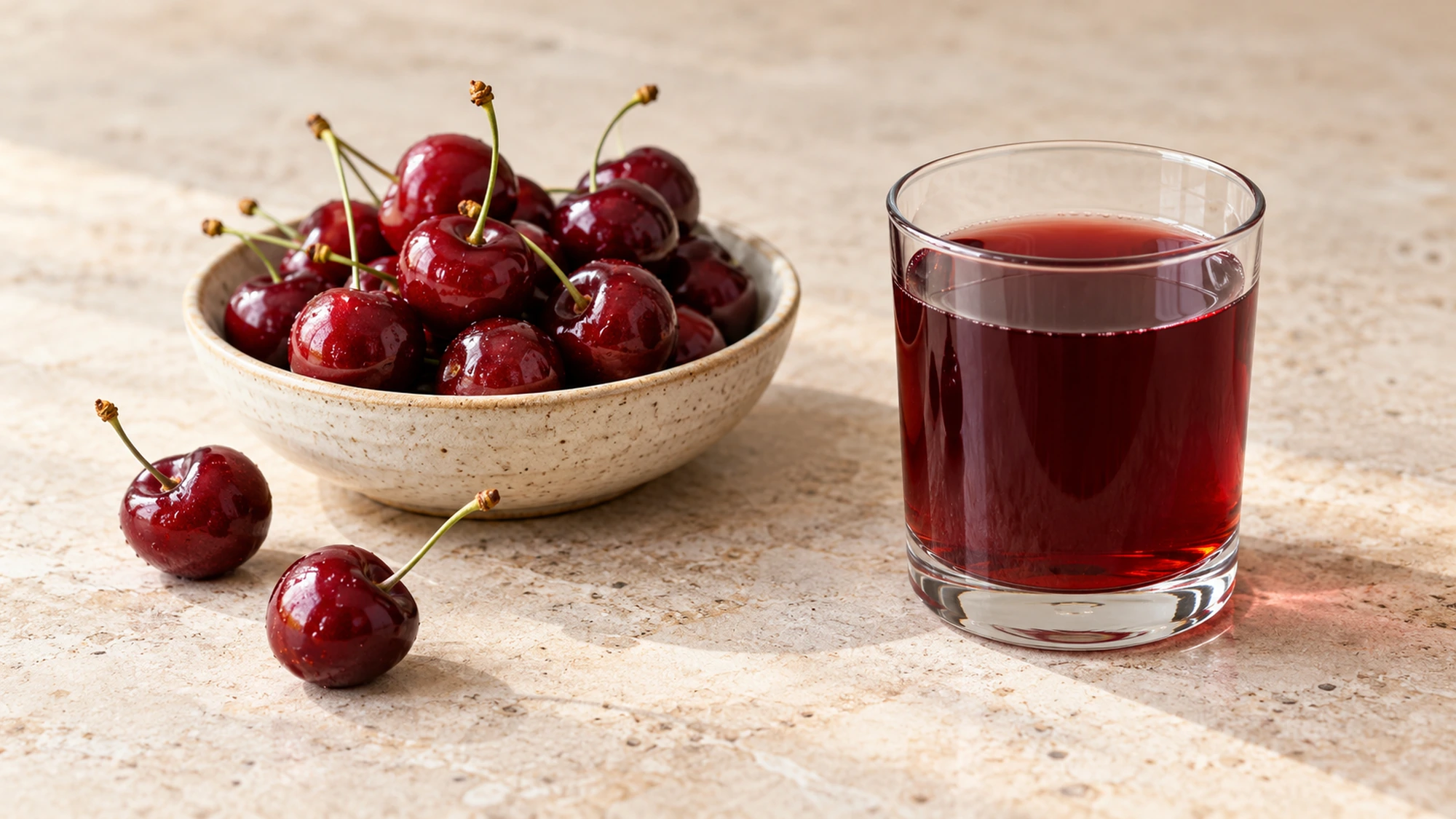
These forms solve different kitchen problems, so there is no need to pretend they are interchangeable. Fresh fruit offers a different eating experience from a small pour of concentrate. The label is especially helpful when a product combines cherries with sweeteners or other ingredients.
| Cherry form | Useful feature | What to check |
|---|---|---|
| Fresh | Ready for a simple fruit snack | Remove pits before eating |
| Unsweetened frozen | Convenient when fresh cherries are unavailable | Ingredients and intended use |
| Dried | Easy to carry or sprinkle into food | Serving size and added sugar |
| Juice | Convenient as a drink | Serving size and ingredient list |
| Concentrate | Designed for a different preparation | Dilution instructions and label details |
A dried-fruit serving should not be judged by the same visual volume as a bowl of fresh fruit. Likewise, do not assume a small bottle of concentrate is meant to be finished like a ready-to-drink beverage. Read the directions before using it, particularly when adding it to another sweet drink.
Choose the form for the job it does, not because all products with “cherry” on the front seem equivalent.
Easy Ways to Enjoy and Handle Cherries
Cherries can bring a juicy contrast to creamy or crisp foods without needing a separate recipe. I’d start with a straightforward pairing and let the fruit remain recognizable rather than burying it under several sweet additions.
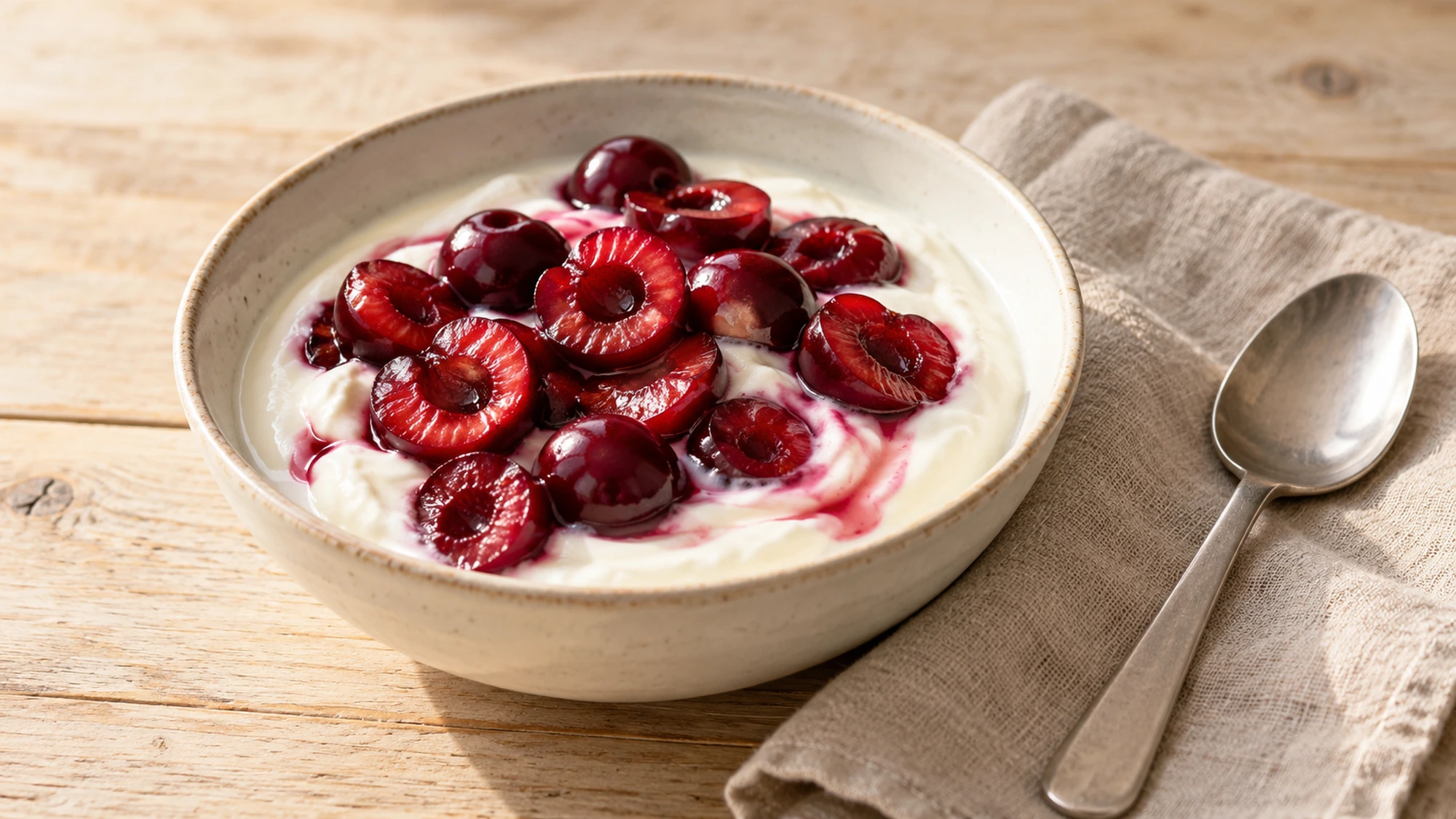
- Pitted cherries with plain yogurt and a spoonful of your usual cereal.
- Chopped cherries stirred into prepared oatmeal.
- Pitted cherries alongside other fruit for a varied snack plate.
- Frozen cherries used according to their package instructions in a prepared breakfast or dessert.
For handling, follow FDA produce guidance: rinse fresh produce under running water rather than washing it with soap, and discard rotten fruit. Remove pits and check prepared pieces before serving. If a package has specific storage or preparation instructions, follow those instead of assuming all cherry products keep the same way.
Bottom Line
Cherries can be a pleasant, practical fruit choice, but they are not a proven shortcut to better sleep or lower blood pressure. Enjoy the form that fits your meals, compare prepared-product labels, and separate research on concentrates from everyday advice about whole fruit. A bowl of cherries can be enough without asking it to perform miracles.
Sources
- Human cherry research review
- Cherry products and blood pressure: meta-analysis
- Tart cherry juice trial in female field-hockey players
- FDA: selecting and serving produce safely

Emily is Spoonvale’s recipe-writing persona, bringing a warm, practical voice to everyday cooking. Her focus is simple: approachable meals, comforting flavors, and clear instructions that help make time in the kitchen more enjoyable.