
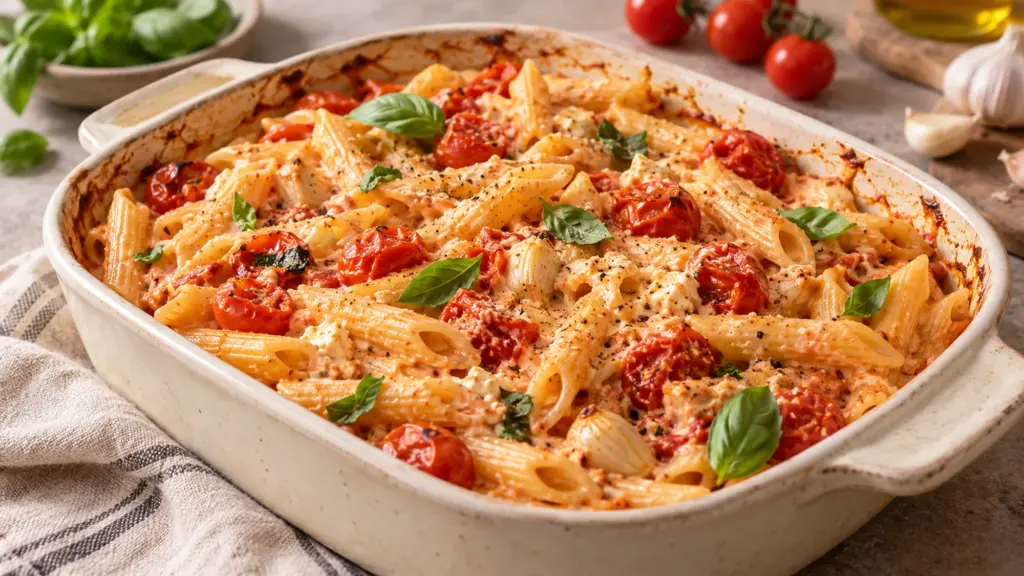
A block of feta and a dish of tomatoes do not look much like pasta sauce at the start. Give them oven heat and the tomatoes release their juices while the cheese softens. Baked feta pasta brings the two together into a tangy coating that clings to short pasta without adding cream.
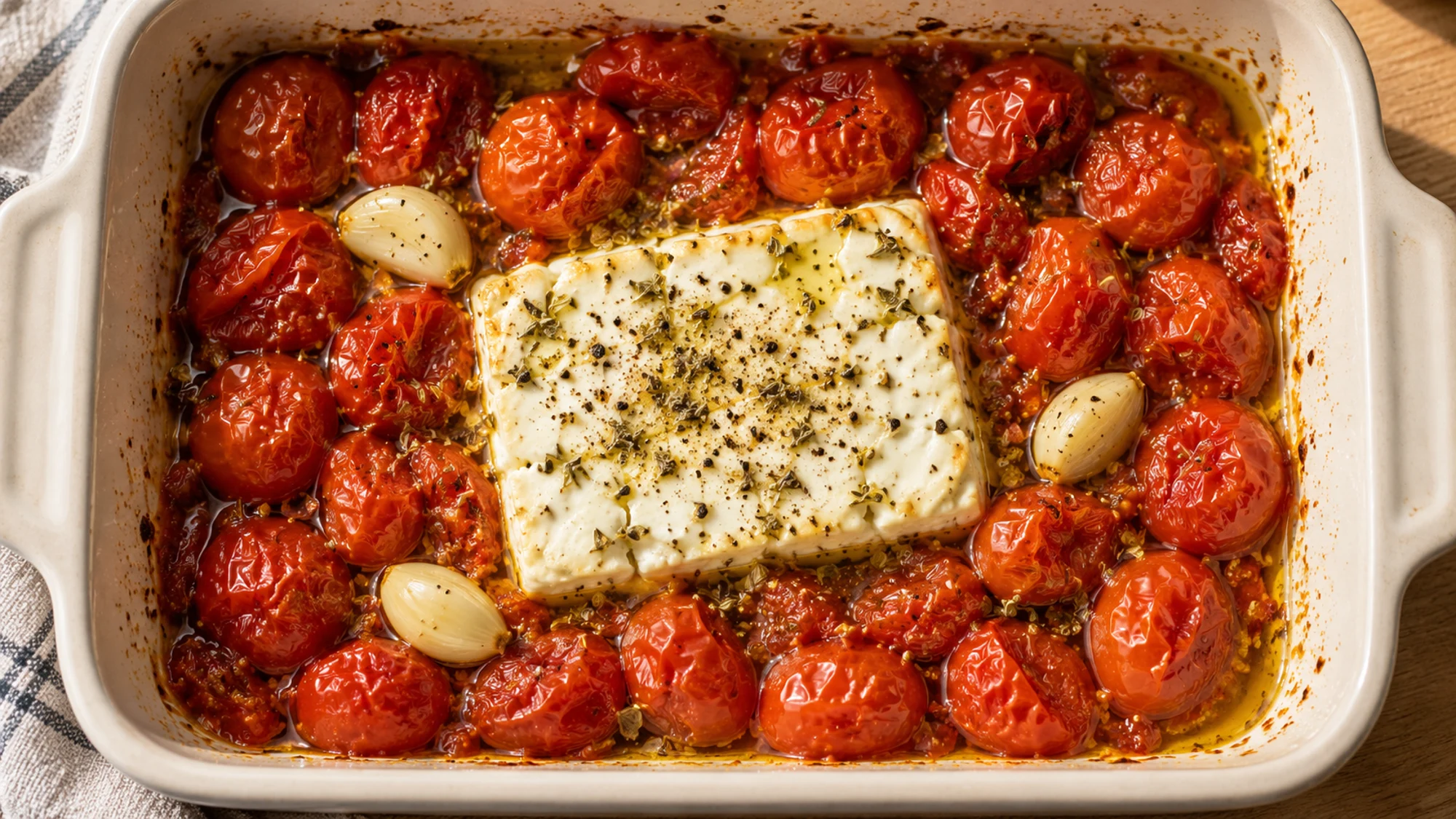
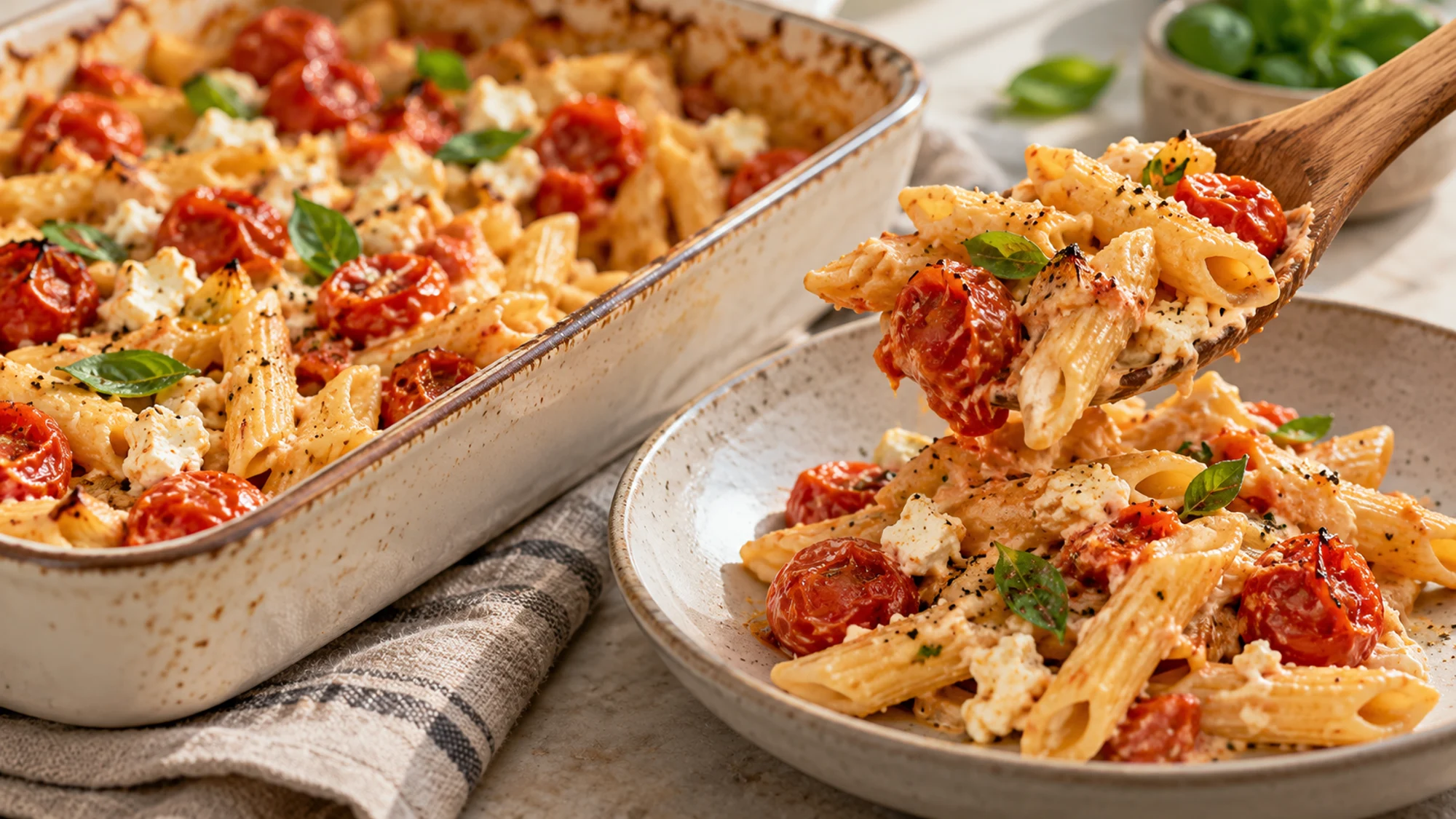
Roast the feta, cherry tomatoes and garlic until the tomatoes burst and the cheese softens, then mash them together and fold in cooked penne. Reserve some pasta water before draining: a small splash helps the sauce coat each piece rather than sit in heavy clumps.
I’d use a whole block of feta here because it is easy to nestle among the tomatoes and mash while warm. This version makes four portions with plenty of sauce; the recipe card holds the complete quantities and method.
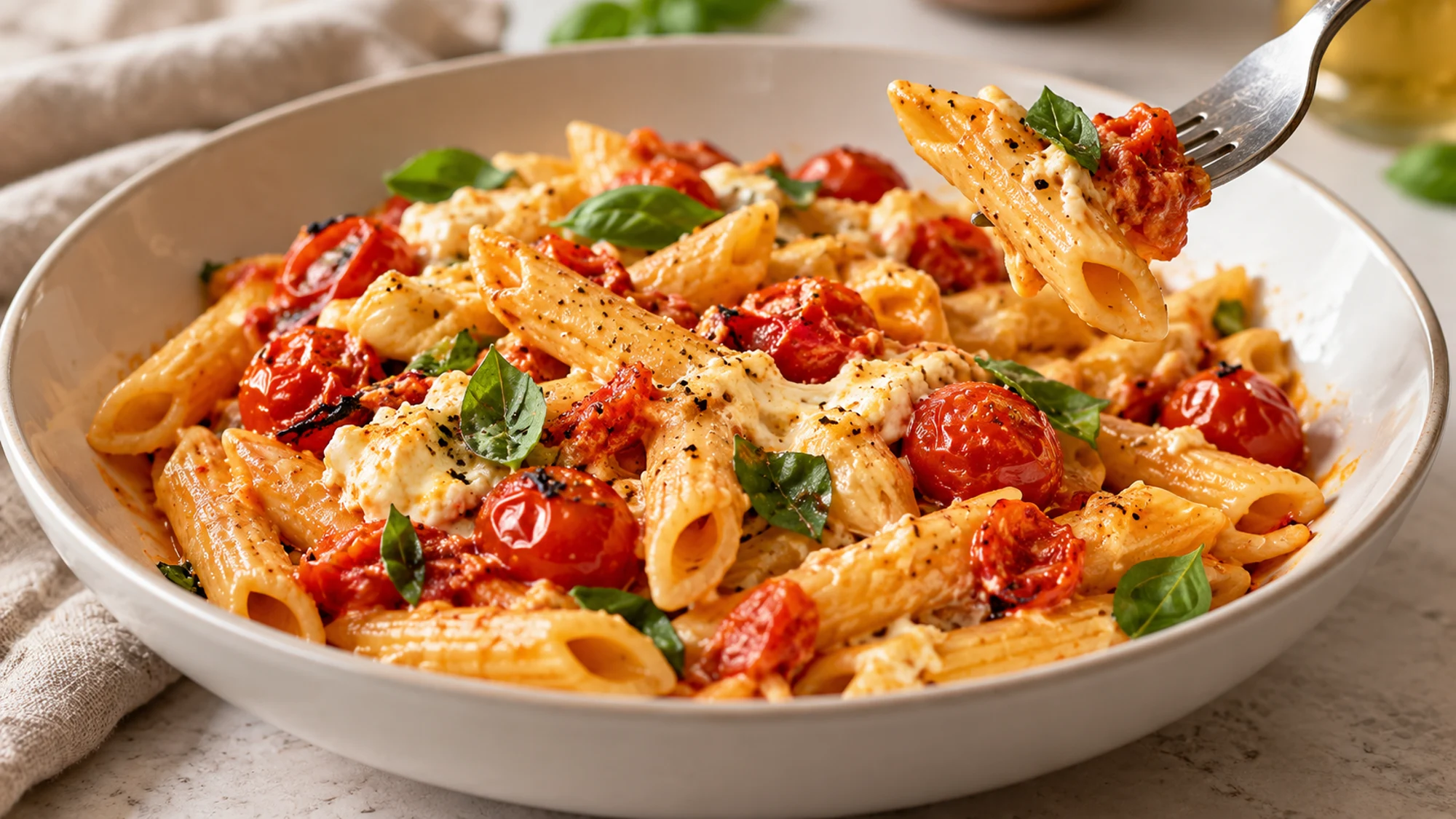
Serving Suggestions for Baked Feta Pasta
Serve the pasta promptly, while the sauce is loose and the basil still smells fresh. It thickens as it stands, so keep a little reserved pasta water nearby until everyone has a bowl. Stir that water in gradually; you are aiming for a coating, not a shallow soup.
The salty, tangy sauce is already doing plenty of work. I prefer a crisp vegetable side over another rich accompaniment. For a different sort of dinner, the same sweet-savory contrast appears in our apricot chicken with Dijon glaze.
- Add crunch: a simple cucumber or green salad contrasts with the soft roasted tomatoes.
- Add vegetables: serve steamed broccoli or green beans alongside, keeping their seasoning light.
- For smaller appetites: divide into smaller bowls and offer an extra vegetable side; the card’s yield remains four portions.
- Reheat gently: add a splash of water, cover and heat thoroughly. Stir so the center warms evenly instead of letting the edges dry out.
Keep the sides simple and finish the sauce just before serving for the most appealing texture.
Variations and Ingredient Choices
Changing the pasta shape is straightforward; changing the cheese changes the dish more substantially. Short shapes with ridges or hollow centers catch the sauce well. Check the package cooking time rather than applying penne’s timing to every substitute.
Use this reference to choose an adjustment without expecting an identical result. I’d keep the tomato quantity generous: their juices balance the feta’s saltiness and provide the liquid needed to bring the sauce together.
| Choice | What changes | Practical adjustment |
|---|---|---|
| Penne or rigatoni | Hollow shapes catch sauce | Cook to the package’s al dente cue |
| Whole-wheat pasta | Firmer texture and nuttier flavor | Expect a different cooking time |
| Crumbled feta | Smaller pieces can dry at edges | Gather in the center and watch closely |
| Extra basil | Fresher herbal finish | Fold in after roasting |
- Use cherry or grape tomatoes of similar size so they soften at a similar pace.
- Mash the hot cheese before the dish cools; feta softens without melting into a stretchy cheese sauce.
- If the sauce tastes too sharp, fold in the pasta and reassess before adding anything sweet.
- Refrigerate leftovers promptly within two hours, or one hour above 90°F. Use within three to four days and reheat to 165°F.
Adjust the sauce with reserved water first; changing the cheese or adding cream should be a deliberate flavor choice.
Health Benefits and Practical Balance
Feta supplies protein and calcium, while pasta provides carbohydrate and the tomatoes add vegetables. The cheese also contributes sodium and saturated fat. Portion size, the feta brand and what you serve alongside all matter more than a broad healthy label.
The Nutrition Facts label guide helps compare sodium and serving sizes between cheeses. For practical storage, use the cold-food storage reference alongside prompt refrigeration and thorough reheating.
- Choose a feta you enjoy, then check its sodium information before adding more salt to the sauce.
- Use a labeled wheat-free pasta if needed, while checking all ingredient labels and cooking instructions.
- Feta contains milk; this recipe is not suitable for someone avoiding dairy without a substantial recipe change.
Enjoy the creamy texture while keeping the cheese portion and the rest of the plate in view.
Bottom Line
The useful trick in baked feta pasta is bringing the roasted ingredients together while they are hot. Let the tomatoes supply their juices, mash the softened feta thoroughly and keep some pasta water for the final stir. With fresh basil and a crisp side, the result is a practical four-serving dinner built around a short list of ingredients.
Baked Feta Pasta Recipe

Ingredients
- 400 g cherry tomatoes washed, all stems removed
- 200 g feta cheese one block, drained
- 3 tbsp olive oil about 40.5 g
- 3 cloves garlic peeled
- 0.5 tsp dried oregano
- 0.25 tsp black pepper
- 250 g penne pasta dry
- 3 L water for cooking pasta; reserve 1/2 cup before draining
- 1 tsp salt for pasta water
- 10 g fresh basil leaves torn
Equipment
- 9-by-13-inch baking dish
- Large pot
- Colander
- Wooden spoon
- Measuring cup
- kitchen scale
Instructions
- Preheat the oven to 400°F (200°C). Arrange the stemmed cherry tomatoes and peeled garlic in a 9-by-13-inch baking dish, coat with the olive oil and nestle the feta in the center. Sprinkle with oregano and pepper.
- Roast for 30–35 minutes, until the tomatoes have burst and the feta is soft with lightly golden edges. Ovens vary; the texture cues matter more than an exact minute.
- Meanwhile, bring the water and salt to a boil in a large pot. Cook the penne to the package’s al dente instructions. Reserve 1/2 cup of cooking water, then drain.
- Carefully mash the hot feta, tomatoes and garlic together in the baking dish. Fold in the drained penne. Add reserved cooking water a little at a time until the sauce coats the pasta.
- Fold in the basil, divide among four bowls and serve promptly. Taste before adding any extra salt because feta is already salty.
Nutrition
Video
Notes
Tried this recipe?
Let us know how it turned out!Emily is Spoonvale’s recipe-writing persona, bringing a warm, practical voice to everyday cooking. Her focus is simple: approachable meals, comforting flavors, and clear instructions that help make time in the kitchen more enjoyable.