
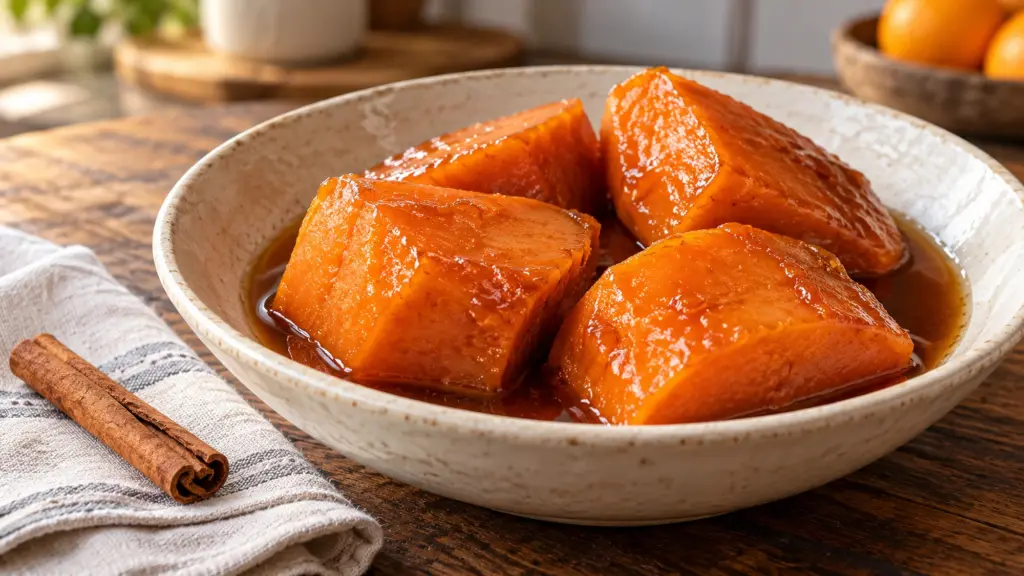
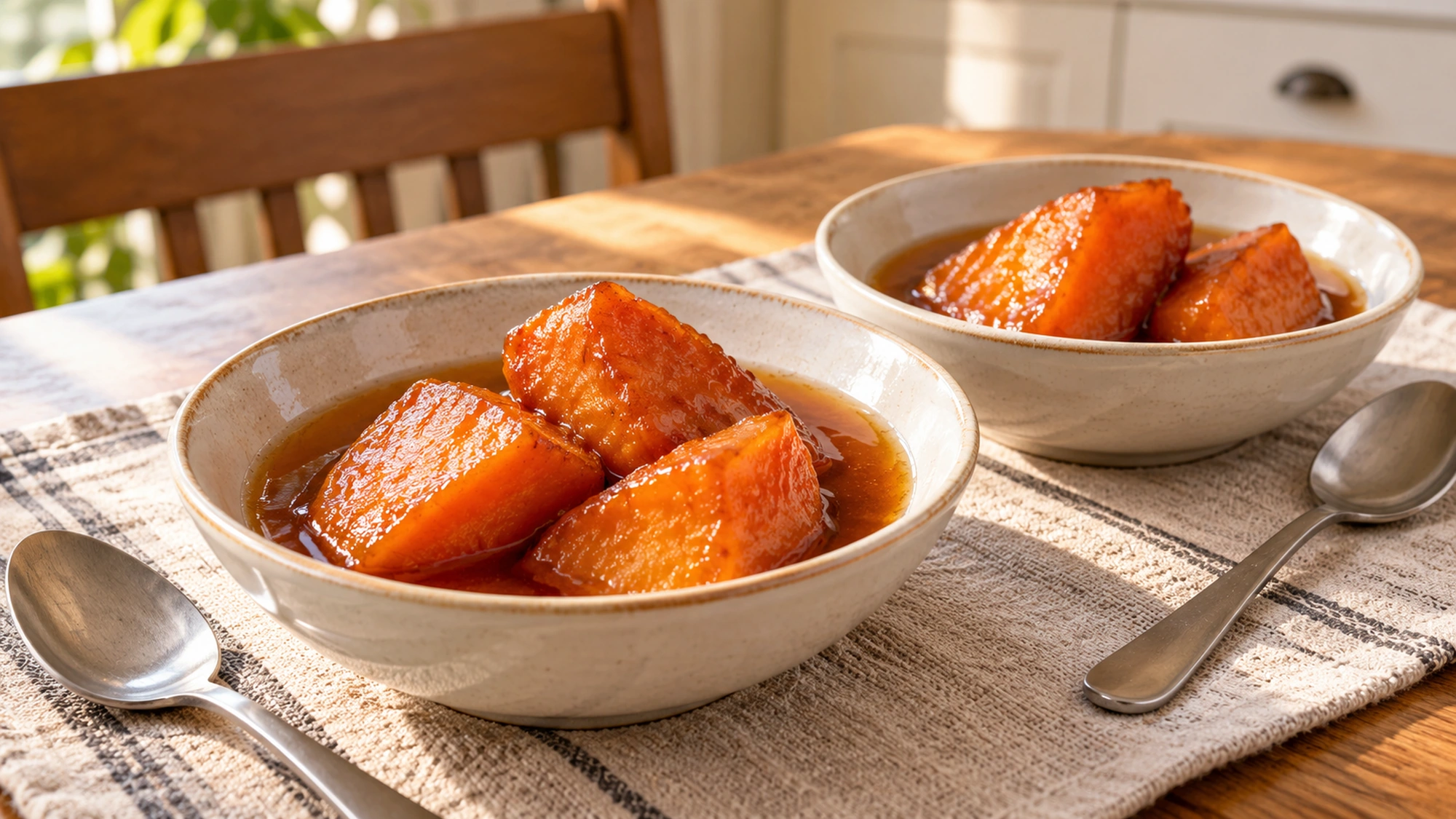
The appeal of camotes en dulce is right there in the bowl: soft orange sweet potato, a little amber syrup, and the warm scent of canela. Piloncillo brings a deep cane-sugar flavor that gives this Mexican dessert its character. A few simple ingredients make a generous finish to a meal without a separate cake batter or pastry dough.
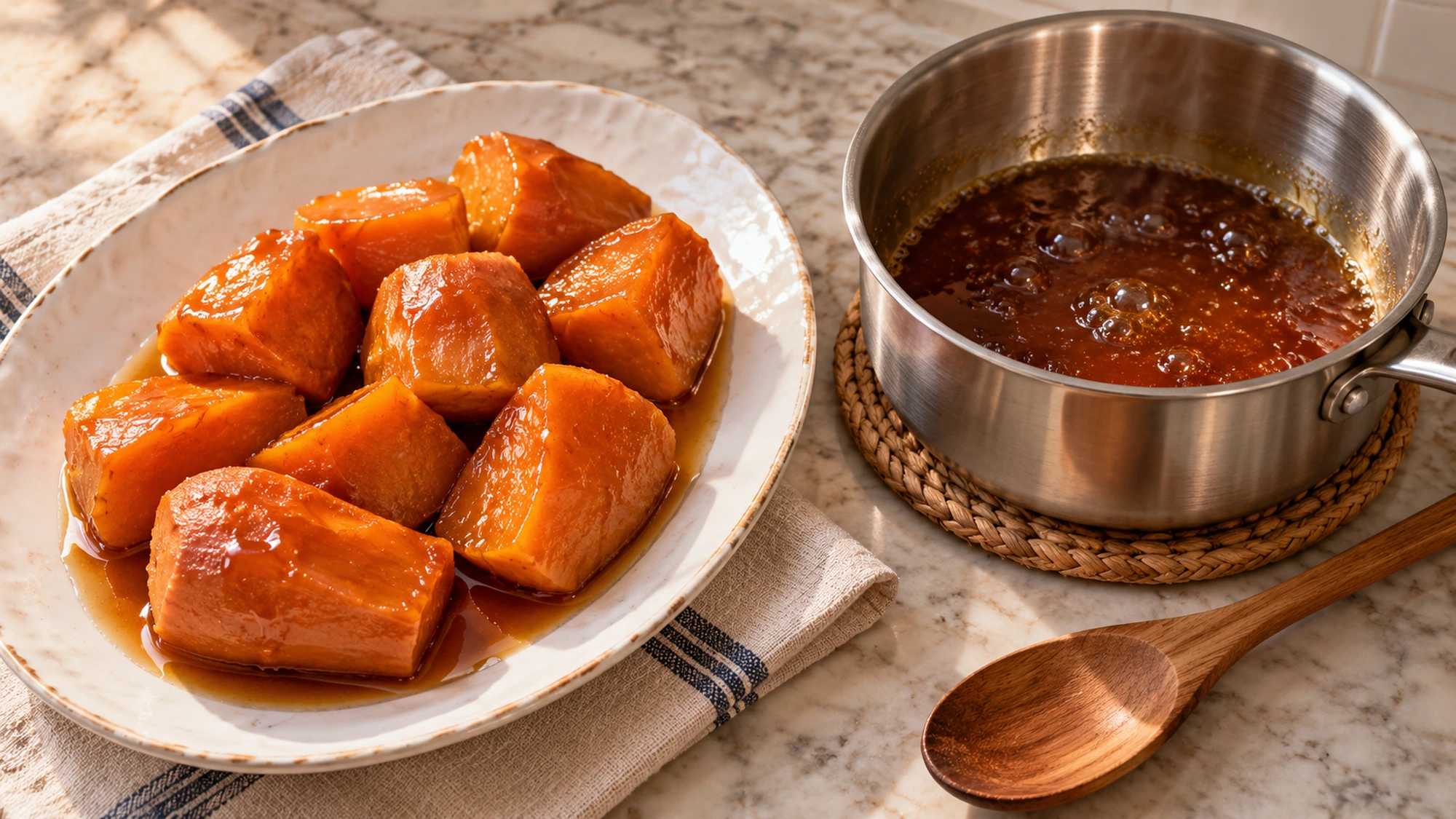
The useful decision is when to stop cooking the sweet potatoes and give the syrup its own attention. Once the pieces are tender, lifting them out lets the liquid thicken without repeated stirring against their soft edges. The goal is a spoonable coating with distinct pieces underneath, so judge the syrup as it cools as well as when it bubbles.
Serving Suggestions for Camotes en Dulce
Choose small, shallow bowls so a spoon can reach both the sweet potato and its syrup. Let the dessert stand briefly before serving; hot sugar syrup can burn even when the food looks ready to eat. A modest spoonful over each portion gives you room to notice the canela and orange.
If I were serving this after a large meal, I’d keep the bowls small and offer unsweetened coffee alongside them. The dessert already has a clear flavor of its own. Extra syrup can go in a small jug for anyone who wants a little more.
- For a simple dessert: Divide the pieces among six bowls; atole de pinole makes an alternate warm drink.
- For a breakfast addition: Put a small portion beside plain oatmeal, letting the syrup provide the sweetness.
- For a shared table: Serve from a shallow dish with a broad spoon that supports the tender pieces.
Pack leftovers with their syrup so the surfaces stay coated. Follow USDA leftover guidance: refrigerate within two hours, or one hour above 90°F, and use within 3–4 days. Divide the dessert into shallow covered containers instead of leaving a deep pot on the counter.
Camotes en Dulce Variations That Respect the Syrup
Piloncillo is worth seeking out for its particular flavor. Cones differ in size, so weight gives a clearer starting point than counting them. Chop it carefully into manageable pieces, and check the package for the ingredient list. Dark brown sugar can stand in when necessary, but the flavor will shift.
Keep the spice changes small. If I wanted the canela to lead more clearly, I’d leave out the orange peel before adding another spice. This version uses a cinnamon stick and broad strips of peel that can be removed cleanly, giving the finished bowl a smooth syrup.
| What you notice | A useful response |
|---|---|
| Sweet potato resists a thin knife | Continue the gentle covered simmer |
| Pieces are tender but syrup looks thin | Lift them out before reducing the liquid |
| Syrup looks thick while still boiling | Stop and check a little on a cool spoon |
| Pieces begin breaking at the edges | Handle them less and use a broad slotted spoon |
- Use similarly sized pieces so the smaller ones do not fall apart first.
- Keep thick white pith off the orange peel to limit bitterness.
- A vigorous boil can knock tender pieces together; gentle movement is easier to control.
Use the syrup’s cooled texture to decide when to stop reducing it.
Health Benefits and the Added Sugar
Orange-fleshed sweet potatoes provide beta-carotene, which the body can convert to vitamin A. The NIH explanation of vitamin A and carotenoids helps distinguish plant sources from preformed vitamin A. Sweet potatoes also contribute fiber; those qualities belong to the vegetable, while the syrup adds sweetness and energy.
Piloncillo contributes added sugar. Its color and cane flavor are reasons to choose it for this dessert, and the FDA’s added-sugar guidance explains how sweeteners fit into label comparisons. Portion size and the amount of syrup served both affect the finished bowl.
- Enjoy the dessert as part of a varied meal.
- Offer extra syrup separately so each person can choose.
- Check any packaged substitute rather than assuming its ingredients are identical.
Keep the portion and syrup in view when planning the rest of the meal.
Bottom Line
Camotes en dulce work best when the sweet potatoes and syrup receive separate attention at the right moment. Keep the pieces large enough to handle gently, check tenderness with a knife, and allow the syrup a little room to thicken as it cools. The reward is a simple bowl with soft centers, a glossy coating, and a clear canela aroma.
Camotes en Dulce Recipe

Ingredients
- 900 g orange-fleshed sweet potatoes peeled and trimmed weight, about 2 lb prepared; buy approximately 2.75–3 lb whole
- 250 g piloncillo chopped or crumbled; weigh rather than counting cones
- 720 mL water 3 cups; plus up to 60 mL (1/4 cup) additional water only if needed
- 1 3-inch stick Mexican canela Ceylon cinnamon
- 2 wide strips orange peel about 1 by 2 inches each, from 1/4 medium orange; avoid thick white pith
- 1/8 teaspoon fine salt about 0.75 g
Equipment
- 4-quart wide saucepan with lid
- Kitchen scale; measuring jug and spoons
- Vegetable peeler; knife and cutting board
- Wooden spoon; broad slotted spoon
- Shallow platter and serving bowls
- Instant-read thermometer for reheating
Instructions
- Scrub the sweet potatoes under running water before peeling. Peel and trim, then weigh 900 g of prepared sweet potato. Cut into similarly sized 2-inch (5 cm) pieces so they cook evenly.
- Combine the 720 mL water, piloncillo, canela, orange peel and salt in the saucepan. Bring to a gentle simmer over medium heat, stirring for about 8–10 minutes, until the piloncillo has dissolved. Allow longer for harder pieces rather than leaving lumps in the syrup.
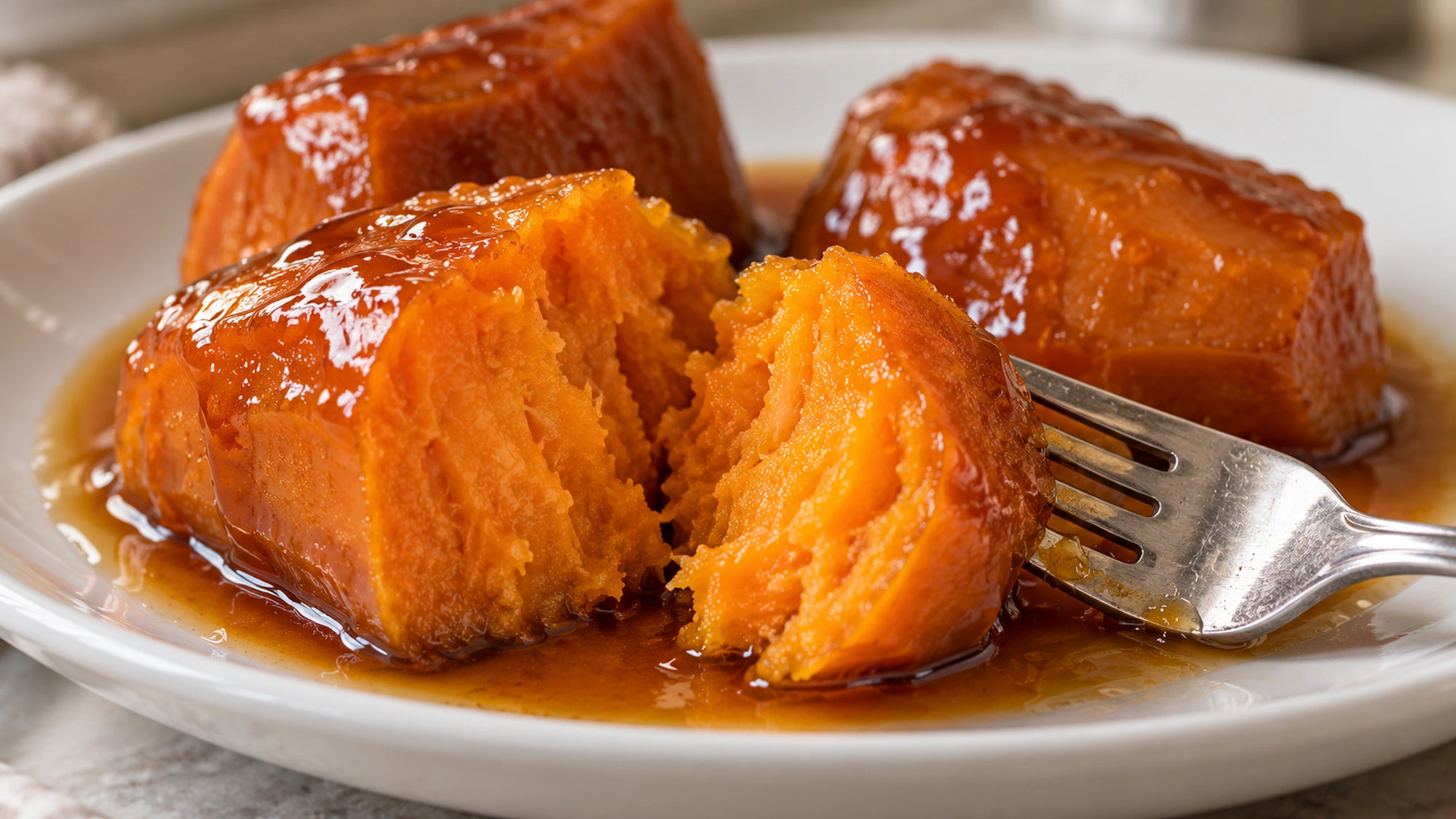
- Carefully add the sweet potatoes, arranging them in a snug layer or two. The liquid should come partway up the pieces. Cover and simmer gently over low to medium-low heat for about 30–40 minutes, checking from 25 minutes. Turn the pieces carefully once if needed; avoid vigorous stirring. They are ready when a thin knife enters the center with little resistance. If the liquid becomes sticky before the centers are tender, lower the heat and add a little of the optional extra water, up to 60 mL total.
- Use the broad slotted spoon to lift the tender pieces onto the platter. Remove and discard the canela and orange peel. Simmer the uncovered liquid over medium heat for about 8–12 minutes, only until it lightly coats a spoon. Check a small amount on a cool spoon; it will thicken further as it cools. Stop before it becomes a sticky candy-like caramel.
- Take the pan off the heat. Return the sweet potatoes carefully and spoon syrup over them without breaking the pieces. Stand for 10 minutes, then divide among 6 dessert bowls and spoon over syrup. Let the syrup cool to a comfortable serving temperature before tasting.
- Refrigerate in shallow covered containers within 2 hours, or within 1 hour above 90°F. Keep at 40°F or below and use within 3–4 days. Reheat leftovers to 165°F, handling the pieces gently.
Video
Notes
Tried this recipe?
Let us know how it turned out!Emily is Spoonvale’s recipe-writing persona, bringing a warm, practical voice to everyday cooking. Her focus is simple: approachable meals, comforting flavors, and clear instructions that help make time in the kitchen more enjoyable.