
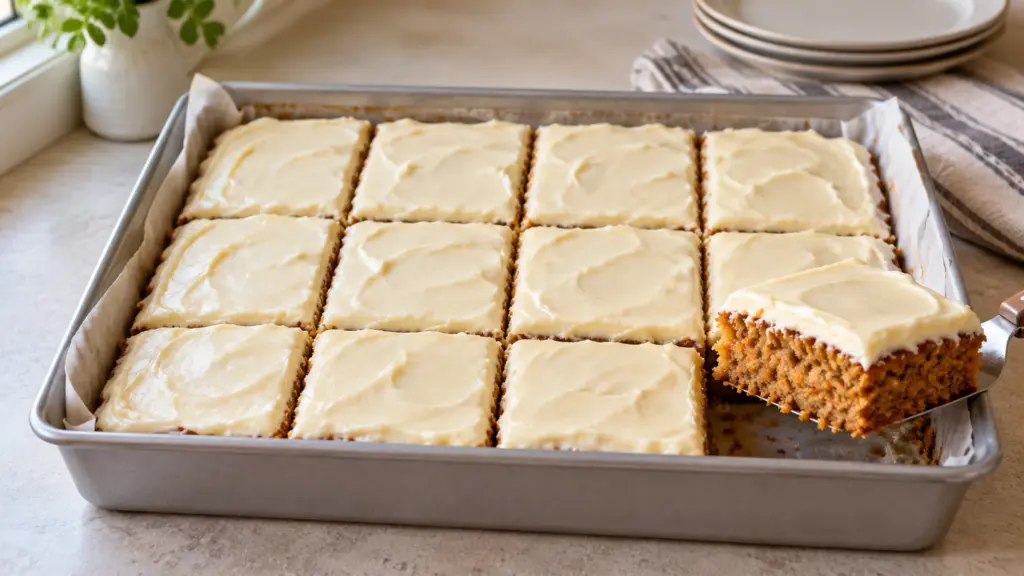
Carrot cake can be generous without becoming a stacking project. This version bakes in one rectangular pan, with finely grated carrots, cinnamon, and brown sugar running through the crumb. A thin layer of cream cheese frosting brings a tangy finish while leaving plenty of cake in each forkful.
The useful details are small: grate fresh carrots finely, fold the batter gently, and let the cake cool completely before frosting. Those choices help you aim for tender squares with a frosting layer that stays on top.
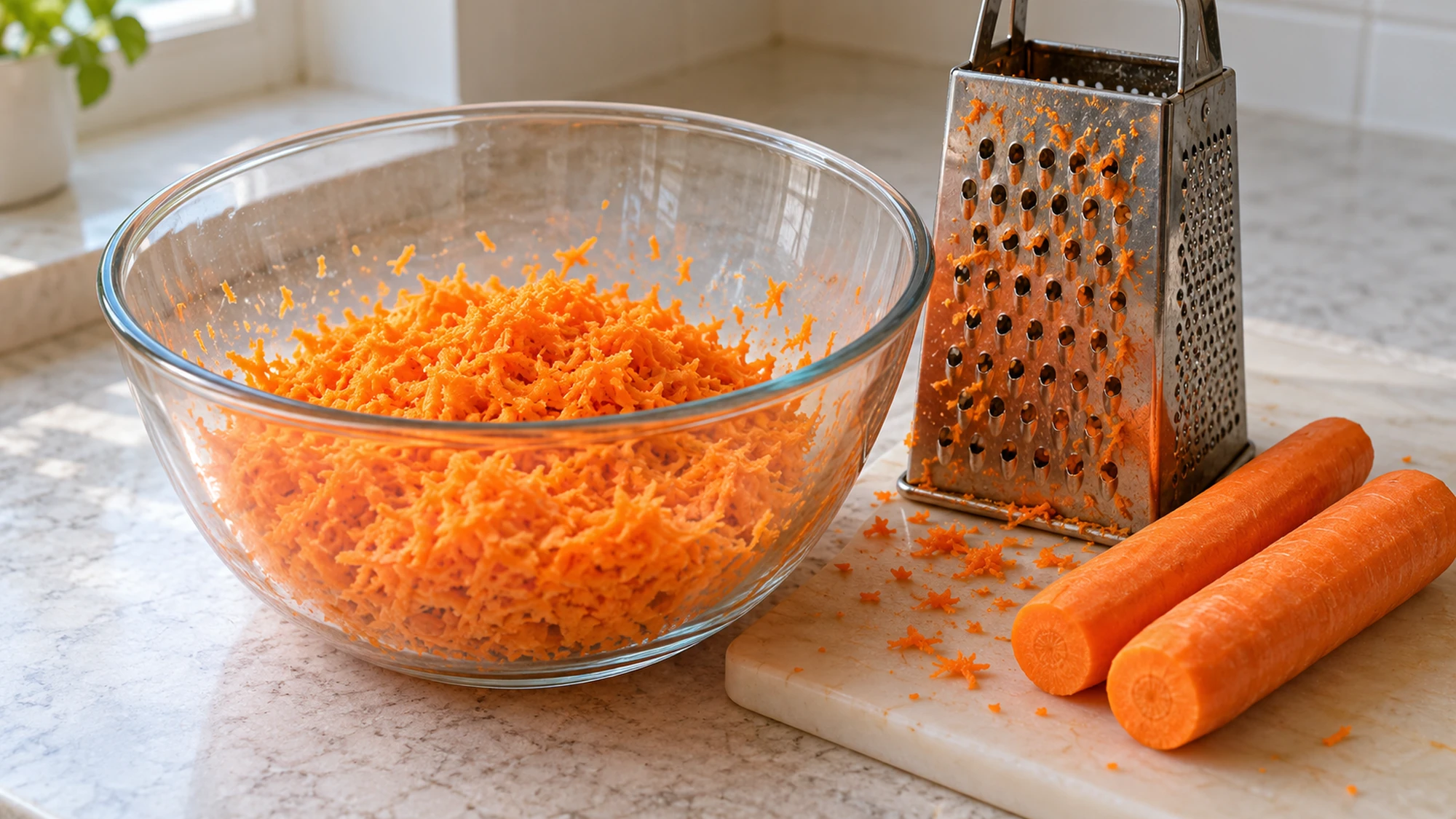
Freshly grated carrots matter here because thick, dry packaged shreds can remain noticeable in the crumb. Weigh the carrots after trimming and grating, and keep their natural moisture rather than squeezing them dry. If I wanted an even-textured slice, I’d choose the fine holes of a box grater and take the extra few minutes.
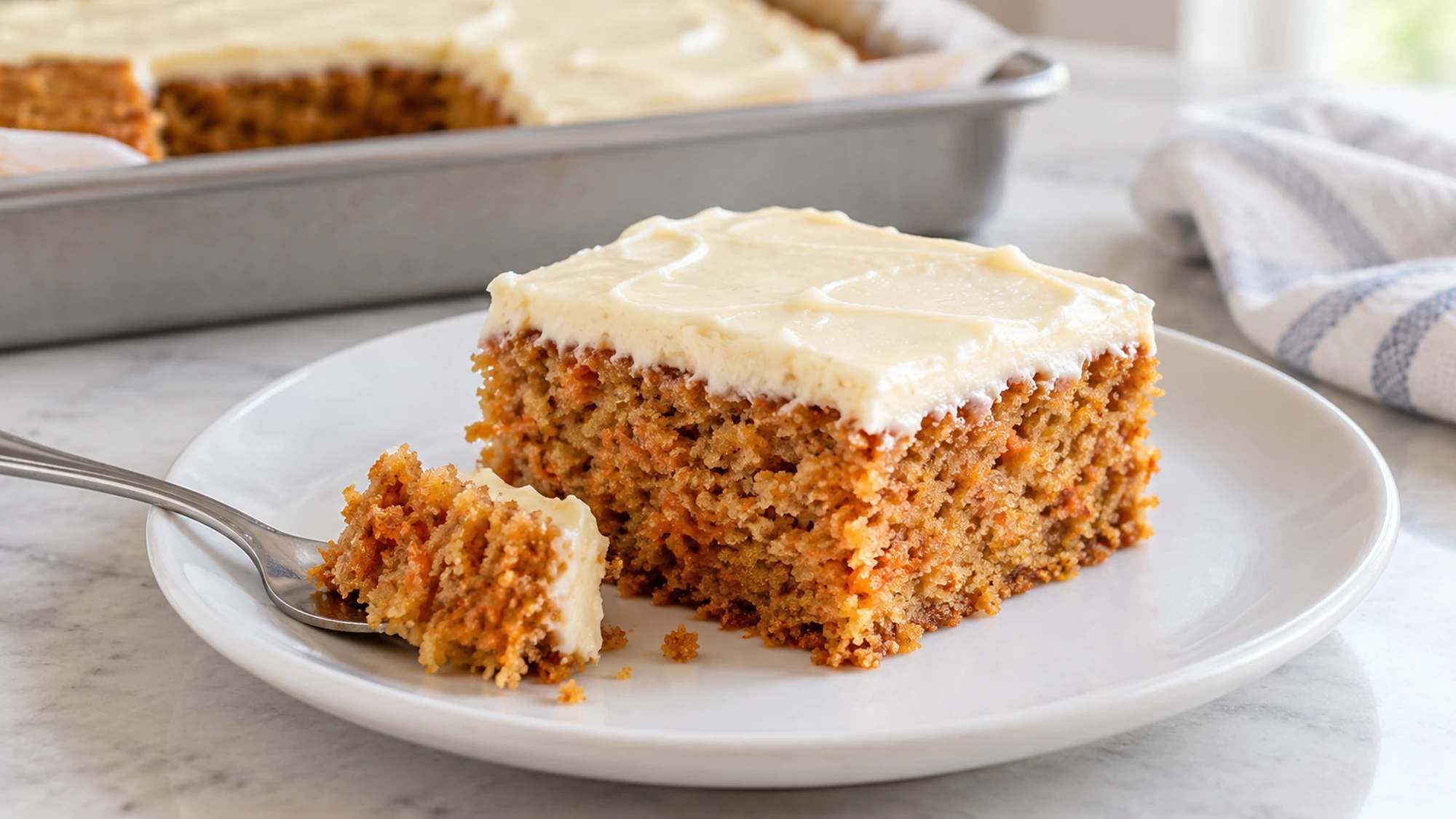
Serving Carrot Cake in Twelve Squares
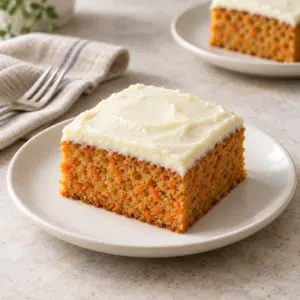
Cut the cooled, frosted cake into twelve squares, using four columns and three rows. A clean knife wiped between cuts keeps the edges tidier, especially once the frosting has chilled. Serve the squares on small plates with forks; the soft crumb is easier to manage that way than as a hand-held snack.
For a casual dessert table, I’d keep the frosting thin and let the cinnamon and carrot remain the main flavors. Coffee or plain tea works alongside the cake without adding another sweet topping. If you are planning another pan dessert for a different occasion, Spoonvale’s apple fritter cake offers another baking option.
- Put out a few squares at a time and replenish from the refrigerator.
- Pack individual portions in rigid covered containers so the frosting stays intact.
- Keep the remaining cake covered; exposed cut edges dry more readily.
Because the frosting contains cream cheese, keep the cake at 40°F or below. Follow the FDA’s guidance for perishable food: limit time out of refrigeration to two hours, or one hour above 90°F.
Carrot Cake Variations That Keep the Crumb Tender
The base recipe keeps the flavor focused, with cinnamon as its only spice and no chunky add-ins. That makes it easier to appreciate the fine carrot texture. If I were changing the flavor, I’d make one adjustment at a time so the result stayed close to the cake described here.
| Change | Practical option | What to expect |
|---|---|---|
| Different neutral oil | Use the same volume of sunflower oil | A similar mild flavor |
| Deeper sugar flavor | Replace light brown sugar with equal-weight dark brown sugar | A stronger molasses note |
| Gentler cinnamon | Use half the listed cinnamon | A milder spice background |
Keep the flour, eggs, carrots, and baking powder at the listed amounts when making those changes. Reducing the sugar or replacing eggs changes more than sweetness or flavor; those ingredients also affect the cake’s structure and moisture. A smaller or deeper pan changes the baking pattern, so use the specified pan for the timing given.
- Let the cream cheese and butter soften only until they yield to light pressure. Melted butter or very warm cheese makes a softer frosting that is harder to spread neatly.
- Scrape the bowl while mixing the frosting so small cream cheese lumps are not hidden underneath a smooth-looking surface.
- If the cake sticks to the knife, chill it briefly and wipe the blade between cuts rather than pressing harder.
For the closest match to this recipe, keep the pan size and main batter proportions steady. Change an accent rather than several structural ingredients at once.
Health Benefits
The carrots bring color, moisture, and a vegetable ingredient, but this remains a frosted dessert containing added sugar and fat. A twelve-square cutting pattern gives a clear serving reference without pretending that every appetite or meal is the same. The recipe contains wheat, eggs, and dairy, so check ingredient labels and guests’ needs before serving.
Food handling deserves attention before the cake reaches the oven. The FDA advises against tasting raw flour, dough, or batter, including mixtures containing raw eggs. Wash the grater, bowls, utensils, and work surface after preparation, and use clean equipment for the frosting.
Cream cheese frosting needs refrigeration. Cool the unfrosted cake fully, frost it with clean tools, and refrigerate the finished cake rather than treating the sugar in the frosting as a preservation method.
Bottom Line
This carrot cake keeps the work in one pan and the finish simple. Look for a center that springs back lightly and a tester carrying a few moist crumbs rather than wet batter. Give the cooling stage enough time; a cake that still feels warm is not ready for cream cheese frosting.
Fine carrots, gentle folding, complete cooling, and a thin frosting layer are the details to keep. The card below gives the quantities, timing, and complete method for twelve squares.
Carrot Cake Recipe
Ingredients
- 300 g carrots freshly finely grated; weigh after trimming and grating, without squeezing dry
- 250 g all-purpose flour about 2 cups, spooned and leveled
- 300 g packed light brown sugar about 1½ cups
- 180 ml canola oil ¾ cup
- 3 large eggs about 150 g without shells
- 2.5 tsp double-acting baking powder 10 g
- 2 tsp ground cinnamon 5 g
- 0.5 tsp fine salt 3 g
- 1 tsp vanilla extract 5 ml; reserve another 1 tsp for the frosting
- 226 g full-fat brick cream cheese one 8-oz block, softened just until pliable
- 56 g unsalted butter 4 tbsp, softened but not melted
- 180 g powdered sugar about 1½ cups; sift if lumpy
- 1 tsp vanilla extract 5 ml; total vanilla for cake and frosting is 2 tsp (10 ml)
Equipment
- 9-by-13-inch light metal baking pan
- Oven-safe parchment paper
- Box grater with fine holes
- Kitchen scale, measuring cups, and measuring spoons
- Two mixing bowls
- Whisk
- Silicone spatula
- Hand mixer with beaters
- Toothpick or cake tester
- Wire cooling rack
- Offset frosting spatula
- Knife
Instructions
- Heat the oven to 350°F (175°C). Line a 9-by-13-inch light metal pan with parchment paper, leaving an overhang on the long sides.
- Finely grate the fresh carrots and weigh out 300 g after trimming and grating. Do not squeeze out their moisture. In one mixing bowl, whisk the flour, baking powder, cinnamon, and salt until evenly combined.
- In the second bowl, whisk the eggs, light brown sugar, canola oil, and 1 teaspoon vanilla until smooth and well combined. Fold in the dry ingredients with a silicone spatula just until no dry flour remains, then gently fold in the grated carrots. Stop mixing when the carrots are evenly distributed.
- Spread the batter evenly in the prepared pan. Bake on the center rack for 30–40 minutes, starting to check at 30 minutes. The center should spring back lightly when gently touched, and a tester inserted into the center should carry a few moist crumbs without wet batter. If wet batter remains, bake a little longer and check again.
- Set the pan on a wire rack and let the cake cool completely, about 90 minutes. Allow more time if any warmth remains. During the final 20–30 minutes of cooling, take the cream cheese and butter out of the refrigerator so they soften just until pliable; do not melt them.
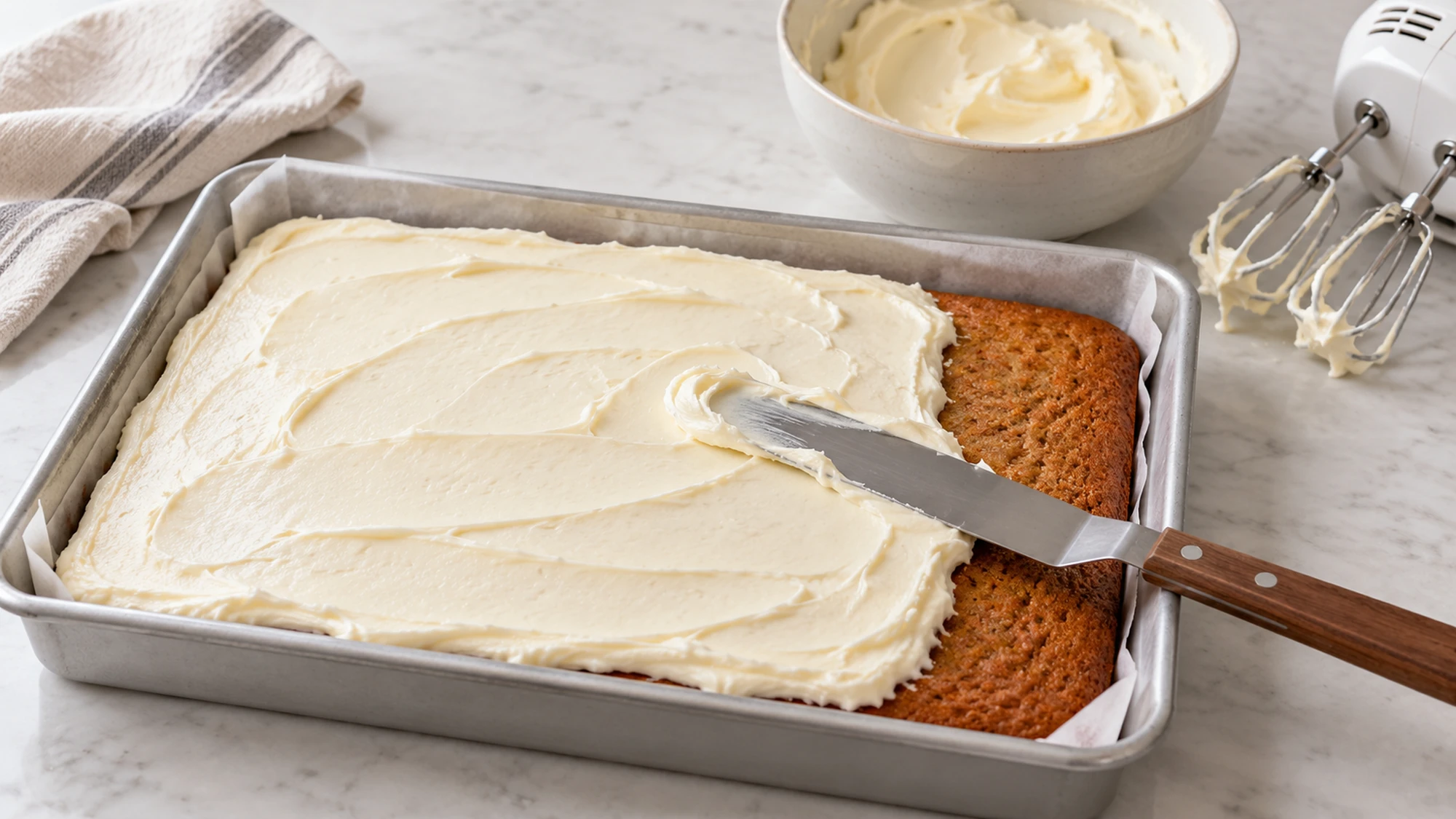
- Once the cake is completely cool, beat the cream cheese and butter together with the hand mixer on medium speed until smooth, about 1 minute. Scrape the bowl. Gradually beat in the powdered sugar on low speed, then add the remaining 1 teaspoon vanilla. Beat briefly until smooth and spreadable, scraping the bowl as needed.
- Spread all the frosting over the cooled cake in a thin, even layer with an offset spatula. Cut into twelve squares in four columns and three rows. Keep the frosted cake covered and refrigerated at 40°F or below; take out only the portions being served.
Video
Notes
Tried this recipe?
Let us know how it turned out!Emily is Spoonvale’s recipe-writing persona, bringing a warm, practical voice to everyday cooking. Her focus is simple: approachable meals, comforting flavors, and clear instructions that help make time in the kitchen more enjoyable.