
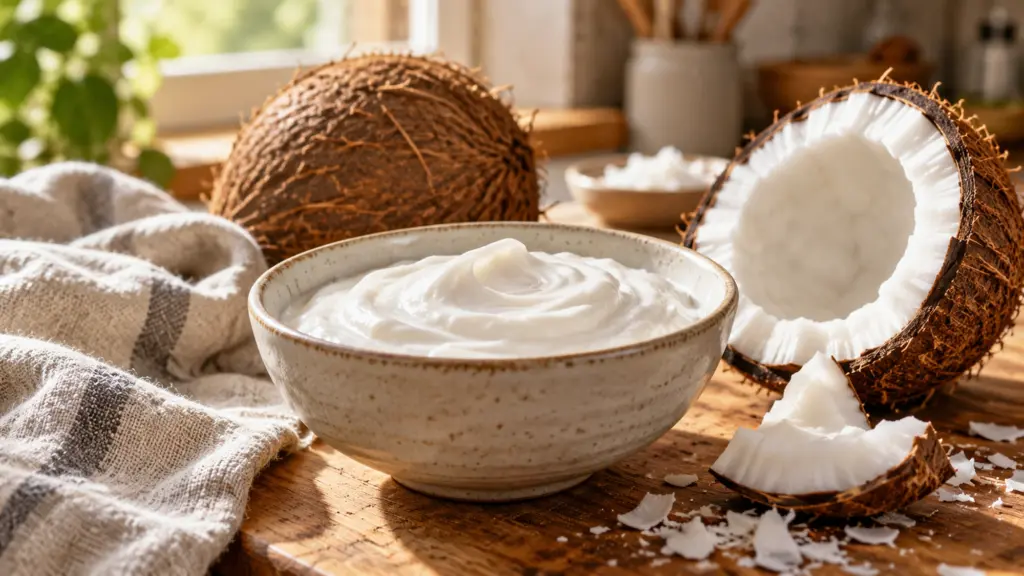
A recipe asks for cream of coconut, but the can in your hand says coconut cream. The words look close enough to swap, until the finished drink or dessert turns out much less sweet than expected. This is one pantry distinction worth catching before opening the can.
Cream of coconut is generally a sweetened coconut product used in drinks and desserts. It is not interchangeable with unsweetened coconut cream or coconut milk simply because the names share the same words.
I’d check the exact ingredient name before comparing brands or prices. A moment with the label is easier than trying to rebalance a finished dessert after the wrong coconut product has gone into the bowl.

What Is Cream of Coconut?
A useful example is GOYA’s cream of coconut, whose listed ingredients include coconut milk and sugar. The company describes it as an ingredient for drinks and desserts. That sweetened formulation explains why it plays a different role from a plain coconut product.
Do not assume every brand uses the same proportions or supporting ingredients. Texture, sweetness and packaging can vary, so the product’s own ingredient list is more useful than a generic picture of a white liquid.
- Look for the complete name, including the word “of.”
- Check whether sugar or another sweetener is included.
- Read the recipe’s ingredient notes before choosing a substitute.
- Treat unfamiliar flavors or reduced-sugar versions as separate products, not automatic equivalents.
Cream of coconut brings sweetness as well as coconut flavor.
Cream of Coconut, Coconut Cream and Coconut Milk
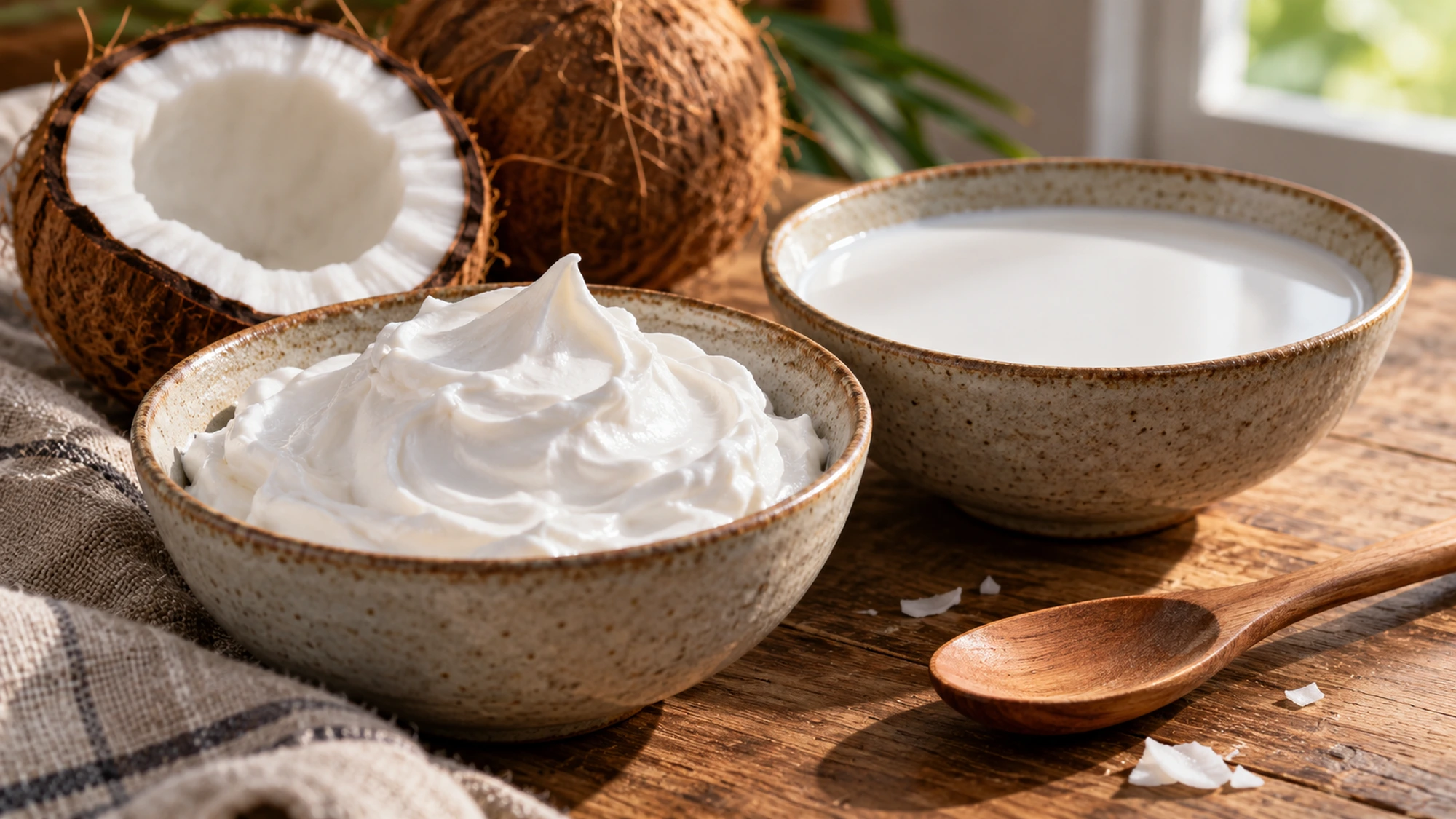
GOYA describes its coconut milk as unsweetened, unlike its cream of coconut. Meanwhile, Thai Kitchen’s unsweetened coconut cream is marketed as thicker than coconut milk. These are concrete product examples, not proof that every similarly named can has an identical formula.
Use this comparison to identify the job a product is meant to do. The label remains the final check, particularly when a recipe depends on a precise texture.
| Product | Typical role | Before substituting |
|---|---|---|
| Cream of coconut | Sweetened ingredient for drinks and desserts | Account for sweetness and consistency |
| Unsweetened coconut cream | Rich coconut ingredient without added sweetening | Check the recipe’s sugar and liquid balance |
| Canned coconut milk | Coconut flavor in sweet or savory dishes | Check thickness and the exact formula |
| Coconut beverage | A formulated drink | Do not assume it replaces canned products |
Similar names do not guarantee the same sweetness, richness or behavior.
Choose It for the Sweet Dish You Are Making
Cream of coconut makes sense when a recipe expects both coconut flavor and sweetness from the same ingredient. Think of a blended tropical drink or a coconut dessert whose balance was written around that product. Replacing it changes more than a word in the ingredient list.
My preference would be to use the named product for a first attempt, then consider a supported variation later. That keeps the starting point clear: if the result needs adjustment, you are not simultaneously guessing about sweetness, liquid and texture.
- For a drink, check whether the recipe calls for sweetened cream of coconut or unsweetened coconut cream.
- For a dessert, read the author’s substitution notes before changing the coconut ingredient.
- For a savory dish, do not assume a sweetened product fits merely because coconut milk is listed.
- For a dietary requirement, read the current ingredient and allergen information rather than relying on the product category.
A can left over from a dessert does not need to become an improvisation in the next curry. It may be more useful to plan another suitable sweet preparation and follow the container’s storage directions in the meantime.
Match the product to the recipe instead of asking a similar name to do the same job.
Stirring, Storage and Substitutions Need Their Own Checks
Some coconut products separate or become firm. Thai Kitchen specifically says its unsweetened coconut cream can separate and harden, and directs users to shake, stir and refrigerate after opening. Apply those instructions to that product; do not turn them into a universal shelf-life promise for every sweetened cream of coconut.
When a recipe asks for a measured amount, follow its instructions about mixing the contents first. Scooping only a thick layer can give a different mixture from measuring an evenly combined product. If the recipe deliberately wants a separated layer, follow that instruction instead.
- Read storage directions before and after opening; the requirements may differ.
- Keep the original label available if transferring the contents.
- Do not use a separation explanation to dismiss mold, damage or other spoilage concerns.
- Avoid inventing a one-for-one substitute by adding an arbitrary amount of sugar to coconut cream.
- For a reliable replacement, choose a recipe-specific substitution from the recipe’s author.
The useful shortcut is checking the directions, not guessing a universal swap.
Bottom Line
Cream of coconut is the sweetened ingredient, while unsweetened coconut cream and coconut milk serve different purposes. Read the full name, ingredients and recipe notes before buying or substituting. Once that distinction is clear, choosing the right coconut product becomes much less confusing.
Jessica of Savory Experiments explains the distinction between coconut milk, coconut cream and cream of coconut.
Sources

Emily is Spoonvale’s recipe-writing persona, bringing a warm, practical voice to everyday cooking. Her focus is simple: approachable meals, comforting flavors, and clear instructions that help make time in the kitchen more enjoyable.