
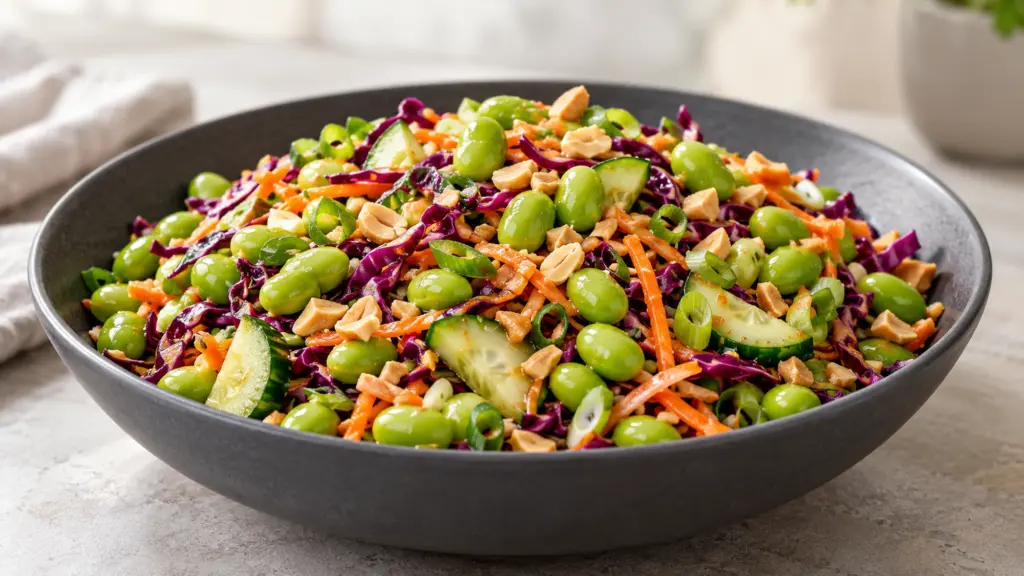
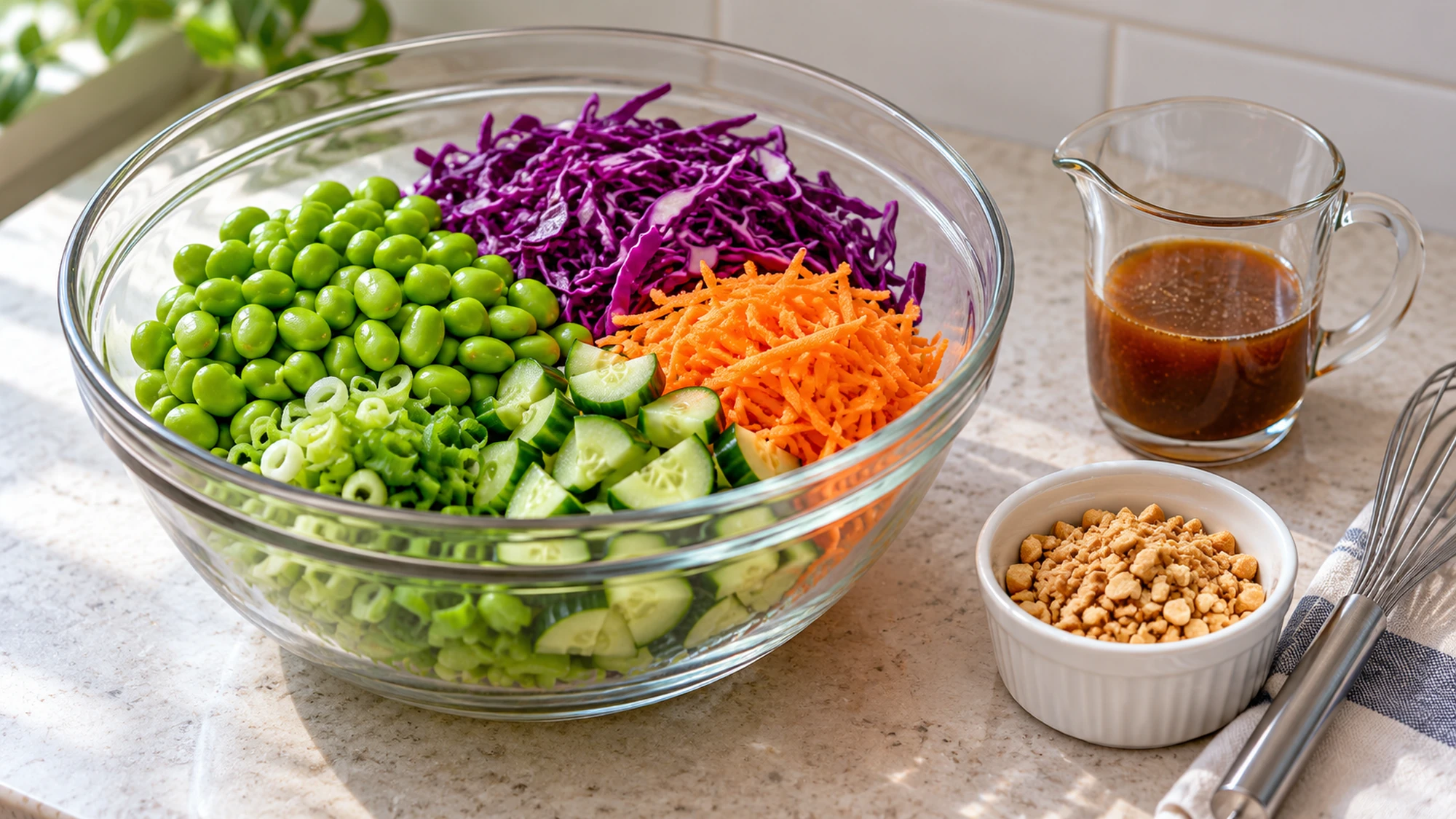
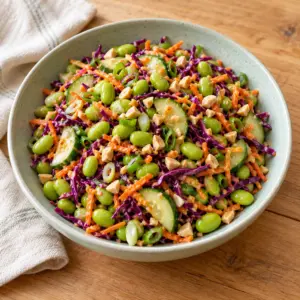
Crunch, color and cool soybeans give this edamame crunch salad a lively first bite. Cool green soybeans sit among thin purple cabbage, cucumber and grated carrot, with roasted peanuts added at the end. Lime, a measured spoonful of toasted sesame oil and a little soy sauce make a light dressing that leaves the vegetables easy to recognize.
Cook the frozen edamame as its package directs, cool it thoroughly, and drain it well. Add the peanuts just before serving so the name still makes sense at the table.
I’d keep the cabbage finely sliced and the cucumber a little chunkier. That small difference gives each forkful variety without needing a long ingredient list or a heavy sauce. The honey rounds off the lime rather than turning the dressing sweet; start with the measured amount before adjusting.
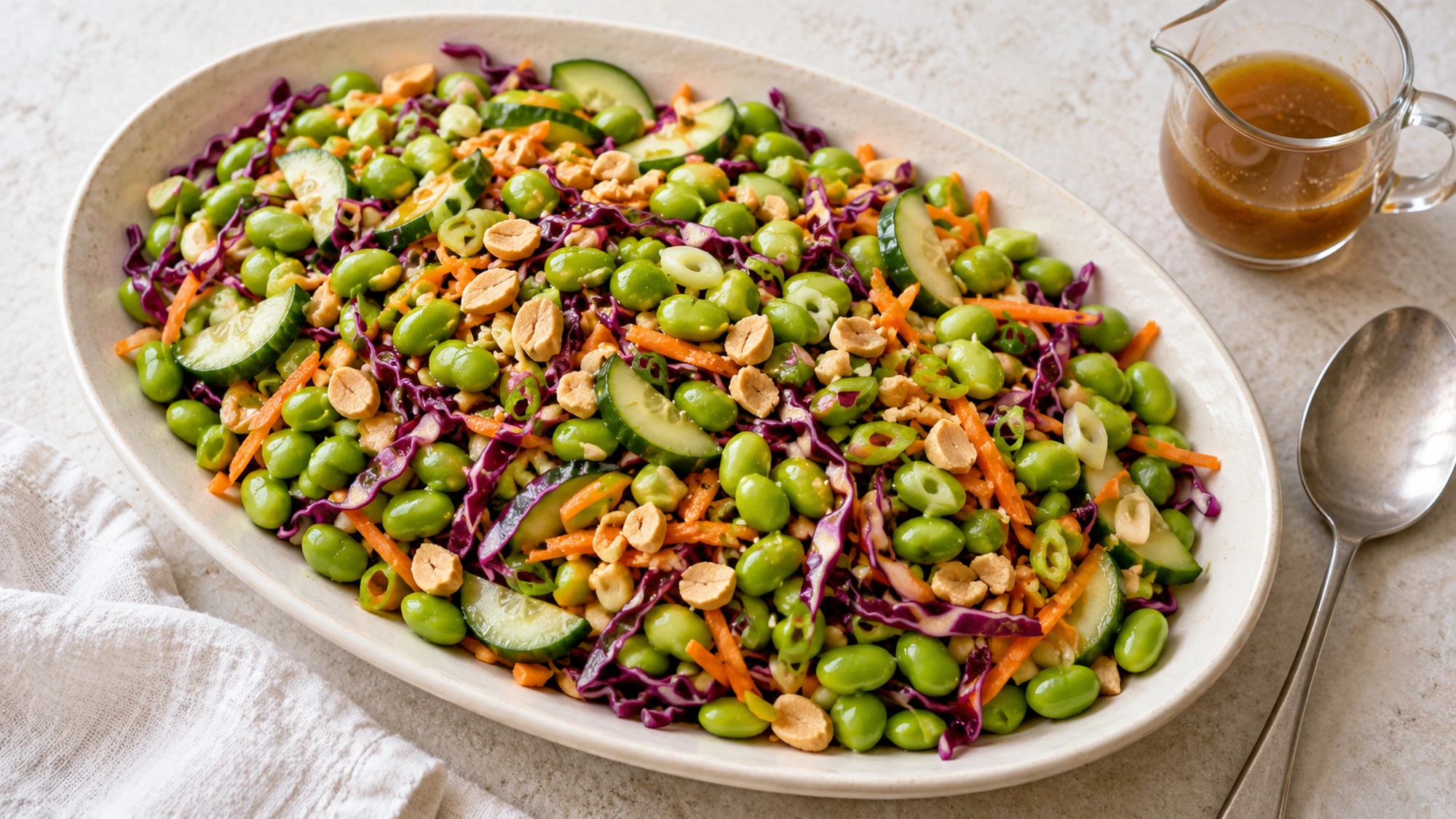
Serving Suggestions for Edamame Crunch Salad
This salad works as a colorful side for rice, noodles, grilled fish or simply cooked chicken. It also makes a useful component of a lunch bowl. Four side servings is the starting yield here; appetites and the other foods on the table determine whether you want a larger portion.
- Add a warm base: Spoon the chilled salad beside rice, keeping the peanuts on top.
- Offer it family-style: Use a wide dish so the beans and chopped vegetables stay evenly distributed.
- Pack lunch in parts: Keep the peanuts in a small separate container until you eat.
- Build a varied spread: Serve it with another vegetable dish rather than adding several competing dressings.
Spoonvale’s jacket potato in air fryer supplies a warm, fluffy contrast to the cool salad. Keep any extra accompaniments separate so everyone can choose the balance they prefer.
A little contrast on the plate goes a long way: cool beans, crisp vegetables and peanuts added at the last moment.
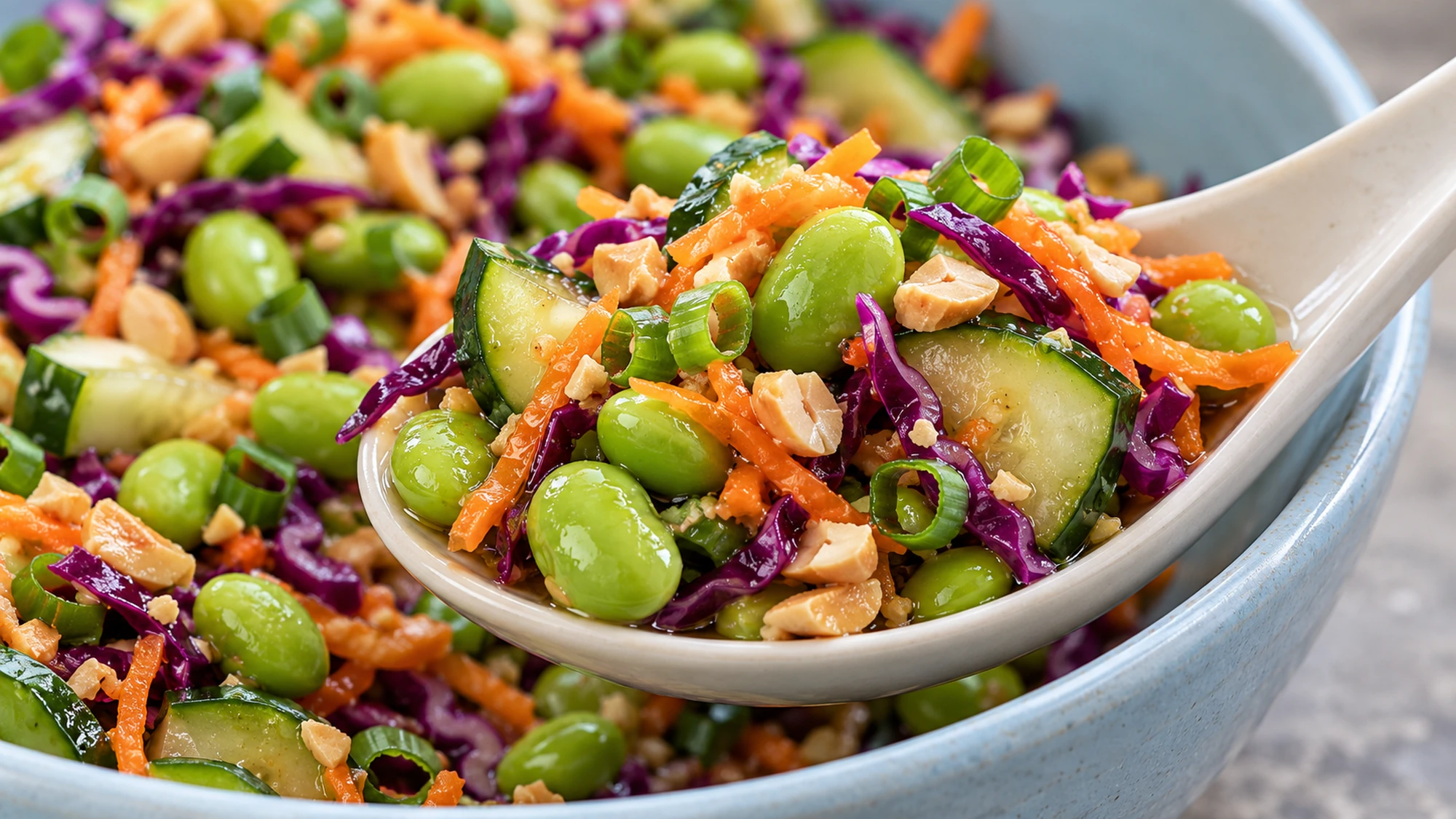
Variations and Ingredient Choices
Frozen shelled edamame saves the work of opening pods, but it still needs the cooking step stated on its bag. The manufacturer’s shelled-edamame guide is one example; follow the product you actually buy. Choose plain beans without a seasoning sachet for this dressing.
| Change | Measured approach | What changes |
|---|---|---|
| Green cabbage | Use the same shredded volume | A milder color and flavor |
| Cashews for peanuts | Replace the same chopped volume | A softer crunch; introduces tree nuts |
| Maple syrup for honey | Use the same teaspoon amount | Makes the dressing suitable for a vegan version |
| Tamari for soy sauce | Use the same tablespoon amount | Check the label for wheat and gluten |
I would keep the first version close to the quantities below, then decide whether it needs more lime or a little extra cabbage. Pouring in more oil can blur the fresh flavor and leaves a heavier coating. A fresh lime also varies in acidity, so taste the dressing before it meets the bowl.
Change one ingredient at a time, and keep the peanuts separate until the salad is ready to serve.
Health Benefits and Everyday Balance
Edamame is a soybean: it contributes plant protein and fiber, while the vegetables add variety and color. MyPlate’s protein-food guidance includes soy products, beans, nuts and seeds among the choices. A useful salad still needs an amount and a place in the meal that suit you.
- Know the allergens: This version contains soy, peanuts and sesame; ordinary soy sauce usually contains wheat.
- Measure the dressing: Sesame oil brings flavor and fat, and soy sauce contributes sodium even when labeled less sodium.
- Keep the vegetables crisp: Drain cooled beans well and pat wet cucumber dry before mixing.
- Make it your meal: Add a grain or another appropriate accompaniment if a side-size portion is not enough.
Follow USDA’s leftover guidance: refrigerate within two hours, or one hour above 90°F (32°C), and use within three to four days. Chill promptly in a covered container and follow an earlier package limit when one applies.
Enjoy the vegetables and beans for their flavor and useful nutrients, while keeping allergen labels, dressing quantities and safe storage in view.
Bottom Line
Edamame crunch salad earns its texture through simple choices: properly cooked and cooled beans, thin cabbage, well-drained cucumber and a measured lime-sesame dressing. Finish each serving with roasted peanuts and leave the rest separate for later. The vegetables should taste bright and distinct, with enough dressing to connect them. Expect a dressed portion to soften over time, and use the full recipe below for the amounts and cooking directions.
Edamame Crunch Salad Recipe

Ingredients
- 12 ounces plain frozen shelled edamame 340 g; choose a product with stovetop cooking directions
- 3 cups finely shredded red cabbage About 180 g, loosely filled
- 1 large carrot About 100 g; peeled and coarsely grated
- 1/2 English cucumber About 150 g; cut into small quarter slices
- 2 scallions About 30 g; thinly sliced
- 1/4 cup chopped unsalted dry-roasted peanuts About 35 g; add just before serving
- 2 tablespoons fresh lime juice 30 ml
- 1 tablespoon less-sodium soy sauce 15 ml
- 1 tablespoon toasted sesame oil 15 ml
- 1 teaspoon honey 7 g
Equipment
- 1 Medium saucepan
- 1 Colander
- 1 Large mixing bowl
- 1 Small mixing bowl
- 1 Whisk
- 1 Box grater
- knife and cutting board
- Measuring cups and spoons
- 1 Large serving spoon
Instructions
- Bring a medium saucepan of water to a boil. Keep the frozen shelled edamame ready, and check its package for the cooking time.
- Add the edamame and cook thoroughly according to its package directions. Drain in a colander, rinse under cold running water until cool, then drain very well. Refrigerate while preparing the other ingredients.
- Thinly slice the cabbage, grate the peeled carrot and quarter the cucumber lengthwise before cutting it into small slices. Slice the scallions. Pat very wet cucumber dry so it does not dilute the dressing.
- In the small bowl, whisk the lime juice, less-sodium soy sauce, toasted sesame oil and honey until combined.
- Put the cooled drained edamame, cabbage, carrot, cucumber and scallions in the large mixing bowl. Add the dressing and toss with the serving spoon until lightly coated.
- Fold in or scatter over the peanuts just before serving. If keeping some salad for later, leave its peanuts separate until ready to eat.
Nutrition
Video
Notes
Tried this recipe?
Let us know how it turned out!Emily is Spoonvale’s recipe-writing persona, bringing a warm, practical voice to everyday cooking. Her focus is simple: approachable meals, comforting flavors, and clear instructions that help make time in the kitchen more enjoyable.