
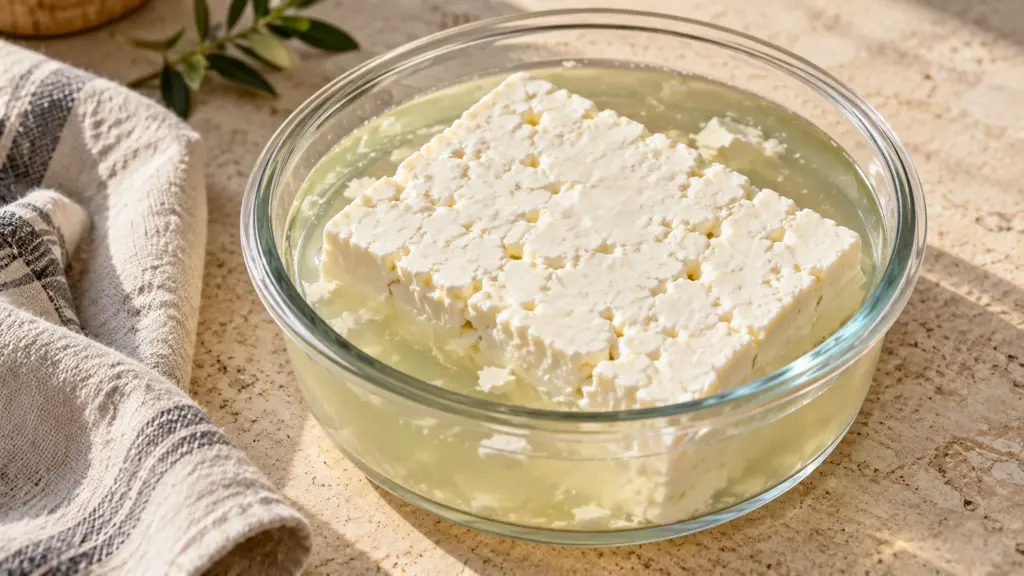
A few white crumbles can change a bowl of tomatoes, a tray of vegetables, or a simple lunch plate. Feta brings a salty, tangy contrast, but the cheese shelf can make a straightforward ingredient feel surprisingly complicated.
Feta cheese is a brined white cheese with a distinctive salty, slightly acidic flavor. For Greek PDO feta, origin and production rules matter; for choosing a product safely, the milk’s pasteurization status is a separate detail to check.
I’d decide how I plan to use it before choosing a package. A block gives you several ways to serve it, while ready-made crumbles can be convenient when the goal is simply to finish a salad and sit down to lunch.
What Is Feta Cheese?
The European Commission’s Feta PDO description connects this cheese to Greece, sheep and goat milk, and a ripening process that includes brine. PDO means protected designation of origin: it describes a defined connection between the product, its place, and its production.
That background helps explain the cheese, but you do not need to memorize its history before using it. In the kitchen, its assertive flavor makes it useful where a dish needs a contrast rather than another mild ingredient.
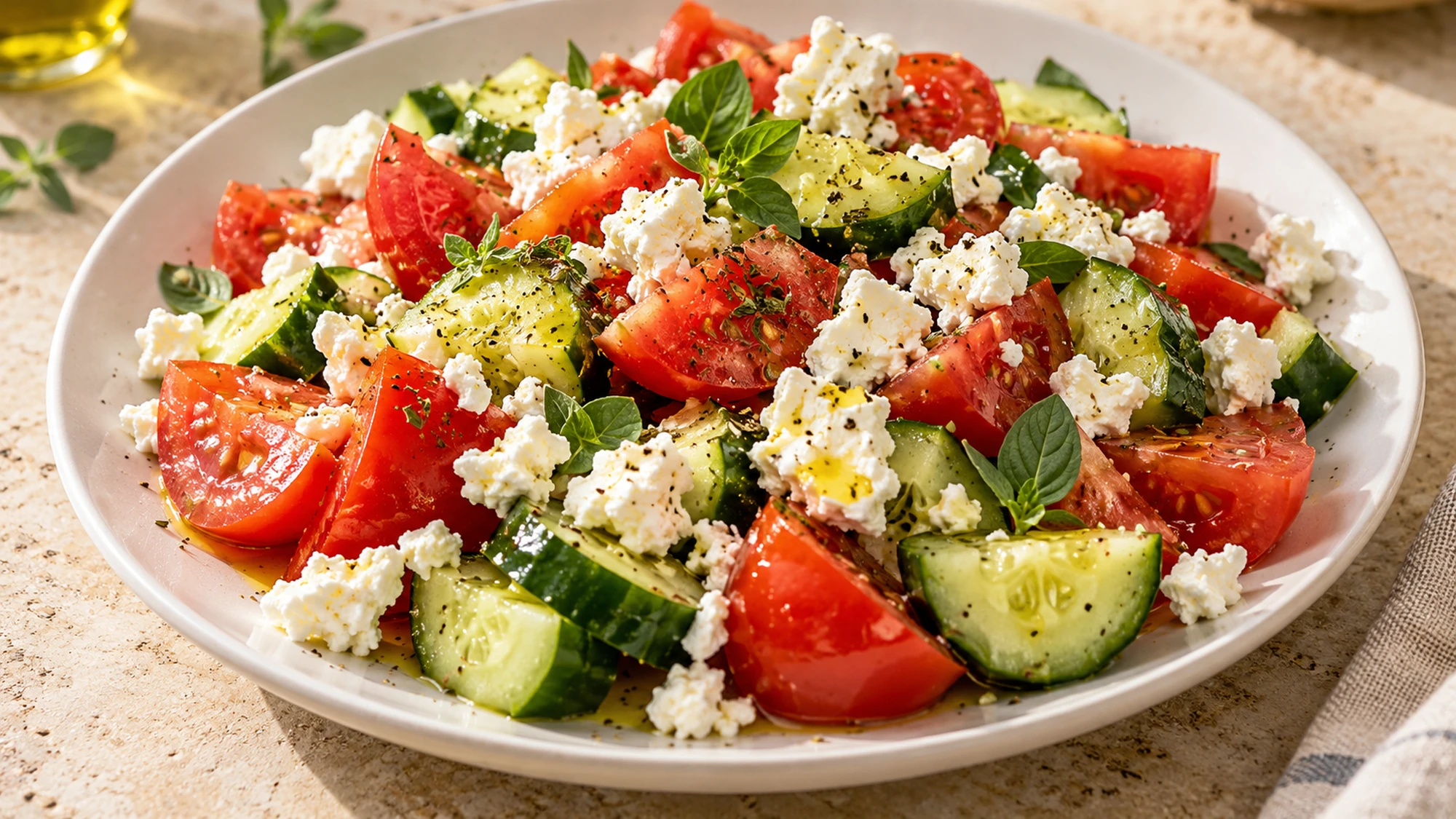
- Pair crumbles with juicy tomatoes and crisp cucumber.
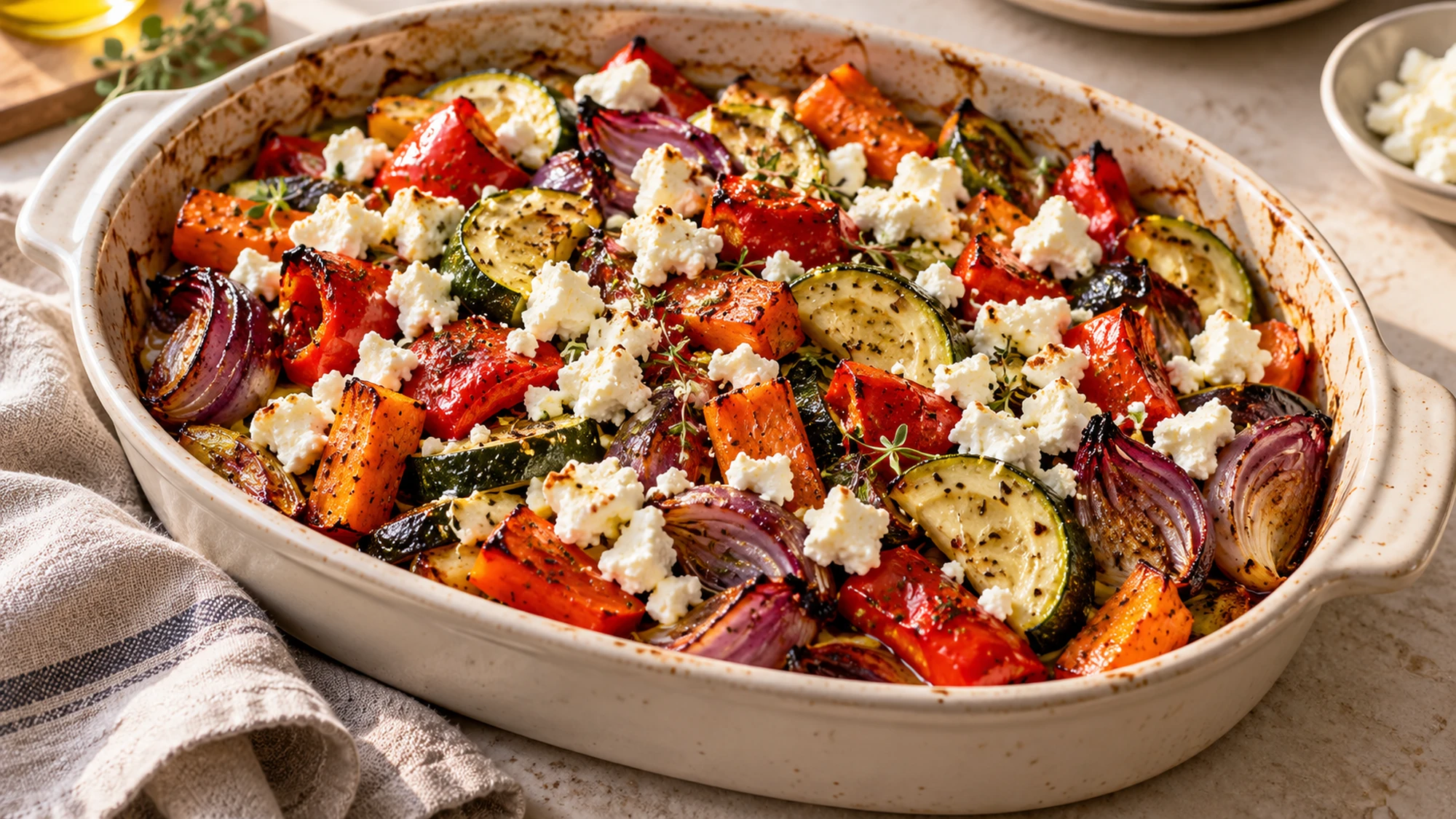
- Use small pieces as a finishing accent on roasted vegetables.
- Keep larger pieces when you want the cheese to remain distinct on a plate.
- Taste the overall dish before adding more salt.
Let feta bring contrast to a meal, rather than expecting it to behave like every other white cheese.
Understanding Feta Cheese Labels and Milk Types
Look at origin, ingredients, and pasteurization as separate questions. The European Commission notes that Feta PDO can be made using pasteurized or unpasteurized milk. A traditional origin claim therefore does not tell you which kind of milk was used in a particular package.
- Origin or PDO information identifies the product’s stated provenance.
- The ingredient list tells you what the specific cheese contains.
- A pasteurized-milk statement answers a different question from origin.
- Storage directions explain how the manufacturer wants that product handled.
I would read the small print before comparing attractive front labels. The package that looks most traditional is not automatically the best match for your dietary needs, and a familiar brand name does not replace checking the actual product.
An origin label is not a pasteurization statement. Check both when both matter to you.
Choosing a Block or Ready-Made Crumbles
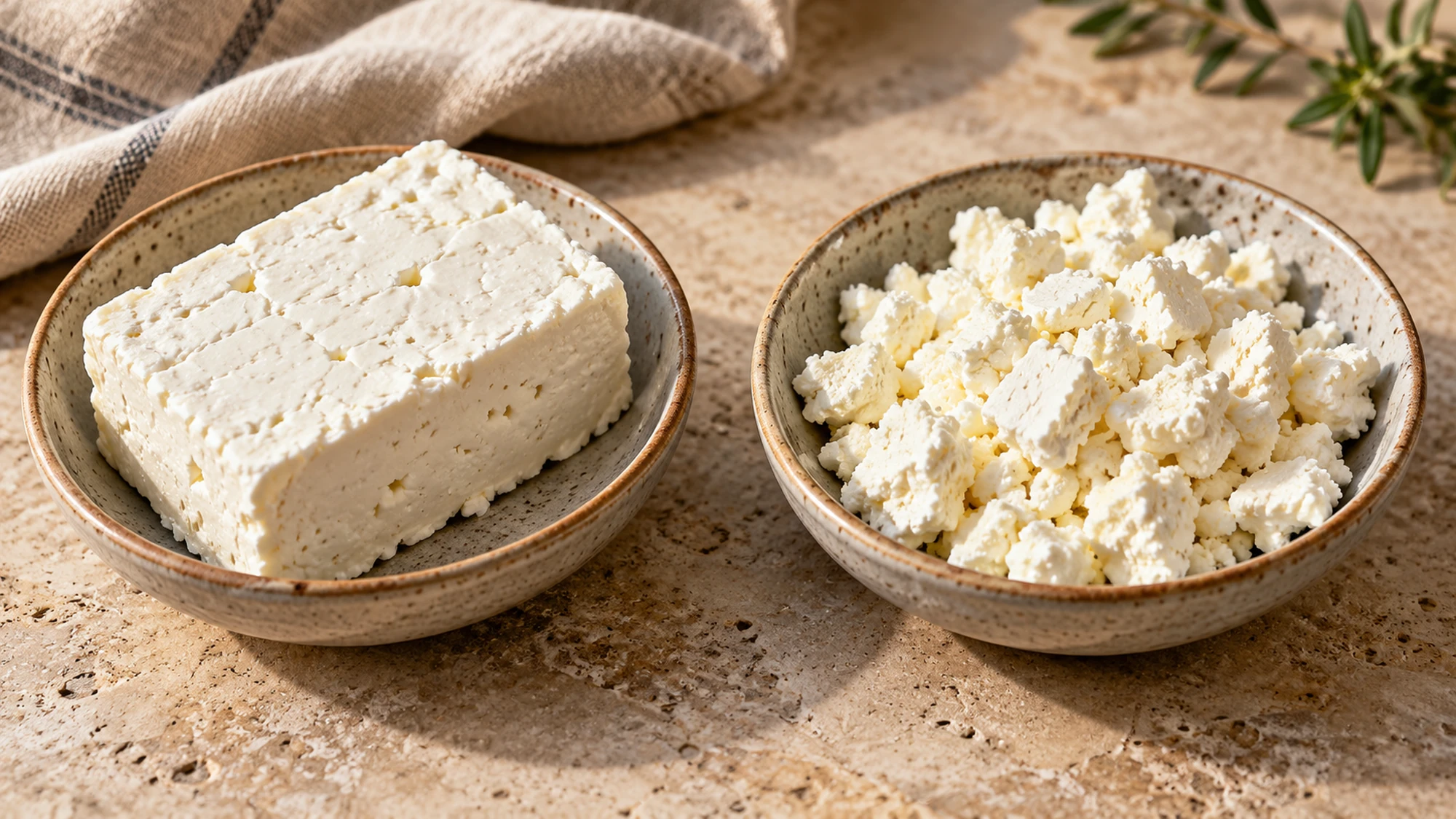
There is no need to turn this into a contest between a serious cook’s choice and a convenient one. Think about the size of the pieces you want, how often you plan to use the cheese, and the amount you can realistically finish.
| Form | Useful when you want | Check before buying |
|---|---|---|
| Block in brine | Slices, cubes, or hand-broken pieces | Package size and storage directions |
| Ready-made crumbles | A quick topping | Ingredients and serving information |
| Small individual package | A limited amount for one meal | Net quantity and intended use |
| Larger container | Several planned meals | Whether the amount fits your routine |
A block lets you vary the pieces from one meal to another. Crumbles save that small preparation step. Neither format tells you everything about the milk, ingredients, salt content, or safety, so compare the actual labels rather than judging by shape alone.
The most useful package is one that suits the meal and your routine, not simply the largest or most elaborate option.
Using and Handling Feta Cheese
I’d begin with one simple combination and leave enough room to taste the cheese. On a busy day, a vegetable plate with a little feta can be more appealing than a complicated dish built around using every item in the refrigerator.
- Finish roasted vegetables with crumbles after cooking.
- Try Spoonvale’s chickpea cucumber salad for a lemony bowl with feta.
- Serve alongside olives, vegetables, and bread.
- Try a modest amount first, then adjust the balance of the whole dish.
Safety deserves its own check. The CDC lists feta made with pasteurized milk as a safer choice for people at higher risk of Listeria illness, including pregnant people, adults 65 and older, and those with weakened immune systems. Safer does not mean risk-free: follow package refrigeration and handling directions, and do not assume every soft white cheese has the same advice.
Bottom Line
Choose feta cheese for its flavor and the way you want to serve it. Read origin and pasteurization details separately, buy a practical package size, and follow the product’s handling directions. A few well-placed pieces can add plenty of character without making the rest of the meal complicated.
Sources

Emily is Spoonvale’s recipe-writing persona, bringing a warm, practical voice to everyday cooking. Her focus is simple: approachable meals, comforting flavors, and clear instructions that help make time in the kitchen more enjoyable.