
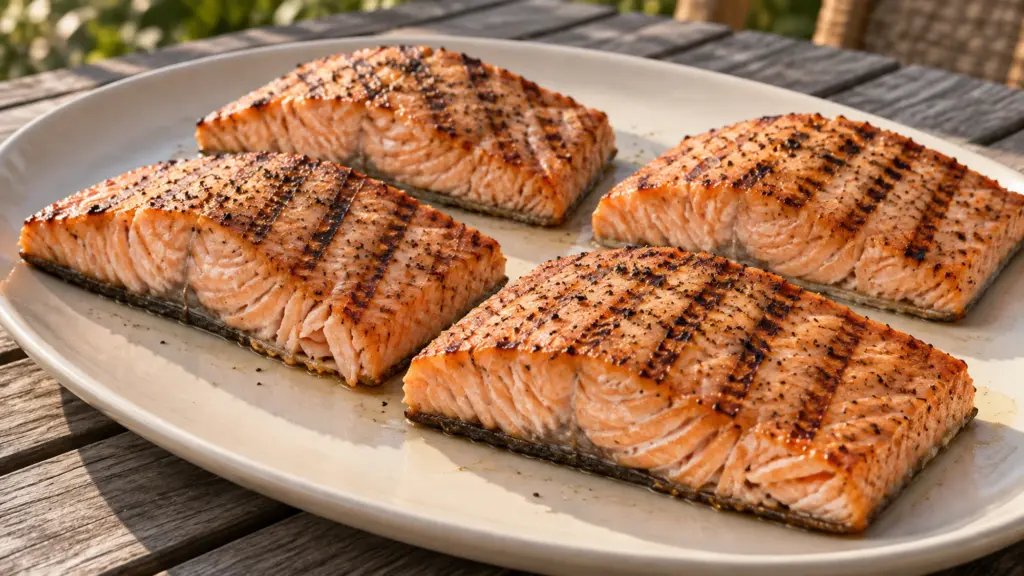
A salmon fillet should come off the grill in one piece, but pulling too soon can leave dinner stuck to the bars. If you want to know how to grill salmon with a browned surface and recognizable portions, start with skin-on fillets and give the first side time to release.
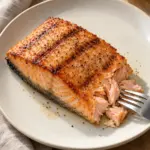
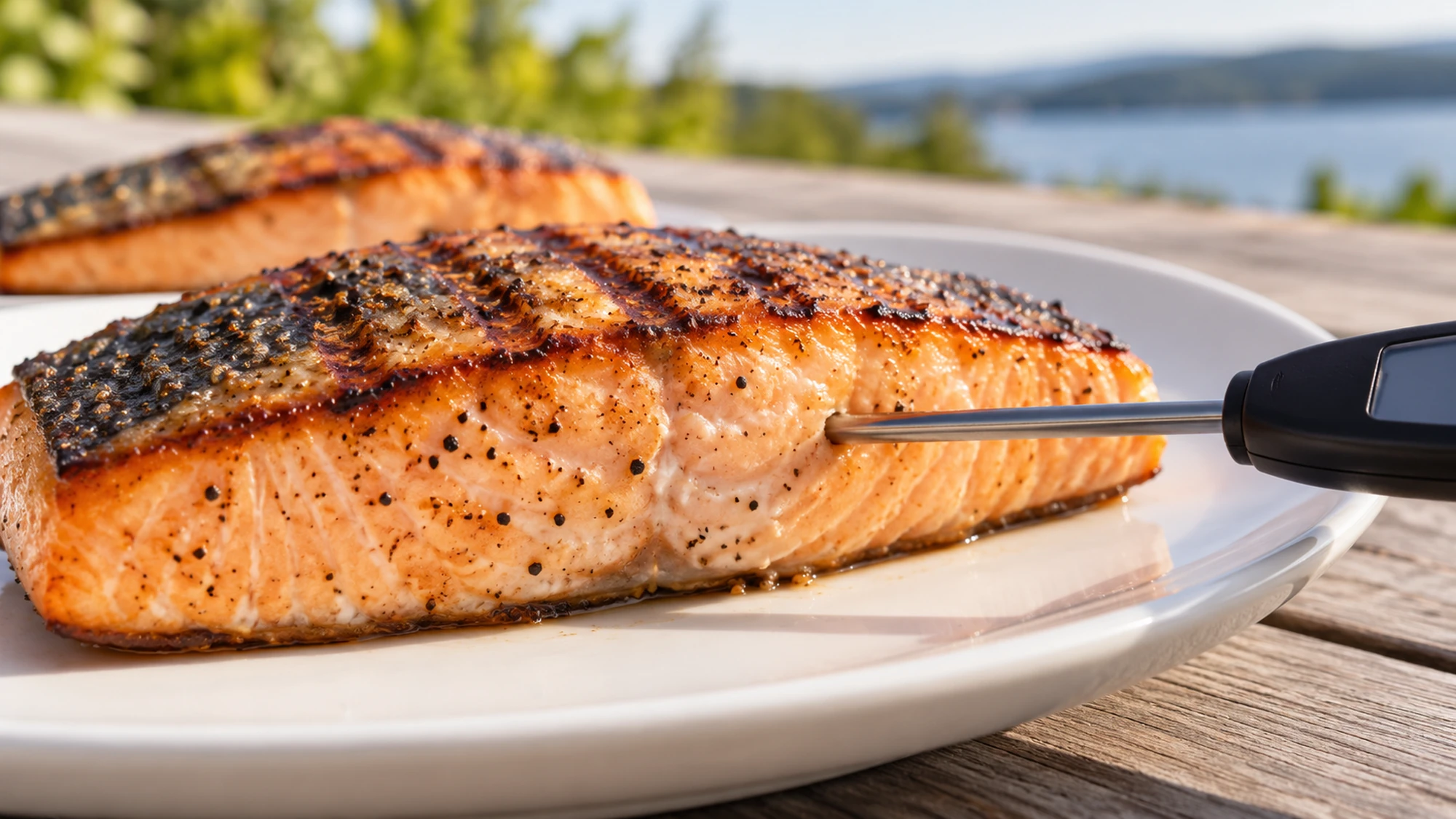
Use clean, preheated grates, dry and lightly oil the fish, and turn it once. Finish cooking each fillet to 145°F (63°C) in its thickest part; a grill mark cannot tell you what is happening inside.
I’d choose similar center-cut portions for this method, because their thickness matters more than matching their exact outline. A wide fish spatula supports the flesh during that single turn. This is a direct-grill recipe for a lidded gas grill, with simple seasoning and no sweet coating to manage.
How to Grill Salmon and Build the Rest of Dinner
Have the sides ready before the fish reaches the grates. A grain salad can wait in the refrigerator, while warm potatoes should already be tender. The salmon needs your attention near the end, so this is a useful moment to let another appliance handle the rest of dinner.
I prefer one warm side and something crunchy here. A jacket potato with a fluffy center makes the plate substantial, while sliced cucumber or a cabbage salad supplies contrast. Keep dressings separate until serving so the fish’s browned surface remains visible.
- For bowls, add large flakes to cooked rice and vegetables just before eating, rather than stirring the fish into everything.
- For a platter, leave the fillets whole and offer any extra sauce separately; the base recipe is simply seasoned.
- For outdoor meals, bring a clean serving platter outside. The tray that carried raw salmon has already done its job.
Prepare the supporting dishes first, then serve the salmon promptly while its surface and soft flakes provide their best contrast.
Variations and Storage for Grilled Salmon
Choose your fillets before choosing extra flavors. Thickness, skin, and surface moisture all affect handling. The principle of waiting for the flesh to release is useful, but no percentage or kitchen timer replaces checking the actual fish.
| Choice | Adjustment | What to expect |
|---|---|---|
| Similar center cuts | Check each thickest part | More comparable cooking times |
| Thin tail portions | Check earlier and separately | Less margin before drying |
| Frozen portions | Thaw in the refrigerator, then dry | A wet surface needs extra attention |
| Sweet sauce | Offer after grilling | Avoid a sugary coating over direct heat |
For a different finish, offer a little plain yogurt with chopped herbs or a squeeze of citrus at the table. Those are optional additions, with their own ingredients and allergens. Refrigerate cooked salmon in shallow covered containers within two hours, or within one hour when the temperature is above 90°F (32°C).
- Keep the refrigerator at 40°F (4°C) or below and use cooked leftovers within three to four days.
- Follow USDA leftover guidance: reheat portions to 165°F (74°C), checking with a thermometer.
- Freeze promptly if you will not use the portions in time; expect a softer surface after thawing.
Change the finish at the table, and treat prompt cooling as part of the recipe rather than something to decide afterward.
Health Benefits of a Simply Grilled Salmon Dinner
Salmon contributes protein and naturally occurring fats. The amount varies with the fish, so the card’s ingredient-based estimate is a guide rather than a laboratory result. Grilling adds no special health guarantee; the portion, seasoning, and other foods on the plate still matter.
The FDA’s seafood guidance pairs nutrition with practical handling advice. Keep raw fish cold, separate its utensils from ready-to-eat sides, and cook the center thoroughly. Lemon juice, grill marks, and a browned exterior cannot substitute for that temperature check.
- Choose vegetables and a grain or potato alongside the fish for a more varied meal.
- This recipe contains fish. Check any optional sauces for additional allergens.
- The estimate counts all the measured oil; actual oil and juices retained after grilling can differ.
Enjoy salmon as part of a varied meal, with a measured amount of oil and the same careful handling you would give any seafood.
Bottom Line
Learning how to grill salmon is largely a lesson in restraint: prepare the grate, support the fillet, and resist turning it repeatedly. Let each portion release before lifting, then use its center temperature to decide when it is ready. Keep the sides simple, use a clean platter, and bring the fish to the table without covering its browned surface in unnecessary extras.
How to Grill Salmon Recipe

Ingredients
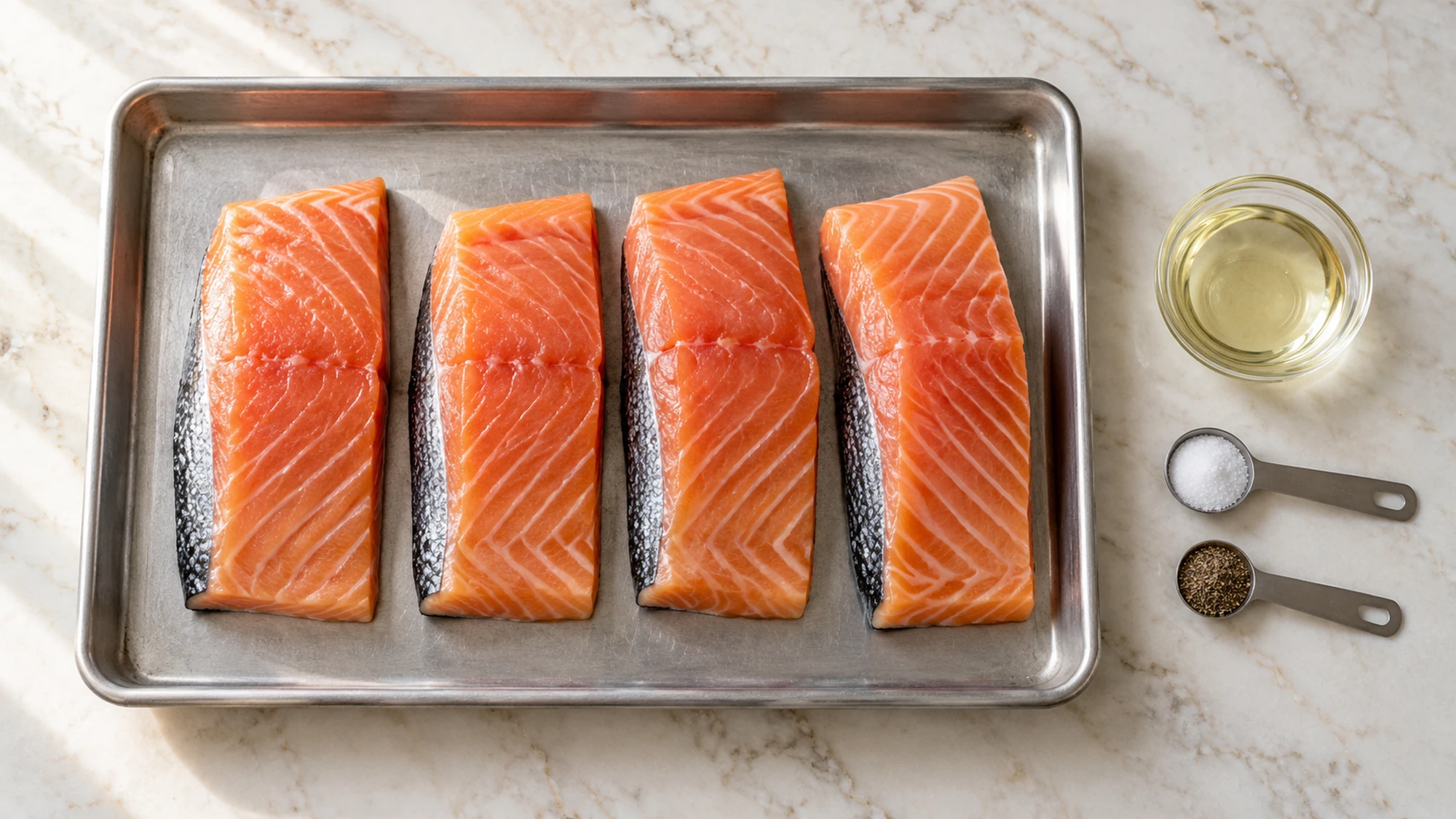
- 4 boneless skin-on salmon fillets 6 oz (170 g) each; 24 oz / 680 g total, about 1 inch thick, thawed if frozen
- 1 tbsp canola oil 15 ml / about 14 g
- 0.5 tsp fine table salt about 3 g
- 0.25 tsp ground black pepper about 0.5 g
Equipment
- 1 Outdoor gas grill with lid and temperature gauge
- 1 Grill-safe grate scraper
- 1 Wide fish spatula
- 1 Instant-read food thermometer
- 1 Measuring spoons
- 1 Raw-fish tray and separate clean serving platter
- 1 Paper towels
Instructions
- Pat the salmon fillets dry on both sides with paper towels, then return them to the refrigerator while the grill preheats.
- Prepare the gas grill for direct medium-high heat, about 450°F (230°C), following the grill manufacturer’s instructions. Preheat with the lid closed, usually 10–15 minutes. Clean and inspect the grates using a grill-safe scraper.
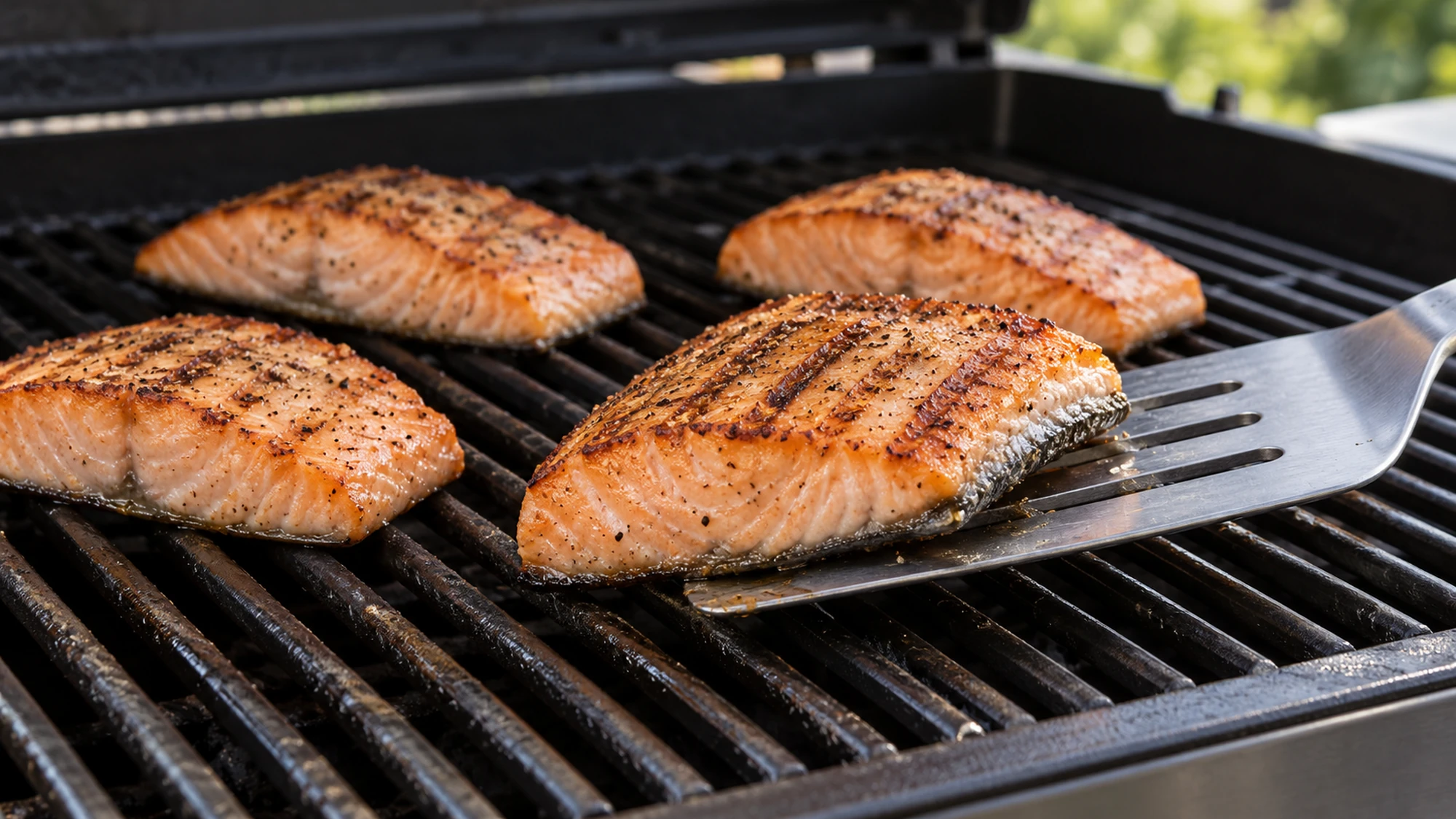
- Rub the measured oil lightly over both sides of the fish, then divide the salt and pepper over the flesh. Wash hands after handling raw fish. Place the fillets flesh-side down on the hot grates, with space between them. Close the lid and leave undisturbed for about 4–6 minutes.
- Slide a wide fish spatula gently under a portion. If it sticks, give it another 30–60 seconds before trying again; do not pull the flesh apart. Turn each fillet once onto its skin side, close the lid, and continue cooking about 3–6 minutes. Begin checking early, inserting a clean food thermometer from the side into the thickest center of each portion. Cook each to 145°F (63°C), removing thinner portions first if needed; total grill time is usually about 8–12 minutes but varies.
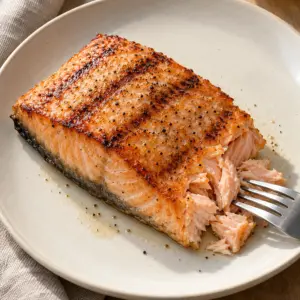
- Transfer the cooked portions with a clean utensil to a clean serving platter and serve promptly. Refrigerate leftovers in shallow covered containers within 2 hours, or 1 hour above 90°F (32°C).
Nutrition
Video
Notes
Tried this recipe?
Let us know how it turned out!Emily is Spoonvale’s recipe-writing persona, bringing a warm, practical voice to everyday cooking. Her focus is simple: approachable meals, comforting flavors, and clear instructions that help make time in the kitchen more enjoyable.