
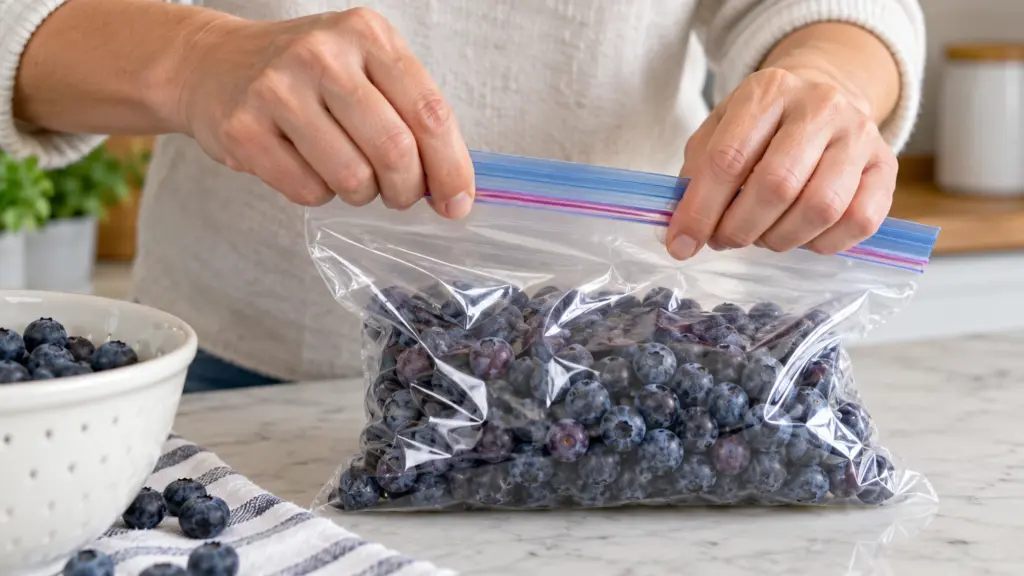
Pale, dry patches on frozen food are disappointing, especially when you were counting on that package for dinner. Freezer burn develops as food loses moisture. It can leave the texture tough or less appealing, even when the food has remained frozen.
To help prevent freezer burn, use packaging intended for freezing, remove unnecessary trapped air, seal it well and keep the freezer at 0°F (−18°C) or below. Leave appropriate expansion space for liquids. Freezer burn is a quality issue; food safety still depends on storage and handling.
The most useful improvements are often ordinary ones: a better seal, a sensible portion and a clear label. Special equipment can be convenient, but it does not replace those basics.
How to Prevent Freezer Burn Starts With the Seal
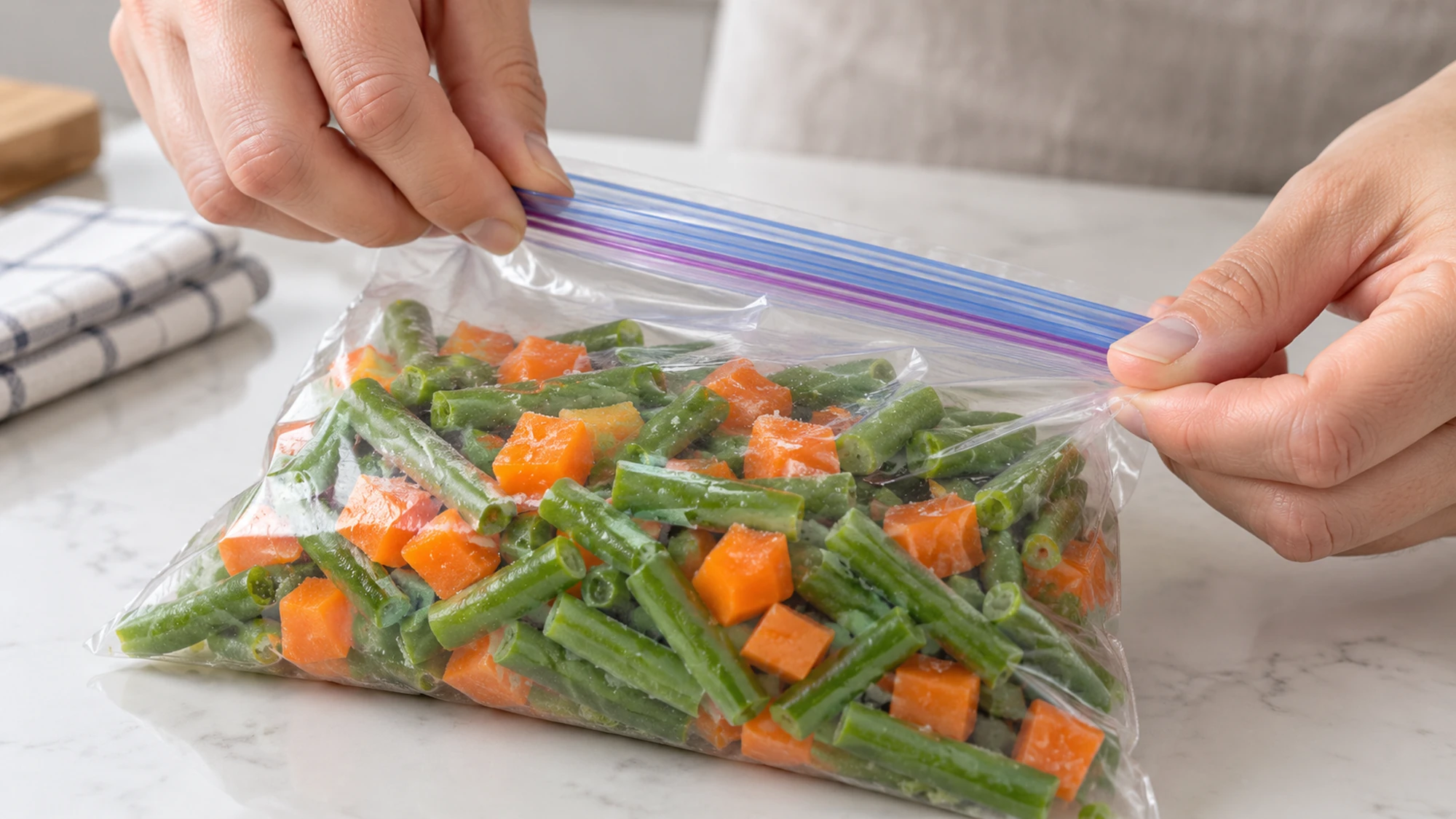
Freezer packaging should protect food from moisture loss and air exposure. A thin bag intended for short-term storage is not necessarily the best choice for a long stay in the freezer. Look for bags, wraps or containers designed for freezing.
Press excess air from a freezer bag without crushing delicate food, then close the seal completely. With a rigid container, keep the sealing surface clean and check that the lid fits securely. A small gap can undo otherwise careful packing.
My practical priority would be checking the package already in your hand before buying another gadget. The National Center for Home Food Preservation emphasizes suitable containers and careful packaging; a tidy-looking stack alone does not show whether the food is protected.
Match the Package to the Food
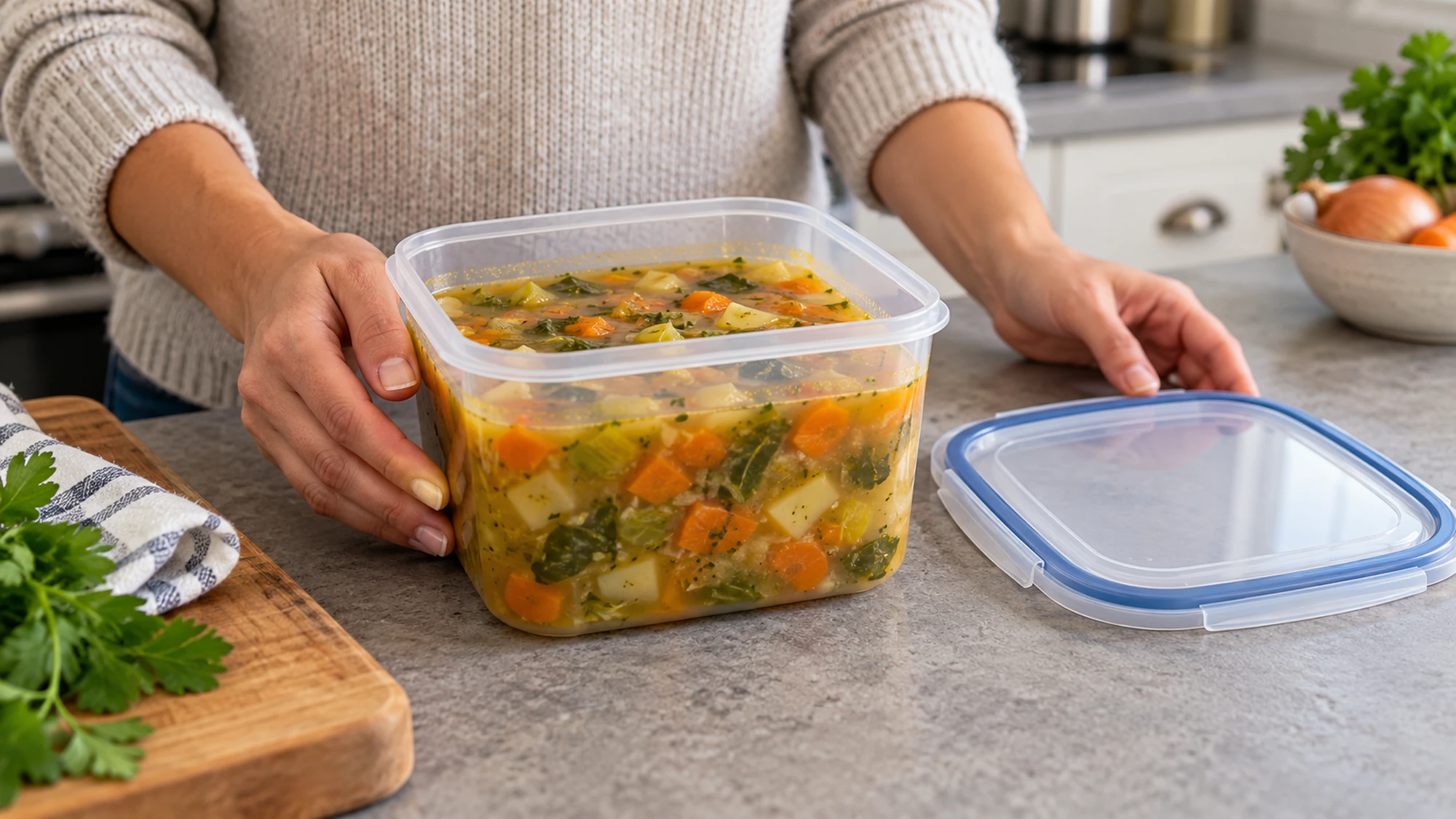
The right fit depends on what you are freezing. Bread benefits from close wrapping, while soup needs room to expand. Freezer-safe glass must be suitable for the job; an ordinary glass jar is not automatically a safe substitute.
| Food | Packaging approach | Detail that matters |
|---|---|---|
| Soup or other liquid | Suitable rigid freezer container | Leave the recommended expansion space |
| Bread | Close wrapping or a freezer bag | Limit exposed surfaces and trapped air |
| Irregular solid pieces | Freezer bag or well-fitting wrap | Avoid large air pockets |
| Fruit packed with liquid | Container suitable for the method | Follow food-specific headspace guidance |
| Food in freezer-safe glass | Container rated for freezing | Follow its fill and handling directions |
Do not apply an air-removal rule so aggressively that a liquid container has no room to expand. Protecting the food and protecting the package are part of the same job.
Freeze Manageable Portions and Label Them
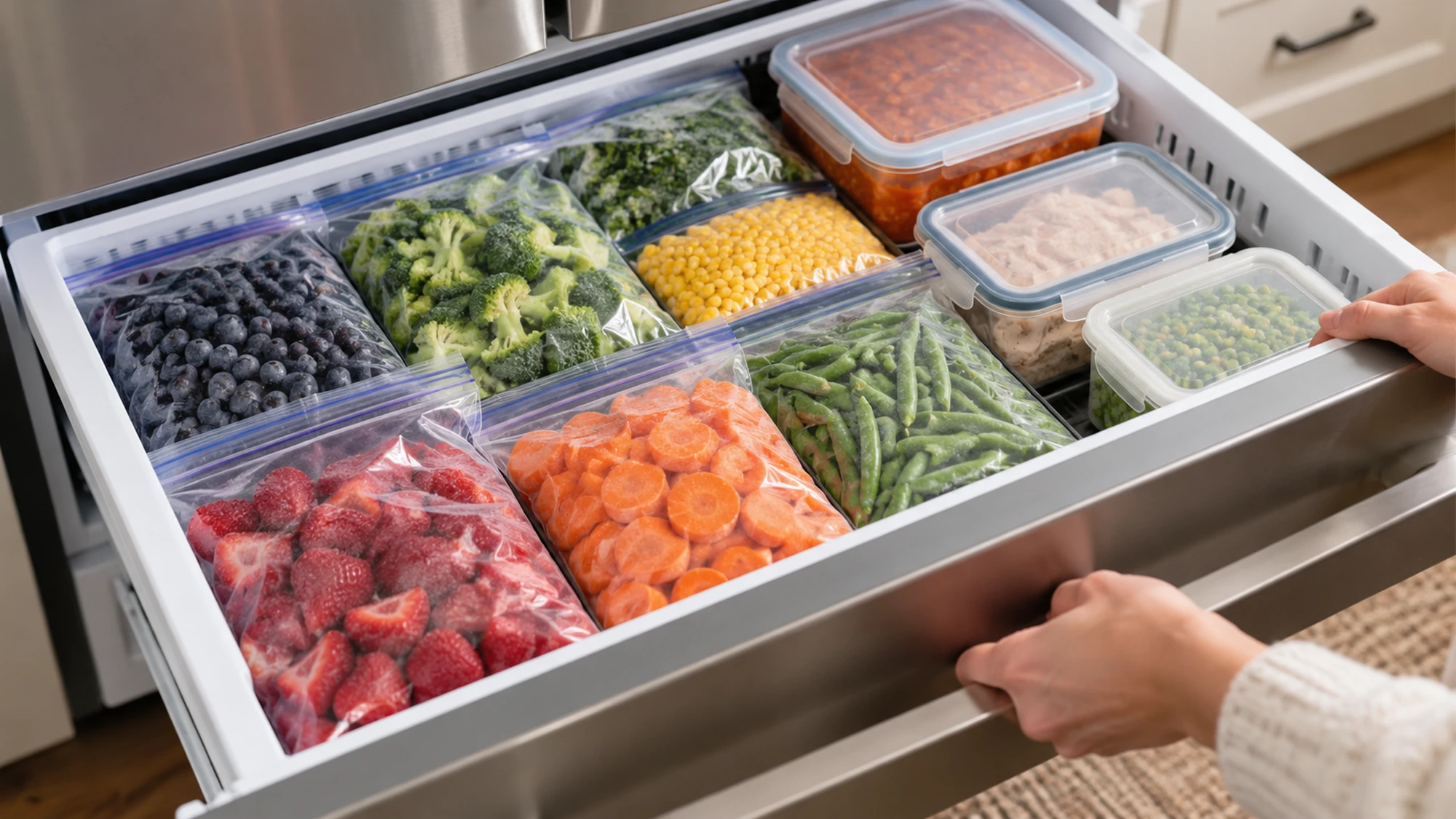
Meal-sized portions are easier to use than one large block. They also reduce the temptation to repeatedly open a package just to remove a little food. Choose the portion before packing, rather than trying to separate everything after it freezes. I prefer a labeled dinner-sized portion to a mystery block that needs a separate project to use.
- Divide the food into useful portions with clean utensils.
- Pack it in appropriate freezer packaging, allowing required expansion space.
- Label the contents, amount if useful, and freezing date.
- Keep a simple inventory and use older packages first.
Handle leftovers safely before freezing. Refrigerate perishable food within two hours, or within one hour when the surrounding temperature exceeds 90°F. Shallow containers help divide a large amount for cooling; do not leave a pot on the counter for hours waiting for it to become cold.
Use a freezer thermometer rather than relying only on a dial setting. Maintaining 0°F (−18°C) or below helps protect frozen food, while unnecessary temperature fluctuations can harm quality.
What if the Food Already Has Dry Patches?
Freezer burn by itself does not establish that a food is unsafe. It can make a meal less enjoyable, and badly affected areas may be trimmed away if the food’s handling history is otherwise safe. A sauce may improve a dry texture, but it cannot correct unsafe storage.
A quality problem and a safety problem are different questions. Freezing does not erase earlier mishandling or reliably destroy all harmful microorganisms. When the temperature history is uncertain, appearance alone cannot settle safety.
Thaw perishable food in the refrigerator, in cold water using a suitable leakproof package, or in the microwave, not on the counter. Food thawed with cold water or a microwave should be cooked promptly. Follow food-specific guidance when deciding whether thawed food can be refrozen.
Bottom Line
Learning how to prevent freezer burn starts with packaging that fits the food, a complete seal and steady cold storage. Label portions so they are used, not forgotten. If damage appears, judge quality separately from safety instead of assuming that dry patches prove either one.
Illinois Extension’s freezing overview below covers practical preservation questions, including freezer burn. Use it alongside the packaging guidance in the sources.
Sources
- University of Minnesota Extension: Freezing
- National Center for Home Food Preservation: Containers for freezing
- National Center for Home Food Preservation: Packaging and labeling foods
- FoodSafety.gov: Four steps to food safety
- Illinois Extension: How to freeze food
- USDA FSIS: Safe defrosting methods

Emily is Spoonvale’s recipe-writing persona, bringing a warm, practical voice to everyday cooking. Her focus is simple: approachable meals, comforting flavors, and clear instructions that help make time in the kitchen more enjoyable.