

A bowl of warm rice is a useful beginning when breakfast needs a savory turn or dinner needs to happen without much fuss. Chili oil eggs give that rice a golden-edged topping, a little heat, and the fresh bite of scallion. The short ingredient list leaves each flavor easy to notice.

These chili oil eggs are fried in neutral oil, cooked until both whites and yolks are firm, then finished off the heat with measured commercial chili oil. Serve two eggs over each bowl of hot cooked rice, with a little soy sauce and sliced scallion.
The finishing drizzle is the useful distinction here. It lets you control the chili flavor separately from the frying step. I prefer that division of jobs: the pan handles the golden edges, while the jar supplies the heat at the end. Read the chili-oil label before choosing one; jars differ in spice level, salt, and added ingredients.
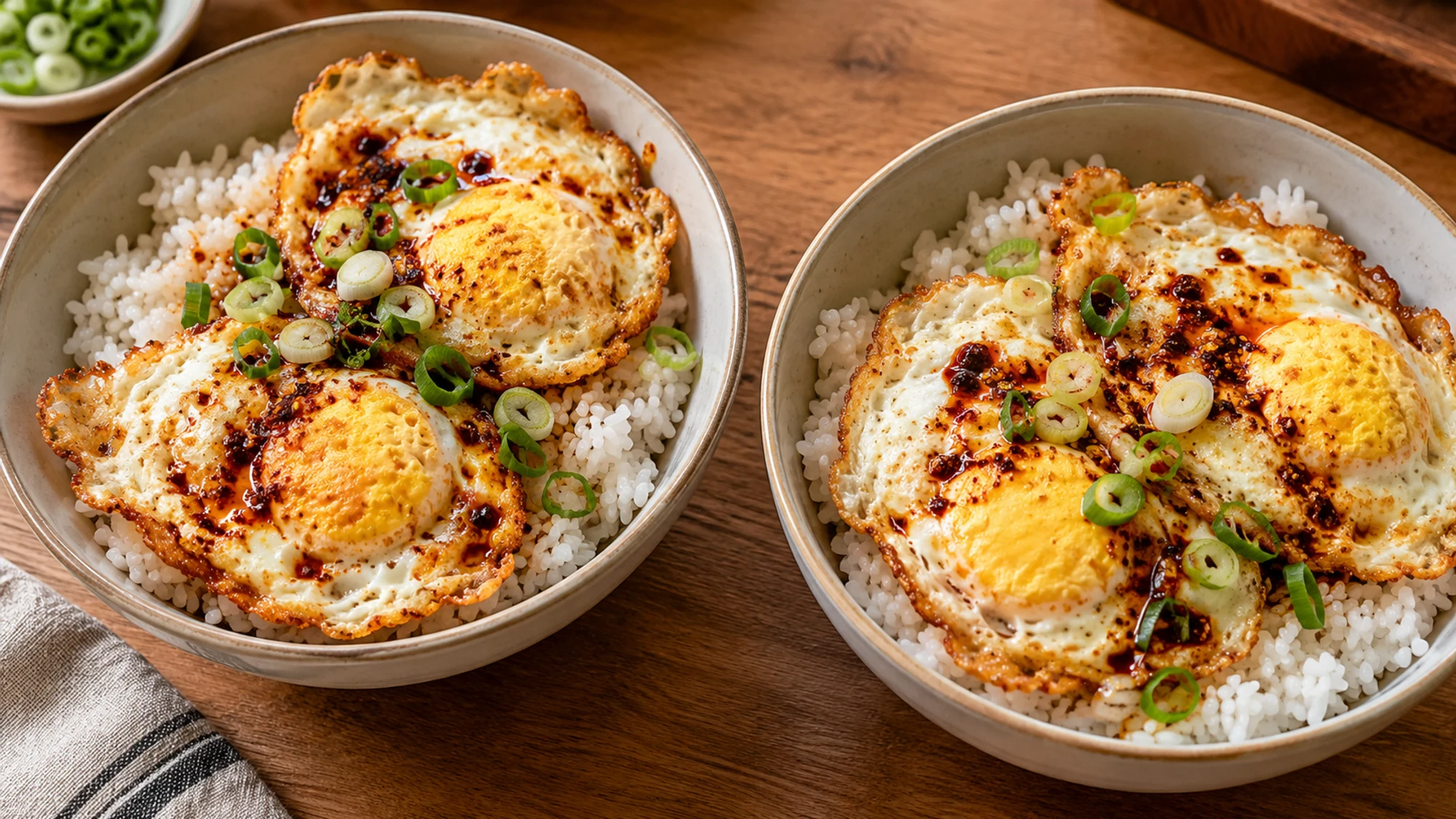
Serving Suggestions for Chili Oil Eggs
Have the rice ready before the eggs reach the pan, and serve the bowls promptly. A little attention to that order keeps the meal simple. Add a cool cucumber side or cooked green vegetables if you want more variety alongside the rice and eggs; keep additional sauces modest until you taste the chili oil.
| Rice starting point | Before frying the eggs | Timing |
|---|---|---|
| Hot, fully cooked rice | Divide between the bowls | The 15-minute estimate applies |
| Safely chilled cooked rice | Reheat thoroughly first | Allow extra reheating time |
| Raw rice | Cook completely using its directions | Rice cooking takes additional time |
Follow the FDA’s egg-safety guidance and cook until both whites and yolks are firm. Golden edges alone do not establish that the rest of the egg is ready. Lowering the heat and covering the skillet helps the top finish cooking while you watch the edges for excessive browning.
Start with hot rice, give the eggs time to cook fully, and finish the bowls just before eating. A fresh vegetable side provides a useful contrast without complicating the skillet work.
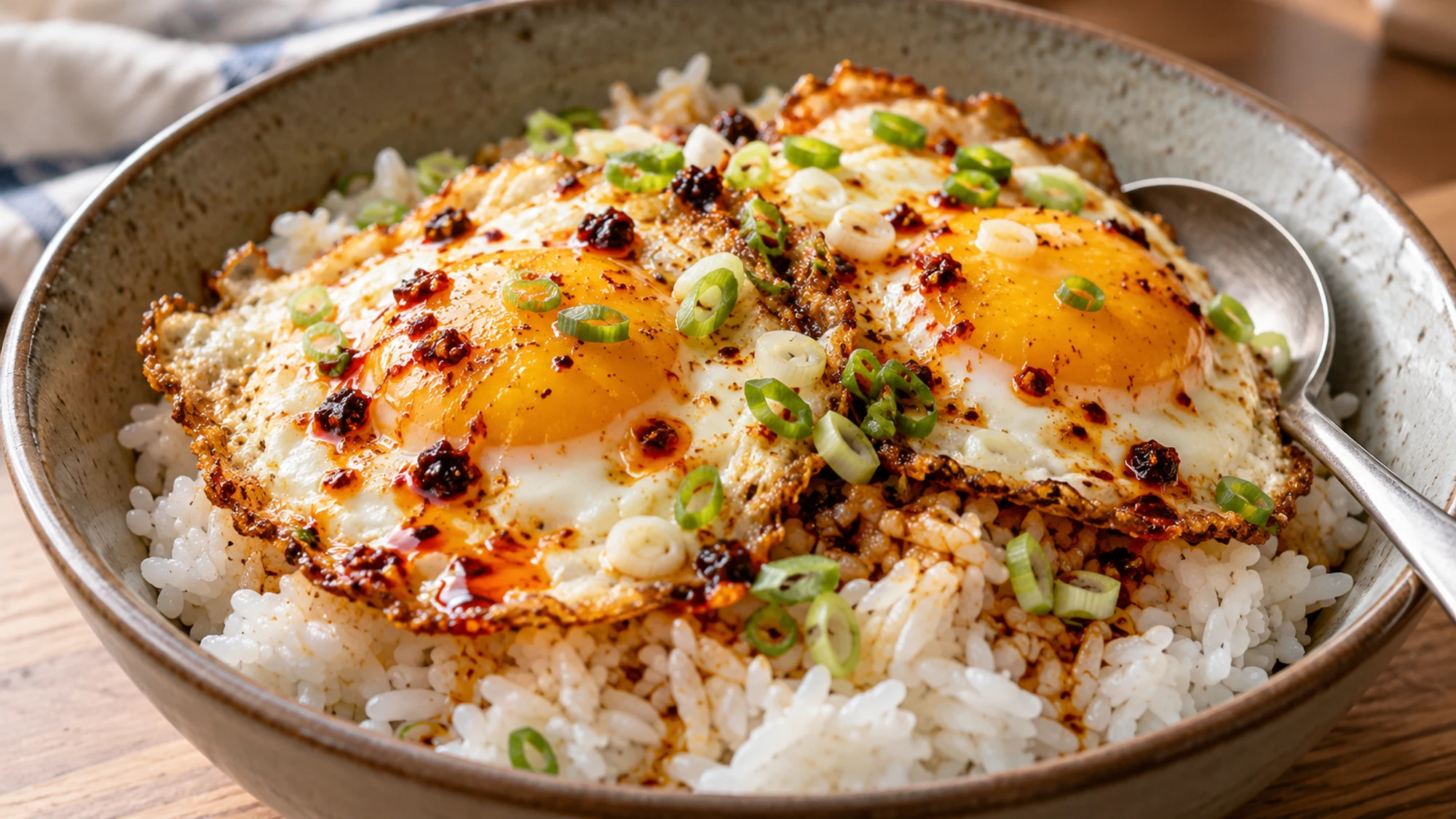
Chili Oil Eggs Variations
Choose the change that solves your actual preference: less heat, a different base, or another texture alongside. Keep the commercial chili oil as a finishing ingredient in this version, so a thicker jar of chili solids does not have to do the frying.
- Milder heat: choose a milder commercial chili oil and begin with less at the table. Flavor and salt vary, so taste before adding another sauce.
- Different rice: fully cooked brown rice brings a chewier grain texture. Prepare or reheat it separately; its cooking time is outside the egg recipe.
- Bread base: serve the eggs with toasted slices of baguette when you want bread instead of rice. The serving size and nutritional balance will change.
If you plan to use leftover rice, its handling matters before reheating. The Food Standards Agency’s rice guidance recommends cooling quickly, ideally within an hour, refrigerating, and using within 24 hours. Reheat rice only once, thoroughly throughout; rice left on the counter overnight should be discarded.
I would adjust the jar or the base before adding a long topping list. Keep the measured finish, fully cooked eggs, and careful rice handling as the practical constants.
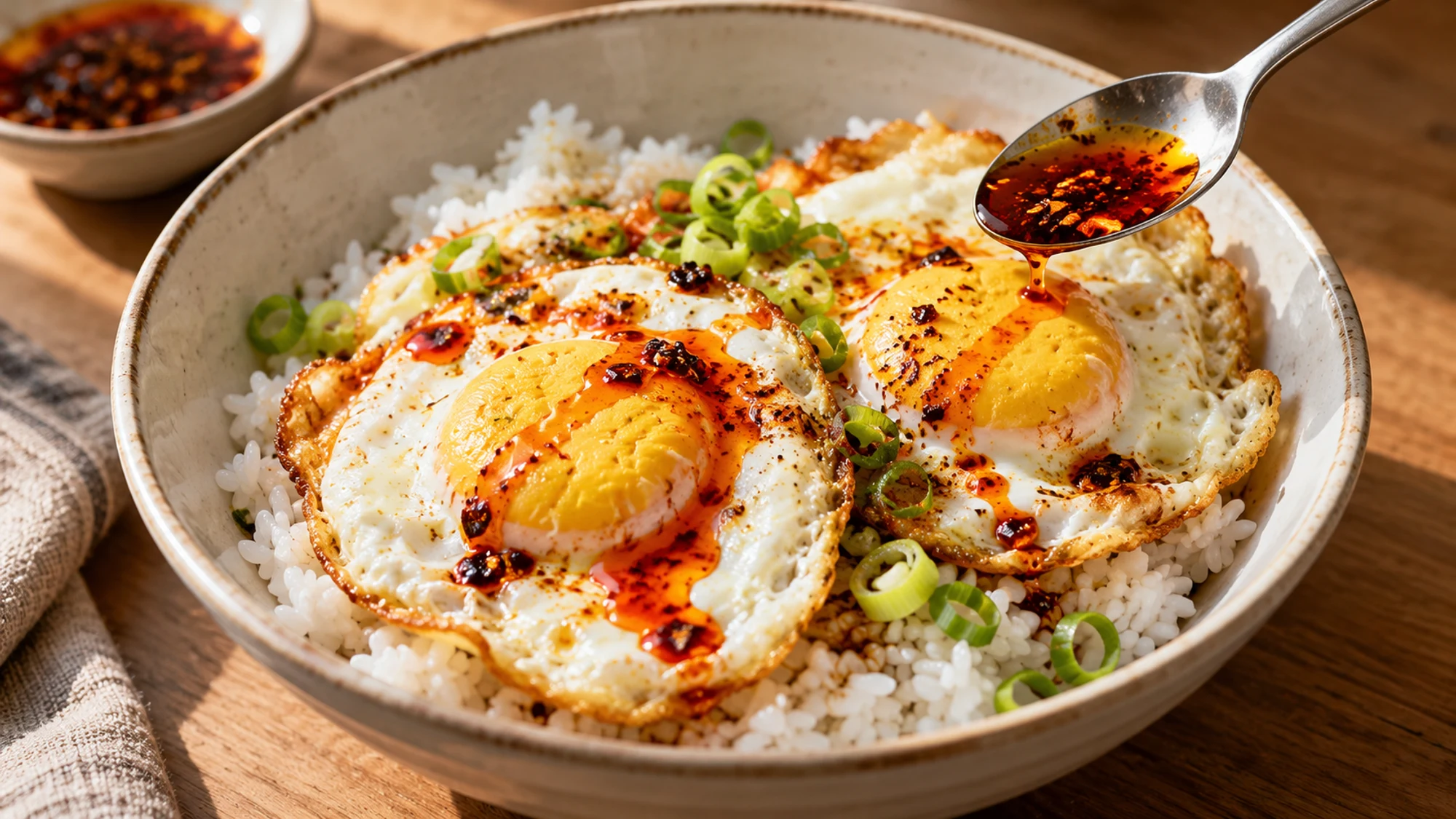
Health Benefits and Everyday Trade-Offs
Eggs contribute protein, and rice provides a carbohydrate base. Canada’s Food Guide overview of protein foods places eggs within a varied eating pattern. The small scallion garnish adds flavor and color, while a separate vegetable side makes a more substantial contribution to the meal’s variety.
Oil portions, soy sauce, and the chosen chili-oil brand affect the finished bowl. Reduced-sodium soy sauce still contributes sodium, and commercial chili oils may already contain salt. Check labels for allergens, too: eggs and soy are present, soy sauce may contain wheat, and chili oils can include peanuts, sesame, or other ingredients.
Enjoy the eggs, rice, and chili flavor as part of the whole meal. Measuring the oils and sauce gives you a clear starting point without needing a sweeping health label.
Bottom Line
Chili oil eggs turn hot cooked rice into a straightforward savory bowl when you keep the sequence clear: rice ready, eggs fully cooked, chili oil added off the heat. Watch the edges, lower the heat to finish the tops, and choose a jar whose spice level suits you. I would keep the first serving simple, with scallion and the measured sauce, then decide whether anything else is needed.
Chili Oil Eggs Recipe

Ingredients
- 4 large eggs
- 1 tablespoon neutral cooking oil 15 ml, divided between two batches
- 2 teaspoons commercial chili oil 10 ml; choose a heat level you enjoy
- 2 cups hot fully cooked white rice about 320 g; rice cooking time is not included
- 1 scallion about 15 g, rinsed and thinly sliced
- 1 teaspoon reduced-sodium soy sauce 5 ml
Equipment
- 10–12-inch nonstick skillet with a lid
- Small bowl for cracking eggs
- Spatula
- Cutting board
- Knife
- Measuring cups and spoons
- Two serving bowls
Instructions
- Rinse the scallion under running water, pat dry and slice thinly. Divide the hot cooked rice between two bowls.
- Heat a 10–12-inch nonstick skillet over medium-high heat with half the neutral cooking oil (1½ teaspoons). Crack two eggs, one at a time, into a small bowl and slide them into the skillet, leaving a little space between them.
- Cook for 1–2 minutes, until the edges are golden. Reduce the heat to medium-low, cover and cook for about 2–3 minutes more, or as long as needed until both the whites and yolks are firm. Adjust the heat if the edges brown too quickly.
- Transfer the two cooked eggs to one rice bowl. Repeat with the remaining 1½ teaspoons neutral oil and two eggs, then transfer them to the second rice bowl.
- With the eggs off the heat, drizzle 1 teaspoon commercial chili oil over each bowl. Add ½ teaspoon reduced-sodium soy sauce and half the sliced scallion to each. Serve promptly.
Video
Notes
Tried this recipe?
Let us know how it turned out!Emily is Spoonvale’s recipe-writing persona, bringing a warm, practical voice to everyday cooking. Her focus is simple: approachable meals, comforting flavors, and clear instructions that help make time in the kitchen more enjoyable.