
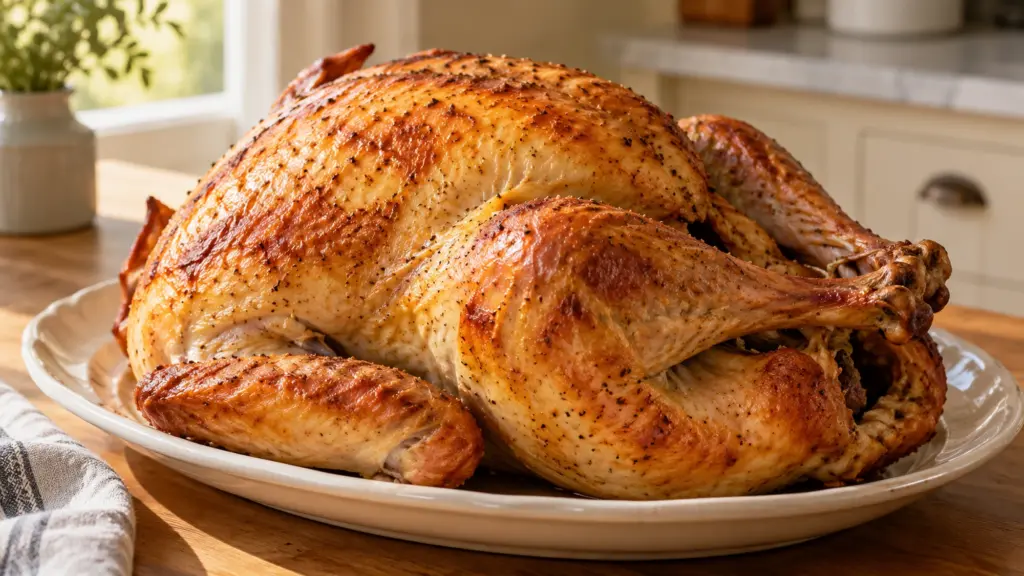
The roasting pan may fit the oven perfectly while the refrigerator has other ideas. Before planning a wet-brined turkey, give the cold storage space the same attention as the bird. This brine for turkey uses weighed salt, a little brown sugar, lemon, and rosemary, followed by a straightforward unstuffed roast.
For one fully thawed, plain 12-pound turkey, the key is a measured salt solution kept at 40°F or colder for the entire soak. Weighing the salt avoids the differences between a fluffy spoonful of kosher salt and a dense spoonful of fine salt. Start with chilled water, keep the bird refrigerated, and use a thermometer to judge the roast.
Serving Suggestions for Brined Turkey
Lemon and rosemary make a useful background for familiar sides without asking everything on the table to taste alike. Roasted vegetables, mashed potatoes, and a sharp cranberry relish give the plate different textures. If I were planning the menu, I’d choose one bright, tart side to balance the richness of the meat and skin.
The pan drippings may be salty after brining, so taste them before deciding how to use them. An unsalted sauce base gives you more control than adding a salty broth automatically. Keep stuffing in a separate baking dish; the turkey’s cavity stays empty in this recipe.
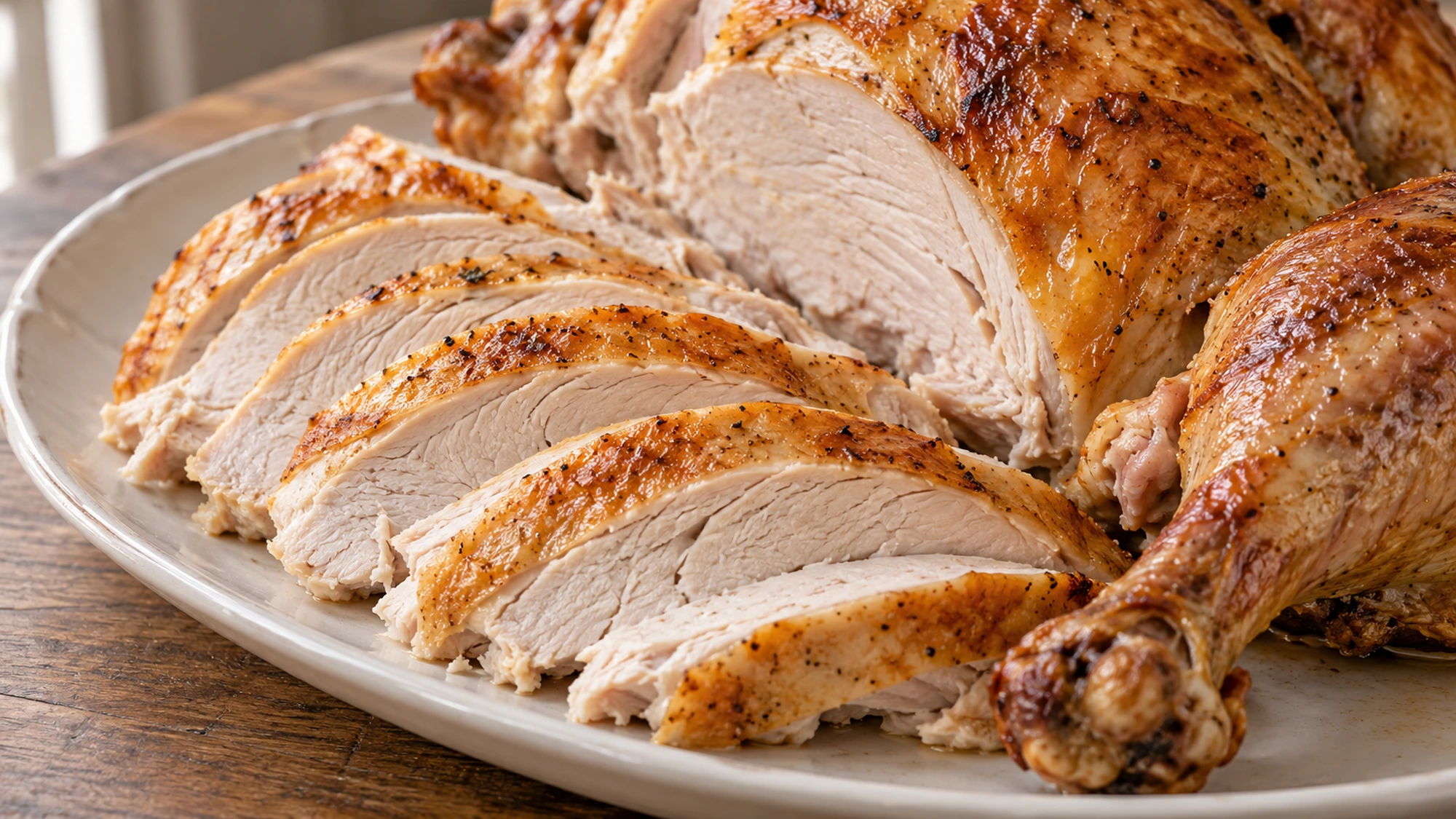
- For the first meal: Offer both breast and dark meat so everyone can choose.
- For leftovers: Pack carved meat separately from sauces and bread, then build sandwiches in a baguette or a grain bowl later.
- For a manageable table: Put sides in serving bowls instead of crowding the turkey platter.
The USDA’s turkey roasting guidance also covers leftovers: refrigerate within two hours, or one hour above 90°F, and use refrigerated cooked turkey within 3–4 days. Divide it into shallow containers; reheat leftovers to 165°F.
Variations on a Brine for Turkey
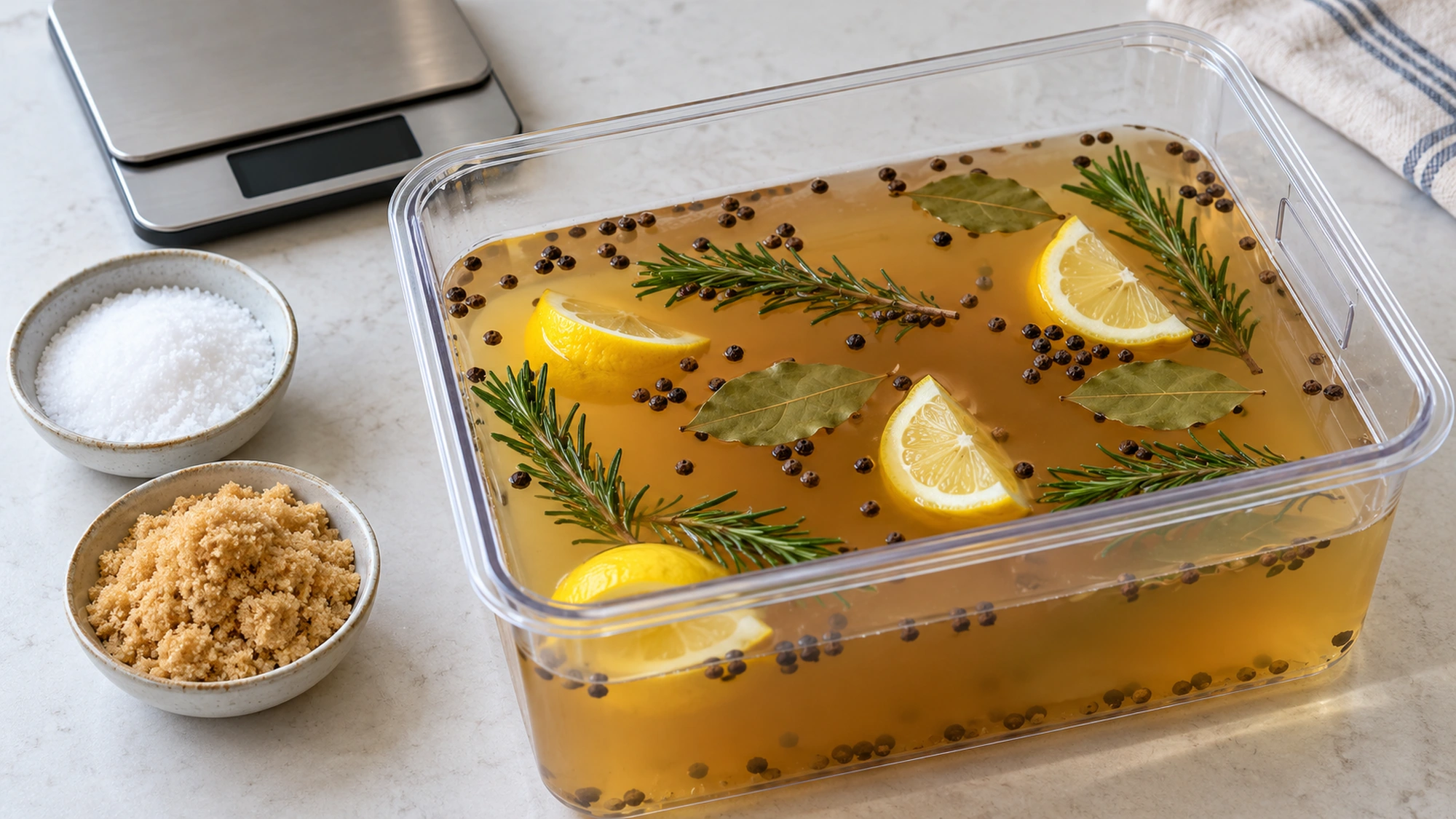
Keep the salt weight, water quantity, bird size, and soak time steady while changing the aromatics. The salt is doing a different job from the lemon peel or rosemary. If I wanted a more woodsy aroma, I’d exchange the rosemary for the same number of small thyme sprigs, rather than adding another handful of herbs.
Package labels matter more than an extra bay leaf. This recipe is for a bird without added salt or solution, and a fresh or refrigerator-thawed turkey must still be within its safe storage period. Follow USDA poultry brining guidance and include the soak within the one-to-two-day window after thawing or buying a fresh bird. Use this quick decision table before committing refrigerator space:
| What the package or kitchen tells you | What to do |
|---|---|
| Plain, fully thawed turkey with no added solution | Suitable for this measured wet brine |
| Enhanced, self-basting, pre-brined, or kosher turkey | Skip this additional salt soak |
| Bird still frozen inside | Finish thawing safely in the refrigerator first |
| Covered container will not fit the refrigerator | Choose another preparation; do not brine on the counter |
- Change the citrus to one small quartered orange if you prefer its sweeter aroma.
- Leave out the peppercorns for a gentler aromatic mixture.
Do not dilute the prepared brine randomly or keep adding salt by eye.
Health Benefits and the Sodium Trade-Off
Turkey supplies protein, but brining is a seasoning technique, not a way to turn the roast into a low-sodium food. Some salt enters the meat, and the amount retained varies. The discarded brine cannot be counted as though it were all eaten, or as though none of it mattered.
For anyone comparing sodium choices, the FDA’s label-reading guidance is a useful starting point. A plain roast without a salt brine offers more control over added sodium. Herbs, citrus, vegetables, and portions still contribute to how the complete meal comes together.
- Keep extra salt off the skin after brining.
- Use vegetables and unsalted sides to bring variety to the plate.
Never treat brine as a disinfectant: refrigeration, clean handling, and thorough cooking remain essential.
Bottom Line
A good brine for turkey begins with the package label and the refrigerator, then moves to the scale. Keep the solution cold, follow the measured recipe, and roast to the required temperature rather than relying on browned skin. Do not rinse the raw bird after its soak; drain it carefully, pat it dry, and clean anything that touched raw turkey or brine.
Brine for Turkey Recipe

Ingredients
- 1 whole turkey 12 pounds; fully refrigerator-thawed, plain and unenhanced, without added salt or solution; neck and giblets removed
- 7.5 L water refrigerator-cold, 40°F or below; not warm or room temperature
- 300 g fine salt weigh it; do not substitute a cup measure
- 150 g light brown sugar
- 1 lemon scrubbed and quartered
- 4 sprigs fresh rosemary about 4 g
- 4 dried bay leaves
- 1 tablespoon whole black peppercorns about 7 g
- 2 tablespoons olive oil 30 mL
- 120 mL water for the roasting pan
Equipment
- Snug food-grade lidded brining container, about 16–24 quarts, that fits the bird, the measured brine and the refrigerator
- Kitchen scale; measuring jug and measuring spoons
- Long stirring spoon; tongs; paper towels
- Roasting pan and rack; oven
- Instant-read food thermometer and refrigerator thermometer
- Carving knife and cutting board
- Clean food-safe plate, aluminum foil and food-safe kitchen twine, if needed
Instructions
- In the clean food-grade brining container, combine the 7.5 L refrigerator-cold water, 300 g fine salt and 150 g brown sugar. Stir for 3–5 minutes, until no salt or sugar crystals remain on the bottom. Do not warm the brine.
- Add the quartered lemon, rosemary, bay leaves and peppercorns. Check with the food thermometer that the liquid is 40°F or below before it touches the turkey.
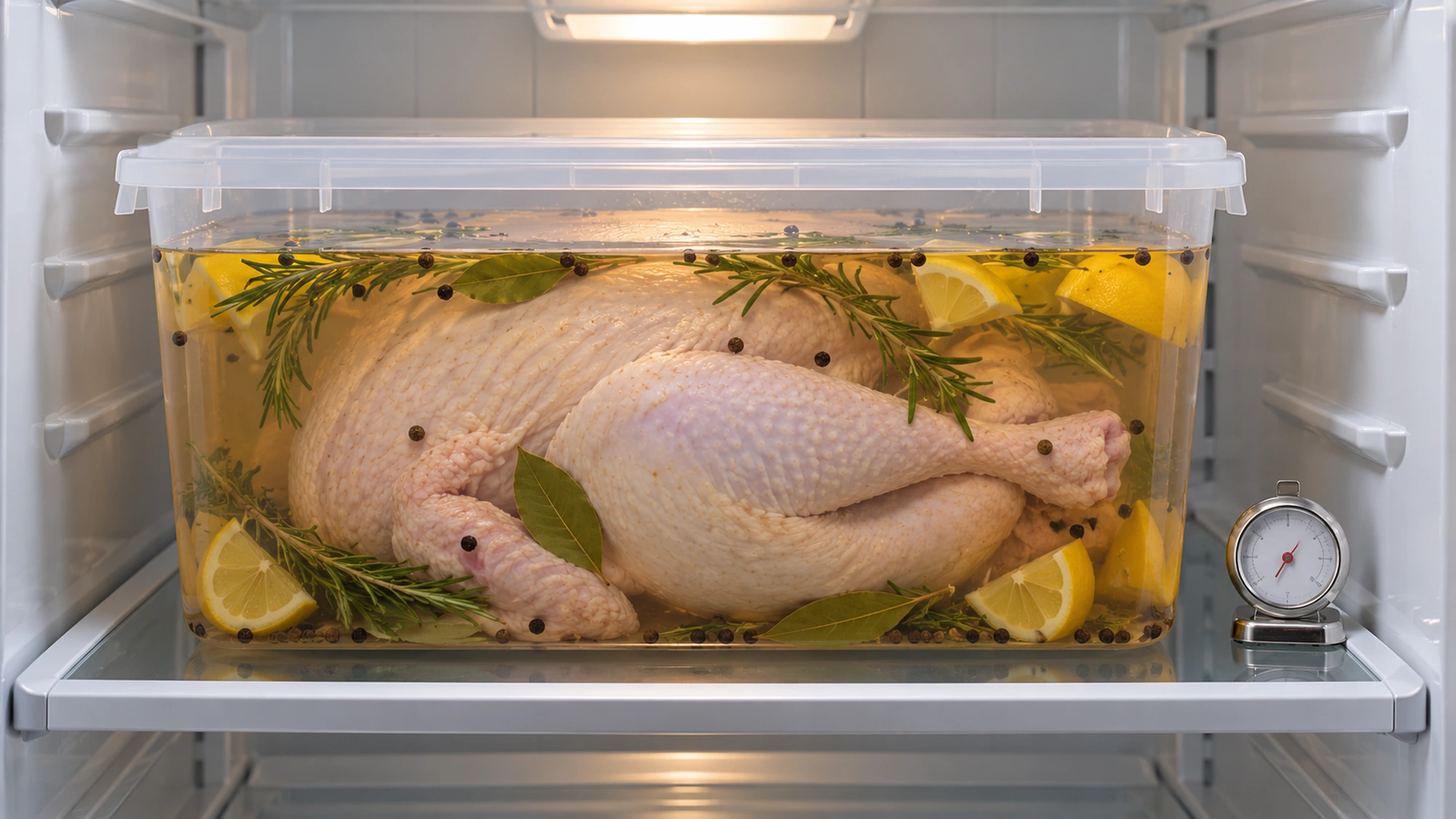
- Confirm the fully thawed turkey has no added salt or solution, and that the neck and giblets are removed from both cavities. Lower it carefully into the brine; the measured liquid must cover the bird in a snug container. Use a clean food-safe plate to keep it submerged if necessary. Cover and refrigerate at 40°F or below for 12 hours. Include this soak within the one-to-two-day refrigerator storage period for a fresh or fully refrigerator-thawed turkey.
- Heat the oven to 325°F. Set a rack in the roasting pan. Carefully lift the turkey from the brine over the container so it drains without splashing. Discard all used brine and aromatics. Do not rinse the raw turkey. Pat the skin and cavities dry with paper towels, then wash hands and clean and sanitize surfaces and utensils that touched raw turkey or brine.
- Set the turkey breast-side up on the rack with the cavity empty. Rub the skin with the 2 tablespoons olive oil; add no more salt. Tuck the wing tips under the bird and, if desired, loosely tie the legs with food-safe kitchen twine. Pour the 120 mL water into the pan below the rack. Wash hands again after handling the bird.
- Roast the unstuffed 12-pound bird for approximately 3–3¾ hours, beginning temperature checks around 2¾ hours. If the skin browns too quickly, loosely cover the browned area with foil. Continue until a food thermometer reads at least 165°F in the thickest breast and the innermost thigh and wing, without touching bone. Golden skin and elapsed time do not establish doneness.
- Rest for 20 minutes before carving. Refrigerate leftovers in shallow containers within 2 hours, or within 1 hour if the room or outdoor temperature is above 90°F. Use refrigerated cooked turkey within 3–4 days and reheat leftovers to 165°F.
Video
Notes
- Before starting, confirm that the covered container fits in a refrigerator that maintains 40°F or below and that its shape will allow the measured brine to cover the turkey. Choose a snugger food-grade container if needed; do not dilute or salt the solution by eye.
- This method is only for a fully thawed plain turkey without added solution. Skip enhanced, self-basting, pre-brined and kosher birds.
- Thaw in the refrigerator before starting. Turkey thawed in cold water or a microwave must be cooked immediately and is not suitable for this overnight soak.
- Thawing time is additional and is not included in the recipe times. Brine for 12 hours, and cook promptly afterward within the safe storage window.
- Pan drippings can be salty. Taste fully cooked drippings before adding them to gravy, and use an unsalted sauce base.
Tried this recipe?
Let us know how it turned out!Emily is Spoonvale’s recipe-writing persona, bringing a warm, practical voice to everyday cooking. Her focus is simple: approachable meals, comforting flavors, and clear instructions that help make time in the kitchen more enjoyable.