
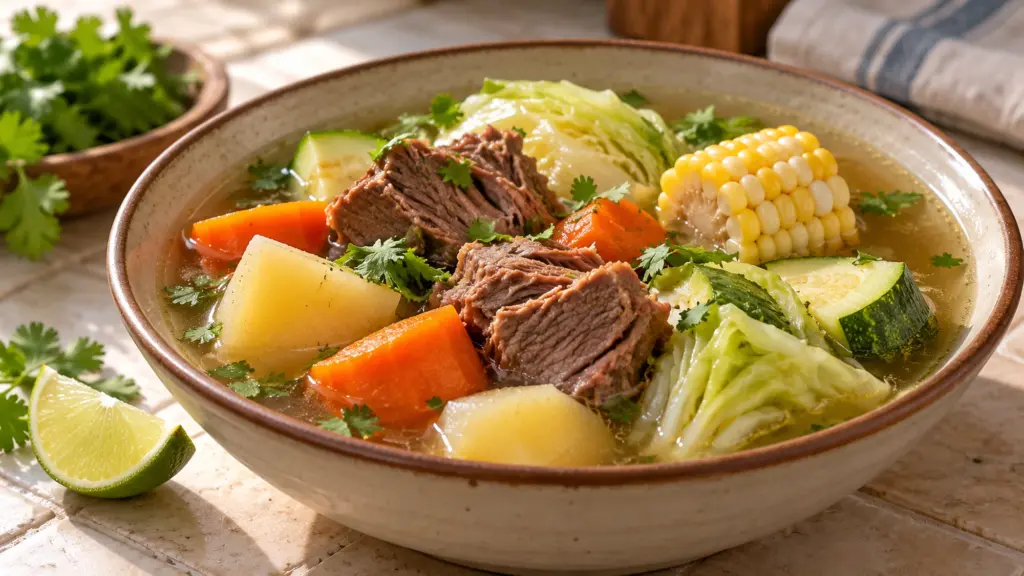
A bowl of caldo de res should give you something to spoon and something to cut: tender beef, a piece of corn, and vegetables substantial enough to recognize. This version starts with bone-in beef shanks and water, then builds the bowl gradually. There is no need to turn the vegetables into the broth while waiting for the meat.

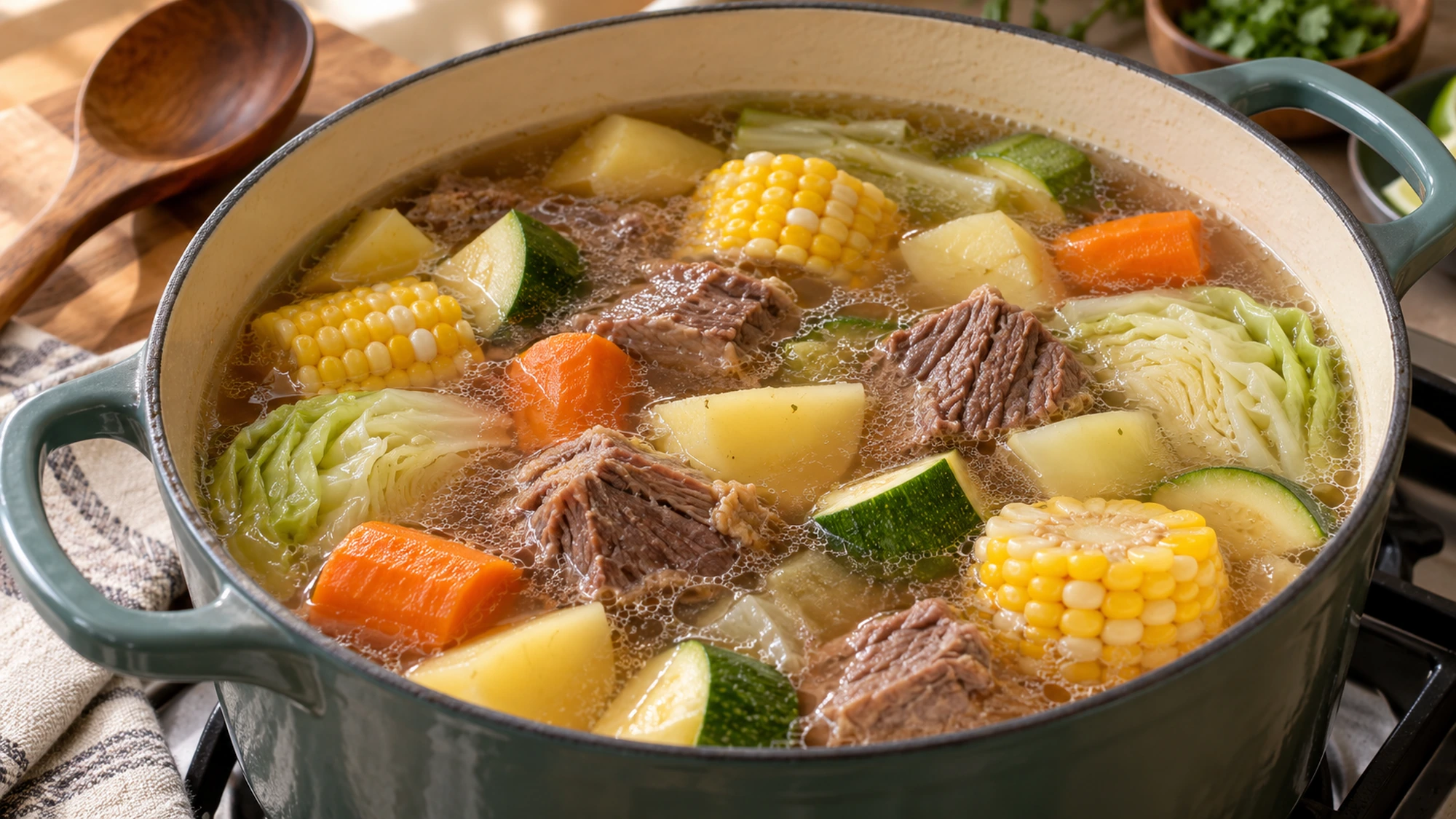
Simmer the beef gently until it yields to a fork, then add the vegetables in two stages. Carrots, potatoes and corn need a head start; cabbage and zucchini join near the end so they keep some shape.
The quiet simmer is the useful part. Beef shank suits slow, moist cooking, and its connective tissue needs time to soften. I’d choose that patient approach over a hard boil: it gives you more control over both the meat and the liquid.
Serving Caldo de Res Without Overloading the Bowl
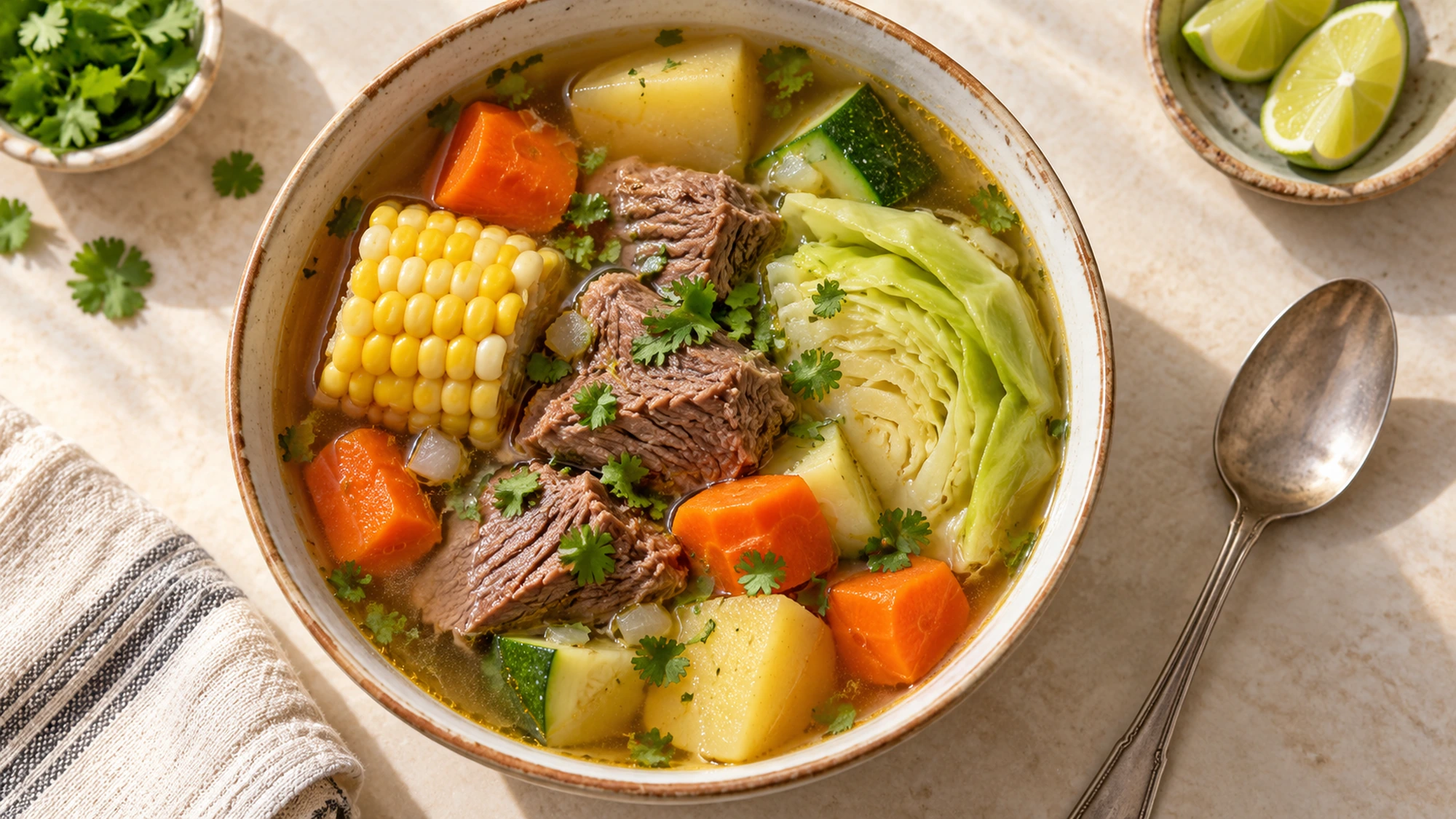
Ladle a little broth into each bowl first, then divide the beef and vegetables. A corn segment and a cabbage wedge take up more space than their weight suggests, so leave room to use the spoon. Put lime on the table rather than squeezing it into the whole pot.
I’d keep the first bowl simple before reaching for extra salt or toppings. For a bread accompaniment, Spoonvale’s baguette with a crisp crust gives you something to dip. Serve bread separately so it does not soak up the broth before everyone sits down.
- Divide the corn into six segments before cooking, one for each serving.
- Offer optional chopped cilantro and lime wedges separately.
- Use a fork alongside the spoon for the larger vegetable pieces.
| Addition | Approximate time | Useful cue |
|---|---|---|
| Carrots, potatoes and corn | 15 minutes before the next addition | Potatoes beginning to soften |
| Cabbage and zucchini | 10–15 more minutes | Vegetables tender, with recognizable edges |
| Beef returned to the pot | Until hot throughout | Meat and broth ready to serve together |
A comfortable bowl has room for broth as well as the larger pieces. Divide the solids fairly, then ladle more liquid around them.
Caldo de Res Variations and Texture Choices
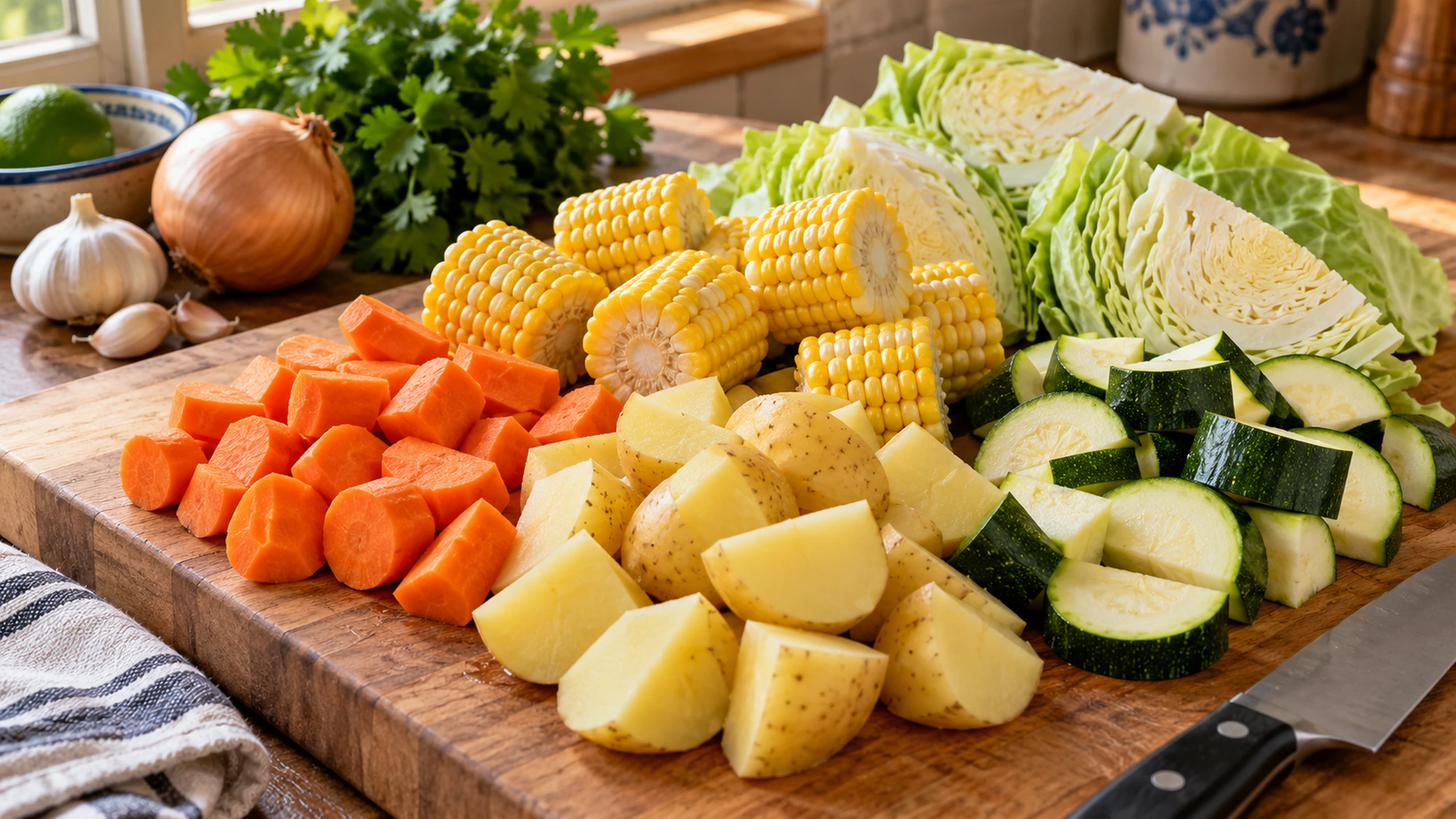
Keep the vegetable pieces similar in size within each type. Thick zucchini pieces are easier to keep intact than thin slices, while a small cabbage wedge holds together better when a little of its core remains. Wash and prepare everything before the final cooking stages begin.
This is a clear-broth version; tomato-seasoned versions are also common, but adding tomato or bouillon changes the seasoning and the color. If you change the base, taste before adding the full salt amount. Water lets the beef supply the central flavor here.
- For less fat on the surface, skim carefully before the vegetables go in.
- For softer cabbage, add it a few minutes before the zucchini.
- For easier serving, remove the cooked meat from the bones and check it carefully for fragments.
- If a vegetable becomes tender ahead of the others, lift it out with a slotted spoon and return it at the end. That is more useful than letting the whole pot soften together.
I prefer vegetables with a little structure in this soup. Their different textures are part of the appeal, so give each addition its own time.
Health Benefits and Practical Balance
Beef supplies protein, while the vegetables add variety to the bowl. The USDA’s protein-food guidance encourages choosing a range of protein foods. Across the week, that can mean alternating a beef dinner with meals built around beans, fish, eggs or poultry.
The fat and sodium depend on the shanks, trimming, skimming and final seasoning. Using water avoids adding packaged broth’s salt, but the measured salt still counts. Skim visible surface fat if you prefer, and taste the broth before adding the remaining salt.
- Cool leftovers promptly in shallow containers rather than leaving a full stockpot on the counter.
- Follow USDA leftover guidance: refrigerate within two hours, keep for three to four days, and reheat to 165°F (74°C).
Treat the soup as a satisfying meal with varied ingredients, and give cooling and reheating the same attention as the initial simmer.
Bottom Line
Good caldo de res leaves the beef tender and the vegetables recognizable. Start with the shanks, wait for the fork-tender cue, and let the vegetables join in stages. Serve the larger pieces with enough broth to enjoy them, then let each person finish a bowl with lime if they like.
Caldo de Res Recipe


Ingredients
- 2.5 lb bone-in beef shanks about 1.13 kg; trim thick exterior fat
- 12 cups water about 2.84 L; plus up to 2 cups hot water if needed to maintain the broth level
- 1 medium white onion about 200 g, peeled and quartered
- 4 cloves garlic peeled
- 2 tsp fine salt 12 g, divided
- 3 medium carrots about 225 g, peeled and cut into 1½-inch pieces
- 2 medium gold potatoes about 300 g, scrubbed and cut into 1½-inch pieces
- 2 ears corn husked; each cut crosswise into thirds
- 2 medium zucchini about 300 g, cut into thick half-moons
- 300 g green cabbage cut into small wedges, with a little core attached
- 0.25 cup chopped cilantro optional
- 1 lime optional; cut into six wedges
Equipment
- 8-quart stockpot with lid
- Tongs
- Skimmer or slotted spoon
- Ladle
- knife and cutting board
- Measuring cups and spoons
- Instant-read thermometer
Instructions
- Put the beef shanks, onion, garlic and 12 cups water in an 8-quart stockpot. Bring just to a boil over medium-high heat, then reduce to a gentle simmer. Skim off the foam that rises during the first 15–20 minutes.
- Add 1 teaspoon of the salt. Partially cover and simmer gently for about 2–2½ hours, until a fork goes through the meat easily. The broth should move gently rather than boil hard. Add some of the extra hot water only if needed to keep the shanks mostly submerged.
- Lift the shanks onto a board. Remove the onion and garlic from the broth and skim excess surface fat. When the meat is safe to handle, remove it from the bones, discard the bones and tough connective pieces, and check carefully for bone fragments. Cut or pull the meat into large bite-size pieces.
- Bring the broth back to a gentle simmer. Add the carrots, potatoes and corn and cook for 15 minutes, until the potatoes have begun to soften.
- Add the cabbage and zucchini. Simmer for 10–15 minutes, until all the vegetables are tender. Return the beef and heat it through. Taste the broth and add the remaining measured salt only as needed.
- Divide the beef and vegetables among six bowls, including one corn segment per bowl. Ladle broth around them and serve with the optional cilantro and lime wedges.
Video
Notes
Tried this recipe?
Let us know how it turned out!Emily is Spoonvale’s recipe-writing persona, bringing a warm, practical voice to everyday cooking. Her focus is simple: approachable meals, comforting flavors, and clear instructions that help make time in the kitchen more enjoyable.