
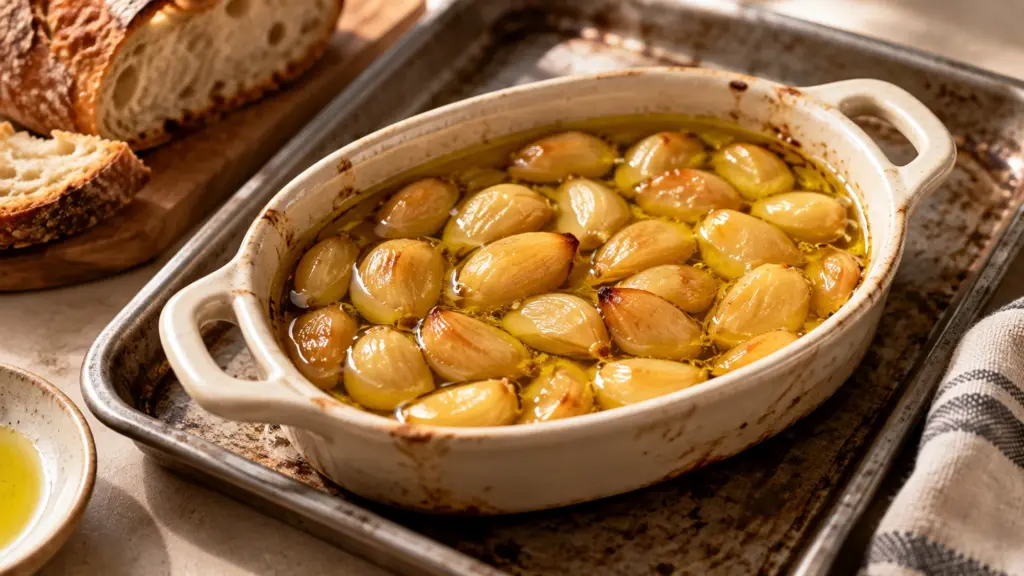
Garlic confit begins with peeled cloves and enough olive oil to cover them. Slow oven heat makes the cloves soft enough to spread, while the oil takes on their flavor. The method is simple, but the storage decision matters just as much as the cooking.
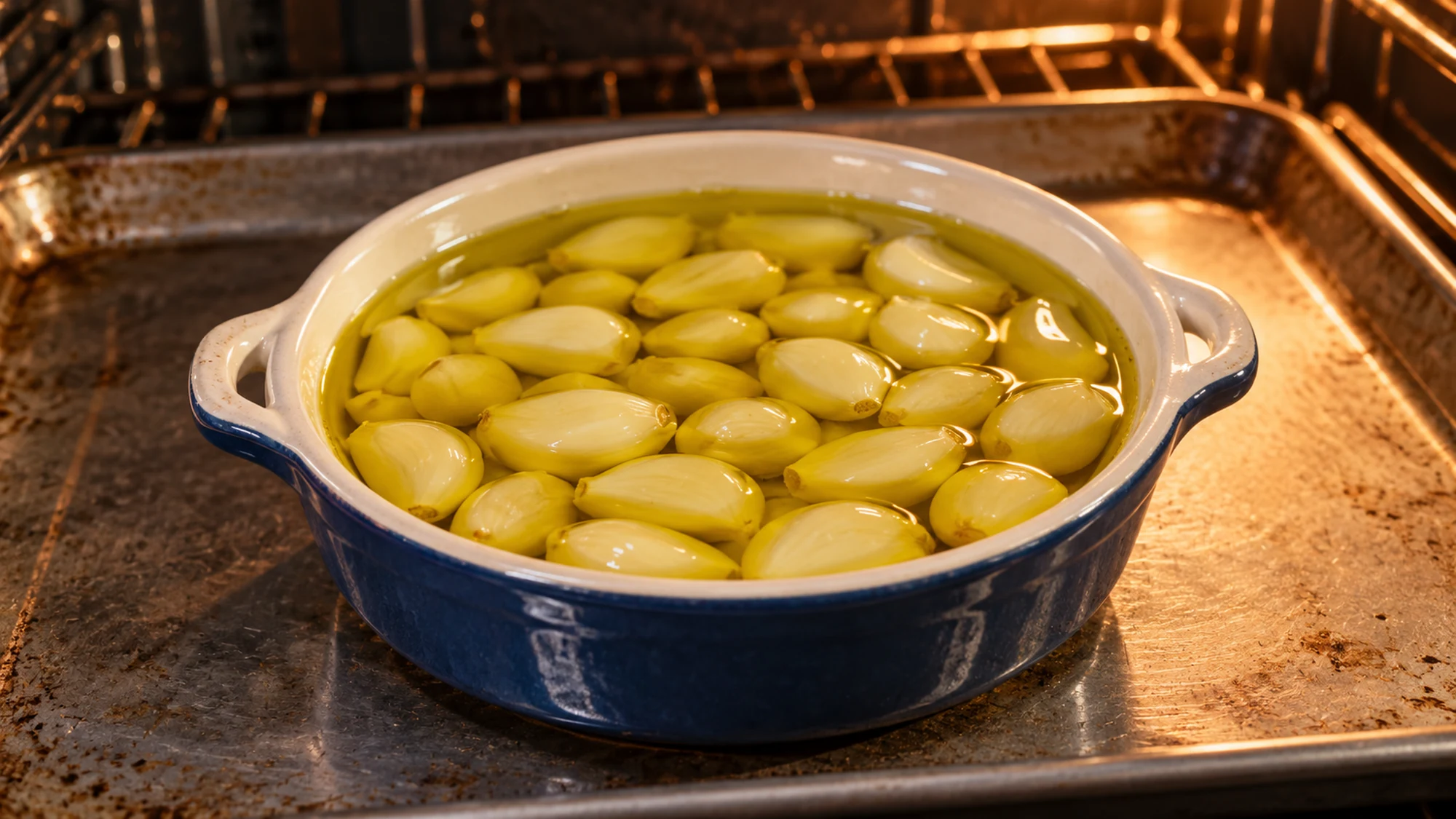
To learn how to make garlic confit, put 240 g peeled garlic in a small deep ovenproof dish, cover it completely with 1½ cups olive oil and cook at 250°F (120°C) until the cloves mash easily with a fork, about 90 minutes to two hours. Divide the finished garlic and oil into small containers, refrigerate promptly and use within four days, or freeze.
Cooking garlic in oil does not turn it into a shelf-stable preserve. Plan the meal or freezer portions before the dish goes into the oven.
How to Make Garlic Confit: Serving Ideas
Lift a few tender cloves with a clean spoon and mash them onto warm toast. They also blend into a dressing, soften into mashed potatoes or bring mellow garlic flavor to a pasta sauce. A little of the oil can be used in cooking, but account for it as oil when estimating a serving.
The cloves should be soft and lightly golden, not hard, crisp or deeply fried. An uncovered dish in a low oven lets you check them occasionally. If exposed cloves begin to brown before their centers soften, add enough oil to cover them and check that your oven temperature has not risen above the setting.
- Use a clean utensil for each serving.
- Keep both cloves and oil refrigerated between uses.
- Freeze what will not be used within the four-day limit in small, labeled portions.
I’d cook this for a planned toast or pasta meal and freeze the extra portions on the day it is made. That keeps the storage plan as straightforward as the ingredient list.
How to Make Garlic Confit: Oil and Storage Choices
A small, deep ovenproof dish keeps the measured oil over the cloves. A wider dish may leave garlic exposed. Set the dish on a rimmed tray for safer handling.
Garlic in oil has a specific botulism risk at room temperature. The CDC directs home cooks to refrigerate homemade garlic oils and discard them after four days. The National Center for Home Food Preservation also supports freezing garlic in oil for longer storage. Treat the flavored oil and the cloves alike, even if you strain them apart.
| Plan | Where it goes | Limit |
|---|---|---|
| Use soon | Covered, at 40°F (4°C) or below | Use or discard within 4 days of making |
| Save extra | Small freezer-safe portions | Freeze promptly for longer keeping |
| Serve | Only the amount needed | Return the rest to cold storage promptly |
After cooking, divide into shallow heatproof containers, let the intense heat subside briefly and refrigerate within two hours; keep at 40°F (4°C) or below. Label the preparation date and use or discard both garlic and oil within four days. Freeze portions you will not use in time. Never leave garlic in oil at room temperature for storage.
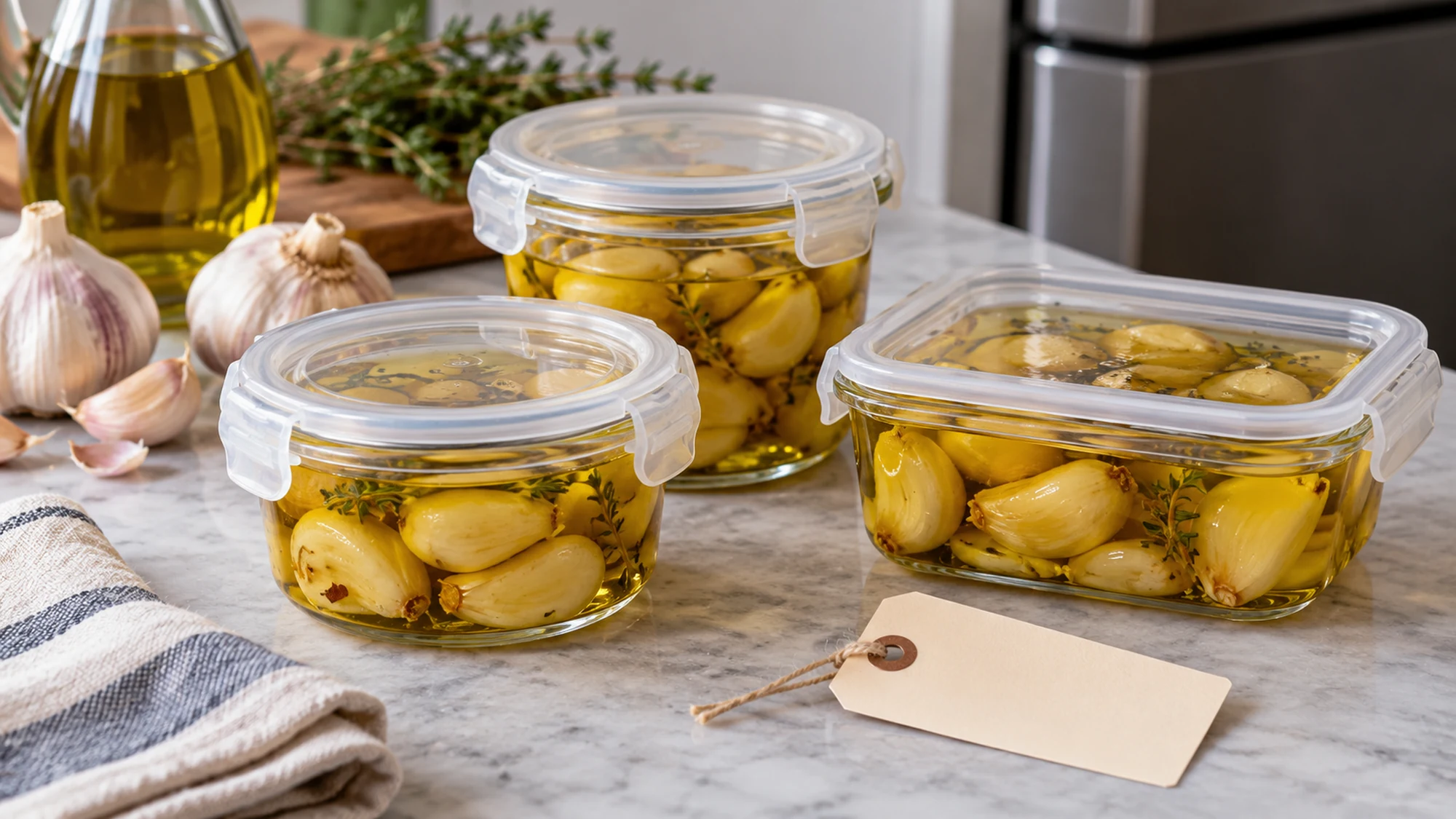
Do not rely on a clean jar, a low oven or a splash of lemon to make homemade garlic in oil safe on the shelf. For this recipe, cold storage and the four-day limit are part of the method.
Health Benefits and Garlic Portions
Garlic adds flavor; most of this recipe’s energy comes from olive oil. The card estimates one twenty-fourth of the batch and assumes all measured oil is consumed. A clove with only a drop of oil would contain less.
Confit is a cooking method, not a health treatment. Mild taste does not establish that stored garlic oil is safe; harmful toxin cannot be reliably detected by sight, smell or taste.
Because this condiment is made with a large volume of oil, a spoonful of oil and a spoonful of cloves are not nutritionally interchangeable. Measure what goes into the meal if you track portions. The estimate below divides the entire measured batch into twenty-four equal shares, including all the oil, so it is a planning figure rather than a prediction of what will cling to each clove.
- Use the oil as a measured ingredient in another dish rather than pouring freely.
- Treat the batch as an oily condiment, not a vegetable side in its own right.
- Keep the four-day date visible on every refrigerated container.
The useful benefit is culinary: a small amount adds mellow garlic flavor. Portion it, keep it cold and discard any refrigerated remainder at the stated limit.
Bottom Line
The method for how to make garlic confit is gentle oven cooking with the cloves fully covered in olive oil. Check for a soft, spreadable center. Cool in small portions, refrigerate promptly and use within four days, or freeze extra portions; the garlic and the oil share the same storage rule.
How to Make Garlic Confit Recipe

Ingredients
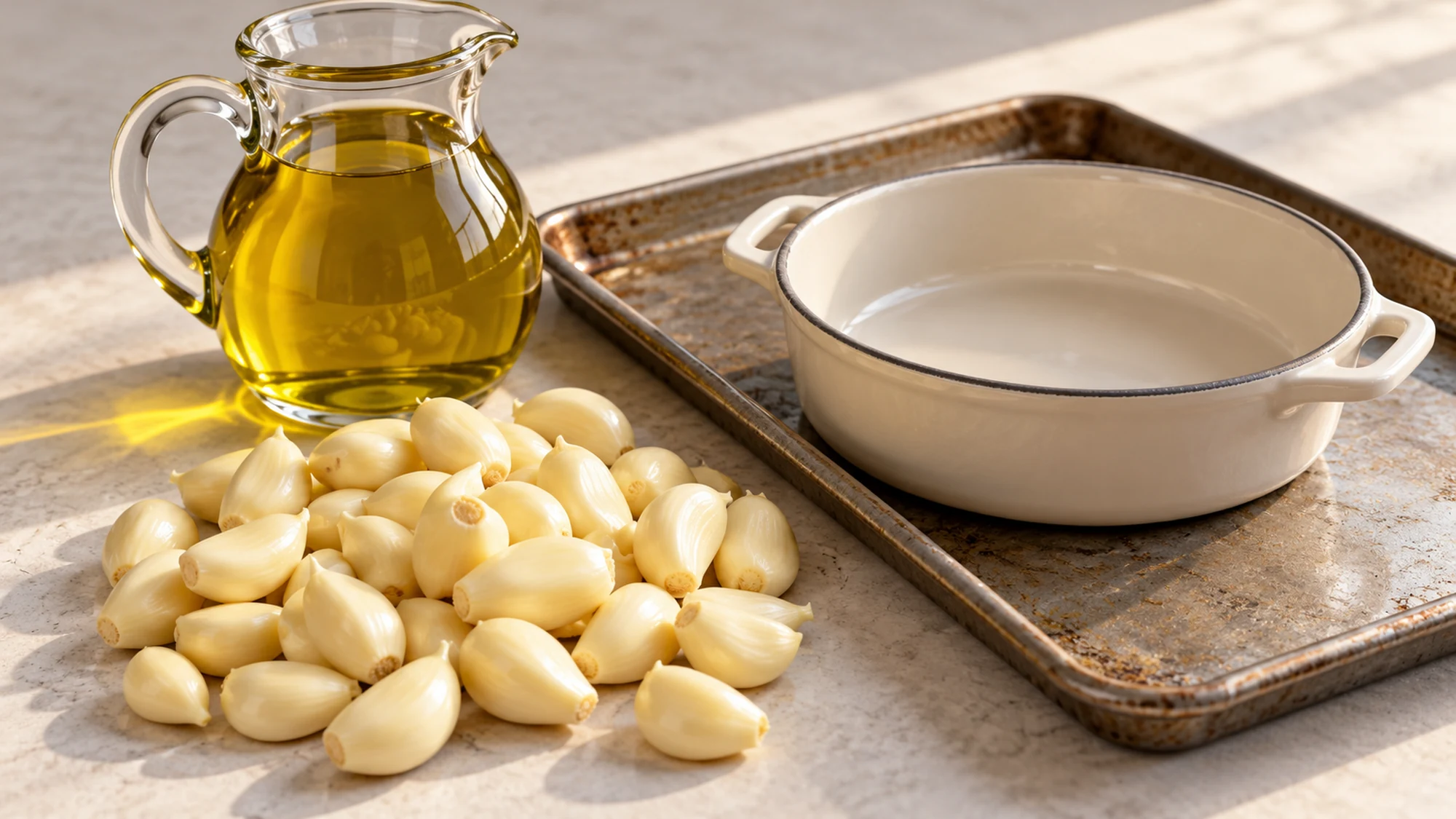
- 240 g peeled garlic cloves about 2 cups; fully peeled and trimmed
- 1 1/2 cups olive oil about 355 ml; use enough to keep every clove covered
Equipment
- Small deep ovenproof ceramic dish large enough for the cloves, narrow enough to keep them under the measured oil
- Rimmed baking tray for handling the hot dish
- Oven mitts
- Measuring cup and kitchen scale
- Fork or clean spoon to check texture
- Small shallow heatproof containers with lids for prompt cooling and cold storage
Instructions
- Heat the oven to 250°F (120°C). Put the peeled garlic cloves into a small, deep ovenproof ceramic dish set on a rimmed tray. Pour over the olive oil, checking that every clove is fully submerged.
- Transfer the tray to the oven. Cook uncovered for 90 minutes to 2 hours, checking occasionally, until the cloves are pale golden and mash easily with a fork; do not fry them dark or leave cloves exposed above the oil.
- Remove carefully and divide the hot garlic and oil among small, shallow heatproof containers. Let the intense heat subside briefly, cover and refrigerate promptly within 2 hours, at 40°F (4°C) or below. Label with the preparation date.
- Use clean utensils for serving. Keep both the cloves and oil refrigerated and use or discard within 4 days of preparation. Freeze extra portions promptly for longer keeping; do not store this homemade garlic in oil at room temperature.
Nutrition
Notes
Tried this recipe?
Let us know how it turned out!Emily is Spoonvale’s recipe-writing persona, bringing a warm, practical voice to everyday cooking. Her focus is simple: approachable meals, comforting flavors, and clear instructions that help make time in the kitchen more enjoyable.