
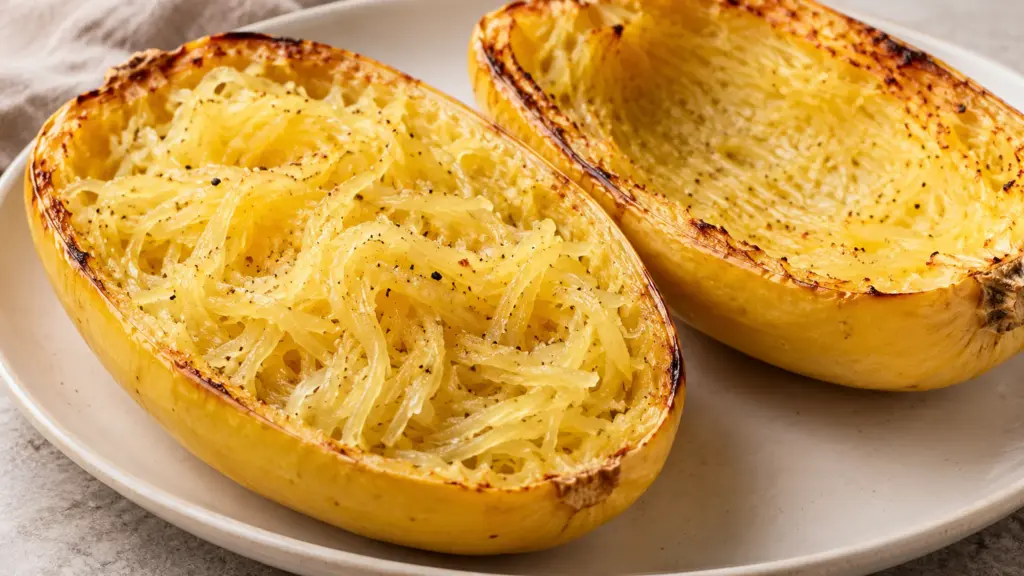
A spaghetti squash can sit on the counter looking more like a project than an ingredient. Once roasted, its pale yellow flesh separates into tender strands with a mild, slightly sweet flavor. It is useful when you want a vegetable side that can take a sauce without needing a complicated recipe.

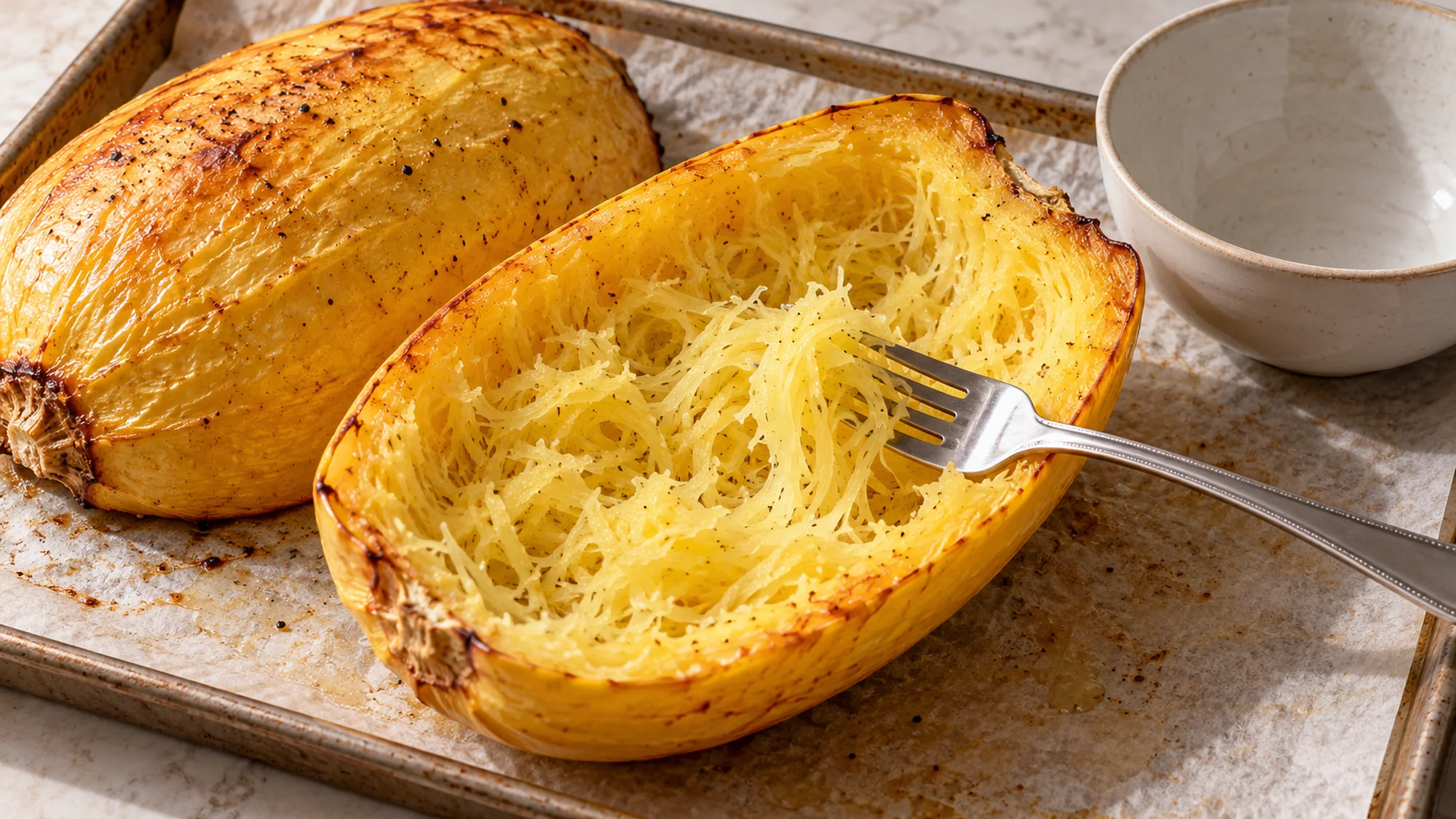
Roast cleaned, seeded spaghetti squash halves cut-side down at 400°F (200°C), then check the flesh before it becomes very soft. A fork should release separate strands that feel tender but still have a little bite. Add the sauce after loosening them.
I prefer stopping before the flesh becomes a soft heap, especially if another hot sauce will go on top. Learning how to cook spaghetti squash is mostly about cutting it carefully and checking it as it roasts. A bigger squash may need longer; the clock is a reminder to look, not a guarantee.
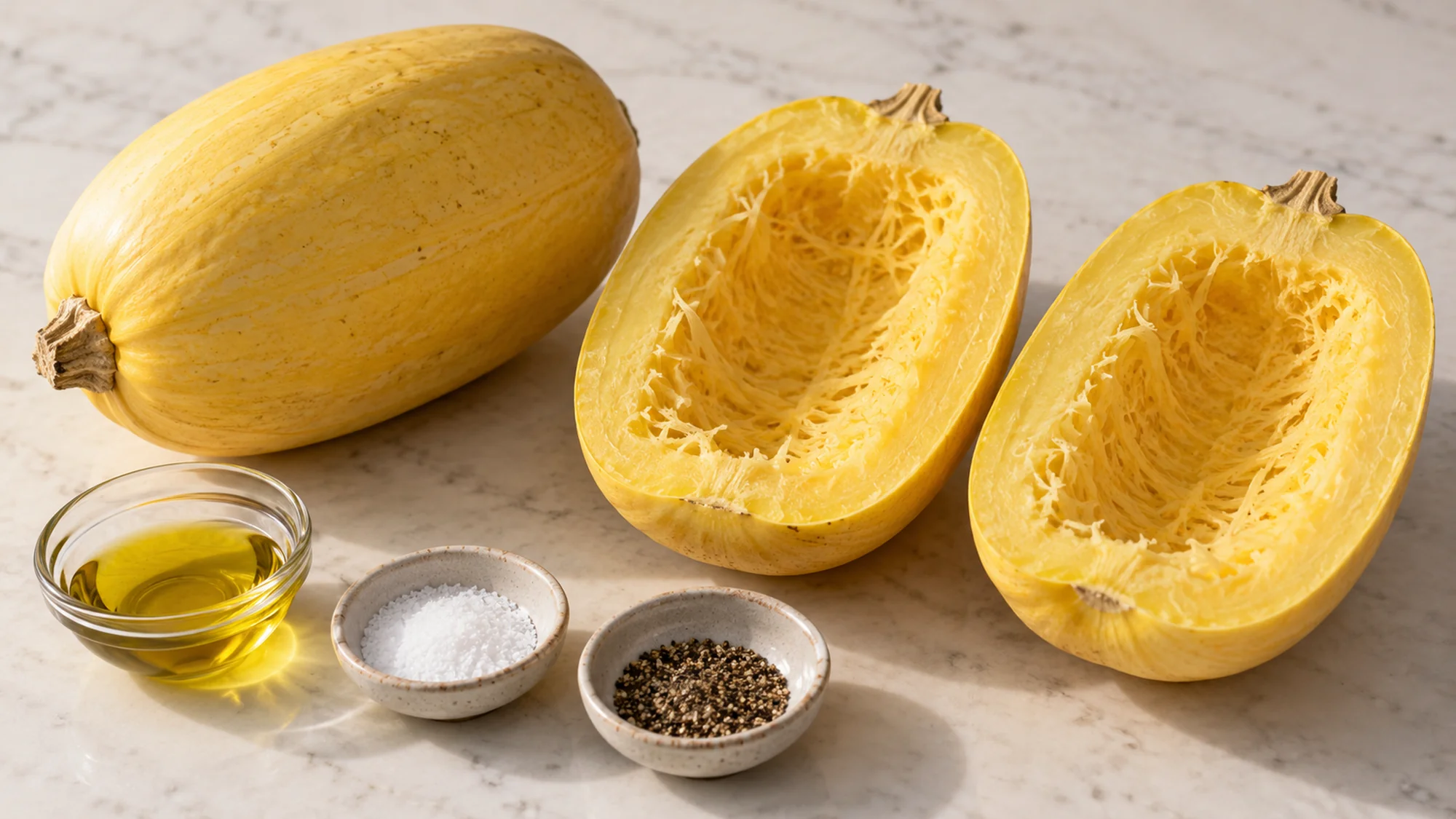
How to cook spaghetti squash for sauces and sides
Loosen the strands before adding a topping so you can see their texture and control how much sauce they receive. Start with a spoonful of a thick tomato sauce rather than flooding the bowl. The squash already contains moisture, and a watery topping can leave a puddle beneath an otherwise good dinner.
For a simple plate, serve the strands beside apricot chicken and something green. For a vegetarian meal, try white beans or lentils with a sauce you enjoy. I’d treat the squash as one part of the meal, with enough protein and other food to make dinner satisfying.
- Keep some strands plain until you know how much topping you want.
- Toss gently with a fork so the strands stay distinct.
- Divide leftovers into shallow containers instead of cooling a large stuffed shell.
| Serving style | What to add | Useful cue |
|---|---|---|
| Simple side | A little olive oil and seasoning | Taste before adding more salt. |
| Sauced bowl | A thick sauce, added gradually | Stop before liquid pools beneath the strands. |
| Leftover portion | Reheat only what you need | Reach 165°F (74°C) throughout. |
The strands can carry flavor, but they do not need to swim in it. Add a little sauce, toss gently and taste.
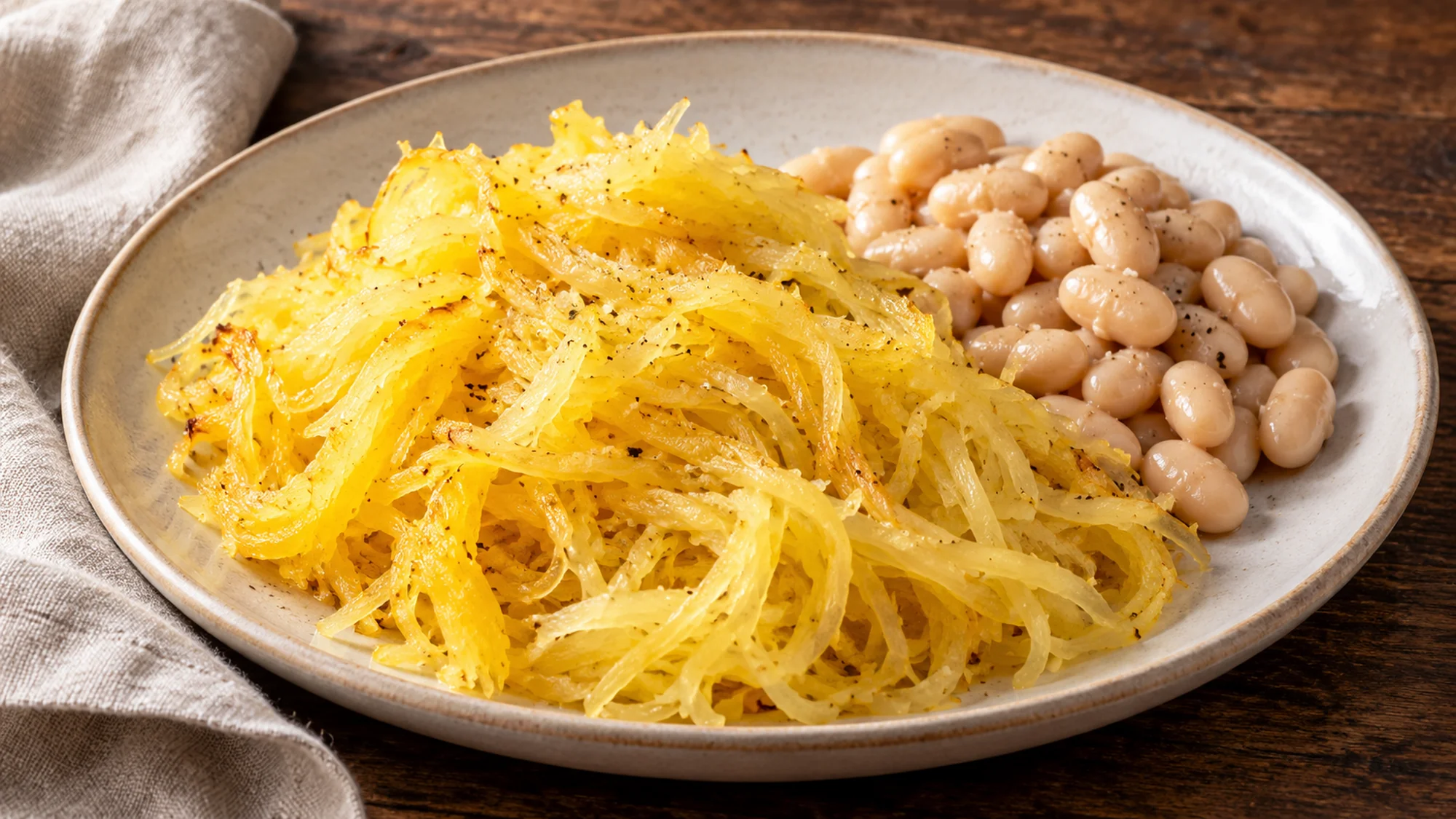
Seasoning variations for spaghetti squash
The plain roasting method leaves room for several finishes. Lemon zest and a small squeeze of juice make a bright side; a spoonful of pesto gives a richer result. These are serving variations, so add them after roasting and account for any salt already present in the topping.
Cutting deserves more attention than extra seasonings. Work on a steady board and keep fingers clear of the blade. If the squash will not open with controlled cuts, stop and choose fresh precut halves instead of forcing the knife. The FDA recommends washing produce before cutting, even when the skin will not be eaten.
- Use a pinch of chile flakes at the table for heat.
- For a dairy finish, add a little grated Parmesan after separating the strands.
- Keep toppings separate when preparing several portions ahead.
Change the finish to suit dinner, but keep the roasting method simple. Check for tender strands before committing to more oven time.
Health benefits in perspective
Spaghetti squash is another way to put vegetables on the plate. MyPlate’s vegetable guidance encourages variety because different vegetables provide different combinations of nutrients. Choosing a vegetable you enjoy preparing can be useful without turning it into a special health remedy or a strict replacement rule.
The strands resemble noodles, but the ingredients are different. Do not assume a bowl of squash supplies the same energy, protein or staying power as your usual pasta meal. Sauces and toppings also change the finished dish. I’d choose it for its mild flavor and texture, then build the rest of the meal around what you need.
Enjoy the squash as a vegetable with its own texture. A balanced meal matters more than making every ingredient imitate something else.
Bottom Line
Careful cutting and timely checking do more than extra oil or a long ingredient list. Roast until the flesh releases into separate strands, let it cool enough to handle and dress it lightly. Follow USDA leftover guidance: refrigerate in shallow containers within two hours, or one hour above 90°F (32°C), at 40°F (4°C) or below. Use within three to four days and reheat to 165°F (74°C). Keep the sauce separate when you can.
How to Cook Spaghetti Squash Recipe


Ingredients
- 1 medium spaghetti squash about 3 lb (1.36 kg), or two fresh precut halves totaling that weight
- 2 tsp olive oil
- 0.25 tsp fine table salt
- 0.125 tsp ground black pepper
Equipment
- Clean produce brush
- Stable cutting board and sharp chef’s knife
- 1 Large spoon for removing seeds
- 1 Rimmed half-sheet pan approximately 13 × 18 inches
- Baking parchment rated for 400°F (200°C)
- Measuring spoons
- Oven mitts and a spatula or tongs for safely turning the hot halves
- Fork and serving bowl
Instructions
- Wash your hands. Scrub the whole spaghetti squash under running water with a clean produce brush, then pat it dry with a clean towel. Do not use soap or detergent on the squash.
- Heat the oven to 400°F (200°C) with a rack in the middle. Line the rimmed 13 × 18-inch half-sheet pan with parchment rated for that temperature.
- Set the squash securely on a steady cutting board. Carefully cut it lengthwise into two halves with a sharp chef’s knife, keeping fingers clear and using controlled cuts beside the hard stem rather than forcing through it. If you cannot cut it steadily, stop and use fresh precut halves. Scoop out the seeds and loose stringy center with the large spoon.
- Rub the cut flesh of both halves with the measured olive oil. Sprinkle with the salt and black pepper. Place cut-side down on the prepared pan; do not add water.
- Roast for 40–50 minutes, checking at 35 minutes if the squash is small. Wearing oven mitts and using a spatula or tongs, carefully turn a half cut-side up, keeping your face away from escaping steam. Test the flesh with a fork: it should release into strands that are tender but retain a little bite. If still firm, return cut-side down and check again after 5 minutes. Larger squash may need longer.
- Let the halves cool for about 10 minutes, or until safe to handle. Use a fork to gently loosen the flesh into strands. Transfer to a serving bowl, taste the seasoning and serve plain or add a sauce gradually. Do not eat the hard rind.
Video
Notes
Tried this recipe?
Let us know how it turned out!Emily is Spoonvale’s recipe-writing persona, bringing a warm, practical voice to everyday cooking. Her focus is simple: approachable meals, comforting flavors, and clear instructions that help make time in the kitchen more enjoyable.