

A pitcher can look beautifully amber and still taste thin once the ice melts. Learning how to make iced tea starts with controlling two things separately: how long the leaves steep and how much water reaches the finished drink. This hot-brew method makes a concentrated base, then dilutes it before chilling.

Steep family-size black tea bags briefly in hot water, remove them, and add the measured cold water. Chill the finished tea before pouring it over ice. Sweetener and lemon are optional, so the pitcher can stay plain while each glass gets its own finishing touch.
I’d rather adjust a slightly strong glass with a splash of water than rescue a whole watery pitcher. Use bags labeled for iced tea and check their size: a family-size bag is not interchangeable with a small single-cup bag. The card below uses the family-size format.

Serving Suggestions for Freshly Brewed Iced Tea
Serve the tea thoroughly chilled in glasses with fresh ice. Keep the ice separate from the storage pitcher, where it would keep melting and quietly change the strength. If guests like different levels of sweetness, set out a small jug of syrup rather than sweetening every serving in advance.
A plain pitcher fits lunch just as easily as a cookout. Try it alongside grilled salmon or a sandwich, with lemon slices offered separately. I prefer lemon at the table; it lets the tea’s own aroma stay noticeable.
- Use clean, heat-safe equipment for brewing. Ordinary decorative glass pitchers may not tolerate boiling water.
- Chill the tea promptly after dilution in a covered container. Divide a large batch into smaller containers if that helps it cool.
- Pour out only what you expect to serve. Do not keep topping an old pitcher with fresh tea.
- Choose a serving glass with room for both tea and ice rather than relying on ice to cool warm tea.
Make the tea cold first and add ice at serving time. That small separation makes the final strength much easier to control.
Variations: How to Make Iced Tea With Less Sugar
The same pitcher can become lightly sweet, citrusy, or simply plain. Dissolve the optional sugar while the brewed concentrate is still hot; cold tea is not especially cooperative with sugar crystals. For a single glass, a little prepared syrup is easier to stir in.
Different teas need different brewing instructions. Follow the package rather than giving green tea, black tea, and herbal blends the same steep. For another way to serve black tea, our chai latte uses milk and whole spices instead of this chilled, diluted finish.
| Change | What to do | What changes |
|---|---|---|
| Unsweetened | Omit the optional sugar | Tea flavor stays more prominent |
| Lightly sweet | Dissolve sugar in the hot base | Sweetness is evenly distributed |
| Lemon | Add a slice when serving | Adds citrus aroma and tartness |
| Decaffeinated | Use an iced-tea product labeled decaf | Check its own brewing directions |
If the tea tastes harsh, a longer steep is not the fix. Follow the tea’s directions, then adjust dilution and sweetness separately.
Health Benefits and Sensible Serving Choices
Unsweetened tea lets you choose a drink without added sugar, but it does not need a detox promise to earn a place at lunch. Adding sugar, honey, or syrup changes that choice. I’d decide how sweet the drink needs to be before reaching for a second spoonful.
Black tea contains caffeine, and the amount varies with the product and brewing. The FDA’s caffeine guidance explains why individual sensitivity and total daily intake matter. Decaf tea can still contain some caffeine, so read the label if that distinction is important to you.
- Consider all the caffeinated drinks you have during the day, not just this pitcher.
- Keep lemon and sweetener optional instead of assuming everyone wants the same additions.
- Use the measured water for predictable dilution; a darker color alone does not tell you the caffeine content.
- For product-specific proportions and steeping, follow the manufacturer’s family-size tea instructions.
The useful benefit is choice: control the sweetness and serving size, and choose the tea that suits your caffeine needs.

Bottom Line
How to make iced tea is less about adding extras and more about giving the brew a clear plan. Match the bags to the recipe, keep the steep controlled, measure the dilution, and chill before serving. A simple pitcher leaves room for lemon, sweetness, or neither without losing the tea underneath.
Start with a measured brew, not a handful of ice. Then finish each glass the way you like it.
How to Make Iced Tea Recipe


Ingredients
- 2 family-size bags black iced tea each bag intended for 1 quart; not small single-cup bags
- 8 cups water divided: 4 cups hot and 4 cups cold; about 1.9 L total
- 1/4 cup granulated sugar optional, 50 g
- 1/2 lemon optional, sliced for serving
- ice for serving only
Equipment
- Kettle or saucepan
- Heat-safe brewing jug or saucepan
- Measuring cups and spoon
- Covered 2-quart pitcher or storage containers
- Serving glasses
Instructions
- Bring 4 cups of the water to a boil in a kettle or saucepan. Use a heat-safe brewing vessel, not an ordinary decorative glass pitcher.
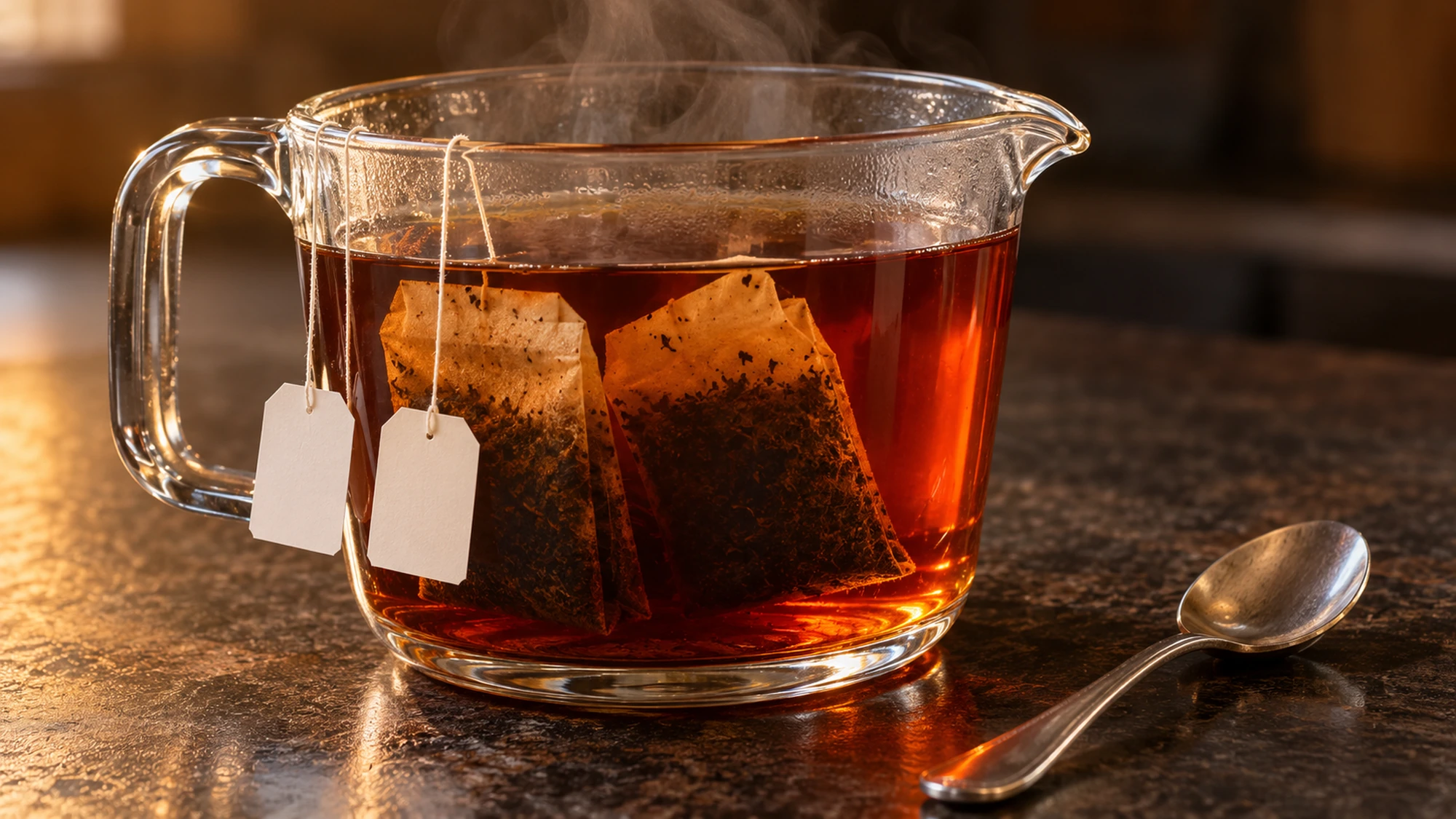
- Take the water off the heat and add the 2 family-size tea bags. Steep for 3–5 minutes, using 4 minutes as a starting point, or follow the package directions. Remove the bags without squeezing them.
- If using sugar, stir the measured 1/4 cup into the hot tea until dissolved. Omit it for an unsweetened pitcher.
- Stir in the remaining 4 cups cold water. Transfer to a clean covered pitcher or smaller covered containers and refrigerate promptly until chilled, about 1 hour depending on the container and refrigerator. Do not add ice to the stored pitcher.
- Divide the chilled tea among glasses with fresh ice. Offer the optional lemon separately. Keep the remaining pitcher refrigerated and make a fresh batch rather than topping old tea with new.
Video
Notes
Tried this recipe?
Let us know how it turned out!Emily is Spoonvale’s recipe-writing persona, bringing a warm, practical voice to everyday cooking. Her focus is simple: approachable meals, comforting flavors, and clear instructions that help make time in the kitchen more enjoyable.