
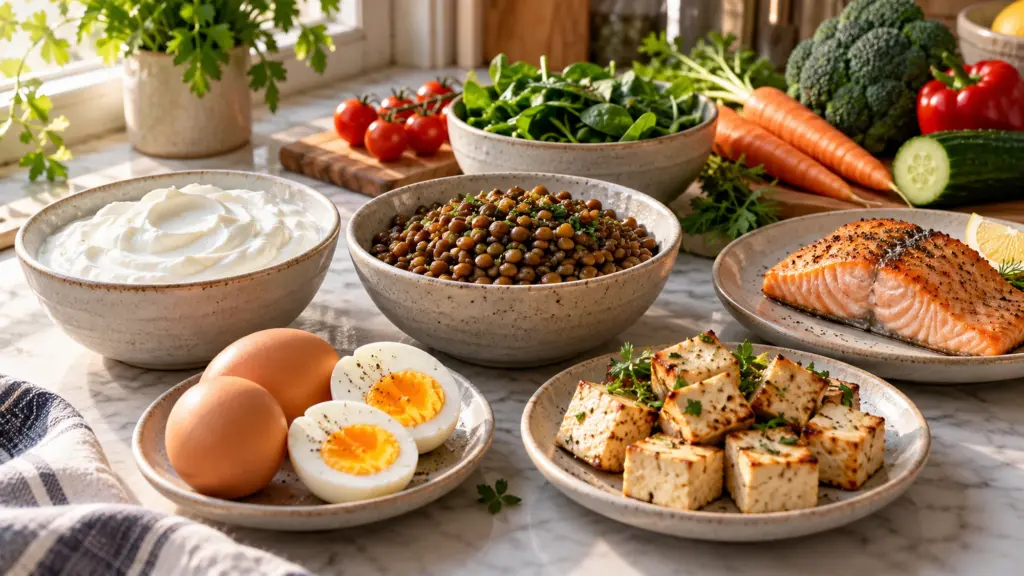
You turn over a yogurt tub, glance at a bag of beans and wonder whether dinner needs more protein or just less arithmetic. The numbers online can look contradictory because they do not always describe the same kind of recommendation.
How much protein do I need a day? The adult RDA is 0.8 grams per kilogram of body weight, while the 2025–2030 U.S. Dietary Guidelines give a higher target of 1.2–1.6 grams per kilogram. Age, activity and health determine how those general numbers apply to you.
I’d start by understanding those two benchmarks before buying another powder. A useful plan should fit your meals and circumstances, not make every grocery trip feel like a nutrition exam.
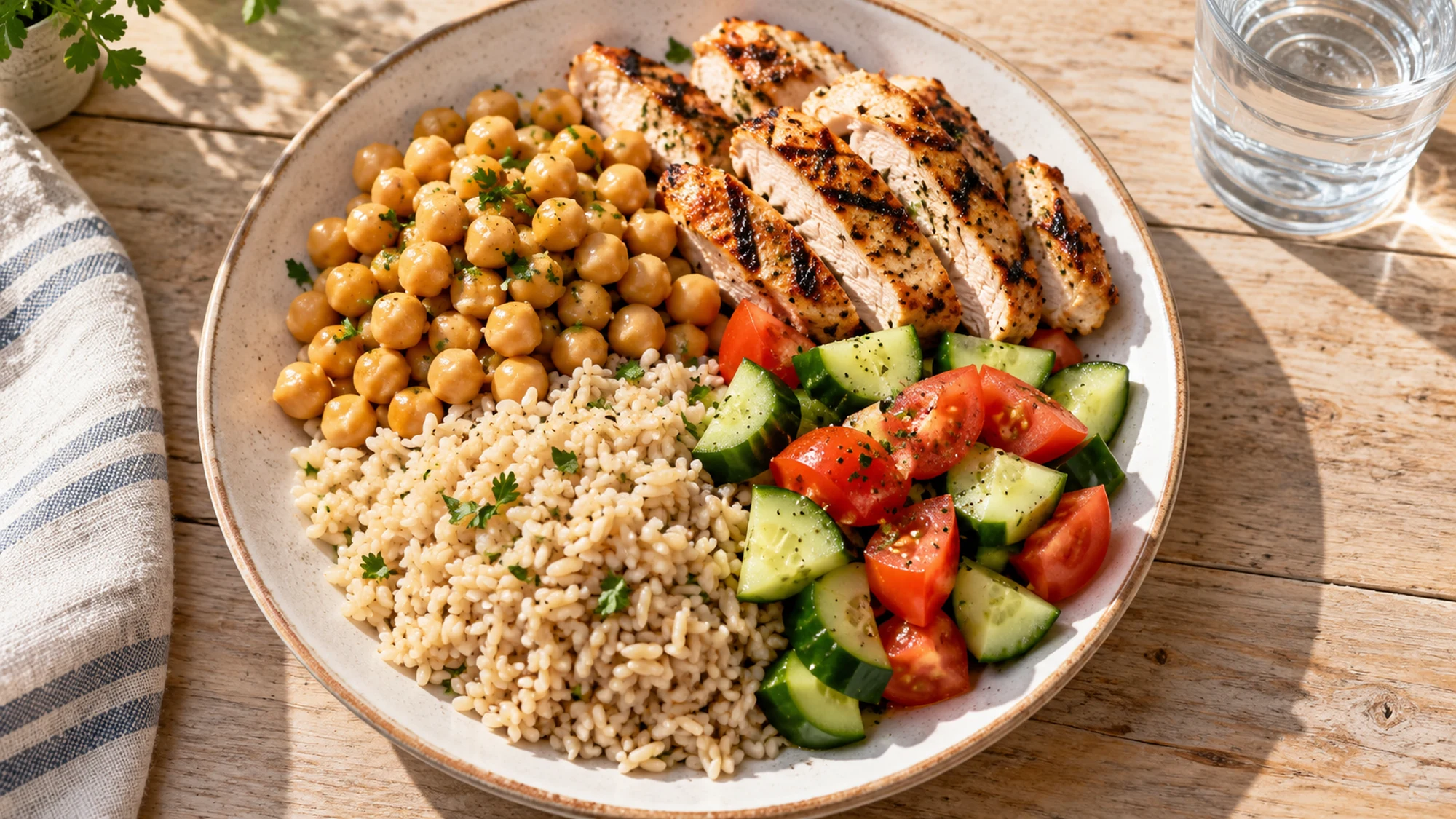
How much protein do I need a day: two different benchmarks
The National Academies’ adult RDA of 0.8 g/kg/day is a nutritional-adequacy benchmark for healthy adults. It is not an upper limit, and it is not a promise that every person, at every life stage, will do best at that intake.
The 2025–2030 Dietary Guidelines instead recommend 1.2–1.6 g/kg/day, adjusted to individual calorie needs. Call this the current dietary-guideline target, not a newly renamed RDA. Keeping the labels attached to the numbers makes the difference much easier to understand.
- Both figures refer to grams of protein, not the weight of the whole food.
- A higher target does not automatically mean you need a supplement.
- General guidance does not replace a clinician’s plan for a medical condition.
Calculate examples without turning them into a prescription
Convert pounds to kilograms by dividing by about 2.205, then multiply by the benchmark you are comparing. The table shows arithmetic examples for adults, not individual recommendations. Body weight alone cannot capture training, illness, appetite or other relevant circumstances.
For example, 70 kg multiplied by 0.8 gives 56 grams of protein. Multiplying the same weight by 1.2 and 1.6 gives 84–112 grams. Neither calculation means eating only 56 or 112 grams of chicken: the protein is only one component of that food.
| Example body weight | Adult RDA: 0.8 g/kg | DGA target: 1.2–1.6 g/kg |
|---|---|---|
| 60 kg (about132 lb) | 48 g/day | 72–96 g/day |
| 70 kg (about154 lb) | 56 g/day | 84–112 g/day |
| 80 kg (about176 lb) | 64 g/day | 96–128 g/day |
Build meals before reaching for a scoop
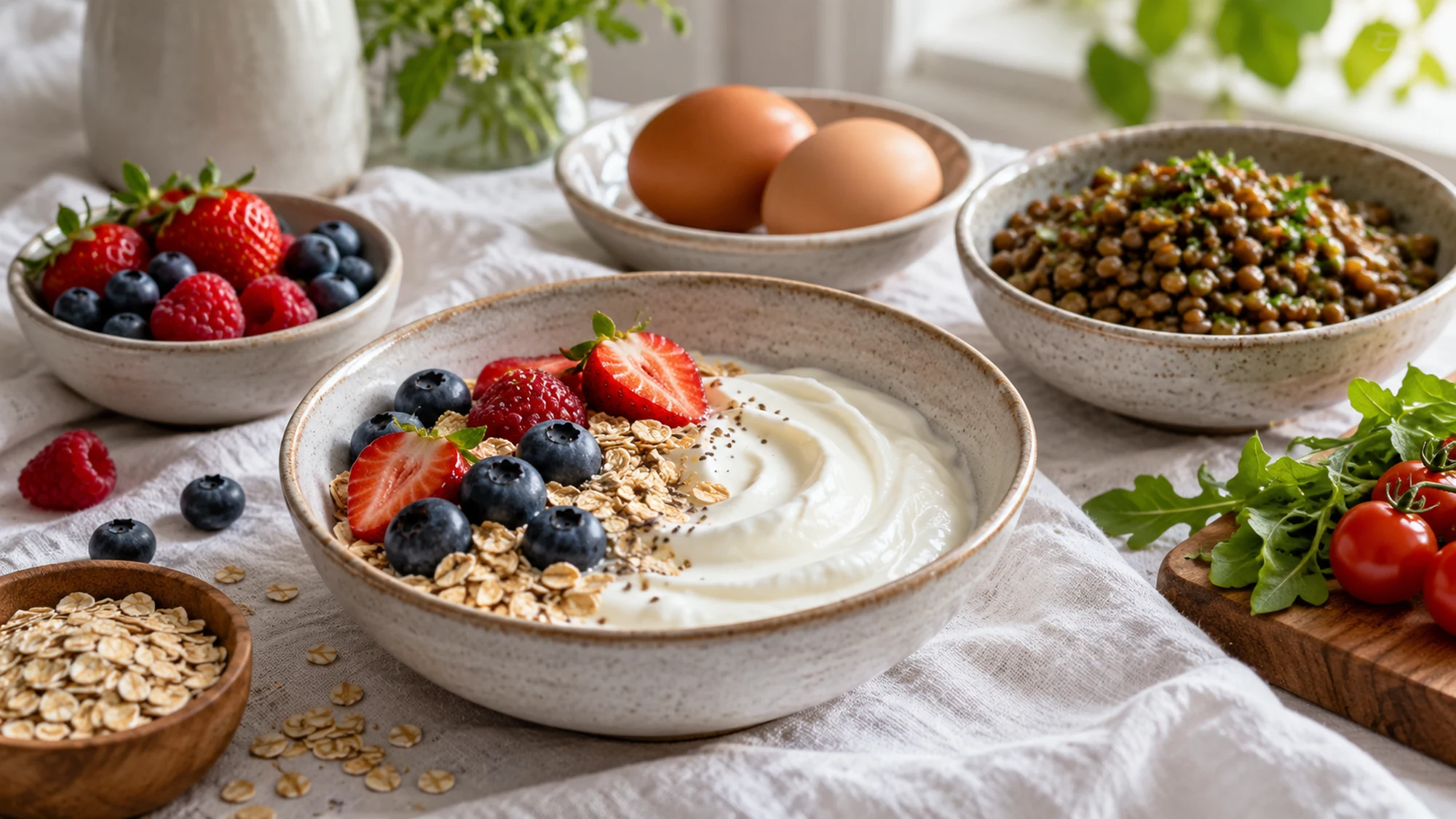
Look at the foods you already enjoy: yogurt, eggs, beans, lentils, tofu, fish and poultry can all contribute. Our egg protein guide explains one familiar ingredient without pretending it has to carry the entire day. Check a package’s serving size as well as its protein line.
I prefer to plan around ordinary meals, then use labels to fill in the details. If a personalized target were 90 grams, three meals averaging 30 grams would be one organizational example, not a rule about absorption. Vegetables, fruit, grains and fats still belong in the picture.
A quick food check is often more helpful than estimating from the size of a plate. Note the serving you usually eat, then add the protein amounts across a normal day. Include drinks and snacks, but do not count a dry-food label as though it described the same weight after cooking. If the arithmetic feels burdensome, a dietitian can translate a suitable target into familiar portions instead.
- Choose a protein-containing food at meals rather than trying to fix the whole day at dinner.
- Compare the amount you actually eat with the package’s stated serving.
- Keep plant and animal options flexible according to your preferences and needs.
- Use a supplement for a practical reason, not because a larger number looks impressive.
When the simple calculation is not enough
Kidney disease needs particular care. NIDDK explains that some people need moderated protein, while too little can contribute to malnutrition. Dialysis changes the situation again. Do not raise or lower intake sharply from a general online calculator.
Pregnancy, breastfeeding, significant illness and demanding athletic goals also deserve tailored advice. The ESPEN older-adult guideline recommends individual adjustment for nutrition, activity, disease and tolerance. I’d prioritize a practical discussion about appetite or unintended weight loss over chasing a number alone.
- Ask which target fits your health and life stage, and why.
- Bring a realistic example of your usual meals to the discussion.
- Mention supplements and any kidney-related advice you have already received.
- Ask how to meet the target without crowding out other nutritious foods.
Bottom Line
Keep the benchmark beside the number: 0.8 g/kg is the adult RDA, while 1.2–1.6 g/kg is the current U.S. dietary-guideline target. Use the calculations for context, build varied meals and seek individualized advice when health or life stage changes the picture. More protein is not a substitute for a balanced eating pattern.
Northside Hospital’s dietitian discussion offers practical meal-planning context. Published in 2025, it predates the 2025–2030 Dietary Guidelines and does not establish their newer target.
Sources
- 2025–2030 Dietary Guidelines for Americans
- National Academies: adult protein RDA
- NIDDK: eating with chronic kidney disease
- ESPEN: nutrition in older adults

Emily is Spoonvale’s recipe-writing persona, bringing a warm, practical voice to everyday cooking. Her focus is simple: approachable meals, comforting flavors, and clear instructions that help make time in the kitchen more enjoyable.